Precision Surgical Implants & Instrument Systems
Explore our certified ISO 13485 trauma, spine, sports medicine, joint replacement, and specialized OEM manufacturing product lines.
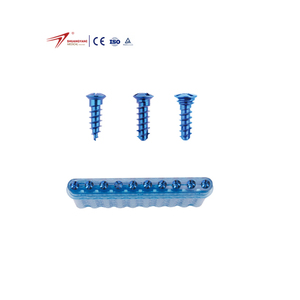
Medical Factory Supply Titanium Micro Locking Screw Implants for Neurosurgery Maxillofacial Orthopaedic Interventional Materials
Engineered from pure titanium TA2/TA3 and TC4 alloy (ASTM F1472). Ultra-low profile thread pattern optimized for maxillofacial and neurosurgical fixation.
Get Catalog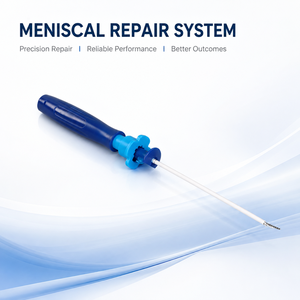
Meniscus Repair Needle Meniscal Repair System Surgical Suture All Inside Needle Repair Meniscus Total Inner Meniscal Stapler
All-inside arthroscopic suturing delivery device pre-loaded with high-tensile UHMWPE suture for precise meniscal tear adaptation and joint stability.
Get Catalog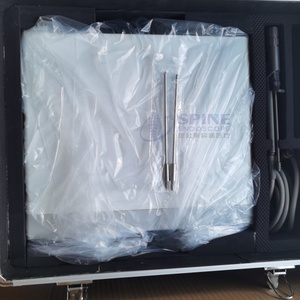
Orthopedic Power Drill/arthroscopy Shaver Cutter System Rigid Endoscope Transforaminal Endoscope 12000r/min
High-torque medical electric power system operating up to 12,000 RPM. Designed for smooth bone reaming, endoscopic tissue resection, and arthroscopic burring.
Get Catalog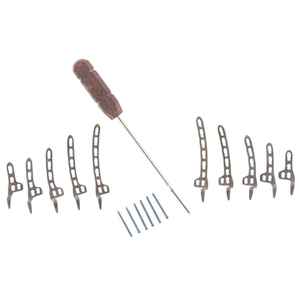
Premium Quality Stainless Steel 3.5mm Clavicle Hook Locking Plates 2H-6Holes L/R for Screw 101 Pcs Set Orthopedic Implants
Anatomically pre-contoured 316L medical stainless steel plates. Complete instrument set tailored for acromioclavicular dislocation and clavicle fracture fixation.
Get Catalog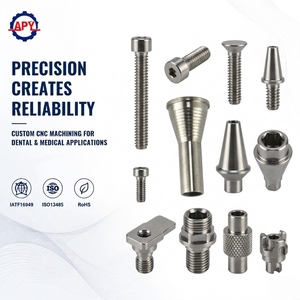
ISO13485 Certified Precision Custom CNC Machining Dental Abutment Implant Screw Titanium Medical Component
Micron-level Swiss lathe turn-milling for titanium dental prosthetic components. Meets strict bio-compatibility, surface roughness, and dimensional tolerances.
Get Catalog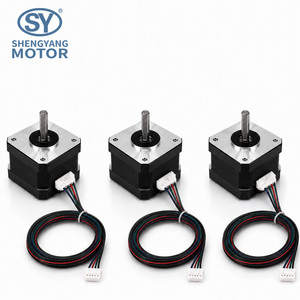
Factory Supply NEMA 17 42x42x34mm 1.2A 0.31Nm 4Lead High Precision Bipolar 12V Hybrid Stepper Motor for 3D Printer
High-precision motion control actuator used in automated medical equipment manufacturing, additive implant manufacturing units, and precision laboratory dispensers.
Get Catalog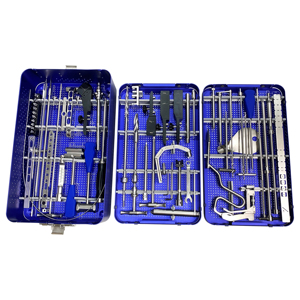
Orthopedic Implant Femur Bone Fixation Femoral Interlocking Nail Intramedullary Nails and Instrument Set
Titanium intramedullary nail system for diaphyseal and metaphyseal femoral fractures. Accompanied by cannulated flexible reamers and dynamic targeting guides.
Get Catalog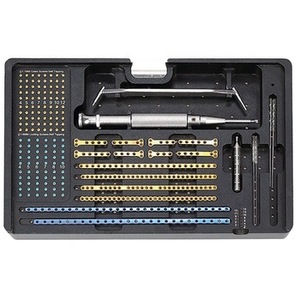
1.6mm Locking Plate Instrument Kit Small Animals Orthopedic Veterinary Surgical Instruments Drill Guide Implants Bone Plate
Micro-orthopedic trauma repair kit designed for veterinary surgical applications. Includes titanium mini locking plates, high-speed drills, and specialized bone reamers.
Get CatalogGlobal Industry Analysis: Surgical Bone Reamer Technology & Procurement Dynamics
In modern orthopedic surgery, surgical bone reamers are quintessential cutting tools utilized for intramedullary canal preparation, acetabular socket shaping in total hip arthroplasty (THA), and glenoid bone bed sculpting in shoulder reconstruction. The primary goal of any bone reaming system is to prepare an exact anatomical bed for orthopedic implants—such as femoral interlocking nails, humeral rods, and prosthetic cups—while maintaining cortical integrity, controlling intramedullary pressure, and minimizing frictional thermal generation.
Over the past decade, the global bone reamer market has shifted dramatically toward high-torque flexible reamer shafts, self-centering cutting geometry, and single-use sterile packaging modular systems. Surgical evidence confirms that controlling intramedullary pressure spikes and bone marrow embolization during reaming is directly dependent on flute geometry, clearance angle, and bone chip evacuation efficiency. Modern hospitals, orthopedic OEM brand owners, and procurement directors now demand cutting instruments that satisfy micro-hardness durability standards while reducing operative duration and surgical site infection (SSI) risks.
Clinical Insight: Thermal Necrosis Prevention in Bone Reaming
Cortical bone osteonecrosis occurs when local tissue temperatures exceed 47°C (116.6°F) for longer than one minute during mechanical cutting. Advanced bone reamer factories utilize multi-flute parabolic cutting heads with specialized rake angles to lower frictional heat, ensuring rapid debris clearance and thermal preservation of periosteal micro-vasculature.
Technical Evaluation Criteria for Selecting Bone Reamer OEM Factories
When enterprise procurement managers evaluate medical instrument suppliers, vague manufacturing promises are insufficient. A rigorous technical audit must assess metallurgy, CNC precision machining, micro-finish quality, dynamic fatigue testing, and regulatory traceability.
1. Material Science & Metallurgy
Top-tier factories manufacture reamers using medical-grade stainless steel (such as 17-4PH, Custom 455, or 420 Stainless Steel per ASTM F899) and ultra-flexible Nitinol or CoCrMo alloys for flexible shafts. High core toughness prevents intraoperative shaft fracture under torsional stress, while edge-hardened teeth retain keen cutting margins through repeated cleaning and autoclaving.
2. Flute Design & Debris Evacuation
The geometry of the cutting head—specifically the radial vs. axial rake angles and deep spiral flutes—determines chip clearance capacity. Superior reamer heads feature deep, polished flutes that rapidly evacuate autologous bone debris, preventing packing, pressure elevation within the medullary canal, and systemic lipid embolization.
3. Shaft Flexibility & Torque Transmission
Flexible intramedullary reamer shafts require welded wound wire coils or laser-slotted cannulated tubes. Exceptional manufacturing ensures 1:1 rotational torque transmission without rotational hysteresis, binding, or dynamic whipping during high-speed power driver attachment (up to 12,000 RPM).
4. Surface Passivation & Wear Resistance
To resist galvanic corrosion and surface degradation from blood, saline, and enzymatic cleaners, cutting edges undergo electrochemical passivation (per ASTM A967) or Physical Vapor Deposition (PVD) titanium nitride (TiN) coating. This elevates micro-hardness past 60 HRC while drastically reducing friction coefficient.
Technical Benchmark Matrix: Surgical Reamer Materials & Standard Specifications
This comparative engineering chart outlines the mechanical parameters required for surgical reamer components manufactured by certified OEM facilities.
| Component / Material | Standard Specification | Tensile Strength (MPa) | Hardness Rating | Primary Clinical Application |
|---|---|---|---|---|
| 17-4PH Stainless Steel | ASTM F899 / ISO 7153-1 | ≥ 1,100 MPa | 40 - 45 HRC | Rigid Acetabular & Glenoid Reamer Heads |
| Custom 455 Stainless Steel | ASTM F899 | ≥ 1,550 MPa | 48 - 54 HRC | Intramedullary Cutting Heads & Driver Couplings |
| Ti-6Al-4V ELI (Grade 23) | ASTM F1472 / ISO 5832-3 | ≥ 930 MPa | 30 - 36 HRC | Lightweight Reamer Connectors & Trial Components |
| Nitinol (Ni-Ti Alloy) | ASTM F2063 | ≥ 890 MPa (Superelastic) | N/A (Shape Memory) | Single-Piece Flexible Intramedullary Reamer Shafts |
| Wound Spring Steel Coils | ISO 16074 Medical Wire | ≥ 1,800 MPa | 45 - 50 HRC | Flexible Shaft Multi-Layer Torque Cables |
Top 10 Bone Reamer Factories & OEM Manufacturing Benchmark
A comprehensive analysis of leading global orthopedic cutting instrument hubs, evaluating production capacity, quality management systems, engineering specialization, and OEM/ODM private label capabilities.
Analytical Breakdown: Leading Global Surgical Tool Manufacturers
The global production landscape for bone reamers is highly concentrated among specialized medical technology centers in North America, Western Europe, and East Asia. Procurement executives must evaluate each factory's distinct core capabilities, quality credentials, and supply chain scalability.
- Orthi Medical Co., Ltd. (China) – Premier high-precision OEM/ODM manufacturer specializing in comprehensive trauma, spine, joint replacement, and sports medicine instruments. Operates complete ISO 13485 and ISO 9001 certified manufacturing facilities with advanced multi-axis CNC turn-milling centers, laser coil slitting, electro-polishing, and ISO Class 7 sterile packaging cleanrooms. Supplies both reusable autoclavable systems and Co-60 gamma-sterilized single-use reamers to international distributors.
- Stryker Instruments (USA) – Industry pioneer in surgical power tools and intramedullary reaming systems. Renowned for proprietary flexible reamer technology (such as the BCD and Stryker Reamer-Irrigator-Aspirator systems) focused on bone graft harvesting and pressure reduction.
- DePuy Synthes / Johnson & Johnson (Switzerland/USA) – Global market leader in trauma fixation and joint arthroplasty tools. Offers extensive modular acetabular reamers, RIA II systems, and specialized femoral reamers backed by extensive clinical research.
- Zimmer Biomet (USA) – Key supplier of high-performance joint reconstruction tooling, including hemispherical acetabular reamers and specialized shoulder glenoid cutters with custom quick-connect drive shafts.
- Smith & Nephew (UK) – Specialist in sports medicine, arthroscopy shavers, and intramedullary hip/knee tooling. High technical expertise in diamond-coated burrs and small-joint precision reamers.
- Brasseler USA Medical (USA) – Major specialized OEM maker of surgical blades, burs, and rotary cutting instruments. Strong focusing on custom blade teeth serration and private-label hospital supply.
- KOMET Medical (Germany) – European precision tooling manufacturer celebrated for micro-precision geometry, German engineering tolerances, and superior carbide/stainless surgical rotary tools.
- AYGUN Surgical Instruments (Turkey) – Established supplier of medical power tool systems, container sterilization systems, and matching reamer drill attachments for trauma surgery.
- Intech Medical (France) – Global contract manufacturing group specializing exclusively in complex orthopedic surgical instruments, custom reamer handles, and trial cases.
- Greatbatch Medical / Integer (USA) – Major tier-1 contract manufacturer providing flexible shaft components, laser-welded torque wire assemblies, and sub-assemblies to global orthopedic OEMs.
| Factory Name | Primary Region | Core Reamer Expertise | Quality Certifications | OEM / ODM Support | Sterile Package Delivery |
|---|---|---|---|---|---|
| Orthi Medical Co., Ltd. | Asia (China) | Intramedullary Flexible Reamers, Acetabular & Trauma Tools | ISO 13485, ISO 9001, CE Mark | Full OEM/ODM Drawing-Based | Available (Gamma SAL 10-6) |
| Stryker Instruments | North America (USA) | Power Tools, RIA Reamer-Irrigator-Aspirators | ISO 13485, FDA Registered | Proprietary Brand Only | Available |
| DePuy Synthes | Europe / USA | Modular Trauma & Joint Reconstruction Tooling | ISO 13485, CE, FDA | Proprietary Brand Only | Available |
| KOMET Medical | Europe (Germany) | Precision Rotary Blades & Micro-Reamers | ISO 13485, CE Mark | Contract OEM Component | Non-Sterile Bulk / Custom Pack |
| Intech Medical | Europe (France) | Custom Instrument Sets & Acetabular Reamer Cases | ISO 13485, FDA Registered | Contract Manufacturing Only | Optional Partner Service |
Future Procurement Trends in Surgical Bone Reamer Manufacturing
As health systems prioritize perioperative efficiency, infection control, and total cost of care, procurement teams must align with factories capable of supporting next-generation surgical technological trends:
Shift to Single-Use Pre-Sterilized Kits
Reusable reamers suffer progressive cutting dullness and present sterilization validation challenges due to cannulated marrow debris accumulation. Pre-sterilized single-use reamer heads eliminate hospital reprocessing costs, prevent cross-contamination, and guarantee 100% sharp cutting edges for every procedure.
PVD Diamond-Like Carbon (DLC) Coatings
Next-generation factories are implementing DLC and TiAlN nanocomposite coatings. These coatings provide extreme hardness (up to 2,500 HV) and near-zero friction coefficients, reducing bone cutting heat generation by up to 35% compared to uncoated stainless steel.
Additive Manufacturing & Porous Flutes
Direct Metal Laser Sintering (DMLS) 3D printing enables specialized reamer heads with internal irrigation channels and optimized chip-breaking structures that were previously impossible to produce via traditional 5-axis CNC milling.
Monolithic Nitinol Flexible Shafts
Replacing traditional wound-wire coils with single-piece laser-slotted Nitinol tubes provides exceptional torsional rigidity while maintaining superior flexural fatigue life, preventing coil unraveling under high surgical torque.
Strategic OEM Procurement Playbook for Medical Device Brands
Transitioning custom surgical tool manufacturing to an external factory requires structured governance to mitigate regulatory and quality risks. Follow this 4-step sourcing roadmap:
Collaborate with factory application engineers to review 2D/3D CAD files, specifying critical cutting edge tolerances (±0.01 mm), concentricity runout limits, and material hardness standards (ASTM F899).
Request short-run prototypes to conduct mechanical torque testing, cutting performance benchmarking on synthetic bone models (Sawbones), and cleaning validation studies.
Verify factory ISO 13485 certification, review Device Master Record (DMR) protocols, inspect 100% optical coordinate measuring machine (CMM) reports, and confirm batch material heat treatment certificates.
Ensure the supplier provides full technical documentation files, biocompatibility testing data (ISO 10993), and sterilization validation files to support your FDA 510(k) or CE MDR registration.
Frequently Asked Questions: Bone Reamer Sourcing & Manufacturing
Expert guidance addressing critical technical, quality, and supply chain queries for hospital buyers and OEM brand owners.
Why Partner with Orthi Medical for Bone Reamers & Orthopedic Implants?
Orthi Medical Co., Ltd. is a leading ISO 13485 certified manufacturer specializing in trauma, spine, sports medicine, joint replacement, and custom surgical instrument solutions. We partner with international medical device distributors, brand owners, and hospital networks to provide premium OEM/ODM manufacturing services tailored to rigorous clinical standards.
In-House CNC Precision Tooling
Our production floor features high-precision Swiss-type 5-axis turn-milling centers, wire EDM, and automatic cutter grinding machines capable of achieving ±0.005 mm tolerances on complex reamer head geometries.
Complete Batch Traceability
Every single instrument and implant is laser marked with unique UDI matrix codes and supported by raw material mill certificates (ASTM F67 TA2/TA3, ASTM F1472 TC4, ASTM F899), guaranteeing total quality traceability.
Full-Service OEM & ODM Capabilities
From initial blueprint design and rapid prototyping to anodized color-coding, customized surgical tray layout, private label branding, and regulatory file compilation, we streamline your path to market approval.
Clinical Academic & Surgeon Support
We supply complete surgical technique documentation, Sawbones clinical instruction guides, and technical workshops so your sales teams and hospital partners can deploy new systems seamlessly.