Featured Medical Implants & Surgical Instrumentation
Explore our certified orthopedic systems, precision trauma plates, spinal interbody fusion cages, and advanced surgical tools engineered for OEM/ODM global procurement.
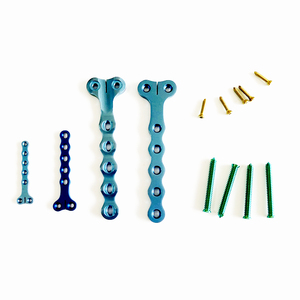
T Shape 1.6 2.4 2.0 mm Implants Bone Plates Veterinary Orthopedic Locking Plate for Fracture Surgery
Send an Inquiry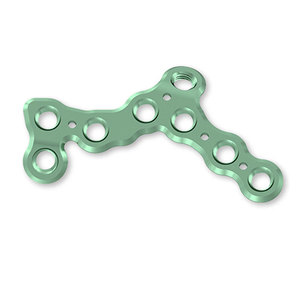
Orthopedic Surgical Trauma Non-Locking Plate Large Fragment Instrument Set Lower Limb Bone Manual Stainless Steel Bone Fixation
Send an Inquiry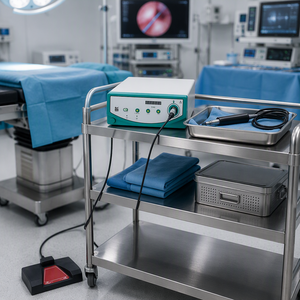
Surgical Instrument Under Discectomy Endoscope Medical Shaver System
Send an Inquiry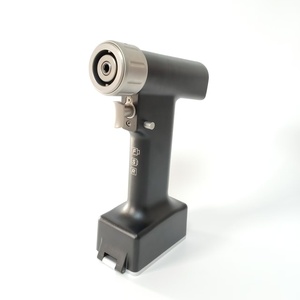
Factory Outlet BP Orthopedic Drill Saw Surgical Power Tools Multifunctional High Speed Steel CE Certified Removable Battery
Send an Inquiry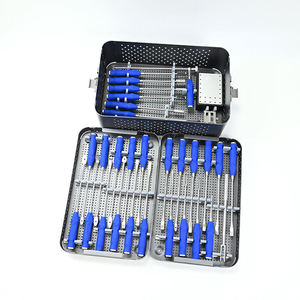
PLIF PEEK Cage & Titanium Lumbar Cage Instrument Set Stainless Steel Posterior Lumbar Interbody Fusion System
Send an Inquiry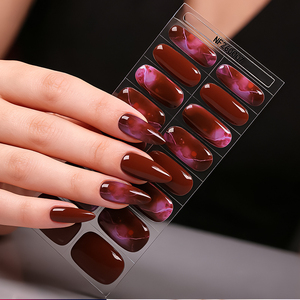
Wholesale Supplier High Quality Healthy Long Lasting 3D French Nail Art Semi Cured Gel Nail Wraps Set UV Lamp Gel Nail Stickers
Send an Inquiry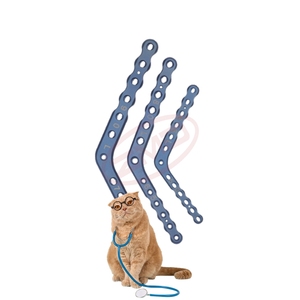
ZMD Medical Orthopedic Titanium Bone Screw Cancellous & Hex Head Cortex Locking Implant 30 Sold Ready to Ship
Send an Inquiry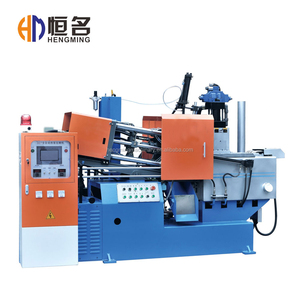
Metal Spin Casting Process Machine for Sale
Send an InquiryExecutive Engineering White Paper: The Technical Evolution and OEM Manufacturing Standard of XLIF Cages
Extreme Lateral Lumbar Interbody Fusion (XLIF), also categorized under Lateral Lumbar Interbody Fusion (LLIF), represents a pivotal paradigm shift in minimally invasive spine surgery (MISS). By utilizing a retroperitoneal trans-psoas lateral approach to the thoracolumbar spine, XLIF enables spinal surgeons to perform comprehensive discectomy, neural decompression, and interbody reconstruction without disrupting the anterior longitudinal ligament (ALL) or posterior spinal musculature.
From a biomechanical and manufacturing perspective, the success of lateral fusion procedures hinges directly upon the structural integrity, surface topographies, and anatomical conformability of the interbody cage. As a premier OEM/ODM XLIF cage manufacturer and factory, our facility integrates high-precision 5-axis CNC machining, selective laser melting (SLM) additive manufacturing, and rigorous quality management frameworks adhering strictly to ISO 13485:2016 and EU MDR 2017/745 specifications. This technical document provides procurement executives, OEM partners, and clinical distributors with deep insights into material science selection, biomechanical engineering, and regulatory validation protocols required for next-generation XLIF device production.
Precision OEM/ODM Manufacturing Capabilities
Vertical integration from raw titanium bar stock to cleanroom sterile packaging guarantees full batch traceability and uncompromised quality.
5-Axis Swiss & Milling CNC
Our factory operates advanced Makino and DMG Mori multi-axis CNC machining centers. We execute complex lateral anatomical geometry machining with micro-scale precision, creating tapered leading edges, aggressive anti-migration serrations, and internal graft cavities within tight tolerances (±0.005 mm).
- Machining of Medical-Grade PEEK-OPTIMA LT1
- Ti-6Al-4V ELI (ASTM F136) Precision Turning
3D Metal Printing (SLM)
Utilizing Selective Laser Melting (SLM) technology, we produce 3D-printed porous titanium XLIF implants with biomimetic trabecular structures. Pore sizes are dynamically engineered between 400–700 μm with 65%–80% interconnected porosity to accelerate early osteointegration and vascularization.
- Biomimetic Trabecular Lattice Architecture
- Elimination of Delamination Risk
Class 10,000 Cleanroom Packaging
Implantable devices are washed via automated multi-stage ultrasonic passivation tanks (ASTM F86) and assembled inside an ISO Class 7 (Class 10,000) cleanroom environment. We offer double-blister Tyvec packaging supporting Gamma Co-60 irradiation with Sterility Assurance Level (SAL 10⁻⁶).
- Pre-Sterilized Ready-to-Use (RTU) Packaging
- Full UDI & Barcode Traceability Support
Biomechanical Material Comparison for XLIF Cage Manufacturing
Selecting the appropriate substrate material is critical to balancing radiolucency, compressive yield strength, modulus of elasticity, and long-term biological bone bridging. Below is a comparative technical specification chart provided by our metallurgy and R&D engineering team:
| Biomaterial Specification | PEEK-OPTIMA (LT1) | Ti-6Al-4V ELI (ASTM F136) | Porous 3D Titanium (SLM Lattice) |
|---|---|---|---|
| Modulus of Elasticity (GPa) | 3.5 – 4.0 GPa (Close to cortical bone) | 110 – 114 GPa | 2.5 – 5.0 GPa (Tailored to cancellous bone) |
| Radiolucency (X-Ray / CT) | 100% Radiolucent (Requires Tantalum Markers) | Radiopaque (Artifact shadow under CT/MRI) | Semi-Radiolucent (Minimal imaging artifact) |
| Surface Osseointegration | Passive (Bio-inert surface topography) | Moderate (Smooth/Micro-roughened) | Superior (Cellular migration & bone ingrowth) |
| Static Axial Compression (ASTM F2077) | > 25,000 N | > 45,000 N | > 30,000 N |
| Subsidence Risk Factor | Low (Matching cortical stiffness) | Moderate (Risk of endplate violation) | Extremely Low (Optimized load distribution) |
| Primary Manufacturing Method | 5-Axis CNC Milling / Injection Molding | Precision CNC Swiss Machining | Additive Manufacturing (SLM / DMLS) |
Technological Evolution & Future Development Trends
How cutting-edge structural mechanics and smart manufacturing are transforming lateral spine fusion implants.
Porous 3D Additive Structure Overcoming PEEK Limitations
While hydrophobic PEEK has traditionally dominated the spinal interbody market due to radiolucency and low elastic modulus, its biological inertia can lead to fibrous encapsulation rather than direct bone bonding. The industry modern trajectory is aggressively shifting toward 3D-printed porous titanium XLIF implants. By replicating human trabecular morphology (pore size 500–600 μm, porosity 70%), 3D titanium cages exhibit vascularized bone ingrowth throughout the internal scaffold, effectively shortening fusion time from 12 months down to 3–6 months post-operatively.
In-Situ Expandable XLIF Mechanical Mechanisms
Static cages require force insertion through small lateral corridors, increasing the risk of endplate destruction and nerve root irritation. Modern ODM developments focus on expandable lateral cages. These mechanisms enter the disc space at a collapsed height (e.g., 8 mm) and expand continuously in-situ up to 14 mm while simultaneously dialing in hyperlordotic angles (0° to 20°). This expansion restores intervertebral disc height, maximizes indirect foraminal decompression, and minimizes nerve traction injuries.
Anatomical Wide-Footprint Endplate Coverage
Recent biomechanical cadaveric studies demonstrate that subsidence is dramatically reduced when an interbody cage spans bilateral cortical rims (apophyseal ring). Our OEM XLIF cage engineering utilizes extended lengths (up to 60 mm) and wide footprints (up to 26 mm width). Spanning the dense perimeter ring transfers axial loads away from the fragile central cancellous bone, significantly decreasing subsidence incidence rates in osteoporotic spinal segments.
Integrated Lateral Fixation & Zero-Profile Screws
To eliminate the necessity of supplemental posterior pedicle screw instrumentation in select single-level disc degeneration cases, next-generation lateral cages incorporate integrated trajectory locking screws or anchors. These stand-alone XLIF devices provide immediate 3D rotational and torsional stability directly through the lateral incision, reducing operative time, blood loss, and healthcare system expenditure.
Future Procurement Trends for Global Medical Device Purchasing Managers
Global orthopedic device procurement is experiencing unprecedented structural shifts driven by regulatory inflation (such as European MDR compliance burdens), hospital cost-containment mandates, and supply chain fragility. B2B buyers and brand owners sourcing OEM/ODM XLIF systems must align with contract manufacturers that offer strategic long-term advantages:
1. Consolidated Turnkey OEM/ODM Co-Development
Distributors are moving away from multi-vendor supply chains (sourcing raw machining from one supplier, coating from another, and packaging elsewhere). Leading buyers prioritize single-source manufacturing partners capable of delivering turnkey solutions—including implant machining, matching surgical instrument kit production, laser marking, anodization, and sterile cleanroom packaging.
2. Regulatory Technical File Turnkey Support (CE MDR & 510(k))
Regulatory clearance timeline is the single greatest bottleneck in commercializing new spine products. Qualified OEM factories must provide pre-validated technical documentation, including ASTM F2077 static/dynamic shear test reports, biocompatibility datasets (ISO 10993), cleanroom validation files, and packaging shelf-life stability testing to accelerate distributor FDA 510(k) and CE mark submissions.
3. High Demand for Ready-to-Use Sterile Implants
Hospitals globally are seeking to reduce Operating Room (OR) turnover time and eliminate in-hospital autoclave sterilization costs. Sourcing pre-sterilized, single-pack sterile XLIF cages with barcoded UDI tracking guarantees sterility assurance, reduces hospital infection risks, and simplifies inventory control.
Frequently Asked Questions: Sourcing XLIF Cages & OEM Contract Manufacturing
Addressing core engineering, regulatory, and supply chain inquiries from healthcare procurement managers.
- ASTM F2077: Static and Dynamic Axial Compression, Static and Dynamic Compression-Shear, and Static Torsion Testing.
- ASTM F2267: Measuring Subsidence of Interbody Fusion Devices Under Static Axial Load.
- ISO 14801: Dynamic Fatigue Evaluation of Implantable Components.
- Lengths: 40 mm, 45 mm, 50 mm, 55 mm, 60 mm.
- Widths: 18 mm, 22 mm, 24 mm, 26 mm.
- Heights: 8 mm to 16 mm (in 1 mm or 2 mm increments).
- Lordotic Angles: 0°, 4°, 8°, 12°, 15°, and hyperlordotic 20° angles.
Partnering with a World-Class XLIF Cage Manufacturer
Establishing a strategic OEM manufacturing relationship requires absolute alignment between clinical intent, precision manufacturing, and regulatory compliance. Our engineering team brings decades of collective spinal device manufacturing expertise, offering flexible cooperation models tailored to emerging medical device brands as well as established global spine leaders.
Whether you require drawing-based custom machining (OEM), co-development of expandable 3D-printed lateral systems (ODM), or rapid procurement of certified trauma and spinal fusion components, our engineering infrastructure is configured to accelerate your time-to-market while reducing regulatory risk.
Request OEM/ODM Product Specs & Contract Manufacturing Quotation
Connect directly with our senior orthopedic engineering team. We deliver rapid CAD evaluations, manufacturing feasibility assessments, and commercial quotes within 24 hours.
Send an Inquiry