Featured Endoscopic & Corpectomy Systems
Explore our ISO 13485-certified spine endoscopy instruments, expandable cage holding systems, and precision spinal decompression assemblies engineered for contract manufacturing export.
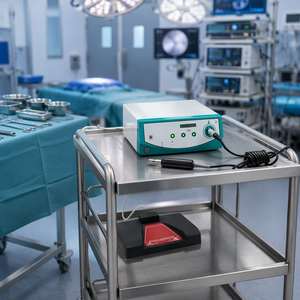
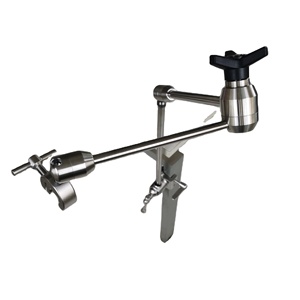
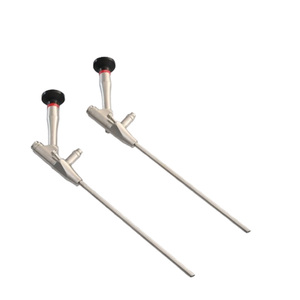
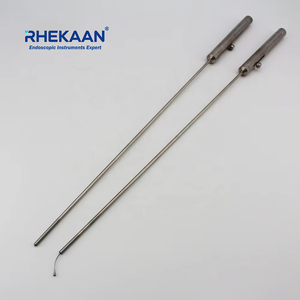
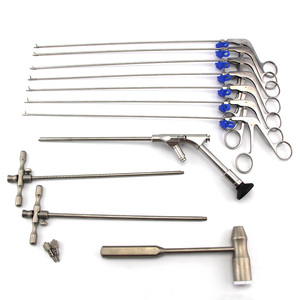
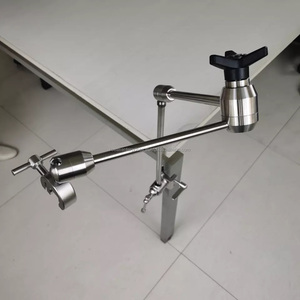
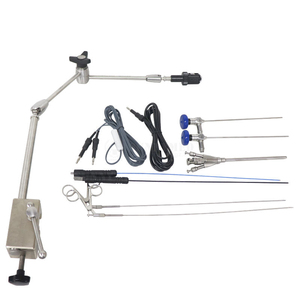
Endoscopic Discectomy System Free Arm Scope Holder Stainless Steel Retractor
Engineering Whitepaper: Next-Gen Telescopic Corpectomy Systems
An in-depth technical examination of expandable Vertebral Body Replacement (VBR) mechanisms, biomechanical stabilization, load-sharing optimization, and private-label contract manufacturing standards.
Biomechanical Principles of Continuous Expansion
Surgical reconstruction of the anterior column following anterior cervical corpectomy and fusion (ACCF) or thoracolumbar total corpectomy requires implants capable of providing immediate structural stability while preserving intervertebral height. Traditional non-expandable mesh cages and static strut grafts present significant intraoperative challenges, including high subsidence rates, endplate damage caused by over-distraction, and difficulty achieving tailored lordotic fit.
Modern telescopic corpectomy systems overcome these limitations by utilizing a continuously expandable telescoping core. Controlled intraoperative distraction allows spine surgeons to expand the cage *in situ* until precise anatomical height and optimal endplate contact pressure are achieved. This eliminates the frictional micro-trauma associated with force-fitting static implants, drastically reducing the risk of postoperative graft collapse and instrument migration.
Material Metallurgy & Fatigue Performance
For OEM/ODM exporters and hospital procurement boards, material purity dictates clinical longevity. Telescopic corpectomy implants are manufactured from medical-grade Titanium Alloy (Ti-6Al-4V ELI conforming to ASTM F136) or high-performance PEEK (Polyetheretherketone) reinforced with radiopaque markers.
ASTM F136 titanium offers an impressive yield strength exceeding 790 MPa and dynamic fatigue resistance compliant with ASTM F2077 (axial compression, shear, and torsional fatigue testing) up to 5,000,000 cycles. Furthermore, endplate interfaces undergo chemical anodization or porous titanium plasma spraying (TPS) to augment the surface roughness, fostering rapid primary osseointegration and micro-interlocking with adjacent vertebral bodies.
| System Parameter | Cervical Telescopic VBR | Thoracolumbar Expandable VBR | OEM Customization Range |
|---|---|---|---|
| Indication Spectrum | Tumor resection, burst fracture, ACCF | Trauma, spondylolisthesis, corpectomy | Specific pediatric or custom revision profiles |
| Base Material Standard | Ti-6Al-4V ELI (ASTM F136) / PEEK | Ti-6Al-4V ELI (ASTM F136) | Pure Titanium TA2/TA3 (ASTM F67) options |
| Distraction Mechanism | Central threaded gear drive / bevel gear | Dual-rack telescoping piston / worm gear | Continuous step-less vs. discrete ratchet stop |
| Endplate Modularity | 0° to 12° fixed & articulating lordosis | 0° to 15° infinitely adjustable swivel tilt | Custom footprint geometry & tooth patterning |
| Fatigue Resistance Limit | > 5.0 × 10⁶ cycles at 1.5 kN load | > 5.0 × 10⁶ cycles at 4.0 kN load | Exceeds ASTM F2077 & ASTM F2267 standards |
| Sterilization Standard | Non-sterile or Co-60 Gamma (SAL 10⁻⁶) | Non-sterile or Co-60 Gamma (SAL 10⁻⁶) | Custom sterile barrier blister & pouch packing |
Future Procurement Trends in Spinal Implants (2025–2035)
Strategic market analysis for medical device importers, brand owners, and hospital procurement officers navigating the shifting global landscape of spinal reconstruction technologies.
1. Turnkey Sterile Packaging
Global hospitals are increasingly shifting away from in-house autoclave reprocessing of implants toward pre-sterilized, single-use packaged VBR cages. Procurement trends show a 40% growth in demand for implants pre-packaged under ISO 11607 cleanroom conditions with Co-60 Gamma Irradiation (SAL 10⁻⁶). This mitigates cross-contamination risks and simplifies surgical tray prep.
2. 3D-Printed Additive Structures
Sourcing managers are demanding hybrid telescopic cages incorporating 3D-printed selective laser melting (SLM) porous titanium endplates. Mimicking trabecular bone structure (60–70% porosity), these biomimetic interfaces increase friction coefficients and promote rapid vascularization, significantly cutting down subsidence rates in compromised bone.
3. Supply Chain Consolidation
Distributors are consolidating vendors, favoring OEM/ODM factories capable of providing multi-specialty portfolios—combining spine expandable cages, pedicle screw systems, PTED/UBE endoscopic towers, and sports medicine anchors under unified ISO 13485 registration and regulatory file bundles (CE MDR & FDA 510k documentation support).
Future Technological Trends in Expandable VBR Devices
Where the industry is heading: Innovation vectors reshaping anterior column reconstruction over the next decade.
Zero-Drift Auto-Locking Drive Mechanisms
One of the persistent mechanical risks with expandable cages has been secondary collapse due to intraoperative gear slippage under cyclic spinal loads. Next-generation systems feature internal mechanical micro-ratchets and friction-lock set screws that automatically engage upon reaching desired expansion, completely preventing micro-backlash.
Integrated Navigation & Robotic Alignment
As spine surgery advances toward image-guided surgery (IGS) and surgical robotics, telescopic corpectomy inserters are evolving. Modern driver instruments come integrated with optical tracking arrays and standardized hex-coupling shafts, enabling real-time intraoperative visualization of cage expansion trajectory under 3D fluoroscopy.
Customizable Modularity & Articulated Footprints
Anatomical variations across patient populations demand multi-axial endplate flexibility. Emerging telescopic systems feature modular ball-and-socket endplate attachments that automatically self-align to matching endplate angles (0°–15° lordosis/kyphosis), distributing compressive forces evenly across the cortical rim.
MIS Delivery & Mini-Open Access Cannulation
Minimally Invasive Surgery (MIS) corridors reduce soft tissue destruction. Future corpectomy designs emphasize low-profile collapsed heights (e.g., collapsed diameter < 16mm for lumbar corridor), allowing delivery through narrow tubular retractors followed by substantial expansion expansion ratios up to 180% of native height.
Why Partner With Us: OEM/ODM Factory Capabilities
With decades of orthopedic implant manufacturing experience, our state-of-the-art production facility serves as an international contract manufacturing hub for premier medical device brands.
5-Axis Precision Machining
Our workshop houses high-precision DMG MORI 5-axis CNC machining centers and Swiss-type automatic lathes capable of micron-level tolerance (±0.005mm), ensuring flawless mesh threading and telescoping smooth action.
Complete Traceability & QC
Every single titanium rod used in production carries raw material mill test certificates (conforming to ASTM F136 / ASTM F67). Inspection protocol incorporates Zeiss CMM coordinate measurement and 100% optical dimension verification.
End-to-End ODM Customization
From initial CAD modeling and finite element analysis (FEA) to rapid prototyping (<14 days), anodized color-coding, laser engraving, and custom sterilizable aluminum tray layout design—we deliver market-ready solutions.
Purchasing & Technical FAQ
Answers to critical questions asked by orthopedic device buyers, regulatory directors, and supply chain managers.
What regulatory quality certifications do your telescopic corpectomy systems hold?
+
Can you manufacture custom telescopic corpectomy cages based on proprietary client drawings (OEM/ODM)?
+
Are the implants supplied sterile or non-sterile?
+
What mechanical testing standards do your expandable VBR cages meet?
+
- ASTM F2077: Static and dynamic axial compression, shear compression, and torsional fatigue testing up to 5,000,000 cycles.
- ASTM F2267: Standard test method for measuring load-induced subsidence of intervertebral body fusion devices into polyurethane foam blocks.