Featured OEM/ODM Percutaneous Pedicle Screw Systems
Explore our precision-machined minimally invasive spinal fixation implants, featuring cannulated polyaxial pedicle screws, extended breakaway tabs, and dedicated instrument surgical sets.
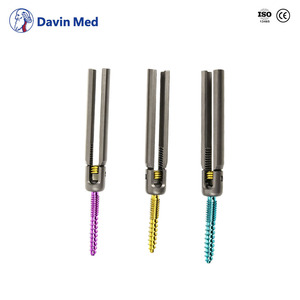
DavinMed CE ISO Certified MIS Pedicle Screw Cannulated Polyaxial Spinal Fixation System for Minimally Invasive Surgery
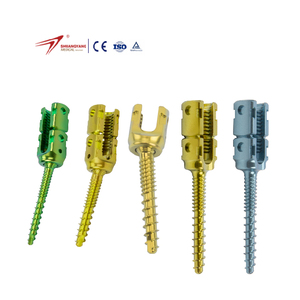
Shuangyang Pedicle Screw Oem Orthopedic Implants 5.5 Polyaxial And Monoaxial Pedicle Screw Spine Fixation Pedical Screw System
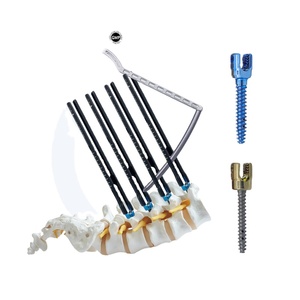
CZMEDITECH's Orthopedic Implant Regarding the MIS Spinal Pedicle Screw System
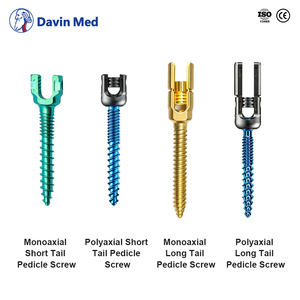
Multi-specification Pedicle Screw System CE Certified Titanium Alloy Spinal Pedicle Screw For Orthopedic Spine Fixation Surgery
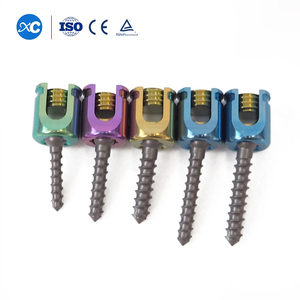
XC MEDICO Animal Spinal Surgery Orthopedic Surgical Bone Monoaxial Pedicle Screw System Polyaxial Reduction Fixation for Spinal
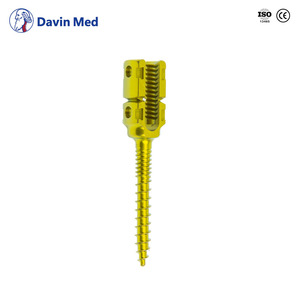
High Quality CE ISO 13485 Approved Spine Fixation System Reduction Monoaxial Pedicle Screw Long Tail For Vertebra Fracture
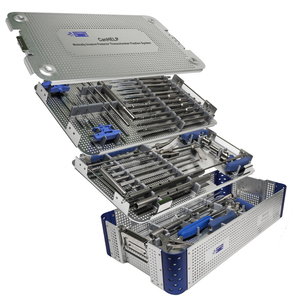
Professional Kyphoplasty Percutaneous Pedicle Screws Surgical Instruments Complete MIS Spine Tool Kit Dentavex Corporation
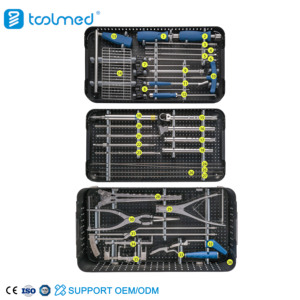
Toolmed 5.5 MIS Spine Instrument Set For Minimally Invasive Pedicle Screw Placement And Spinal Fixation Surgery
1. Executive Overview: Biomechanical Paradigm of Percutaneous Pedicle Screw Systems
Over the past decade, spinal surgery has undergone a profound structural migration from open posterior thoracolumbar instrumentation toward Minimally Invasive Surgical (MIS) techniques. At the vanguard of this shift is the Percutaneous Pedicle Screw System (PPSS). Designed to treat lumbar degenerative disc disease, spondylolisthesis, vertebral fractures, and spinal deformities, percutaneous systems provide rigid internal stabilization while substantially reducing paraspinous tissue trauma, intraoperative blood loss, and post-operative recovery timelines.
From a mechanical engineering perspective, percutaneous pedicle screw fixation presents unique design hurdles compared to conventional open pedicle screws. Because pedicle screws in an MIS workflow are inserted through small stab incisions guided by fluoroscopy or O-arm intraoperative navigation, the implant must integrate extended delivery channels—such as integrated breakaway extended tabs or detachable reduction sleeves—to facilitate remote rod insertion, set-screw placement, and final torque tightening.
As a dedicated medical device manufacturer operating under ISO 13485 and ISO 9001 quality systems, Orthi Medical Co., Ltd. delivers full-scale contract manufacturing, engineering design customization (OEM/ODM), and sterile-package solutions for orthopedic brands, medical device distributors, and healthcare institutions worldwide.
Extended Breakaway Tabs
Integrated long-tail sleeves engineered with precise laser-etched score lines. Provides stable rod passage without bulky external extension tubes, snapping cleanly off post-tightening.
Cannulated Dual-Core Threads
Precision longitudinal cannulation (Ø1.5 mm – Ø1.8 mm) permitting seamless Kirschner wire (K-wire) tracking and optional PMMA bone cement augmentation in osteoporotic patients.
Anti-Cross-Thread Set Screws
Reverse-angle Buttress or square thread geometries engineered to redirect radial outward forces into axial clamping force, mitigating tulip splaying during final tightening.
2. Material Metallurgy, CNC Machining Tolerances & Surface Modification
Implants utilized in spinal fixation must endure high dynamic bending moments, torsional stress, and cyclic fatigue over millions of physiological loading cycles. At Orthi Medical, all raw materials undergo rigorous physical, chemical, and metallurgical verification in accordance with international medical standards.
| Material Designation | Regulatory Standard | Chemical Composition | Tensile Strength (Rm) | Yield Strength (Rp0.2) | Primary Clinical Application |
|---|---|---|---|---|---|
| Ti-6Al-4V (TC4) | ASTM F1472 / ISO 5832-3 | Ti-6% Al - 4% V | ≥ 930 MPa | ≥ 860 MPa | Pedicle Screws, Set Screws, Connecting Rods |
| Ti-6Al-4V ELI | ASTM F136 / ISO 5832-11 | Ti-6% Al - 4% V (Extra Low Interstitial) | ≥ 860 MPa | ≥ 790 MPa | High-Fatigue MIS Cannulated Screws |
| Pure Titanium TA2 | ASTM F67 / ISO 5832-2 | Unalloyed Titanium | ≥ 400 MPa | ≥ 275 MPa | Pre-bent Fixation Plates, Mesh Cages |
| Pure Titanium TA3 | ASTM F67 / ISO 5832-2 | Unalloyed Titanium | ≥ 500 MPa | ≥ 380 MPa | Cervical Plates & Structural Components |
| PEEK-OPTIMA | ASTM F2026 | Polyetheretherketone | ≥ 95 MPa | ≥ 90 MPa | Radiolucent Interbody Fusion Devices |
Swiss 5-Axis Precision Machining & Tolerance Controls
The fabrication of cannulated pedicle screws requires specialized machining setups. Orthi Medical utilizes high-precision Swiss-type 5-axis CNC sliding-headstock lathes (Citizen & Tornos). The deep-hole drilling process for the interior cannulation channel demands absolute concentricity (tolerance within ±0.02 mm) to prevent wall-thickness variation that could induce mechanical failure under shear loads.
Furthermore, the outer thread profile employs custom dual-lead helical geometry. Dual-lead threads double the insertion speed per revolution (e.g., 3.0 mm pitch per 360° turn), shortening intraoperative fluoroscopy exposure time and reducing surgeon fatigue while maintaining high pull-out resistance (exceeding ASTM F1541 pull-out test requirements).
Surface Treatment & Anodization Protocols
To improve corrosion resistance, reduce galling between titanium mating surfaces (such as the set screw and tulip body), and allow rapid color-assisted size identification in the operating room, implants undergo Type II or Type III electrolytic anodization. Color coding standardizes diameter matching across instrumentation: Blue (Ø5.5 mm), Green (Ø6.5 mm), Yellow (Ø7.5 mm), and Magenta (Ø8.5 mm).
3. Sterile Barrier Packaging & Gamma Irradiation
Healthcare facilities increasingly favor pre-sterilized, single-pack spine implants to minimize autoclave processing costs and mitigate hospital-acquired infection (HAI) risks. Orthi Medical operates Class 100,000 (ISO Class 7) cleanrooms dedicated to primary thermoformed blister tray packaging.
- Tyvek® Sterile Barrier: Sealed with Dupont Tyvek 1073B medical packaging film ensuring high tear strength and moisture resistance.
- Co-60 Gamma Irradiation: Validated sterilization processes achieving a Sterility Assurance Level (SAL) of 10⁻⁶ in compliance with ISO 11137.
- Accelerated Shelf-Life Validation: 5-year real-time and accelerated aging stability studies confirming package integrity.
4. Custom OEM/ODM Engineering & Technical Files
For medical device brands seeking private-label manufacturing, Orthi Medical provides end-to-end design transfer and regulatory assistance. We convert 2D conceptual drawings into 3D CAD parametric models and perform finite element analysis (FEA) to stress-test designs before physical prototyping.
- Laser Marking & Serial Identification: Unique Device Identification (UDI) compliant laser marking for full lot traceability.
- ASTM F1717 Mechanical Testing: Static compression bending, dynamic fatigue, and static torsion testing data provided for regulatory submissions.
- Design History File (DHF) Support: Comprehensive technical documentation formatted for CE marking under EU MDR and 510(k) clearances.
5. Procurement Trends & Future Outlook in MIS Spine Fixation (2025–2035)
The global spine surgery market is experiencing major technological convergence. Procurement managers and OEM contract buyers must align their product development roadmaps with these key industry directions:
1. Cement-Augmented Screws
Rise in geriatric spinal procedures requires fenestrated pedicle screws capable of controlled polymethylmethacrylate (PMMA) cement injection to prevent screw loosening in osteoporotic bone.
2. Navigation & Robotic Integration
Pedicle screws must integrate radiopaque reference markers and geometric tolerances compatible with stealth navigation arrays and surgical robotic end-effectors.
3. Modular MIS Tooling Sets
Hospitals demand lightweight, ergonomic, color-coded instrument trays containing self-retaining screwdrivers, flexible rod persuaders, and tissue-sparing dilator sets.
By partnering with an experienced OEM provider like Orthi Medical, distributors eliminate supply chain fragmentation. Procurement teams can consolidate trauma plates, intramedullary nails, pedicle screws, sports medicine anchors, and endoscopic UBE systems within a single certified manufacturer.
Orthi Medical OEM/ODM Production Infrastructure
Combining advanced metallurgical processing, automated 5-axis CNC machining, and comprehensive quality control to deliver world-class spinal implants.
In-House Manufacturing
End-to-end control from raw titanium bar stock inspection to final chemical cleaning and sterile packaging.
DHF & Regulatory Files
Technical documentation packages prepared to support customer registrations in North America, Europe, Asia, and Latin America.
Strict Batch Traceability
100% optical coordinate measurement machine (CMM) inspection for critical dimensions and full melt-heat material certificate tracking.
Surgeon Academic Training
Comprehensive support with surgical technique manuals, cadaver workshop guidance, and product demonstration kits.
Frequently Asked Technical & Sourcing Questions
Key details regarding raw materials, quality certification, OEM customization limits, lead times, and regulatory support.
What titanium grades and raw material certifications are supplied with your pedicle screw systems? +
Can Orthi Medical supply implants in sterile-packaged condition? +
What OEM/ODM customization capabilities are available for percutaneous pedicle screws? +
How do you verify the mechanical safety and fatigue strength of pedicle screw designs? +
What quality control certifications does Orthi Medical hold? +
What is the typical lead time for custom OEM manufacturing and prototype delivery? +
Do you offer complete surgical instrument sets matching the MIS percutaneous pedicle screws? +
Request Technical Quotation & OEM Manufacturing Consultation
Connect directly with our orthopedic engineering and contract manufacturing team. We provide drawing evaluations, sample production, and detailed pricing within 24 business hours.