Featured Orthopedic Implants & Surgical Instrument Sets
Precision-engineered medical devices produced under strict ISO 13485 & CE regulatory standards for global hospital distributors and B2B buyers.
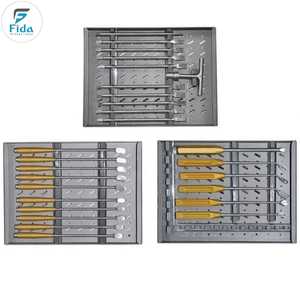
PLIF TLIF Cage Spine Instrument Set Manual Stainless Steel
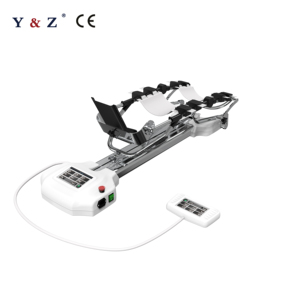
Lower Limb Joint CPM Rehabilitation Device (CE ISO)
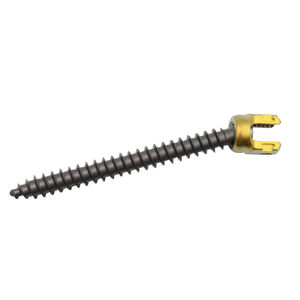
Sacral Reduction & Sacroiliac Bone Screw Implants
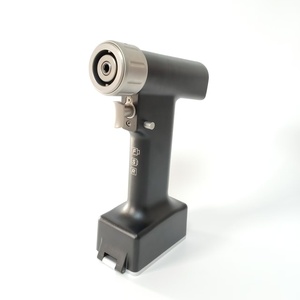
Multifunctional High-Speed Surgical Power Tools Drill Saw
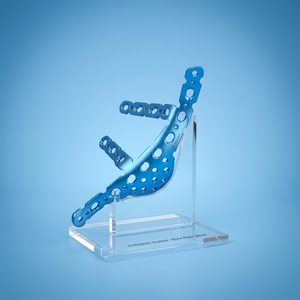
Pelvis Reconstruction Locking Plate Titanium System
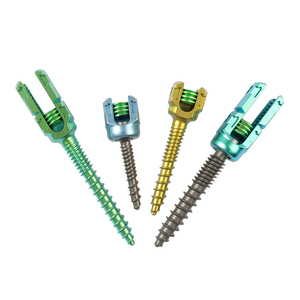
5.5mm Titanium Alloy Pedicle Screw Spinal Fixation System
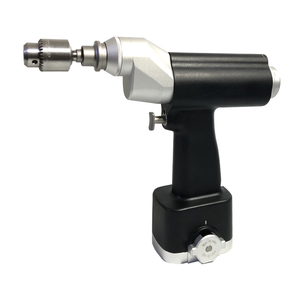
Double Function Cannulated Surgical Drill Power Tool
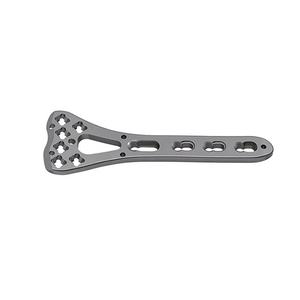
Variable Angle Distal Radius Locking Plate (Class III CE)
1. OEM/ODM Orthopedic Implants Market Overview & Pricing Economics
The global market for orthopedic implants and specialized surgical instruments is undergoing a structural transition. Sourcing managers, medical device distributors, and hospital procurement departments face mounting pressure to balance clinical safety, regulatory compliance (under European CE MDR 2017/745 and US FDA 510(k) frameworks), and cost performance. Navigating an OEM/ODM orthopedic implants price list requires a detailed understanding of metallurgy, precise CNC machining tolerances, sterile packaging requirements, and international export certifications.
Contract manufacturing of orthopedic implants is not simply a matter of high-volume machining; it demands rigorous material traceability, biostability validation, and strict adherence to ISO 13485 quality management systems. Pricing structures across accredited OEM/ODM factories in Asia and Europe vary significantly depending on raw material certification, multi-axis machining time, secondary surface treatments (such as Type II anodization, micro-arc oxidation, or plasma-sprayed Hydroxyapatite), and cleanroom packaging complexity.
SEO Information Gain Insight: Standard wholesale pricing lists often omit crucial cost drivers. In Class III medical device manufacturing, direct material costs represent only 18% to 25% of total unit pricing; the remainder is allocated to 5-axis Swiss CNC machine time, fatigue testing (ISO 12189 / ASTM F1717 standards), cleanroom sterilization validation, and regulatory technical documentation support (DHF/DMR compilation).
Understanding the Cost Structure of Orthopedic Implants Manufacturing
To establish accurate budgetary forecasts, procurement officers must evaluate OEM factory cost breakdowns across four key manufacturing dimensions:
- Biomedical Grade Raw Material Selection: Pure Titanium Grade 2 / Grade 4 (ASTM F67) vs. High-Strength Ti-6Al-4V ELI (ASTM F136 / ISO 5832-3), PEEK-OPTIMA (LT1 / LT3 grades), and Cobalt-Chromium alloys (CoCrMo per ASTM F75). Premium implant factories utilize certified melt-lot billets with 100% ultrasonic flaw detection.
- Precision Subtractive & Additive Machining: Machining complex geometries such as variable-angle locking holes in distal radius plates or dual-thread pitches in spinal pedicle screws requires multi-tasking CNC turning-milling centers (Citizen, Star, Tornos). Machine hour rates directly dictate final unit pricing.
- Bio-active & Protective Surface Finishing: Electrochemical anodization for color-coded sizing, sandblasting, chemical etching, and physical vapor deposition (PVD) coatings. Biocompatibility depends heavily on post-machining passivation (ASTM F86) to remove free iron particles.
- Quality Control & Regulatory Dossier Packaging: Coordinate Measuring Machine (CMM) dimensional verification, optical comparator inspection, destructive mechanical testing, cleanroom packaging (ISO Class 7), and Co-60 Gamma Irradiation achieving a Sterility Assurance Level (SAL) of 10⁻⁶.
Indicative OEM/ODM Wholesale Price List Benchmark Matrix (2025 Benchmark)
The following price range table reflects global market export benchmarks based on minimum order quantities (MOQ) of 100 to 1,000 units. Prices fluctuate based on customization, packaging, and regulatory documentation requirements.
| Product Category | Material Specification | Typical OEM Unit Price (USD) | ODM Tooling / NRE Fee (USD) | Primary Clinical Standard |
|---|---|---|---|---|
| Spinal Pedicle Screw System (5.5mm) | Ti-6Al-4V ELI (ASTM F136) | $14.50 – $32.00 / pc | $1,500 – $4,000 | ASTM F1717 / ISO 12189 |
| Lumbar PEEK Fusion Cages (PLIF/TLIF) | PEEK-OPTIMA / Ti Markers | $22.00 – $55.00 / pc | $2,000 – $5,500 | ASTM F2077 / ASTM F2267 |
| Trauma Locking Compression Plates | Titanium Grade 4 / Ti-6Al-4V | $18.00 – $48.00 / pc | $1,200 – $3,500 | ASTM F382 / ISO 9585 |
| Intramedullary Tibial / Femoral Nails | Ti-6Al-4V ELI Alloy | $45.00 – $115.00 / pc | $3,000 – $7,000 | ASTM F1264 |
| Cannulated Bone Screws (Ø2.5–6.5mm) | Titanium / 316LVM Stainless Steel | $4.20 – $12.50 / pc | $800 – $2,000 | ASTM F543 |
| Surgical Power Tools (Drill & Saw Set) | Stainless Steel / Modular ABS | $380.00 – $1,250.00 / set | Waived for >50 sets | IEC 60601-1 / CE Class IIa |
| Reusable Manual Surgical Instrument Trays | Custom Anodized Alum / SS316 | $450.00 – $1,800.00 / set | $1,000 – $3,000 | ISO 17664 Autoclave Validated |
2. Deep Dive Analysis of Core Product Lines & Clinical Applications
Spine Fixation Systems
Polyaxial and monoaxial pedicle screws engineered with friction-fit heads, dual-lead thread geometries, and fenestrated designs for PMMA bone cement augmentation in osteoporotic bone.
Trauma & Pelvis Reconstruction
Anatomically pre-shaped pelvic plates and distal radius locking plates designed to match bone contours, reducing intraoperative bending time and soft tissue trauma.
Orthopedic Power Instruments
Brushless motor technology operating at high speeds (up to 1,200 RPM for drilling and 12,000 CPM for sawing) with minimal noise vibration and full thermal resistance up to 134°C sterilization.
A. Spinal Fixation & Interbody Fusion Devices
Spinal surgery requires zero-tolerance mechanical performance. Our 5.5mm Titanium Alloy Pedicle Screw Systems incorporate a dual-thread design that doubles insertion speed while enhancing pull-out torque by up to 28% compared to single-thread designs. Matching PLIF/TLIF PEEK Cages feature radiopaque tantalum markers for precise intraoperative fluoroscopic positioning and a hollow core designed to maximize bone graft volume.
Manual spine instrument sets must withstand hundreds of high-pressure autoclave cycles. By employing vacuum heat-treated 420 and 316LVM stainless steel, instrument longevity is extended, eliminating jaw deformation in distractors, reamers, and cage inserters.
B. Trauma Internal Fixation: Locking Compression Plates & Nails
Modern trauma surgery relies heavily on anatomical locking plates that function as internal fixators. Variable angle locking technology enables screws to be locked within a 30-degree cone, allowing surgeons to target specific fracture fragments without compromising screw head locking mechanism integrity.
For long bone fractures, Intramedullary Tibial and Femoral Nails provide superior stress distribution. Manufactured from biocompatible Ti-6Al-4V, these nails undergo surface shot-peening to induce compressive residual stresses, drastically reducing risk of fatigue failure under cyclic loads.
C. Surgical Power Tools & Motorized Rehabilitation Orthotics
Medical power tools bridging trauma surgery require high power-to-weight ratios. Modern brushless DC motors paired with lithium-ion battery modules deliver reliable performance during high-torque bone reaming. Sealed housing enclosures prevent moisture penetration during automatic washer-disinfector cycles.
In post-operative care, Lower Limb CPM (Continuous Passive Motion) machines offer essential early passive joint mobilization. Microprocessor-driven control algorithms maintain consistent flex-extension range of motion (-5° to 120°) while safety sensors detect muscle resistance, preventing secondary trauma to repairing ligaments.
3. Global Sourcing & Future Trends in Orthopedic Manufacturing (2025–2030)
Procurement leaders must position their supply chains to capitalize on emerging technological shifts within the medical device sector. Key global trends shaping orthopedic OEM/ODM manufacturing include:
1. 3D-Printed Porous Titanium (Additive Manufacturing)
Direct Metal Laser Sintering (DMLS) and Electron Beam Melting (EBM) enable the creation of complex trabecular bone structures. Unlike traditional surface coatings, 3D-printed porous implants match the elastic modulus of cancellous bone (1.5–3.0 GPa), significantly reducing stress shielding while promoting early osseointegration.
2. Transition from Bulk Packaging to Gamma-Sterile Ready-to-Use Packages
Hospitals are rapidly transitioning toward pre-sterilized, individually double-blister packaged implants. Sterile-packaged locking plates and cannulated screws eliminate hospital washing and sterilization expenses, ensure 100% sterility at point-of-use, and provide barcode-traceable inventory control.
3. Regulatory Harmonization & Technical Dossier Support
With the implementation of EU MDR regulations, medical device buyers require far more than physical products. Contract manufacturers must provide complete technical documentation dossiers, including biocompatibility reports (ISO 10993 series), cleaning/sterilization validations, shelf-life testing data, and clinical evaluation reports (CERs).
4. Enterprise Manufacturing Strengths & OEM/ODM Capabilities
Our manufacturing complex represents the pinnacle of modern medical engineering. Operating under an integrated ISO 13485 and ISO 9001 quality system, we deliver fully customized solutions for global brand owners and regional healthcare distributors.
Advanced CNC Infrastructure
Over 80 state-of-the-art Swiss CNC automatic lathes, 5-axis machining centers, and wire EDM machinery operating 24/7 with automated robotic loading.
In-House Cleanroom Packaging
Certified Class 10,000 (ISO Class 7) cleanroom facilities equipped with automated pouch sealing and gamma sterilization processing capabilities.
100% Quality Assurance
Optical laser measurement devices, CMM inspection, micro-hardness testers, and dynamic axial/torsional fatigue testing rigs running continuous batch testing.
Custom OEM/ODM Workflow: From initial 2D/3D CAD drawing review to functional prototype delivery within 14 business days. Full technical dossier support included for fast-track market registration.
5. Frequently Asked Questions (FAQ) for B2B Procurement
Request Your Custom OEM/ODM Price Quote Today
Partner with an established ISO 13485 certified orthopedic manufacturer. Receive factory-direct pricing, CAD engineering support, and rapid global delivery within 24 hours.
Inquire Now