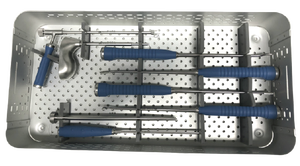
Catalog Highlights
Precision Engineered Orthopedic Implants & Surgical Toolsets
High-precision orthopedic medical devices manufactured under strict ISO 13485:2016 quality systems. Explore featured implant assemblies and OEM core items.
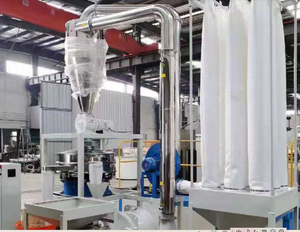
Crystal Double-screw High Productivity Precision Machining Component
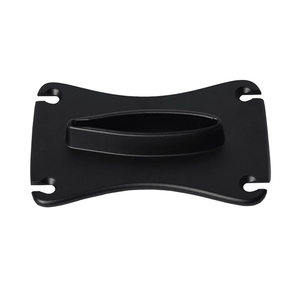
Anodized Aluminum Precision Component Top Plate Accessories Assembly
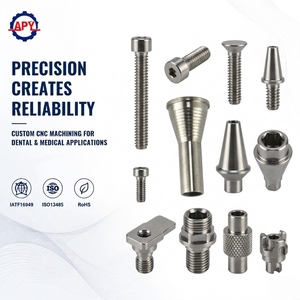
ISO 13485 Custom CNC Machining Dental Abutment Screw Titanium Component
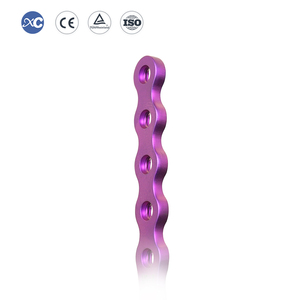
Titanium Orthopedic Surgical Implant 4.0mm T-Type Locking Plate System
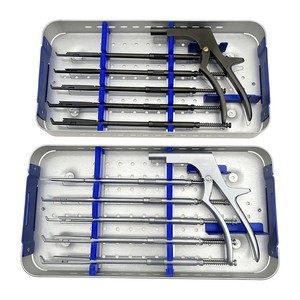
Rotating Kerrison Rongeur Set Spinal & Neuro Surgical Instrument Set
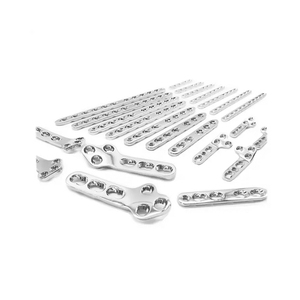
Orthopedic Instrument Ankle Clavicle Hook 1.5mm Straight Locking Plate
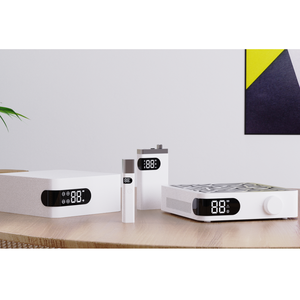
High-Torque Precision Electric Motor Drive & Surgical Power Tool System
Biomaterials & Engineering Whitepaper
The Engineering Science Behind Modern Orthopedic OEM Manufacturing
An architectural overview of metallurgy, surface chemistry, and micro-machining tolerances required for implantable device production.
In the highly regulated arena of medical device manufacturing, acting as a premier OEM/ODM orthopedic implant OEM manufacturer supplier demands absolute mastery over biomaterials science, advanced multi-axis CNC machining, and internationally compliant Quality Management Systems (QMS). Orthopedic implants—spanning trauma fixation plates, interbody fusion cages, total joint arthroplasty components, and intramedullary nails—are subjected to extreme continuous dynamic stress, complex biological environments, and aggressive biomechanical loads within the human musculoskeletal frame.
To deliver structural longevity and uncompromised patient safety, contract manufacturing suppliers must navigate stringent raw material specifications. The core foundation of medical-grade implant manufacturing relies on standardized biocompatible metallic alloys and ultra-high performance polymers:
Ti-6Al-4V ELI (ASTM F136 / F1472)
Extra Low Interstitial Titanium alloy offering superior tensile strength (≥930 MPa), extreme corrosion resistance, low elastic modulus closer to bone, and excellent fatigue limits for load-bearing trauma screws and spinal rods.
PEEK Optima (ASTM F2026)
Polyetheretherketone thermoplastic featuring radiolucency on X-ray/CT imaging, an elastic modulus (3.5 GPa) closely matching cortical bone (18 GPa) to prevent stress shielding, ideal for spine spinal fusion cages.
Commercially Pure Ti (ASTM F67)
Unalloyed Grade 2 and Grade 4 Titanium providing exceptional biocompatibility, superior ductile workability, and optimal osteointegration characteristics for micro-fracture plates and surgical hook applications.
Precision Machining & Micro-Engineering Tolerances
Manufacturing medical devices such as distal tibia locking plates, pedicle screws, and rotating Kerrison rongeurs requires state-of-the-art 5-axis Swiss-type automatic lathes and 5-axis vertical machining centers. Internal drive features—such as Torx T15/T25 sockets and micro-cannulated drills—require sub-micron concentricity and strict profile tolerance control to mitigate screw-head stripping during intraoperative torque application.
Furthermore, surface treatment plays a pivotal role in bio-functional performance. Through anodic oxidation (Type II and Type III color anodization), micro-arc oxidation (MAO), and vacuum plasma coating (Titanium Plasma Spray & Hydroxyapatite), contract manufacturing suppliers alter surface topographies to optimize osteoblast adhesion or reduce friction coefficients on surgical cutting instruments.
Competitive Infrastructure
Why OEM/ODM Medical Brands Partner with Our Manufacturing Hub
From raw material heat-lot verification to gamma-sterilized shelf-ready packaging, our integrated facility guarantees end-to-end audit compliance.
1. Complete Single-Source OEM Contract Manufacturing
We eliminate supply chain fragmentation by providing integrated services: CAD/CAM engineering assistance, DFM (Design for Manufacturability) evaluation, 5-axis CNC machining, wire EDM cutting, surface anodizing, laser marking (UDI compliant), cleanroom assembly, and sterile packaging under one roof.
2. Full Regulatory & Technical File (DHF/DMR) Support
Our regulatory team supports global medical device distributors with comprehensive technical documentation dossiers, including raw material certificates (CoA), mechanical static & fatigue test data (per ASTM F1717, ASTM F543, ASTM F2077), biocompatibility reports (ISO 10993), and CE MDR / FDA 510(k) file templates.
3. Class 10,000 (ISO Class 7) Cleanroom & Sterile Packaging
Implant products can be supplied fully pre-sterilized via Cobalt-60 (γ-ray) irradiation delivering a certified Sterility Assurance Level (SAL) of 10-6. Double thermoformed Tyvek packaging prevents contamination, lowering hospital reprocessing budgets and direct infection risks.
4. Broad Portfolio Across 8 Core Clinical Specialties
With over 230 system variations, our manufacturing lines produce Trauma plates/screws, Spinal thoracolumbar pedicle screw systems, PEEK interbody cages, Sports Medicine suture anchors, Arthroplasty joint systems, Endoscopic UBE instruments, and custom surgical trays.
Biomaterial Chemical & Mechanical Specification Matrix
Contract buyers can review standard material mechanical benchmarks utilized across our production facilities:
| Implant Alloy / Polymer | Standard Ref. | Tensile Strength (σb) | Yield Strength (σ0.2) | Primary Clinical Application |
|---|---|---|---|---|
| Pure Titanium Grade 2 / Grade 4 | ASTM F67 | ≥ 483 - 680 MPa | ≥ 380 - 520 MPa | Small fragment plates, clavicle hook plates, maxilla screws |
| Ti-6Al-4V ELI (TC4) | ASTM F136 / F1472 | ≥ 930 MPa | ≥ 860 MPa | Pedicle screws, intramedullary nails, trauma locking screws |
| PEEK Optima Medical Polymer | ASTM F2026 | ≥ 95 - 110 MPa | ≥ 90 MPa | TLIF/PLIF cages, ACIF interbody implants, suture anchors |
| CoCrMo Casting/Forging Alloy | ASTM F75 / F1537 | ≥ 897 MPa | ≥ 517 MPa | Total knee femoral components, hip acetabular heads |
| UHMWPE Polyethylene | ASTM F648 | ≥ 40 MPa | ≥ 21 MPa | Hip acetabular liners, tibial knee inserts, washer components |
Product System Architecture
Comprehensive OEM/ODM Orthopedic Product Families
Explore engineered instrument and implant configurations available for custom private label manufacturing.
Orthopedic Trauma Fixation Systems
Complete solutions for anatomical bone fracture reduction and internal rigid fixation:
- 1.5mm to 5.0mm Micro & Large Fragment Locking Plates
- Cannulated Compression Screws (Ø2.5mm - Ø7.3mm)
- Proximal Femoral Nails (PFNA) with Helical Blades
- Intramedullary Tibial and Femoral Nailing Assemblies
Spinal Fixation & Interbody Fusion
Advanced spinal implants engineered for biomechanical stabilization and deformity correction:
- Thoracolumbar Mono-axial & Poly-axial Pedicle Screws
- PEEK & Titanium TLIF / PLIF / DLIF Interbody Cages
- Anterior Cervical Plates (ACP) with One-Step Locking
- Percutaneous Kyphoplasty (PKP) Balloon Systems
Sports Medicine & Joint Arthroplasty
Minimally invasive soft tissue repair and complete joint replacement implant systems:
- PEEK & Titanium Threaded Suture Anchors with UHMWPE Sutures
- Arthroscopy Shaver Blades & Diamond Burrs
- Primary & Revision Cementless Femoral Stems & HA Cups
- Total Knee Replacement Femoral Components & Tibial Trays
Strategic Market Forecast 2025-2035
Future Procurement & Technology Trends in Orthopedic Manufacturing
How evolving clinical techniques, additive manufacturing, and global regulatory shifts are reshaping B2B medical sourcing.
As global healthcare demands rise due to aging demographics and increased sports-related joint injuries, the market for orthopedic surgical devices is undergoing rapid transformation. Sourcing teams, medical device brands, and hospital procurement directors must align their supply networks with key industry macro-trends:
1. Transition to Additive Manufacturing (3D Printed Porous Implants)
Traditional subtractive machining is increasingly augmented by Electron Beam Melting (EBM) and Selective Laser Melting (SLM) additive manufacturing. 3D printing enables the direct fabrication of trabecular porous titanium structures with interconnected porosity (60%-80% porosity, pore size 300–600 μm). These biomimetic geometries simulate natural cancellous bone, accelerating early osteoblast ingrowth and osseointegration without requiring secondary plasma coatings.
2. Consolidation into Single-Source OEM Partners
Regulatory overhead under the European Union Medical Device Regulation (EU MDR 2017/745) and FDA Quality System Regulation (QSR) modernization has significantly increased the cost of managing multi-tiered supplier chains. OEMs are consolidating their vendor base, choosing verified contract suppliers capable of executing complete manufacturing—from billet turning to validated double thermoformed sterile packaging.
3. Rapid Growth of Minimally Invasive Surgery (MIS) & UBE Instruments
Clinical practice is shifting heavily toward Minimally Invasive Surgery (MIS) and Unilateral Biportal Endoscopy (UBE). Procurement demand for micro-instruments, rotating Kerrison rongeurs, specialized spinal working sleeves, radiofrequency plasma ablation probes, and navigation-guided drill guides is outpacing traditional open-surgery toolset orders.
4. Patient-Specific Implants (PSI) & Custom Surgical Tooling
Advancements in preoperative CT scan segmentation allow the rapid production of custom Patient-Specific Implants (PSI) and patient-matched cutting guides. Flexible OEM contract manufacturers capable of converting DICOM imaging files into rapid-turnaround custom CNC implants offer significant competitive advantages to modern orthopedic brands.
Contract Manufacturing Process
From Drawing to Sterile Box: Our 4-Step OEM/ODM Pipeline
A transparent engineering workflow ensuring exact geometric tolerances and full audit traceability.
01
DFM & CAD Review
Engineers evaluate 2D/3D STEP drawings, raw material standards, and geometrical tolerances (GD&T) for optimal manufacturing feasibility.
02
Rapid Prototype & Test
CNC precision machining of prototype samples followed by mechanical static/fatigue testing and CMM dimensional validation reports.
03
Volume CNC Production
Automated multi-axis CNC Swiss lathe turning, milling, laser etching (UDI barcoding), passivating, and color anodizing anodization.
04
Cleanroom & Sterilization
Ultrasonic washing, cleanroom Tyvek pouch packaging, Cobalt-60 Gamma ray sterilization (SAL 10-6), and custom labeling.
Procurement Knowledge Base
Frequently Asked Questions (FAQ) for OEM Sourcing
Answers to common B2B technical, regulatory, and production questions asked by medical device procurement buyers.
What international certifications and quality standards govern your orthopedic manufacturing facility?
Our production facilities operate strictly under ISO 13485:2016 and ISO 9001 certified Quality Management Systems. Applicable implant products carry European CE Mark conformity certificates and technical dossiers prepared in alignment with EU MDR (2017/745) requirements and US FDA 510(k) premarket notification guidelines. Every raw material lot undergoes spectroscopic chemical analysis and tensile testing backed by mill certificate traceability (ASTM F67, ASTM F136, ASTM F2026).
Can you provide full custom OEM/ODM manufacturing based on proprietary engineering drawings?
Yes. We specialize in custom OEM contract manufacturing from customer-supplied CAD drawings (STEP, IGES, DWG). Our engineering department conducts thorough Design for Manufacturability (DFM) reviews to optimize toolpaths, select tooling, specify surface finishing (such as Type II anodizing or grit blasting), and establish inline coordinate measuring machine (CMM) inspection plans for custom implants and dedicated surgical tray sets.
What options are available for sterile implant delivery and packaging?
Implants including bone screws, locking plates, PEEK cages, and intramedullary nails can be supplied in pre-sterilized formats. Packaging takes place in our ISO Class 7 (Class 10,000) cleanroom utilizing double rigid thermoformed blister trays sealed with Tyvek lids. Sterilization is executed via Cobalt-60 (γ-ray) irradiation achieving a certified Sterility Assurance Level (SAL) of 10-6 in compliance with ISO 11137 standards.
What mechanical fatigue testing standards do your implants undergo prior to market release?
All structural implant designs undergo rigorous biomechanical testing conducted per international standard protocols: ASTM F1717 for spinal implant constructs, ASTM F543 for metallic medical bone screws, ASTM F2077 for interbody fusion devices, and ISO 7206 for hip joint prostheses. Test reports covering static axial compression, dynamic fatigue limit curves (S-N curves), and torsional strength are accessible for technical regulatory registration filings.
What are the standard lead times for prototyping versus full-scale mass production orders?
Standard prototype fabrication—including CMM inspection reports and material certificates—typically requires 3 to 4 weeks depending on component complexity. Following sample approval and DFM sign-off, full-scale production orders are generally delivered within 6 to 8 weeks. Expedited production slots are available for specialized clinical trials and urgent registration batches.
How do you manage batch traceability and Unique Device Identification (UDI)?
Every single implant component is laser-marked with GS1-compliant Unique Device Identification (UDI) matrix codes, serial numbers, and raw material heat lot identifiers. This ensures 100% end-to-end traceability from the original titanium billet melt through CNC machining, surface treatment, cleanroom packing, sterilization, and distribution.
Partner with a Leading OEM/ODM Orthopedic Implant Manufacturer
Contact our medical engineering team today to review your technical drawings, request raw material sample certificates, or receive a fast-turnaround production quote for titanium plates, spinal cages, or custom instrument trays.