Factory Direct Supply
Featured Orthopedic Implants & Surgical Instruments
Direct from ISO 13485 certified manufacturing facilities. Engineered with ASTM F136 / ASTM F1472 Titanium alloys and implant-grade PEEK, complete with sterile gamma packaging options.
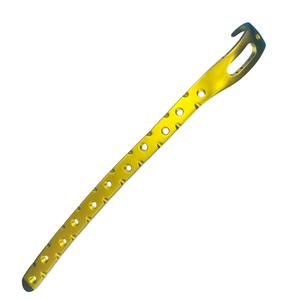
Veterinary Orthopedic Surgery TTA Surgical Instrument Set & Plates
Inquire Now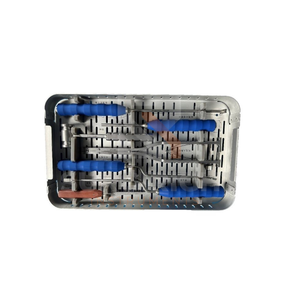
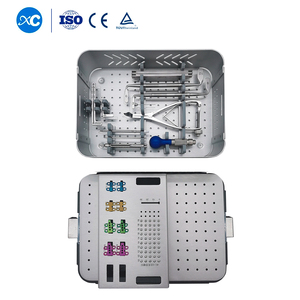
Titanium Cervical Spine Interbody Fusion Cage Mesh Instrument System
Inquire Now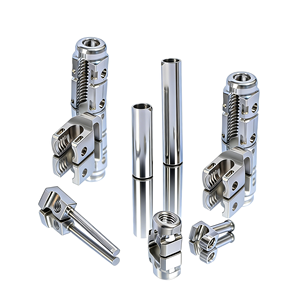
Titanium Spinal Pedicle Screw & Rod System Thoracolumbar Fixation
Inquire Now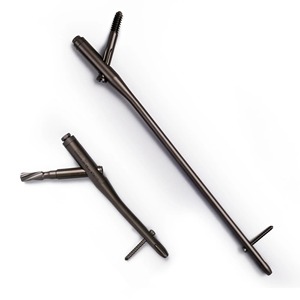
PFNA Proximal Femoral Intramedullary Anti-Rotation Nail System
Inquire Now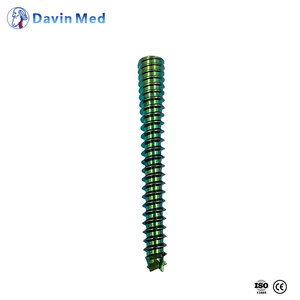
Headless Cannulated Compression Screw Titanium Small Bone Fixation
Inquire Now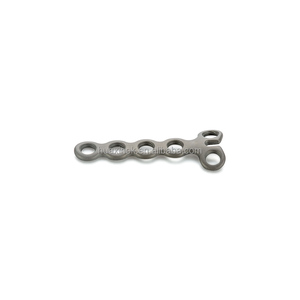
TPLO Veterinary Orthopedic Locking Bone Plate & Instrument System
Inquire Now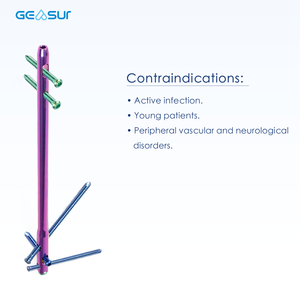
Titanium Hindfoot Ankle Intramedullary Nail System Trauma Fixation
Inquire Now230+
Surgical Instrument & Implant Systems
ISO 13485
Certified Quality Management System
SAL 10-6
Gamma Sterilization Assurance Level
60+
Global Medical Registration Markets
Industry Whitepaper & Technical Guide
Navigating OEM/ODM Medical Device Registration in Orthopedic Manufacturing
The global market for orthopedic implants—spanning trauma fixation, spinal reconstructive systems, joint arthroplasty, and sports medicine—is undergoing a profound regulatory and structural shift. Medical device distributors, brand owners, and healthcare procurement agencies face unprecedented demands under stringent regulatory frameworks, such as the European Union Medical Device Regulation (EU MDR 2017/745), US FDA 510(k) premarket notifications, and regional health authority registrations (e.g., NMPA, ANVISA, COFEPRIS, SFDA). Success in modern orthopedic distribution relies not only on implant precision, but on partnering with a contract manufacturer capable of providing comprehensive technical documentation, full material traceability, and robust quality management systems.
As a leading OEM/ODM medical device registration orthopedic factory and exporter, Orthi Medical Co., Ltd. operates at the intersection of Swiss-precision manufacturing technology and rigorous regulatory support. By managing the full production lifecycle in-house—from raw titanium bar stock milling to final Co-60 gamma-sterilized packaging—we enable global partners to streamline device registration, mitigate supply chain volatility, and accelerate commercial launch.
Key Strategic Takeaway for Procurement Officers: Securing market approval for Class IIb and Class III orthopedic devices requires a factory partner that provides complete technical dossier support (ISO 10993 biocompatibility, ASTM F543 / ASTM F1482 fatigue testing data, and validated SAL 10-6 sterile barrier systems). Partnering with an OEM certified under ISO 13485:2016 reduces registration cycles by up to 45%.
1. Essential Infrastructure & Metallurgy Standards in Orthopedic Manufacturing
Implants placed within the human skeletal framework are subjected to severe cyclical fatigue, multi-axial mechanical loading, and aggressive physiological corrosive environments. Maintaining structural integrity without micro-fretting or ion leaching demands medical-grade alloys processed under controlled metallurgical parameters.
| Material Standard | Chemical Composition | Tensile Strength (MPa) | Yield Strength (MPa) | Primary Clinical Application |
|---|---|---|---|---|
| ASTM F1472 / TC4 | Ti-6Al-4V Titanium Alloy | ≥ 930 MPa | ≥ 860 MPa | Trauma Plates, PFNA Nails, Cannulated Screws |
| ASTM F136 / ELI | Ti-6Al-4V Extra Low Interstitial | ≥ 860 MPa | ≥ 790 MPa | Pedicle Screws, Cervical Plates, Spinal Rods |
| ASTM F67 (Grades 2-4) | Unalloyed Pure Titanium (CP-Ti) | 480 – 680 MPa | 345 – 520 MPa | Cervical Mesh Cages, Craniofacial Plates |
| PEEK-OPTIMA (Invibio) | Polyetheretherketone Polymer | 95 – 100 MPa | 110 MPa (Flexural) | Lumbar/Cervical Interbody Cages, Suture Anchors |
To ensure high precision, our manufacturing facilities utilize multi-axis Swiss-type CNC automatic lathes, 5-axis high-speed vertical machining centers, and wire EDM technology. Every batch of titanium bar stock or PEEK raw material undergoes spectral analysis and ultrasonic flaw detection. This guarantees compliance with strict dimensional tolerances (down to ±0.005mm) for locking screw threads, self-tapping flutes, and anti-backout mechanisms.
2. OEM/ODM Customization & Device Registration Support Protocol
Navigating international medical device registration requires more than delivering physical hardware. Importers require complete technical files to meet regulatory submission standards. Orthi Medical provides a structured, five-stage turn-key protocol engineered to support rapid regulatory approval:
Phase 1: DFM & CAD Engineering
3D modeling, Design for Manufacturability (DFM) assessment, and Finite Element Analysis (FEA) to optimize stress distribution in locking plates, pedicle screws, and joint components.
Phase 2: Mechanical Verification
Biomechanical testing per ASTM F543 (bone screw pullout and torque), ASTM F1717 (spinal implant construct fatigue), and ISO 14801 (dynamic fatigue) to supply verified test reports.
Phase 3: Surface Engineering
Type II anodic oxidation for fatigue-resistant color coding, Micro-Arc Oxidation (MAO), and laser-marking of UDI (Unique Device Identification) codes for end-to-end traceability.
Phase 4: Sterile Packaging
Double blister Tyvek® heat-sealed cleanroom packaging (ISO Class 7 cleanroom environment). Co-60 Gamma Ray irradiation delivering validated Sterility Assurance Level (SAL) 10-6.
Phase 5: Dossier Submission
Provision of standardized Technical File Documentation compliant with STED format, ISO 10993 biological evaluations, shelf-life aging studies, and Risk Management Files (ISO 14971).
Phase 6: Clinical & Field Training
Complementary surgical technique manuals, Sawbones demo sets, and custom aluminum sterilization trays designed to train hospital staff and orthopedic surgeons.
3. Industry & Product Development Trends in Orthopedics
The global orthopedic device sector is advancing rapidly due to aging populations, higher active lifestyle expectations, and shifts toward minimally invasive surgical techniques. Exporters and brand owners must adapt to four core innovation trends shaping the market:
A. Rise of Unilateral Biportal Endoscopy (UBE) and Minimally Invasive Surgery (MIS)
Traditional open spinal fusion procedures are increasingly replaced by Unilateral Biportal Endoscopy (UBE) and Minimally Invasive Surgery (MIS) techniques. MIS approaches significantly reduce muscle dissection, surgical blood loss, and patient recovery times. OEM production for spinal pedicle screws has shifted rapidly toward fenestrated, cannulated screws compatible with cement augmentation (percutaneous vertebroplasty/kyphoplasty) and guide-wire delivery systems. Instrument sets now require specialized slim-profile dilators, endoscopic rongeurs, and radiofrequency plasma probes designed for tight anatomical channels.
B. Additive Manufacturing & Bio-mimetic Porous Titanium Implants
Selective Laser Melting (SLM) and Electron Beam Melting (EBM) 3D-printing technologies are revolutionizing joint replacement and interbody cage design. By creating porous trabecular titanium surface topologies that mimic human cancellous bone structure (pore size 300–600 μm, porosity 60–80%), 3D-printed implants accelerate vascularization and osseointegration. This reduces relying on bone cement or secondary coatings while helping minimize stress shielding by matching the elastic modulus of native bone.
C. PEEK Composite Materials vs. Titanium Hybrids
Polyetheretherketone (PEEK) remains a material of choice for interbody fusion cages and sports medicine suture anchors due to its radiolucency on post-operative X-rays/MRIs and its modulus of elasticity (3.5 GPa), which closely matches human cortical bone. However, second-generation hybrid designs—combining PEEK cores with plasma-sprayed titanium or hydroxyapatite (HA) surface coatings—are rapidly gaining traction. These hybrids offer radiolucent artifact-free imaging alongside direct cellular bone-implant adhesion.
D. Transition to Factory-Sterilized, Single-Use Implants
Sterilization processing in hospital settings represents a major operational bottleneck and introduces potential cross-contamination risks. Modern procurement managers are shifting away from bulk non-sterile implant delivery. OEM suppliers are expected to deliver individually packaged, sterile-certified (Co-60 Gamma ray, SAL 10-6) implants with dual barcode tracking labels. This shift optimizes hospital inventory control, avoids autoclaving wear, and reduces operating room prep times.
4. Strategic Sourcing & Procurement Trends for International Distributors
Strategic purchasing for orthopedic importers has evolved from basic price-per-unit negotiation into a holistic Total Cost of Ownership (TCO) calculation. Leading global distributors evaluate potential manufacturing partners against four critical performance metrics:
- Turnkey Registration File Readiness: Importers require fast access to complete ISO 13485 technical file dossiers, raw material mill test reports (MTRs), cytotoxicity reports, and sterilization validation data. Delays in dossier compilation stall regulatory submissions and market entry.
- Consolidated Multi-Category Sourcing: Sourcing trauma plates from one vendor, spinal screws from another, and arthroscopy consumables from a third creates supply chain complexity and inflated shipping costs. Leading exporters provide full-portfolio coverage: Trauma, Spine, Sports Medicine, Joint Arthroplasty, and Endoscopy.
- Stable Raw Material Allocation & Lead Time Control: Fluctuations in titanium sponge prices and PEEK resin supply can disrupt delivery schedules. Reliable factories maintain strategic raw material safety stocks, ensuring consistent manufacturing throughput and stable 30-to-45 day lead times.
- Private Label & Customized Instrument Integration: A successful surgical outcome relies on intuitive instrument design. B2B buyers look for OEM partners capable of designing customized, color-coded aluminum sterilization trays, ergonomic silicone handles, and custom laser-engraved branding.
5. Technical Product Line Analysis & Application Framework
Orthi Medical’s product portfolio covers major orthopedic clinical specialties, manufactured under strict metallurgical and dimensional quality control checks:
Trauma & Fracture Fixation Systems
Our trauma ecosystem features anatomical locking plate systems (distal radius, proximal humerus, distal femur, tibia) alongside advanced intramedullary nails. The Proximal Femoral Nail Antirotation (PFNA) System utilizes a helical blade mechanism that compresses cancellous bone in osteoporotic hip fractures, offering superior cut-out resistance compared to traditional lag screws. Complementary Headless Cannulated Compression Screws (Ø2.5mm to Ø6.5mm) deliver precise interfragmentary compression for scaphoid fractures, osteochondral defects, and small bone arthrodeses.
Spine & Interbody Fusion Fixation
Our thoracolumbar pedicle screw systems utilize dual-lead threads to double insertion speed while increasing pullout strength per ASTM F543 parameters. Screw heads feature a friction-fit tulip mechanism to simplify rod placement. Cervical interbody cages, available in high-performance PEEK-OPTIMA or 3D-printed titanium mesh, incorporate integrated radiopaque tantalum markers for precise intraoperative fluoroscopic positioning.
Sports Medicine & Arthroscopic Consumables
Addressing soft tissue repair, our sports medicine portfolio includes pre-loaded PEEK and titanium suture anchors (#2 UHMWPE high-strength sutures), alongside single-use Arthroscopy Shaver Blades and Burrs. Precision-machined cutting windows ensure clean, clear resection of synovial tissue and meniscus without thermal necrosis or clogging.
Veterinary Trauma Implants (TPLO & TTA)
Orthopedic veterinary surgery demands implants built to rigorous human-grade standards. Our TPLO (Tibial Plateau Leveling Osteotomy) and TTA (Tibial Tuberosity Advancement) locking plates feature anatomical contouring and low-profile cross-sections, providing stable fixation for canine cruciate ligament ruptures.
Procurement & Regulatory FAQ
Frequently Asked Questions by Medical Device Buyers
Clear answers regarding quality control, regulatory submission support, minimum order requirements, and sterile packaging options.
What quality management certifications do your products carry for international registration?
Our manufacturing facilities are fully certified under ISO 13485:2016 and ISO 9001:2015. Relevant product lines carry CE marking compliant with European Directive 93/42/EEC and Medical Device Regulation (EU MDR 2017/745). Implants are manufactured from raw titanium conforming to ASTM F1472 / ASTM F136 (Ti-6Al-4V) and ASTM F67 (CP Titanium), backed by complete material batch certificates (MTRs) for regulatory dossier submission.
How do you support OEM / ODM private label and drawing-based customization?
We offer complete turn-key OEM/ODM customization services. Customers provide 2D/3D CAD drawings or physical samples, and our engineering team conducts DFM analysis, 3D modeling, FEA testing, and rapid prototyping. Customization includes private label laser etching, custom anodized color coding, tailored instrument tray design, custom packaging graphic design, and full regulatory technical file compilation under your brand name.
What sterile packaging and sterilization validation options are available?
Implants (including locking plates, pedicle screws, intramedullary nails, and cannulated screws) can be supplied non-sterile or in factory pre-sterilized packages. Sterile implants are packaged inside ISO Class 7 cleanrooms using medical-grade Tyvek® heat-sealed blister containers and processed via Co-60 Gamma Irradiation to achieve a verified Sterility Assurance Level (SAL) of 10-6, adhering to ISO 11137 standards.
Can you provide product samples and biomechanical test reports prior to bulk orders?
Yes, we provide evaluation samples and full mechanical test documentation—including static axial pullout strength, dynamic fatigue limits, and torsional stiffness data per ASTM F543, ASTM F1717, and ISO 14801 standards—to support your clinical evaluation and regulatory submission processes.
What is the typical manufacturing lead time for OEM orders?
Standard catalog implants are maintained in stock for prompt dispatch. Custom OEM manufacturing cycles typically take 30 to 45 business days depending on order complexity, surface finishing requirements (such as Type II anodization), cleanroom packaging, and gamma sterilization scheduling.
What clinical training and marketing support do you provide to distributors?
We provide comprehensive technical support for your sales teams and clinical end-users, including step-by-step Surgical Technique Guides (STGs), Sawbones demonstration models, customized aluminum sterilization trays, CAD render assets, and academic clinical workshop materials.
Partner with a Certified Orthopedic OEM/ODM Factory
Streamline your product registration dossiers, lower supply chain risks, and expand your market presence with high-precision, ISO 13485-certified orthopedic implants and instruments.
Inquire Now