Featured Product Portfolio & Surgical Instrument Sets
Explore our export-grade trauma plates, spinal systems, power tools, and specialized surgical instrument kits
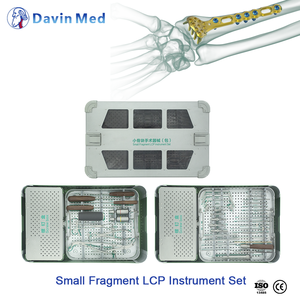
Medical Orthopedic Small Fragment Instrument Set Screw Box for Upper Limb Trauma Fracture Fixation Surgery Autoclavable Kit
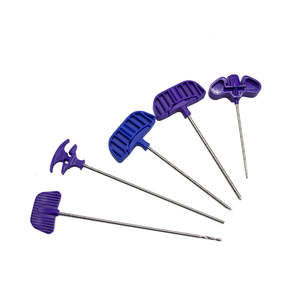
Thoracic Kyphoplasty PVP System Kit Orthopedic Spine Surgery Tool Set for Hospital Use Vertebroplasty Kyphoplasty Tool Set
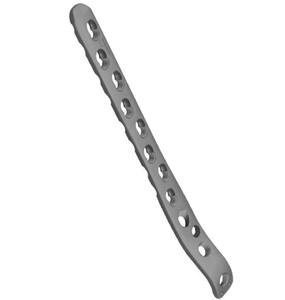
Titanium Orthopedic Implant – Manufacturer Direct, Limited Compression Surgical Implant
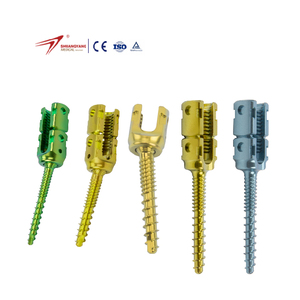
Shuangyang Pedicle Screw OEM Orthopedic Implants 5.5 Polyaxial And Monoaxial Pedicle Screw Spine Fixation Pedical Screw System
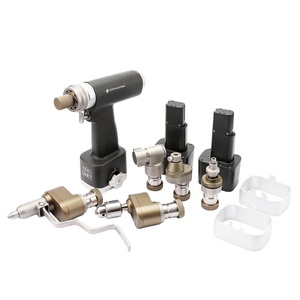
ORTHOCORE 14.4V Veterinary Orthopedic Multi-Function Drill Power Tools Orthopedic Surgical Instruments for Pet Animals 2-Year
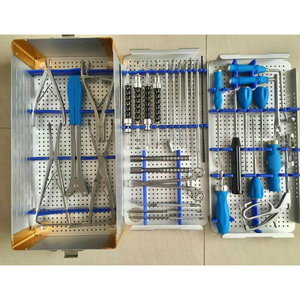
MayoMed Manual Spine Fixation Orthopedic Surgical Instrument Set CE Certified Class I ISO13485 Certified
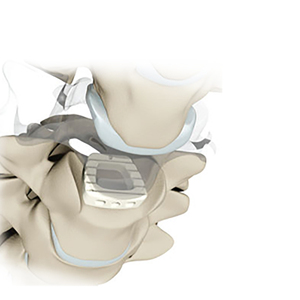
Orthopaedic Surgery Implants Corpectomy Cervical Interbody Fusion Cage Spine Cervical Cage PEEK
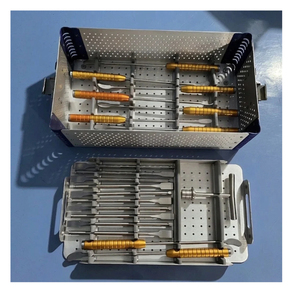
Stainless Steel PLIF TLIF Cage Surgical Instrument Set Manual Orthopedic Spine Surgery Tools for Hospital and Clinic Use
Technical Whitepaper: Biomechanical Principles of Modern LCP Plate Systems
An In-Depth Engineering Evaluation for Clinical Procurement Specialists, OEMs, and Orthopedic Importers
The transition from conventional dynamic compression plates (DCP) to Locking Compression Plate (LCP) systems represents one of the most critical paradigms shifts in modern traumatology and fracture management. As a leading specialized manufacturer and contract OEM/ODM exporter, we engineer LCP plate solutions that combine internal fixation mechanics with minimal biological disruption to periosteal blood flow.
1. The Mechanical Biomechanics: Fixed-Angle Constructs vs. Friction-Based Compression
Traditional bone plating relies heavily on the friction generated between the undersurface of the plate and the cortical bone fragment. This friction is induced by torque applied to standard cortex screws. While effective for rigid primary healing, friction-based fixation compresses the periosteum, triggering cortical bone resorption beneath the plate and compromising microvascular revascularization.
Conversely, an LCP plate system functions as an internal fixator. Threads located on the head of the locking screw mate precisely with the internal female threads of the plate hole. This mechanical interface creates a rigid, fixed-angle construct. Force transmission occurs directly through the plate shaft and screw construct rather than relying on bone-plate friction. Consequently, the plate does not need to be pressed tightly against the bone, preserving essential periosteal blood supply and accelerating secondary callus formation.
2. The Anatomy of the Combination Hole (Combi-Hole)
Our OEM/ODM LCP plate lines feature state-of-the-art symmetrical or asymmetrical Combi-Holes, engineered to afford maximum intraoperative flexibility to orthopedic surgeons:
- Dynamic Compression Unit (DCU) Section: Designed with an inclined compression ramp that allows standard cortical or cancellous screws to achieve axial interfragmentary compression via eccentric screw insertion.
- Threaded Locking Section: A conical threaded hole designed to lock threaded-head screws at a fixed angle, ensuring absolute stability in osteopenic bone, complex metaphyseal fractures, or intra-articular reconstructions.
| Biomechanical Attribute | Conventional Compression Plate (DCP) | Locking Compression Plate (LCP) System |
|---|---|---|
| Primary Mechanism of Stability | Friction between plate underside & cortical bone | Threaded fixed-angle mechanical locking construct |
| Periosteal Vascular Damage | High (due to high surface contact pressure) | Minimal (plate stands off cortex, conserving microcirculation) |
| Fixation Strength in Osteoporotic Bone | Prone to screw stripping & early construct pullout | Superior pullout resistance via angular load distribution |
| Primary Screw Stress Type | Shear and bending moment on individual screws | Compressive & tensile loading across entire locked framework |
| Surgical Precision Requirement | Requires exact anatomical pre-contouring | Anatomical pre-shaping preferred; exact fit non-essential |
3. Metallurgy & Raw Material Standard Compliance
In accordance with global regulatory expectations (CE MDR, US FDA, NMPA), our implant-grade raw materials undergo strict chemical spectroscopy, grain structure analysis, and mechanical fatigue testing per ASTM F382 (Standard Specification and Test Method for Metallic Bone Plates).
- Medical Grade Titanium Alloy (Ti-6Al-4V ELI / ASTM F136): Offers high yield strength (≥860 MPa), exceptional fatigue resistance, optimal biological compatibility, and reduced MRI artifact distortion. Preferred for high-load distal femur, proximal tibia, and humeral shaft fixations.
- Commercially Pure Titanium (CP-Ti / ASTM F67 Grade 2 & 4): Excellent ductility, ideal for small fragment wrist, hand, and maxillofacial locking plates where extensive intraoperative contouring is required.
- High-Nitrogen Stainless Steel (316L / ASTM F138): Cold-worked for maximum tensile strength, offering cost-effective structural rigidity for high-stress load-bearing trauma constructs.
Contract OEM/ODM Capabilities & Manufacturing Process
Empowering International Medical Brands with Turnkey Technical Solutions from CAD Design to Sterile Packaging
1. Precision CAD/CAM & Prototyping
Our R&D engineering team converts your 2D/3D technical drawings (STEP, IGES, SolidWorks) into optimized toolpaths within 48 hours. We conduct finite element analysis (FEA) to eliminate stress concentration points before physical prototyping.
2. Multi-Axis CNC Machining
Equipped with high-precision 5-axis DMG MORI CNC milling centers and Citizen Swiss-type sliding headstock lathes. We achieve sub-micron thread pitch tolerances for locking screws and exact radius beveling on anatomical LCP plates.
3. Surface Treatment & Anodization
We provide Type II anodic oxidation (sulfuric acid anodizing) for titanium implants to enhance surface hardness, reduce fretting corrosion, and eliminate galling. Custom electrochemical color-coding enables intuitive intraoperative size identification.
4. Private Label Laser Marking
High-resolution fiber laser marking applies crisp, permanent UDI (Unique Device Identification) barcode strings, lot batch numbers, brand logos, and plate orientation symbols without breaching anti-passivation oxide layers.
5. Cleanroom Pouching & Sterilization
Assembly takes place within certified ISO Class 7 cleanrooms. Products are double-blister sealed using medical Tyvek pouches, prepped for Gamma Co-60 irradiation to achieve a guaranteed Sterility Assurance Level (SAL) of 10⁻⁶.
6. Full Regulatory Registration Files
We supply comprehensive technical dossiers (STED structure) including raw material mill test certificates, dynamic fatigue test reports (ASTM F382), biological evaluation reports (ISO 10993), and detailed surgical technique guides.
Global Procurement Trends in Orthopedic Trauma Implants
Strategic Insights for Hospital Purchasing Directors, Regional Distributors, and OEM Brand Managers
Navigating the global medical device supply chain requires anticipation of regulatory tightening, clinical shift toward minimally invasive surgery (MIS), and hospital demand for cost-efficient inventory models. Key procurement trends shaping the 2025-2030 landscape include:
Transition to Pre-Sterilized Ready-to-Use Kits
Hospitals are rapidly shifting away from non-sterile bulk implants that require labor-intensive in-house autoclave reprocessing. Pre-sterilized, single-use packaged LCP plate kits reduce operating room prep time, minimize hospital-acquired infection (HAI) risks, and offer 100% batch traceability.
Demands for Polyaxial Locking Versatility
Monaxial locking plates limit screw placement angles to a fixed trajectory. Sourcing managers are prioritizing polyaxial (variable-angle) LCP systems that allow surgeons to angle locking screws up to ±15 degrees off-axis, facilitating precise screw targeting around intra-articular surfaces and joint prostheses.
Regulatory Harmonization & MDR Auditing
With the implementation of the European Union Medical Device Regulation (EU MDR 2017/745), distributors require OEM partners with robust Quality Management Systems certified to ISO 13485:2016. Procurement teams are streamlining vendor lists, favoring qualified direct manufacturers capable of furnishing exhaustive Clinical Evaluation Reports (CER).
Next-Generation Technology Trends in LCP Systems
Emerging Manufacturing Paradigm Shifts and Engineering Breakthroughs in Internal Fixation
As trauma surgery evolves toward smaller incisions and faster patient mobilization, technological innovation in LCP design is accelerating across three primary frontiers:
1. Ultra-Low Profile & Anatomically Pre-Contoured Geometries
Modern LCP plates utilize advanced 3D anatomical bone scanning data to pre-contour plate surfaces for specific bone structures—such as the distal radius, proximal humerus, lateral clavicle, and distal fibula. Advanced 5-axis high-speed milling allows for tapered plate ends and smoothed outer radii, minimizing soft-tissue irritation and tendon impingement.
2. Advanced Carbon-PEEK Hybrid & Radiolucent Implants
While titanium remains the gold standard, polyetheretherketone (PEEK) reinforced with continuous carbon fibers is emerging for specialized oncological trauma applications. Carbon-PEEK LCP constructs offer modulus of elasticity matching native cortical bone (approx. 18-22 GPa), reducing stress shielding while providing complete radiolucency for unimpeded radiographic fracture healing evaluation.
3. Additive Manufacturing (3D Printing) for Patient-Specific Plates
Direct metal laser sintering (DMLS) using Ti-6Al-4V powder enables the production of custom, patient-specific LCP plates for complex malunion, non-union, and revision tumor resections. Additive manufacturing allows for porous trabecular structures to be integrated directly onto non-locking contact pads, encouraging localized osteointegration where clinically advantageous.
Frequently Asked Questions (FAQ) for Importers & OEMs
Essential Technical, Operational, and Commercial Guidance for Global Sourcing Managers
Q1: What standard quality certifications and regulatory documents accompany your LCP systems?
Our manufacturing facility operates under an accredited ISO 13485:2016 and ISO 9001:2015 Quality Management System. Applicable product lines carry CE marking. Each export shipment includes raw material origin certification (ASTM F136 / ASTM F67 mill certificates), lot-specific dimensional inspection reports, passivation verification, and gamma sterilization validation certificates (SAL 10⁻⁶).
Q2: Do you support custom OEM/ODM production based on client-provided engineering drawings?
Yes. We specialize in contract OEM/ODM manufacturing for established orthopedic brands and regional distributors. We process standard CAD files (STEP, IGES, DXF) to manufacture custom plate geometries, customized combi-hole dimensions, unique screw thread pitches, specialized surgical tray layouts, and private-label laser etching.
Q3: What is the difference between small fragment and large fragment LCP plate system instrumentation?
Small fragment LCP systems primarily utilize 3.5mm locking and cortex screws alongside 2.4mm/2.7mm options, tailored for upper limb (radius, ulna, humerus) and distal fibular fractures. Large fragment LCP systems utilize 4.5mm and 5.0mm locking/cortex screws designed for load-bearing lower extremity trauma, including femoral shaft, complex proximal tibia, and pelvic fracture reconstructions.
Q4: Can implants be supplied in both sterile and non-sterile configurations?
Yes. Non-sterile plates and screws are shipped cleaned, passivated, and wrapped in protective protective barrier packaging ready for hospital tray assembly and autoclaving. Alternatively, our sterile package line offers individually blister-packed implants sterilized via Co-60 gamma irradiation under ISO 11137 standards with a 5-year shelf-life stability validation.
Q5: What mechanical fatigue testing is performed on your locking compression plates?
Our trauma plates undergo rigorous four-point bending static strength and dynamic fatigue life testing in accordance with ASTM F382 standards. Tests evaluate the bending stiffness, bending strength, and fatigue life (cycling up to 1,000,000 cycles without mechanical structural failure) across all plate hole sizes and bridge lengths.
Q6: How do you guarantee batch-to-batch color consistency in anodized titanium implants?
We utilize automated Type II electrochemical anodization lines governed by digital voltage feedback loops and standardized chemical bath concentrations. This ensures uniform oxide layer thickness across all production batches, resulting in consistent color-coding (e.g., gold for 3.5mm screws, blue for 4.5mm screws, green for 2.7mm system) without sacrificing corrosion resistance.
Q7: What is the typical lead time for standard export orders versus custom OEM orders?
Standard catalog items (plates, screws, core surgical instrument sets) typically ship within 15 to 30 days depending on order volume. Custom OEM/ODM orders requiring dedicated tooling, CNC program development, and sterile packaging validation generally require 45 to 60 days from final drawing sign-off and prototype verification.
Q8: Do you provide clinical training and surgical technique documentation for international distributors?
Yes. We support our global distribution network with illustrated surgical technique step-by-step manuals, animated procedural videos, complete instrument tray layout diagrams, and technical training modules for sales representatives and clinical staff.
Enterprise Strengths: Why Partner with Orthi Medical Co., Ltd.
A Full-Spectrum Manufacturer Delivering Reliability, Traceability, and Global Regulatory Expertise
Integrated Manufacturing
From raw titanium bar processing to final double-blister sterile packaging, every step is strictly executed inside our ISO 13485 certified facilities, eliminating third-party quality risks.
Comprehensive Portfolio
Consolidate your orthopedic procurement across trauma locking plates, pedicle screw spinal systems, sports medicine anchors, joint replacement systems, and endoscopic imaging instruments.
Global Regulatory Support
We provide registration-ready technical documentation dossiers to assist local importers in securing quick market clearances with regional health authorities worldwide.
Request OEM Specifications & Wholesale Pricing
Partner with a trusted, certified manufacturer of OEM/ODM LCP plate systems and specialized trauma solutions. Contact our engineering and export desk for instant catalog access.