Precision Engineered Implants & Surgical Systems
Explore our certified orthopedic trauma implants, spinal fixation hardware, and precision surgical instrumentation built for global OEMs and distributors.
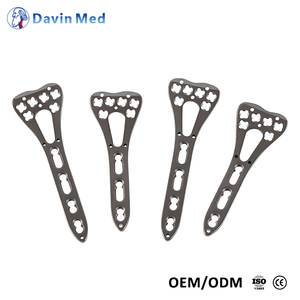
Titanium Two Column Volar Distal Radius Locking Plate 2.7mm Variable Angle Orthopedic Trauma Implant For Wrist Fracture
Get a Quote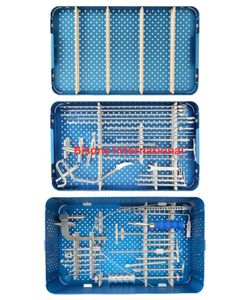
BISONS Stainless Steel Manual Distal Femoral Retrograde Nail & Short PFN Instrument Set CE Certified Class I Trauma Surgery Kit
Get a Quote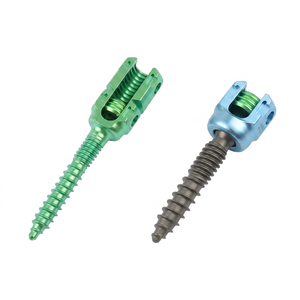
High Quality Thoracolumbar Posterior ValuFix5.5 Pedicle Screw Fixation System
Get a Quote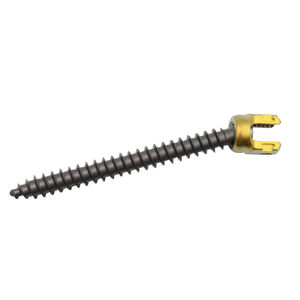
Geasure Non Sterilized Sacral Reduction & Sacroiliac Bone Screw Implants & Interventional Materials
Get a Quote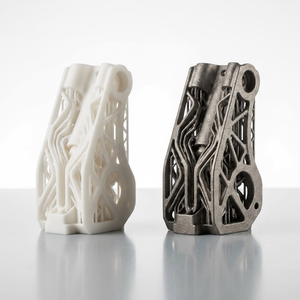
ISO 13485 Biocompatible Titanium SLM 3D Printed Bone Implants for Orthopedic Surgery
Get a Quote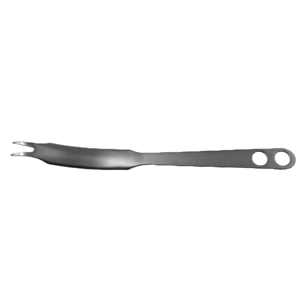
Stainless Steel Surgical Precision Gripping Medical Tissue Forceps Tissue Holding Surgical Tissue Forceps
Get a Quote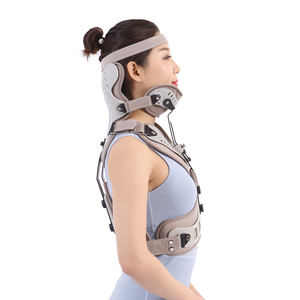
High Quality Adjustable Head Neck Thoracic Support Medical Cervical Vertebra Tractor Rehabilitation Therapy Prime Equipment
Get a Quote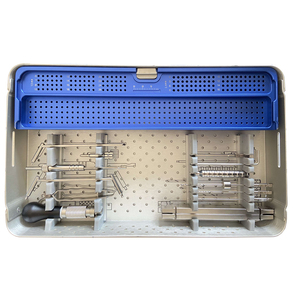
Surgical Small Animal Veterinary ALP S 2.4mm Locking Plate Kit System
Get a Quote1. The OEM/ODM Technical Landscape for Intramedullary Nailing Systems
Biomechanical superiority, intramedullary load sharing, and micro-motion management in modern trauma surgery.
Biomechanical Load Sharing & Callus Formation
Unlike extramedullary locking compression plates (LCP) which bear rigid eccentric loads and risk stress shielding, modern intramedullary nails (IMN) act as central axial load-sharing splints. Positioned directly along the neutral mechanical axis of long bones (femur, tibia, humerus), IM nails allow controlled axial micro-motion.
This micro-motion stimulates robust periosteal callus formation via secondary fracture healing. Contract manufacturing of intramedullary implants requires exact stiffness matching to prevent delayed union while resisting catastrophic cyclic bending fatigue.
Modern Anatomical Fit & Multi-Planar Locking
First-generation straight intramedullary rods failed to accommodate natural bone geometry, resulting in anterior cortical impingement or distal fracture malreduction. Today’s OEM/ODM intramedullary nail factories utilize 3D CT anatomic modeling to engineer complex multi-radius sagittal bows (e.g., 1.5m anatomical radius of curvature for femoral nails).
Furthermore, advanced proximal and distal multi-planar locking options—including static, dynamic compression slots, and angular stable locking screws—provide unparalleled torsional rigidity in complex subtrochanteric and metaphyseal fractures.
Information Gain Insight: The shift from rigid mono-directional locking to variable-angle angular stability in proximal femoral nails (PFN/PFNA) has reduced cut-out rates in osteoporotic bone by up to 64%. OEM manufacturers must maintain tight tolerances (<0.01mm) on helical blade compaction interfaces and cannulated guide wire channels to ensure flawless intraoperative execution.
2. Metallurgy & Manufacturing Engineering: Ti-6Al-4V ELI vs. 316LVM
A technical comparison of medical-grade alloys utilized in OEM intramedullary nail production under ASTM and ISO standards.
Selecting the optimal alloy for intramedullary nails requires balancing ultimate tensile strength, fatigue endurance limit, density, biological osseointegration, and imaging artifact characteristics. Modern OEM factories must hold certified supply chains for both Titanium Alloy (Ti-6Al-4V ELI) and Stainless Steel (316LVM).
| Mechanical / Material Property | Ti-6Al-4V ELI (ASTM F136 / ISO 5832-3) | Stainless Steel 316LVM (ASTM F138 / ISO 5832-1) | Clinical & Structural Impact |
|---|---|---|---|
| Elastic Modulus (Young's E) | 110 GPa | 200 GPa | Titanium is closer to cortical bone (15-30 GPa), significantly reducing stress shielding. |
| Ultimate Tensile Strength (UTS) | ≥ 860 MPa | ≥ 930 MPa (Cold Worked) | Both provide superior structural resistance against heavy patient weight-bearing loads. |
| Fatigue Limit (10⁷ Cycles) | ~ 500 - 600 MPa | ~ 380 - 450 MPa | Titanium offers higher endurance under repetitive dynamic gait cycles. |
| CT / MRI Artifact Distortions | Minimal Artifacts | Significant Magnetic Shadowing | Titanium permits clearer post-operative MRI soft tissue and callus evaluation. |
| Surface Anodization Type | Type II (Anti-Galling) & Type III (Color) | Electropolished & Passivated | Type II anodization increases surface hardness and prevents fretting corrosion in screw slots. |
Deep-Hole Gun Drilling Excellence
Cannulated intramedullary nails require long, ultra-precise center cannulations (Ø2.5mm to Ø4.5mm) across nail lengths up to 480mm. Our factory utilizes high-pressure CNC gun drilling machines maintaining a concentricity tolerance of ≤0.05mm/m, preventing wall thickness variation and mechanical weakness.
Surface Micro-Arc Anodization
Titanium intramedullary nails undergo electrochemical Type II micro-arc anodization. This creates a dense, biocompatible titanium dioxide protective layer that eliminates cold-welding between locking screws and nail holes, enhancing fatigue life under high shear stress.
ASTM F1264 Dynamic Fatigue Testing
Every OEM nail batch is validated in our accredited mechanical testing lab. Implants are subjected to 5 million cycles of 4-point dynamic bending fatigue testing per ASTM F1264 guidelines to guarantee structural integrity prior to commercial release.
3. OEM/ODM Factory Production Roadmap & Quality Management
How Orthi Medical delivers end-to-end contract manufacturing from engineering blueprints to sterile-packaged shelf-ready products.
Phase 1: DFMA Engineering & Prototype Validation
Our experienced R&D team reviews customer CAD models (STEP/IGES) for Design for Manufacturability and Assembly (DFMA). Using 3D finite element analysis (FEA), we simulate stress concentrations around proximal locking slots and distal targeting holes. Functional prototypes are delivered within 15 to 20 business days accompanied by full dimensional inspection reports (CMM).
Custom instrument tray design occurs concurrently to ensure seamless intraoperative fit with cannulated reamers, tissue protectors, and targeting arms.
Phase 2: Automated Multi-Axis CNC Mass Machining
Mass production takes place on high-precision 5-axis Swiss-type sliding headstock CNC lathes (Citizen & Star) and 5-axis machining centers (Mori Seiki). These automated cells execute turning, thread milling, profile milling, and gun drilling in a single setup, eliminating repositioning error.
Cleanroom manufacturing operates in accordance with ISO 14644-1 Class 7 (Class 100,000) standards. Implants are ultrasonically cleaned using multi-stage deionized water systems before automated packaging.
DHF / DMR Technical Files
We supply complete Design History Files (DHF) and Device Master Records (DMR) fully compliant with US FDA 510(k) and EU MDR 2017/745 requirements to accelerate your regulatory approval.
Sterile Tyvek Packaging
Implants can be supplied pre-sterilized using Cobalt-60 Gamma Radiation achieving a Sterility Assurance Level (SAL) of 10⁻⁶. Double-peel Tyvek pouches feature 5-year shelf-life validation.
Laser Marking & Traceability
High-resolution fiber laser marking applies unique DataMatrix UDI codes, lot numbers, part dimensions, and customized brand logos without compromising surface corrosion resistance.
4. Future Procurement Trends & Technological Evolution
Strategic directions reshaping global orthopedic purchasing, implant design, and surgical workflow efficiency.
Trend 1: Radiation-Free Electromagnetic Distal Targeting
Traditional distal locking requires repeated fluoroscopic C-arm exposure, increasing radiation dosage for surgical staff. Future procurement is heavily shifting toward intramedullary nail systems compatible with electromagnetic (EM) or optical distal targeting instrumentation.
OEM factories must manufacture nails with strict magnetic permeability characteristics and embedded internal markers to enable 100% drill alignment accuracy without fluoroscopy.
Trend 2: SLM 3D-Printed Porous Metaphyseal Sleeves
Selective Laser Melting (SLM) additive manufacturing allows for the production of porous titanium structural lattices directly integrated into intramedullary nail fixation systems. These trabecular titanium sleeves mimic natural cancellous bone structure (60-70% porosity), inducing rapid osteoconductive bone ingrowth in severe metaphyseal bone loss cases.
Trend 3: Consolidated Turnkey OEM Supply Chains
Hospital networks and global orthopedic brands are actively trimming vendor lists in favor of single-source contract manufacturers capable of supplying trauma plates, cannulated screws, intramedullary nails, spinal implants, and arthroscopy instruments under a unified ISO 13485 umbrella.
Trend 4: Single-Use Modular Instrument Kits
Sterilization reprocessing costs in Western hospitals have escalated dramatically. Procurement teams are demanding single-use pre-sterilized surgical instrument kits packed alongside the intramedullary nail, eliminating hospital washing, tray assembly, and autoclave validation cycles.
5. Why Leading Global Brands Partner with Orthi Medical
Vertical integration, rigorous quality governance, and scalable OEM production capacity.
Full Portfolio Synergy
Access an integrated catalog encompassing upper/lower limb locking plates, intramedullary nails, thoracolumbar pedicle screws, PEEK spinal cages, sports medicine suture anchors, and UBE endoscopic cameras from a single audited manufacturer.
Guaranteed Raw Material Origin
We source medical titanium exclusively from premium certified mill suppliers (ASTM F136 / ASTM F67) with complete chemical composition, microstructure, and mechanical test certificates matching every heat lot.
Academic & Clinical Support
We empower our distributor partners with complete surgical technique guides, step-by-step instructional videos, sawbone model demonstration sets, and cadaver workshop sponsorship for clinical key opinion leaders (KOLs).
6. Sourcing & Procurement FAQ for Orthopedic Implants
Clear, direct answers to common questions asked by medical device procurement directors and regulatory managers.
What certifications do Orthi Medical factory products hold?
Our manufacturing facility operates under an ISO 13485:2016 and ISO 9001 quality management system. Applicable product lines carry CE marking compliant with European standards. Raw materials conform to ASTM F136 (Ti-6Al-4V ELI), ASTM F67 (Unalloyed Titanium), and ASTM F138 (316LVM Stainless Steel).
What is the typical lead time and MOQ for custom OEM/ODM orders?
For custom drawing-based OEM projects, initial prototype samples are completed within 15 to 25 business days. Standard production batch lead time is 4 to 6 weeks. Minimum order quantities (MOQs) depend on implant size and setup complexity, typically starting at 50 to 100 units per specification.
Can intramedullary nails be supplied pre-sterilized with custom packaging?
Yes. Implants can be packaged in medical-grade Tyvek blister packs and sterilized via Co-60 Gamma Irradiation achieving SAL 10⁻⁶. We provide complete private-label artwork design, customized box printing, laser-engraved UDI barcodes, and multi-language sterile instruction inserts.
Do you offer matching surgical instrument sets for OEM intramedullary nails?
Absolutely. A successful intramedullary nail system requires flawless surgical instrumentation. We design and manufacture complete surgical kits including cannulated reamers, flexible shafts, insertion handles, sliding hammers, tissue protectors, and precision targeting jigs housed in anodized aluminum sterilizing trays.
How do you handle IP protection and non-disclosure for custom ODM drawings?
Intellectual property security is fundamental. We execute formal non-disclosure agreements (NDAs) prior to receiving customer drawings or CAD data. Proprietary product designs are segregated within isolated CNC programming servers with restricted employee access.
What regulatory technical documentation do you provide to assist local registration?
We provide comprehensive registration dossiers including technical product descriptions, raw material mill certificates, biocompatibility test summaries (ISO 10993), mechanical fatigue test reports (ASTM F1264/F543), packaging validation files, and CE/ISO certificates.