Product Showcase
High-Precision Medical Implants & Surgical Instruments
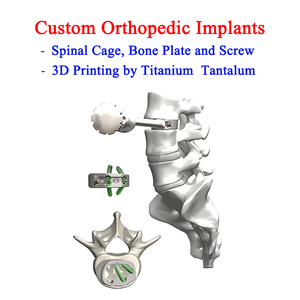
Explore our certified orthopedic solutions, custom 3D titanium printing, spinal implants, and specialized surgical instrumentation for global procurement teams.
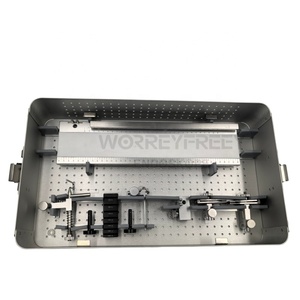
Orthopedic Surgical Instrument Manufacturer Acl Pcl Reconstruction Instrument Set for Knee Repair Worrefreey Medical WFACL Model
Inquire Now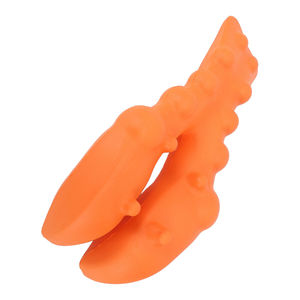
Cervical Traction Trapezius Trigger Point Massager Occipital Release Tool Tension Headache Device EVA Neck Massage
Inquire Now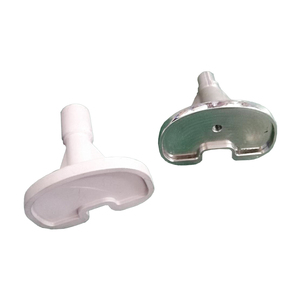
HKXN Femoral Component CoCrMo Forged Knee Hinge Joint with Customizable Sizes
Inquire Now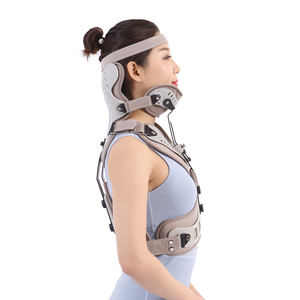
High Quality Adjustable Head Neck Thoracic Support Medical Cervical Vertebra Tractor Rehabilitation Therapy Prime Equipment
Inquire Now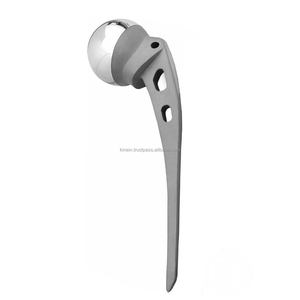
Austin Moore Hip Joint Prosthesis Cemented Femoral Stem Hemiarthroplasty Steel Orthopedic Implant for Hip Replacement Surgery
Inquire Now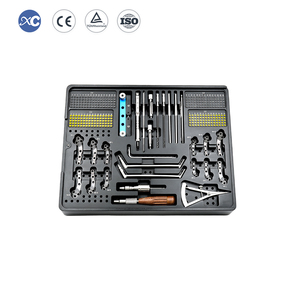
XC MEDICO Factory Price Veterinary Orthopedic Implant 2.7/3.5mm Multi-axial Locking TPLO Bone Plate Set for Vet Fracture Surgery
Inquire Now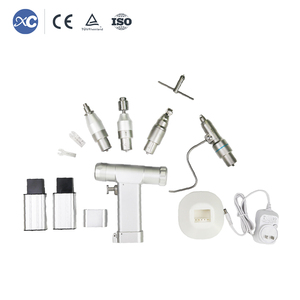
Hot Sale Orthopedic Instrument Multifunctional Surgical Drill Orthopedic Power Drill Saw K-wire AO Chunk Surgery Drill
Inquire Now
Industry Whitepaper
Cannulated Screw Systems: Advanced Biomechanical Engineering & Technical Manufacturing Standard
In modern orthopedic trauma and reconstructive surgery, cannulated screw systems represent a cornerstone technology for minimally invasive internal fixation. By incorporating a hollow axial core (cannulation), these specialized fasteners allow surgeons to insert guide wires—typically Kirschner wires (K-wires)—under real-time fluoroscopic imaging prior to driving the screw across intra-articular or extra-articular fracture sites. This precise technique minimizes soft tissue disruption, reduces surgical morbidity, and ensures optimized interfragmentary compression.
As a leading OEM/ODM cannulated screw system manufacturer and exporter, our facility adheres to rigorous international quality management systems including ISO 13485:2016 and ISO 9001. This technical whitepaper explores the critical engineering parameters, metallurgical selection, surface passivation dynamics, global procurement trajectories, and quality control frameworks required for medical-grade cannulated implants.
Key Biomechanical Core Objective
The fundamental physical objective of a cannulated compression screw is to convert rotational driving torque into linear interfragmentary compression force while maintaining axial alignment over guide wires without core collapse or fatigue shearing under dynamic cyclic loading.
1. Metallurgical Architecture & Biomechanical Material Selection
The choice of raw materials directly dictates the fatigue life, corrosion resistance, biological safety, and radiopacity of cannulated implants. Medical device procurement officers must evaluate material compliance against international standard specifications.
Ti-6Al-4V ELI (ASTM F136 / ISO 5832-3)
Titanium alloy Ti-6Al-4V ELI (Extra Low Interstitial) is the preferred standard for structural trauma screws. The controlled reduction of interstitial elements (oxygen, nitrogen, carbon, and iron) provides enhanced damage tolerance, fracture toughness, and superior fatigue resistance. With a tensile strength exceeding 860 MPa and a elastic modulus (~110 GPa) closer to human cortical bone than stainless steel, Ti-6Al-4V ELI minimizes stress shielding at the fracture interface.
Commercially Pure Titanium Grade 2 & 3 (ASTM F67)
Unalloyed titanium is widely utilized for non-load-bearing or lower-stress osteosynthesis applications where maximum biocompatibility and corrosion resistance are prioritized. High-purity Grade 2 and Grade 3 titanium exhibit excellent cold workability and are optimized for specialized bone plates and low-profile mini-cannulated screws.
Stainless Steel 316L (ASTM F138 / ISO 5832-1)
For markets prioritizing high torsional stiffness and cost-effective bulk procurement, cold-worked vacuum arc remelted (VAR) 316L medical stainless steel offers maximum shear resistance during initial tight thread engaging into hard cortical bone structures.
| Material Specification | Standard Compliance | Yield Strength (Min) | Tensile Strength (Min) | Primary Surgical Application |
|---|---|---|---|---|
| Ti-6Al-4V ELI Titanium Alloy | ASTM F136 / ISO 5832-3 | 795 MPa | 860 MPa | Femoral Neck, Tibial Plateau, Sacroiliac Fixation |
| Pure Titanium (TA2 / TA3) | ASTM F67 | 275 – 480 MPa | 345 – 550 MPa | Small Bone, Scaphoid & Metatarsal Fixation |
| 316L VAR Stainless Steel | ASTM F138 / ISO 5832-1 | 690 MPa | 930 MPa | Heavy-Duty Trauma & Veterinary Fracture Fixation |
| PEEK Optima Medical Grade | ASTM F2026 | 90 – 110 MPa | 120 MPa | Radiolucent Interbody & Soft Tissue Anchoring |
2. Geometric Tolerances & Micro-Cannulation Precision
The manufacturing complexity of a cannulated screw lies in maintaining absolute concentricity between the inner cannulated bore and the outer thread root diameter. Concentricity deviations exceeding 0.02 mm can result in unequal wall thickness, causing the screw to bind against the Kirschner wire or suffer premature structural failure under torsional load.
- Bore Concentricity & Straightness: Our 5-axis CNC Swiss-turning centers utilize high-pressure deep-hole gun-drilling technology, keeping inner diameter (ID) tolerances within ±0.01 mm over screw lengths up to 120 mm.
- Self-Tapping Flute Design: Precision ground reverse-cutting flutes facilitate effortless insertion through hard cortical bone without generating excessive thermal necrosis.
- Thread Profiles (Partial vs. Full Thread): Partially threaded variants feature an optimized smooth shaft (lag effect) that draws the distal bone fragment toward the screw head, creating high interfragmentary compression. Fully threaded designs are optimized for osteoporotic bone or neutralizing shear stresses.
- Head Architecture: Low-profile countersunk, hexalobular (Torx), or internal hex drives maximize torque transmission efficiency while reducing post-operative soft tissue irritation.
3. Anodization, Passivation & Surface Engineering
Medical implant surfaces undergo specialized chemical passivation in accordance with ASTM F86 to eliminate free iron particles and form a durable, corrosion-resistant titanium oxide ($\text{TiO}_2$) protective layer. Furthermore, our automated Type II and Type III electrochemical anodization processes produce color-coded dimensional recognition (e.g., gold for 3.5 mm, blue for 4.0 mm, green for 6.5 mm) for error-free intraoperative sizing by surgical teams.
Enterprise Capacity
Precision OEM/ODM Manufacturing Infrastructure
State-of-the-art CNC Swiss machining, automated quality assurance, and cleanroom packaging facilities built for global medical device brand partners.
±0.005mm
Machining Precision Tolerance
SAL 10⁻⁶
Gamma Sterility Assurance Level
3.5 Million
Annual Screws & Implants Capacity
60+ Countries
Global Export Network
ISO 13485 & CE Compliance
Fully documented Quality Management System (QMS) supporting Class IIa and Class IIb device registration, including complete STED technical dossiers for CE MDR and FDA 510(k) submissions.
Cleanroom & Gamma Packaging
Class 10,000 (ISO Class 7) cleanroom primary double-peel blister packaging. Co-60 Gamma radiation sterilization ready for immediate hospital surgical use without pre-sterilization costs.
Turnkey OEM & Private Labeling
Complete custom manufacturing services from drawing design, FEA biomechanical simulation, rapid prototyping, fiber laser etching, to customized graphic surgical trays.
Future Procurement Trends in Orthopedic Implant Sourcing (2025–2030)
The global market for trauma implants and surgical instrumentation is undergoing a rapid structural evolution driven by cost-containment initiatives in hospital networks, heightened regulatory scrutiny (EU MDR transitioning), and the acceleration of outpatient Ambulatory Surgical Centers (ASCs). B2B procurement managers and OEM distributors must align their supply chain strategies with these critical emerging trends:
1. Transition Toward Pre-Sterilized Procedure Kits
Hospitals are aggressively shifting away from bulk, unsterile implant trays that require expensive, water-intensive, and time-consuming autoclave reprocessing before surgery. Pre-sterilized, individually wrapped cannulated screws packed in barcode-traceable double blisters eliminate cross-contamination risks and significantly lower hospital operating room setup times.
2. Integration of Additive Manufacturing (3D Printing) with CNC Machining
The convergence of selective laser melting (SLM) electron beam 3D printing with subtractive 5-axis CNC machining enables the creation of complex porous titanium structures (simulating trabecular bone) attached directly to high-precision threaded shafts. This hybrid manufacturing approach enhances early osseointegration while maintaining thread structural integrity.
3. Supply Chain Resilience & Near-Zero Defect Mandates
Leading global orthopedic brands are consolidating vendor bases in favor of Tier-1 OEM suppliers capable of providing 100% automated optical inspection (AOI) for critical micro-dimensions. Traceability down to the specific raw material titanium ingot heat batch is now a non-negotiable requirement for international compliance.
Technological Development Trajectory of Cannulated Screws
Looking ahead, technological advancements in cannulated fixator design focus on dynamic compression mechanics, bioactive coating technologies, and digital surgical integration:
- Variable-Pitch Continuous Compression Geometry: Advanced thread pitch engineering where the thread pitch gradually decreases from the screw tip to the screw head, creating continuous interfragmentary compression as the screw advances without relying on a traditional protruding screw head.
- Bioactive Surface Modifications: Application of Micro-Arc Oxidation (MAO) and Hydroxyapatite (HA) nano-coatings onto titanium screw threads to foster accelerated bone apposition and reduce healing times in elderly osteoporotic patients.
- Smart Navigated Instrumentation Compatibility: OEM cannulated screw heads are increasingly integrated with optical and electromagnetic tracking markers for seamless compatibility with modern orthopedic surgical robotics and computerized navigation systems.
Procurement FAQ
Frequently Asked Questions by B2B Buyers
Direct technical answers regarding OEM contract manufacturing, regulatory compliance, quality audits, packaging, and logistics.
What raw material certifications and traceability documentation do you supply?
Every production batch is accompanied by comprehensive Material Mill Certificates verifying mechanical and chemical properties in strict accordance with ASTM F136 (Ti-6Al-4V ELI), ASTM F67 (Commercially Pure Titanium), or ASTM F138 (316L Stainless Steel). Full heat-number lot traceability is maintained from raw bar stock to final packaged product.
Can you manufacture cannulated screws according to our proprietary engineering drawings (OEM/ODM)?
Yes. We specialize in custom OEM/ODM contract manufacturing based on customer STEP/CAD files or physical samples. Our engineering team conducts DFM (Design for Manufacturability) analysis, finite element analysis (FEA), and prototype sampling prior to full mass-production execution.
What sterility assurance standards are applied to pre-packaged screw systems?
Our sterile implants are processed in an ISO Class 7 (Class 10,000) cleanroom environment and subjected to Cobalt-60 Gamma Ray irradiation in compliance with ISO 11137 standards, achieving a verified Sterility Assurance Level (SAL) of 10⁻⁶ with a 5-year shelf-life stability validation.
How do you support international regulatory submissions (CE MDR, FDA 510k)?
We provide brand partners with complete STED (Summary Technical Documentation) format technical files, including biocompatibility test reports (ISO 10993), mechanical fatigue test reports (ASTM F543), cleaning validation, packaging integrity data, and risk management documentation (ISO 14971).
What is your typical Minimum Order Quantity (MOQ) and production lead time?
For standard cannulated screw catalog items, MOQs start as low as 50 pieces per specification. For custom OEM projects, MOQs depend on design complexity. Standard production lead times range from 30 to 45 business days following initial sample approval.
Partner with a Certified OEM/ODM Cannulated Screw Manufacturer
Elevate your orthopedic product line with medical-grade titanium precision engineering, competitive factory-direct pricing, and comprehensive global regulatory support.
Contact Us