Featured OEM/ODM Implants & Surgical Instruments
Explore our ISO 13485-certified orthopedic implant systems, veterinary fixation products, and precision surgical instrumentation manufactured under rigid ASTM quality standards.
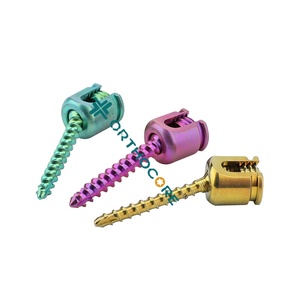
Orthopedic Implants for Large Animals Veterinary Spinal Screw
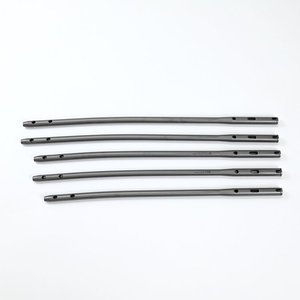
Factory Price PFNA Bone Surgical Instruments Orthopedic Implants Femoral Nail Titanium Locking Intramedullary Nails
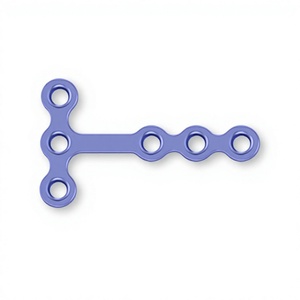
Maxillofacial Internal Fixation System Flat Hole Stainless Steel Cranial Mesh Neurosurgery Craniofacial Reconstruction Reusable
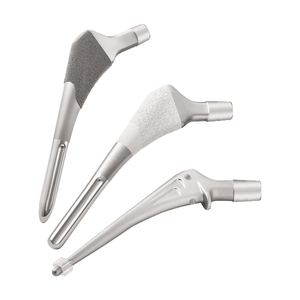
ZIMMER M/L 12/14 Taper Hip Prosthesis Femoral Stem Standard Offset Industrial Grade ODM Custom Medical Implant
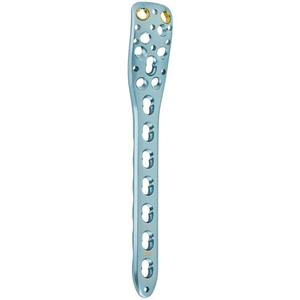
Animal Plate OEM Bone Block Screw Orthopedic Implant Factory With Price Maxillofacial by Dentavex
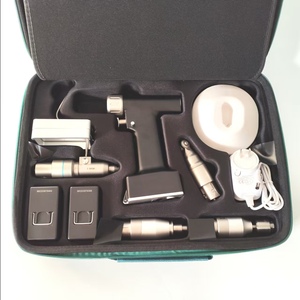
Orthopedic Power Tools Mini Multi-Functional Drill Accessories Titanium Implants Veterinary Surgical Instruments
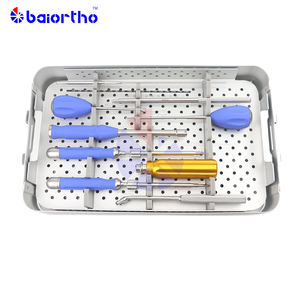
Veterinary Spine Fixation System, Stable Spinal Implant Kit for Small Animal Surgery, Baiortho Medical
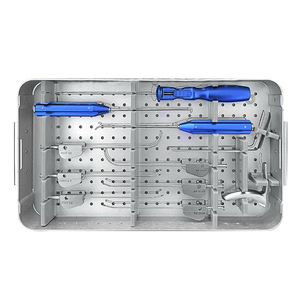
Fixation Instrument Set Orthopedic Surgical Instruments Arthroscopy Instruments
The Biomechanics of Cannulated Compression Screws
Cannulated compression screws represent a cornerstone in modern traumatology, foot and ankle surgery, and sports medicine. Designed with a hollow central longitudinal core, these implants allow precise percutaneous placement over Kirschner guide wires (K-wires), minimizing intraoperative tissue trauma while securing rigid interfragmentary lag compression.
Achieving optimal clinical compression relies on sophisticated pitch differential engineering. In headless designs (such as Herbert and Acutrak variants), the proximal trailing threads feature a narrower pitch than the distal leading threads. As the screw advances, each 360-degree rotation draws the distal and proximal fracture fragments together, generating high-density compression forces across the fracture site without relying on a prominent screw head that could impingement on articular soft tissues.
Core OEM Metric: Concentricity tolerances of the cannulated lumen must be strictly held within ±0.02 mm to prevent K-wire binding during high-torque driving, ensuring seamless intraoperative fluoroscopic insertion.
| Mechanical Parameter | ASTM F1472 (Ti-6Al-4V) | ASTM F67 (Pure Ti TA3) |
|---|---|---|
| Tensile Strength (MPa) | ≥ 930 MPa | ≥ 500 MPa |
| Yield Strength (0.2%) | ≥ 860 MPa | ≥ 380 MPa |
| Elongation at Break | ≥ 10% | ≥ 18% |
| Fatigue Limit (10^7 cycles) | ~ 510 MPa | ~ 240 MPa |
| Anodization Layer | Type II Anodic Oxide | Type II Color Anodized |
| Drive Recess Compatibility | Hexalobular (Torx) / Hex | Internal Hexagonal |
Future Procurement Trends in Orthopedic Implants (2025–2035)
Global medical device supply chains are undergoing paradigm shifts driven by regulatory tightening, hospital operational cost pressures, and a demand for single-use sterile efficiency.
1. Transition to Gamma-Sterilized Single-Pack Solutions
Global hospital procurement divisions are aggressively phasing out non-sterile bulk implants that require repeated in-hospital autoclave cycles. Bulk processing introduces trace detergent contaminants and increases logistics costs. B2B buyers now demand individual Co-60 gamma-sterilized blisters (SAL 10-6 sterility assurance level) with 5-year shelf-life validation, reducing central sterile services department (CSSD) friction.
2. EU MDR 2017/745 & FDA 510(k) Ready Documentation
Distributors are no longer seeking raw machining vendors; they require strategic OEM partners who provide complete technical files (STED format), clinical evaluation reports (CER), biocompatibility data (ISO 10993), and risk assessment (ISO 14971). Contract manufacturers capable of supplying turn-key regulatory packages significantly shorten time-to-market for private label brands.
3. High-Precision Swiss 5-Axis Turning & Micro-Cannulation
As micro-fragment osteotomies and minimally invasive surgical (MIS) techniques expand, demand for small-diameter cannulated screws (2.0 mm, 2.4 mm, and 3.0 mm) with pitch tolerances below ±0.005 mm is accelerating. Advanced 5-axis Swiss-type CNC lathes equipped with deep-hole high-pressure gun drilling are essential to prevent shaft runout.
4. Supply Chain Consolidation & Full-Portfolio Sourcing
Procurement teams are cutting administrative overhead by consolidating trauma plates, intramedullary nails, pedicle screws, sports medicine anchors, and cannulated screws into single multi-specialty OEM contracts. Consolidated purchasing leverages volume discounts and unifies color-anodization standards across surgical trays.
Technical Development Trends of Cannulated Compression Screws
Continuous innovation in orthopedic metallurgy, thread kinematics, and surface passivation has revolutionized fixator performance over the past decade.
1. Torx-Style Hexalobular Recess Geometry
Traditional hexagonal drive recesses suffer from stress concentrations at the corners, making them prone to driver stripping during high-torque lag insertion in dense cortical bone. Modern OEM designs feature hexalobular (T-drive/Torx) recesses. This geometry distributes rotational torque evenly across six broad contact faces, allowing higher insertion torque while preventing metal debris generation inside the surgical site.
2. Reverse-Cutting Flutes & Self-Tapping Tip Dynamics
To eliminate the need for independent tapping steps, cutting flutes are micro-machined at both the distal tip and the proximal tail of the screw. Distal self-tapping flutes evacuate bone chips forward during insertion. Reverse-cutting flutes located along the trailing threads shear bone fragments cleanly during implant removal, significantly simplifying post-union hardware extraction procedures.
3. Type II Anodic Passivation & Surface Modification
Untreated titanium implants can experience micro-galling against stainless steel or titanium driving tools. Type II anodization subjects the titanium surface to high-voltage electrolytic bath modification, transforming the oxide layer into a dense, non-porous titanium dioxide structure. This process increases surface fatigue resistance by up to 20%, dramatically lowers friction coefficients, and prevents ion leaching into surrounding soft tissue.
4. Variable-Pitch Tapered Shaft Engineering
Beyond simple differential pitch, progressive variable-pitch threads continuously decrease in lead distance from tip to tail. Coupled with a subtle core shaft taper, this design maintains constant compression throughout the entire drive phase rather than delivering compression only when the trailing threads engage, proving vital in osteoporotic bone fractures.
Why Global Medical Brands Partner With Us
As a dedicated medical device contract manufacturer, Orthi Medical Co., Ltd. combines advanced manufacturing facilities, rigorous quality assurance, and comprehensive OEM/ODM design services.
Rigid ISO 13485 Quality Control
Our quality management system operates under ISO 13485 and ISO 9001 standards. Every raw material bar (Ti-6Al-4V TC4 per ASTM F1472 and pure titanium TA2/TA3 per ASTM F67) comes with mill certs and chemical analysis tracking. 100% of cannulated screws undergo optical comparator lumen inspection to verify zero axial eccentricity.
In-House Deep-Hole Gun Drilling
Equipped with specialized multi-spindle Swiss turning centers, we execute micro-cannulation drilling up to 150 mm in depth without drift or core wall collapse. This ensures consistent wall thickness across all screw lengths (8 mm up to 120 mm), preventing fatigue fracture under bending moments.
Custom Anodization & Laser Marking
We provide custom color anodization (gold, magenta, green, deep blue, titanium gray) for immediate intraoperative diameter identification. Fiber laser marking delivers crisp, high-resolution UDI (Unique Device Identification) DataMatrix codes and lot codes resistant to repeated autoclave sterilization cycles.
ISO Class 7 Cleanroom & Gamma Packaging
Implant packaging takes place inside certified ISO Class 7 cleanrooms. Using medical-grade Tyvek blisters and triple-barrier foil pouches, we offer validated Co-60 gamma sterilization (SAL 10-6), giving OEM partners market-ready sterile shelf boxes.
Turnkey Instrument Tray Matching
A cannulated screw system is only as good as its instrumentation. We manufacture matching surgical instrument trays, including cannulated drill bits, tissue protectors, countersinks, parallel guide wire sleeves, and depth gauges, all organized in custom graphic-anodized aluminum sterilization cases.
Dedicated Clinical & CAD/CAM Support
Our biomedical engineering department reviews custom OEM drawings for manufacturability (DFM) within 48 hours. We assist international partners with finite element analysis (FEA), mechanical pullout testing under ASTM F543, and surgical technique brochure layout.
Frequently Asked Questions (Sourcing & Engineering FAQ)
Key answers for medical device purchasing officers, product managers, and regulatory affairs teams considering OEM/ODM contract manufacturing.
What raw material grade certificates accompany your titanium cannulated screws?
Every raw material batch used in our manufacturing lines is fully traceable to original steel mill chemical and mechanical test certificates. We primarily utilize Ti-6Al-4V ELI (Extra Low Interstitial) conforming to ASTM F1472 / ISO 5832-3 and pure titanium TA2/TA3 conforming to ASTM F67. Material testing covers chemical composition, microstructural grain size analysis, tensile yield strength (≥ 860 MPa), and elongation percentages.
Can you produce headless design cannulated compression screws based on custom drawings?
Yes. We specialize in custom OEM/ODM drawing-based production. Whether your product line requires dual-thread variable pitch geometries, tapered shaft profiles, or specialized hexalobular (Torx) drive recesses, our 5-axis Swiss turning centers can replicate your exact 3D STEP/IGES models with tight dimensional tolerances held to ±0.005 mm.
How do you ensure zero K-wire binding inside the central cannulation hole?
Cannulation binding occurs when interior lumen drilling drifts off-axis, creating micro-burrs or core eccentricity. We employ high-pressure internal oil-flush gun drilling techniques followed by automated electropolishing and ultrasonic cleaning. Every manufactured lot undergoes 100% pin-gauge pass-through inspection to guarantee smooth axial sliding over standard K-wires (e.g., Ø0.9 mm, Ø1.2 mm, Ø1.6 mm, and Ø2.0 mm wires).
What options exist for private label branding and sterile packaging?
We provide complete turnkey private label solutions. Implants can be supplied non-sterile in protective bulk trays or individually packed inside ISO Class 7 cleanrooms using medical Tyvek blister packs. We offer validated Co-60 gamma sterilization to achieve SAL 10-6 sterility assurance. Private label branding includes custom outer carton graphics, sterile indicator labels, GS1 compliant barcode generation, and multilingual IFUs (Instructions for Use).
What mechanical testing standards do your cannulated screws undergo for regulatory submission?
Our in-house biomechanical laboratory conducts mechanical verification testing according to ASTM F543 (Standard Specification and Test Methods for Metallic Medical Bone Screws). Test protocols include Torsional Yield Strength, Maximum Torque to Failure, Driving Torque into standardized polyurethane rigid foam (ASTM F1839 density models), and Axial Pullout Strength testing. Full test reports are provided for your FDA 510(k) or CE MDR technical dossier.
What are the Minimum Order Quantity (MOQ) requirements for OEM custom sizes?
For standard catalog sizes (e.g., Ø2.7 mm, Ø3.5 mm, Ø4.0 mm, Ø4.5 mm, Ø6.5 mm, and Ø7.3 mm cannulated screws), MOQs start at 50 to 100 units per length. For completely custom ODM geometries requiring dedicated CNC tooling setups, initial prototype runs are supported at low volumes (10–20 units) for design verification and clinical evaluation before transitioning to commercial batch manufacturing.
Do you offer matching surgical instruments for cannulated screw insertion sets?
Absolutly. We supply complete procedural instrument kits tailored to each screw system. This includes cannulated drill bits with depth markings, stainless steel guide wires, quick-coupling hex/torx screwdrivers, countersinks, soft-tissue protectors, parallel wire guides, and direct-measuring depth gauges, housed inside autoclavable PPSU or aluminum graphic trays.
What lead times can buyers expect for custom production orders?
Rapid DFM analysis and prototype samples are typically delivered within 2 to 3 weeks. Commercial production runs for sterile or non-sterile OEM orders average 4 to 6 weeks from drawing sign-off, supported by real-time milestone tracking from raw material forge to final gamma sterilization batch release.
Accelerate Your Medical Device OEM Program Today
Partner with an ISO 13485 certified contract manufacturer. Download our comprehensive product catalog or request a confidential DFM engineering consultation for your custom implant line.