OEM/ODM Joint Arthroplasty & Arthroscopy Sets
Explore our flagship orthopedic surgical instrument kits engineered for joint replacement, reconstruction, and minimally invasive access. Designed for maximum tactile feedback, durability, and ergonomic control.
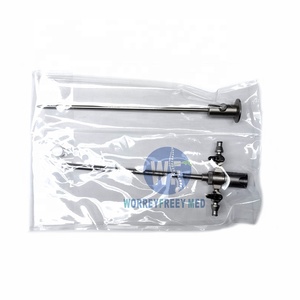
Arthroscopy Instruments Arthroscopic Equipment Arthroscopic Instrument 0degree Trocar Sheath Conmed Linvatec Compatible
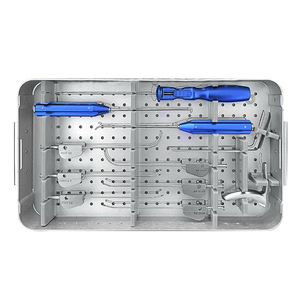
Fixation Instrument Set Orthopedic Surgical Instruments Arthroscopy Instruments
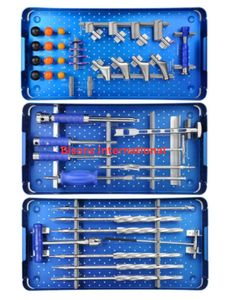
BISONS Wholesale Manual Stainless Steel Modular Stem Hip Arthroplasty Instrument Set for Total Hip Replacement Surgery
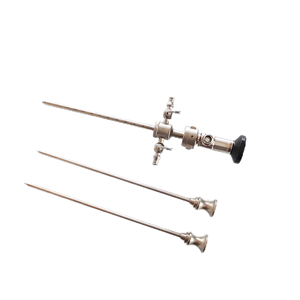
Medical Orthopedics Arthroscopy Trocar/reusable Arthroscope Sheath Set
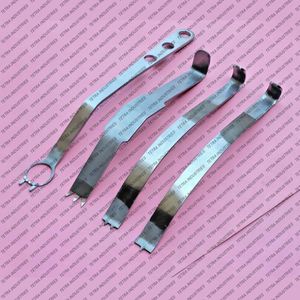
Stainless Steel Glenoid Access & Kolbel Shoulder Anterior Neck Retractor Arthroplasty Orthopedic Instruments Instrument Set
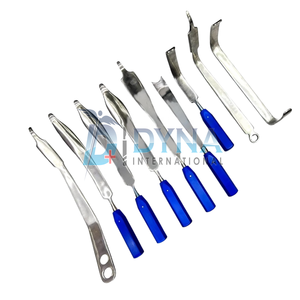
High Quality Manual 9-Piece Arthroplasty Hip Retractor Set (Blue) CE Certified Orthopedic Instruments
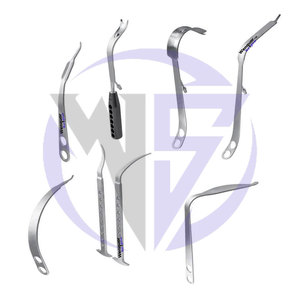
Anterior Total Hip Arthroplasty (THA) Surgical Instruments Set
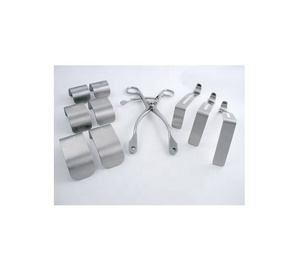
Top Value Manual Reusable Shoulder Arthroplasty Instruments Set with Glenoid Retractor Kolbel Soft Tissue Retractor Made Steel
Engineering Principles of High-Performance Joint Arthroplasty Instrumentation
Total Joint Arthroplasty (TJA)—encompassing hip, knee, shoulder, and ankle joint replacement—demands a level of surgical tool precision that directly impacts clinical alignment, soft tissue tensioning, and long-term implant longevity. As a specialized OEM/ODM medical device manufacturer, Orthi Medical integrates advanced metallurgy, bio-compatible surface chemistry, and ergonomics into every custom surgical tool tray.
Information Gain Insight: The efficacy of an arthroplasty instrument set is governed by three critical engineering vectors: dynamic fatigue endurance under repetitive mechanical impaction, dimensional stability during 134°C high-pressure steam sterilization, and line-of-sight clearing for minimally invasive surgical access.
In modern orthopedic manufacturing, standard stainless steels are no longer sufficient for high-load reaming shafts, trial broaches, and acetabular positioning guides. OEM/ODM contract manufacturing requires careful selection of medical-grade alloys tailored to distinct mechanical roles:
17-4PH & Custom 455 Stainless Steels
Utilized for heavy-impact instruments such as femoral stem broaches, slap hammers, and bone chisels. Precipitation-hardened to H900 or H1025 conditions, yielding yield strengths exceeding 1,100 MPa to eliminate tip deformation and galling during joint cavity rasping.
Ti-6Al-4V ELI (ASTM F136) Titanium
Ideal for lightweight trial implants, anterior hip retractor blades, and patient-specific alignment guides. Titanium reduces surgeon wrist fatigue by 40% during extended revision surgeries while delivering uncompromised biocompatibility and radiolucency under intraoperative fluoroscopy.
Polymer Hybrid Matrix: Radel® & PEEK
Custom sterilization trays, quick-connect instrument handles, and trial liners utilize Radel® (PPSU) and PEEK-OPTIMA®. These polymers withstand over 500 repetitive steam autoclave cycles without micro-cracking, color degradation, or chemical leaching.
Metallurgical & Processing Specification Matrix
The table below outlines our standardized raw material specifications, surface treatment standards, and dimensional tolerances applied across our OEM/ODM joint replacement tool manufacturing lines.
| Component Family | Substrate Material | Standard Reference | Hardness / Tensile Benchmark | Surface Passivation & Finish |
|---|---|---|---|---|
| Femoral Broaches & Rasps | 17-4PH Stainless Steel | ASTM A564 / ISO 5832-1 | 42–48 HRC / ≥1,170 MPa | Citric Acid Passivation (ASTM A967) + Matte Finish |
| Acetabular Reamer Shafts | Custom 455 High-Strength Steel | ASTM F899 Medical Grade | 48–52 HRC / ≥1,450 MPa | Electropolished + Laser Engraved Depth Scale |
| Direct Anterior Retractors | Ti-6Al-4V ELI / 316L SS | ASTM F136 / ASTM F138 | Tensile Strength ≥930 MPa | Color Type II Anodized (Blue/Gold Coding) |
| Surgical Trial Liners & Heads | UHMWPE / Radel® PPSU | ASTM F648 / ISO 5834-2 | Impact Strength ≥140 kJ/m² | Precision CNC Milled (R< sub >a < 0.4 µm) |
| Sterilization Trays & Brackets | Aluminum Alloy 6061-T6 + Silicone | ASTM B221 Industrial Standard | Hardcoat Anodized 25 µm | Steam Permeable Perforations + Custom Cradles |
Anatomic-Specific Arthroplasty Instrument Engineering
We manufacture dedicated, turnkey surgical sets engineered to optimize surgeon access, minimize muscle disruption, and accommodate anatomical variations across hip, shoulder, and knee joints.
Total Hip Arthroplasty (THA) & Direct Anterior (DAA) Kits
Our Direct Anterior Approach (DAA) hip retractor sets feature double-offset broach handles, cobra retractors, and femoral elevators designed specifically for muscle-sparing access. The offset shaft architecture allows unhindered clearance around the anterior superior iliac spine (ASIS), enabling pristine femoral preparation without soft tissue tearing.
- Offset Reamer Handles with quick-latch Hudson connection.
- Curved Hohmann and Mueller retractors with polished tips.
- Trial acetabular shells with line-of-sight visual ports.
Shoulder Arthroplasty & Glenoid Access Sets
Shoulder joint replacement—both Anatomical Total Shoulder Arthroplasty (TSA) and Reverse Total Shoulder Arthroplasty (rTSA)—requires specialized soft tissue retraction around the brachial plexus. Our Kolbel, Bankart, and Glenoid Access sets provide self-retaining ratcheted leverage, ensuring stable exposure of the glenoid vault.
- Fukuda retractor blades with anti-glare satin finish.
- Modular humeral head reamers with self-clearing flutes.
- Subscapularis tissue elevators and alignment guides.
Arthroscopic Access & Minimally Invasive Trocar Sheaths
Minimally invasive joint preservation and diagnostic arthroscopy demand low-profile trocars, cannulas, and shaver blades. Compatible with major camera systems (ConMed, Linvatec, Stryker, Smith & Nephew), our stainless steel 0° and 30° trocar sheath assemblies feature dual-valve irrigation stopcocks and leak-proof silicone sealing gaskets.
- Auto-locking bayonet mechanism for rigid scope protection.
- Passivated sheath barrels ensuring smooth joint insertion.
- Reusable shaver blades with micro-serrated cutting edges.
Full-Lifecycle OEM/ODM Contract Manufacturing Infrastructure
From preliminary 3D CAD modeling and prototype engineering to cleanroom sterile packaging, Orthi Medical offers complete contract manufacturing services tailored for global orthopedic OEMs and distributor networks.
DFM & CAD Co-Development
Our engineering team reviews your drawings for Design for Manufacturability (DFM), optimizing tolerances, tool clearance, and cutter paths for 5-axis CNC machining.
Precision CNC Machining
Utilizing high-precision Swiss lathes and 5-axis CNC milling centers, we execute complex geometries on titanium and stainless steel down to ±0.005mm accuracy.
Surface Chemistry & Passivation
Automated electropolishing, citric passivation (ASTM A967), laser marking, and Type II anodizing ensure corrosion resistance and crisp instrument labeling.
Cleanroom Packing & DHF Files
Class 100,000 cleanroom pouch sealing with optional Co-60 gamma sterilization (SAL 10-6). Full technical file support provided for CE and FDA 510(k) submission.
Regulatory & Quality System Compliance: Our factory operates under strict ISO 13485 and ISO 9001 certified quality management frameworks. Every batch of surgical instruments is supplied with raw material mill test certificates (EN 10204 3.1), heat treatment hardness charts, dimensional CMM inspection reports, and full lot traceability.
Future Trends in Joint Arthroplasty Tool Sourcing
As healthcare systems prioritize operating room efficiency, infection control, and cost optimization, procurement managers must adapt to key shifts transforming orthopedic tool supply chains over the next decade.
1. Shift Toward Modular & Hybrid Instrument Kits
Hospitals are actively reducing surgical tray weight and reprocessing costs. Future procurement favors modular handle systems and interchangeable working tips over dedicated single-piece tools. This trend cuts tray weight by up to 35% and drastically reduces hospital autoclave energy consumption.
2. Single-Use Sterile-Packaged Procedure Kits
While reusable sets remain dominant in high-volume joint centers, outpatient surgery centers (ASCs) are rapidly adopting single-use, sterile-packaged instrument kits for primary total knee and hip procedures. Sterile single-use tools eliminate hospital reprocessing backlogs and guarantee SAL 10-6 sterility.
3. Integration with Robotic & Navigation Blocks
Manual instrument sets are increasingly featuring optical tracking arrays and sensor alignment points compatible with robotic surgery platforms (such as Stryker Mako, Zimmer ROSA, and Smith & Nephew CORI). OEM tool manufacturers must maintain tight geometric tolerances to ensure seamless robotic attachment.
Frequently Asked Questions (FAQ) for OEM Buyers
Answers to essential technical, commercial, and regulatory queries regarding custom arthroplasty instrument set manufacturing.