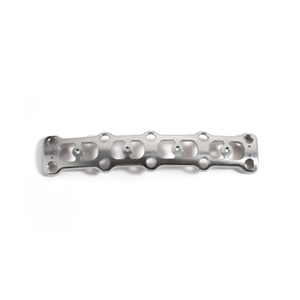
Veterinary Orthopedic & Precision OEM Products
Explore our specialized portfolio of veterinary TTA implants, trauma systems, cannulated drills, and high-precision titanium component manufacturing.
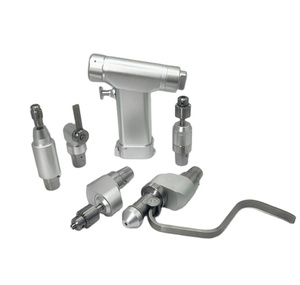
Orthopedic Cannulated Drill Micro Electric Bone Drill for Trauma Surgery Orthopedic Pet Surgical Instrument
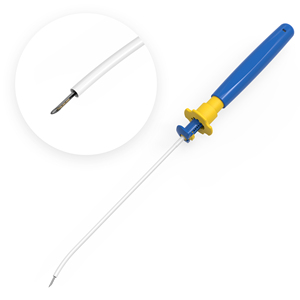
CANWELL Meniscal Repair System Arthroscopic Surgery Meniscus Sutura Device Tap Fast Fix All Inside Orthopedic CE
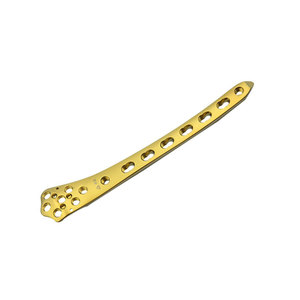
Minimally Invasive Femoral Proximal Locking Plate Distal Femur Lateral Distal Femoral Outer Side Orthopedic Locking Plates
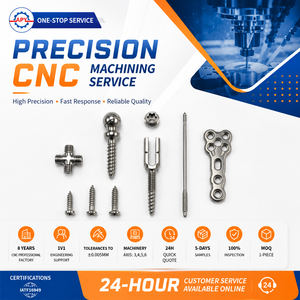
ISO 13485 Custom 5 6 Axis CNC Machining Medical Titanium Bone Plate Orthopedic Pedicle Screw Spinal Implant Components
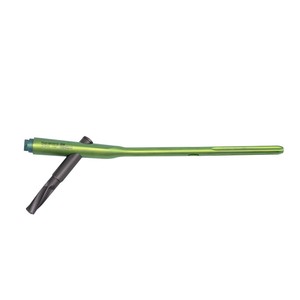
Orthopedic Implant Trauma Bone Nail PFNA Anti-rotation Proximal Femoral Femur Interlocking Nail Titanium Alloy Geasure SGM-IIK
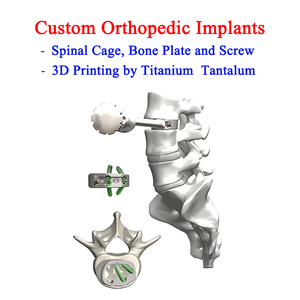
Custom High Precision 3D Printing Service for Medical Grade Orthopedic Implants Spinal Cage Bone Plate Joint Prosthesis Titanium
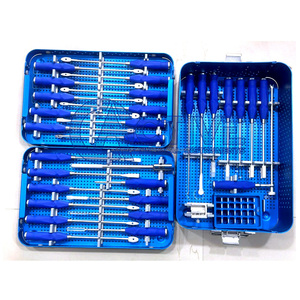
Super Quality New PLIF PEEK Cage Titanium Lumbar Cage Instrument Set for Orthopedic Spine Surgery Instruments CE Approved
ISO 13485
Certified Quality Audit
≤ 0.005mm
5-Axis CNC Precision
SAL 10-6
Co-60 Gamma Sterilization
ASTM F1472
Medical Ti-6Al-4V Grade
Biomechanical Rationale & Clinical Engineering of Veterinary TTA Systems
Cranial Cruciate Ligament Rupture (CCLR) represents the single most common cause of hind limb lameness in canine patients across modern veterinary orthopedics. Biomechanically, the canine stifle relies on the cranial cruciate ligament to counteract the internal tibiofemoral shear forces generated during the stance phase of gait. When CCLR occurs, joint instability triggers progressive joint degradation, osteophytosis, and severe cartilage erosion. The Tibial Tuberosity Advancement (TTA) system alters the internal mechanics of the stifle joint without requiring intra-articular ligamentous reconstruction.
The engineering core of the TTA technique lies in dynamic force vector manipulation. By performing a longitudinal osteotomy of the tibial tuberosity and advancing it anteriorly using a specialized titanium or PEEK cage, the angle between the patellar tendon and the tibial plateau slope is altered to exactly 90 degrees ($\alpha = 90^\circ$). At this right angle, the joint reaction force vector becomes parallel to the patellar tendon during weight-bearing, effectively neutralizing the cranial tibial thrust force. Eliminating this shear force allows the stifle to remain stable during locomotion, even in the complete absence of a functional cranial cruciate ligament.
Key Engineering Paradigm: Custom OEM TTA implants must absorb cyclic peak forces up to 3.5 times the patient's body weight during dynamic locomotion while maintaining dimensional stability, structural rigidity, and vascular osteointegration capacity over the canine life cycle.
Implant Components & Assembly Architecture
A comprehensive OEM veterinary TTA system comprises three interconnected mechanical sub-components, each demanding precise metallurgical engineering and sub-micron dimensional tolerance control:
- TTA Osteotomy Cages (Trabecular 3D Titanium or Machined PEEK): Positioned within the osteotomy gap to maintain the calculated advancement distance (ranging from 3.0 mm to 15.0 mm in 1.5 mm increments). Designed with open porous lattices to accommodate autologous bone graft or synthetic osteoinductive matrices.
- TTA Tension Band Locking Plates (Eared & Earless Configurations): Fixed along the cranial border of the advanced tibial tuberosity and distal tibial shaft. Acts as a tension band to withstand pulling forces exerted by the straight patellar ligament during extension.
- Self-Tapping Cortical & Locking Screws (Ø 2.4mm, 2.7mm, 3.5mm, 4.0mm): Precision-threaded fasteners featuring specialized pitch profiles and Star-Drive (Torx) or hexagonal recesses to eliminate cam-out risks during intraoperative torque application into dense cortical bone.
Material Science & Advanced Metallurgical Manufacturing
As a specialized Custom OEM TTA system veterinary manufacturer and supplier, material selection dictates the long-term clinical safety, fatigue threshold, and biocompatibility of surgical implants. We employ medical-grade titanium alloys and high-performance thermoplastics that meet international surgical standard specifications.
Titanium Ti-6Al-4V ELI (ASTM F1472 / F136)
Exhibits superior ultimate tensile strength (≥ 930 MPa), excellent fatigue resistance (> 107 load cycles), and low elastic modulus matching natural canine bone to mitigate stress shielding effects.
Direct Metal Laser Sintering (3D Porous Titanium)
Additive manufacturing yields trabecular porous cages with 65%–80% interconnecting porosity and pore sizes of 300–600 μm, accelerating rapid vascularization and bone ingrowth.
Medical-Grade PEEK (ASTM F2026)
Polyetheretherketone provides complete radiolucency for unimpeded X-ray verification of bony callus formation, combined with an elastic modulus (~3.6 GPa) closely mirroring cancellous bone.
3D Printing vs. Traditional 5-Axis CNC Machining for TTA Cages
Modern veterinary orthopedic contract manufacturing requires a hybrid approach combining additive 3D printing and sub-micron subtractive CNC machining:
- Additive Selective Laser Melting (SLM): Allows complex geometric structures such as anatomical contouring, integrated wedge angles, and diamond-trabecular inner cell matrices impossible to fabricate via conventional milling.
- 5-Axis Micro-CNC Milling: Essential for precision screw holes, locking thread profiles, plate contouring, and smooth mating contact surfaces where dimensional tolerances must be strictly maintained within ±0.005 mm.
- Surface Modification & Anodization: Type II electro-anodization enhances surface hardness and wear resistance, while color-coded anodization (cyan, gold, magenta, green) simplifies intraoperative identification of cage widths and plate sizes for veterinary surgeons.
Comparative Engineering Matrix: TTA vs. TPLO vs. CBLO Systems
Surgical device buyers, distributors, and veterinary hospital networks evaluate mechanical trade-offs between rival stifle stabilization methodologies. The data matrix below details key biomechanical and operational metrics:
| Biomechanical / Sourcing Criteria | Tibial Tuberosity Advancement (TTA) | Tibial Plateau Leveling Osteotomy (TPLO) | Cranial Tibial Wedge Osteotomy (CBLO) |
|---|---|---|---|
| Primary Mechanical Principle | Neutralizes shear force via 90° ligament vectoring | Alters tibial plateau angle to 5°–7° slope | Leveling osteotomy combined with distal shift |
| Invasive Surgical Profile | Extracapsular osteotomy (Saves joint capsule) | Radial intra-articular osteotomy cut | Intra-articular wedge excision |
| Implant Mechanical Stress Profile | Tension band loading; lower bending moment | High torsional & bending shear on locking plate | Compressive shear forces across wedge gap |
| Bone Graft Requirement | Required inside cage void (Autologous or 3D porous) | Minimal (direct compression cut) | Moderate depending on wedge gap size |
| OEM Manufacturing Complexity | High (Trabecular 3D mesh + thin tension plates) | Medium (Contoured locking compression plates) | Medium (Specialized dual-angle plates) |
| Post-Op Bone Healing Speed | Rapid (6–8 weeks osteointegration) | Standard (8–12 weeks union) | Standard (8–10 weeks union) |
Future Procurement & Technological Trends in Veterinary Orthopedics (2025–2035)
The global veterinary healthcare market is experiencing rapid consolidation, elevated standard-of-care demands from pet owners, and accelerated adoption of modern human-grade surgical methodologies. Procurement managers and OEM distributors must align their supply chains with the following emerging industry shifts:
1. Shift Towards Pre-Sterilized Single-Use Procedure Kits
Veterinary hospitals are actively working to lower operating room turnaround times and eliminate cross-contamination risks associated with in-house autoclave sterilization. Procurement trends show a 42% annual surge in demand for factory-packed, Co-60 gamma-irradiated (SAL 10-6) sterile TTA procedure kits containing a matched cage, plate, and color-coded locking screws ready for immediate surgical deployment.
2. Patient-Specific 3D Printed Osteotomy Guides & Implants
Integration of pre-operative computed tomography (CT) scans with computer-aided design (CAD) software allows veterinary surgeons to request custom-built TTA cages and cut guides for complex canine angular limb deformities or non-standard breeds. OEM manufacturers with embedded 3D additive printing lines hold a decisive competitive advantage.
3. Bioresorbable & Hybrid Composite Cages
Next-generation R&D focuses on hybrid cages combining a porous titanium structural shell with bioabsorbable polymer fills (PLGA/TCP) impregnated with osteogenic growth factors. This hybrid construction provides immediate load-bearing stability while gradually transferring mechanical stresses to newly formed trabecular bone.
4. Rigorous International Regulatory Compliance (ISO 13485 & EU MDR Alignment)
Regulatory oversight for veterinary medical devices is tightening globally. Procurement teams are moving away from non-certified machine shops toward dedicated contract manufacturers operating under audited ISO 13485 quality management systems, complete raw material heat traceability, and documented fatigue testing protocols.
Sourcing & Manufacturing FAQ: OEM Veterinary TTA Systems
Addressing core technical, quality, and commercial inquiries from global veterinary medical device distributors and hospital purchasing groups.
What raw material certifications and traceability documentation do you provide for OEM TTA implants?
Every raw material batch undergoes strict spectrographic and mechanical verification. We provide complete Mill Test Certificates (MTC) conforming to ASTM F1472 (Ti-6Al-4V) and ASTM F67 (Pure Titanium Grade 2/3), alongside ISO 13485 batch traceability certificates detailing raw material heat numbers, CNC machining logs, surface treatment reports, and final sterilization validation data.
What dimensional tolerances can your 5-axis CNC machining setup achieve for custom TTA plates and screws?
Our high-precision 5-axis DMG MORI and Citizen CNC Swiss lathe centers maintain tight dimensional tolerances down to ±0.005 mm (±5 microns) for screw thread pitches, plate locking holes, and cage retention slots. Optical coordinate measuring machines (CMM) and laser profile gauges verify 100% of critical dimensions before cleanroom packaging.
Can you supply veterinary TTA implants in pre-sterilized packaging under private label branding?
Yes. We offer turnkey OEM/ODM private label services. Implants are cleaned in multi-stage ultrasonic baths, packaged inside ISO Class 7 cleanrooms using dual-layer Tyvek blisters, and sterilized via Cobalt-60 gamma radiation to achieve a Sterility Assurance Level (SAL) of 10-6. Blister lids and outer cartons are customized with your corporate logo, artwork, UDI barcodes, and regulatory text.
What is the typical lead time for custom TTA prototype development and mass production orders?
For custom prototype development based on customer-provided CAD models or 2D technical drawings, prototype samples with full inspection reports are typically delivered within 10 to 14 business days. Repeat mass-production contract orders are fulfilled within 3 to 4 weeks depending on batch volume and surface anodization requirements.
Do you manufacture matching surgical instrument sets for TTA implantation?
Yes. We engineer complete TTA surgical instrument trays, including custom osteotomy saws, benders, spreader forceps, drill guides, depth gauges, pass-through benders, and silicone-handled Star-Drive screwdrivers. Instrument sets are crafted from surgical-grade stainless steel (AISI 17-4PH, 420) and housed in anodized aluminum sterilization trays with custom silicone inserts.
Why Partner With Us: Complete Contract Manufacturing Excellence
Orthi Medical Co., Ltd. operates a vertically integrated medical manufacturing infrastructure dedicated to bridging orthopedic design concepts into market-ready commercial surgical devices. We empower global brands, veterinary equipment distributors, and OEM buyers with end-to-end manufacturing stability.
State-of-the-Art Production Facility
Equipped with imported 5-axis CNC machining centers, high-precision Swiss-type automatic lathes, wire EDM machinery, and advanced SLM 3D printers operating under clean environment controls.
ISO 13485 & CE Quality Governance
Our quality management system is fully certified under ISO 13485 and ISO 9001. Every production run undergoes rigorous bio-burden analysis, mechanical fatigue testing, and material certification checks.
End-to-End Engineering Support
From pre-production CAD optimization and Finite Element Analysis (FEA) strain modeling to custom tray layout, laser marking, regulatory file support, and international logistics execution.