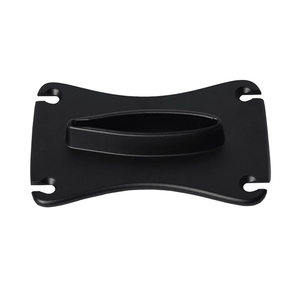
Featured Orthopedic Implants & Surgical Systems
Explore our ISO 13485-certified portfolio of spinal fixation constructs, minimally invasive instruments, and advanced sports medicine anchors.
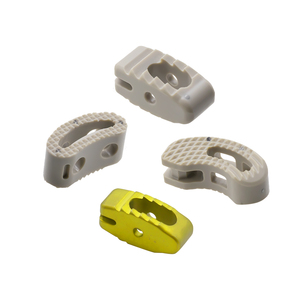
New Design Orthopedic Spinal Titanium Lumbar Cervical fusion Cage Implant System
Inquire Now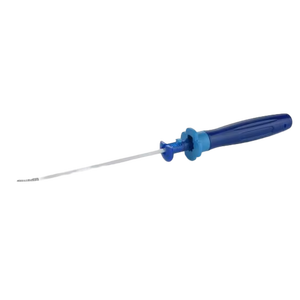
Meniscal Repair System With Fast Fix Needle Interventional Implants & Materials For Meniscus Designed For Men
Inquire Now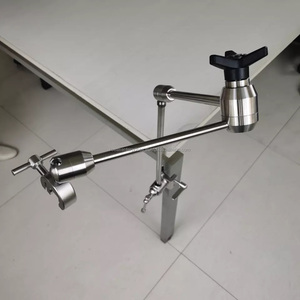
Endoscopic Discectomy System Manual Free Arm Scope Holder Stainless Steel Retractor CE Certified Silver Class II Reeax
Inquire Now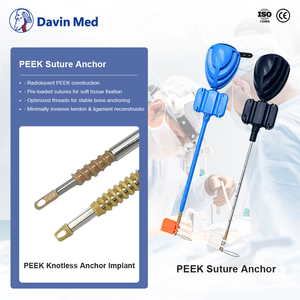
Arthroscopy PEEK Suture Anchor System For Soft Tissue Ligament Repair Orthopedic Implant In Sports Medicine
Inquire Now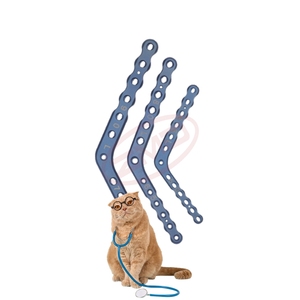
ZMD Medical Orthopedic Titanium Bone Screw Cancellous & Hex Head Cortex Locking Implant 30 Sold Ready to Ship
Inquire Now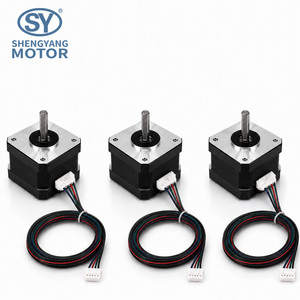
Factory Supply NEMA 17 42x42x34mm 1.2A 0.31Nm 4Lead High Precision Bipolar 12V Hybrid Stepper Motor for 3D Printer
Inquire Now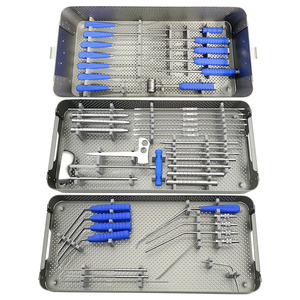
Spinal Surgery Unilateral Biportal Endoscopic Surgery Instruments Set UBE Instrument Set Orthopedic Instrument
Inquire NowISO 13485
Certified Quality System
TC4 / Ti-6Al-4V
ASTM F1472 Implant Grade
SAL 10⁻⁶
Gamma Sterile Assurance
60+ Countries
Global Export Network
Biomechanical Architecture & Engineering Standards of Custom OEM Thoracolumbar Fixation Systems
The human thoracolumbar spine (T1–L5) represents a biomechanically complex region subjected to multi-axial loading vectors, including flexural tension, axial compression, torsional shear, and lateral bending. Constructing an effective thoracolumbar pedicle screw fixation system requires balancing extreme fatigue strength with anatomical adaptability. As a specialized medical device contract manufacturer and exporter, our engineering paradigm is rooted in rigorous mechanical testing, sub-micron precision machining, and strict adherence to international surgical standards.
Information Gain Insight: Modern OEM thoracolumbar stabilization constructs must withstand over 5,000,000 stress cycles under ASTM F1717 vertebrectomy model testing without dynamic fatigue failure, plastic deformation, or screw-rod interface slippage.
1. Metallurgical Pureness & Material Selection Kinetics
System performance relies heavily on raw material integrity. Our manufacturing process utilizes implant-grade Titanium Alloy Ti-6Al-4V ELI (Extra Low Interstitial), fully compliant with ASTM F1472 and ISO 5832-3 specifications. This alloy exhibits an ultimate tensile strength exceeding 930 MPa and a yield strength surpassing 860 MPa, providing an optimal strength-to-weight ratio while minimizing post-operative artifact distortion during Magnetic Resonance Imaging (MRI) and Computed Tomography (CT) scans.
For specific deformities requiring enhanced anatomical contouring flexibility, we also process unalloyed Pure Titanium TA2/TA3 (complying with ASTM F67) and Medical-Grade Polyetheretherketone (PEEK-OPTIMA®), particularly within interbody fusion cages and radiolucent stabilization components.
2. Advanced Screw Thread Geometry & Pull-Out Resistance
To maximize pedicle anchorage in both cortical and cancellous bone structures, our custom OEM pedicle screws incorporate optimized dual-lead thread geometries and self-tapping flutes:
- Proximal Dual-Threaded Zones: Enhanced cortical bone engagement near the pedicle cortex increases initial fixation grip and prevents early loosening.
- Distal Cancellous Thread Profile: Deeper thread pitches increase internal bone-implant contact area (BIC), yielding pull-out strength metrics over 2,200 N in standard dense polyurethane foam models.
- Cannulated & Fenestrated Variants: Engineered specifically for minimally invasive surgery (MIS) over guide wires and osteoporotic spine augmentation, allowing controlled Polymethylmethacrylate (PMMA) bone cement injection directly through the screw shaft.
Polyaxial Friction Heads
Features 50° to 60° multi-directional angulation range with internal friction-fit collars that maintain screw head orientation during rod alignment and insertion.
Buttress Thread Locking
Helical reverse-angle set screws prevent tulip spreading and eliminate cross-threading risks, ensuring secure locking torque retention above 11 Nm.
Low-Profile Tulip Contour
Optimized outer dimensions reduce soft-tissue displacement, anatomical impingement, and adjacent segment degeneration (ASD) risk post-implantation.
Technical Specification Matrix: OEM Thoracolumbar Pedicle Screw Systems
Below is an overview of standard structural dimensions and metallurgical parameters available for global OEM contract manufacturing and private label distribution.
| System Parameter | Standard Specifications | OEM Customization Options |
|---|---|---|
| Screw Diameters | Ø4.5mm, Ø5.5mm, Ø6.5mm, Ø7.5mm, Ø8.5mm | Custom thread pitches, micro-diameters (Ø3.5-4.0mm) |
| Screw Shaft Lengths | 25mm to 60mm (5mm increments) | Extended lengths up to 100mm for pelvic fixation |
| Connecting Rod Diameters | Ø5.5mm & Ø6.0mm (Straight & Pre-curved) | Cobalt-Chromium (CoCrMo) high-stiffness rods |
| Polyaxial Articulation Range | ±28° (56° conical range) | Preferred-angle / uniplanar designs for scoliosis reduction |
| Raw Material Certifications | Ti-6Al-4V ELI (ASTM F1472 / ISO 5832-3) | PEEK OPTIMA®, Pure Titanium TA2/TA3 (ASTM F67) |
| Surface Finish & Color | Type II Anodization (Gray, Gold, Blue, Magenta) | Laser-etched lot numbers, custom depth indicators |
| Sterilization Assurance | Co-60 Gamma Irradiation (SAL 10⁻⁶) | Double Tyvek pouch, sterile-packaged or bulk non-sterile |
Future Purchasing Trends & Technological Evolution in Thoracolumbar Fixation (2025–2030)
As global healthcare procurement shifts toward value-based surgical outcomes, B2B buyers, medical device distributors, and hospital purchasing syndicates must navigate several key shifts in spinal implant design and OEM supply chain strategies.
1. Expansion of Percutaneous & MIS Pedicle Screw Systems
Surgeons are increasingly favoring Minimally Invasive Surgical (MIS) approaches over traditional open thoracolumbar procedures. MIS constructs reduce intraoperative blood loss, shorten hospital stays, and preserve paravertebral muscle tissue. Modern OEM procurement requires integrated long-arm extended pedicle screws with detachable reduction collars, compatible with percutaneous rod passage instrumentation and radiopaque fluoroscopic guidance.
2. 3D-Printed Porous Titanium Interbody Cages & Additive Manufacturing
Additive manufacturing using Selective Laser Melting (SLM) technology has transformed spinal interbody fusion. Future purchasing trends emphasize 3D-printed porous titanium cages featuring biomimetic trabecular architectures (pore sizes between 400–700 μm). These structures match the elastic modulus of cancellous bone, significantly reducing stress-shielding while accelerating osseointegration compared to solid machined implants.
3. Integration with Robotic Navigation & Optical Tracking Alignment
Surgical robotics and intraoperative 3D navigation platforms demand tighter machining tolerances on pedicle screw head geometries, driver engagement interfaces, and reference arrays. OEM manufacturers must maintain sub-micron repeatability ($\pm 0.005$ mm) to ensure driver instruments remain stable during robot-assisted trajectory drilling and automated screw insertion.
4. Supply Chain Risk Mitigation & Full-Process OEM Transparency
Global regulatory tightening under EU MDR (2017/745) and US FDA 510(k) auditing has led purchasing teams to move away from unverified trading entities. Top orthopedic distributors are consolidating vendor bases in favor of direct contract manufacturers capable of providing end-to-end traceability—from raw titanium ingot melt certificates to final ISO 11607 cleanroom packaging and dynamic fatigue test dossiers.
Enterprise Capabilities: Why Partner with Our OEM/ODM Manufacturing Platform
With over two decades of dedicated research, precision engineering, and global medical export experience, our manufacturing infrastructure offers comprehensive contract manufacturing services for international orthopedic brands and regional distributors.
Swiss 5-Axis CNC Precision
Our facility houses high-precision Citizen and Star 5-axis CNC Swiss lathe centers, enabling complex single-pass machining of complex polyaxial screw heads and thread profiles.
ISO Class 7 Cleanroom Packaging
Implant cleaning, automated ultrapure water ultrasonic washing, and primary packaging are conducted inside certified Class 100,000 cleanrooms to guarantee low bioburden limits.
Turnkey Regulatory Dossier Support
We provide full technical documentation (STED format), biocompatibility data (ISO 10993), mechanical test reports (ASTM F1717), and audit-ready files for CE marking and FDA registration.
Frequently Asked Purchasing & Technical Questions (FAQ)
Find authoritative answers regarding our custom OEM manufacturing parameters, regulatory compliance, quality control protocols, and global distribution logistics.
What medical grade certifications and quality standards do your thoracolumbar systems meet?
Our quality management system is fully certified under ISO 13485 and ISO 9001. All thoracolumbar pedicle screws and rod components are manufactured using medical-grade Titanium Alloy Ti-6Al-4V ELI in accordance with ASTM F1472 / ISO 5832-3 standards. Implant systems meet applicable CE mark requirements, and raw material batch heat numbers are fully traceable to original mill certificates.
Can you supply customized OEM pedicle screw dimensions, custom laser marking, and color anodization?
Yes. We offer complete OEM/ODM customization services. We can machine pedicle screw systems according to your engineering drawings or co-develop custom thread profiles, screw head articulation angles, and matching surgical instrument trays. Services include custom laser marking (logos, lot codes, reference numbers), Type II anodization color-coding (blue, gold, magenta, green), and tailored packaging.
Are implants supplied in pre-sterilized packaging or non-sterile bulk configurations?
We offer both supply options based on distributor preferences. Implants can be supplied clean and non-sterile for hospital tray sterilization or delivered pre-sterilized via Co-60 Gamma Irradiation in double-layer Tyvek peel pouches achieving a Sterility Assurance Level (SAL) of 10⁻⁶ compliant with ISO 11137 and ISO 11607 standards.
What mechanical static and dynamic testing protocols have your spinal constructs undergone?
Our thoracolumbar fixation constructs undergo comprehensive mechanical validation according to ASTM F1717 (Standard Test Methods for Spinal Implant Constructs in a Vertebrectomy Model). Testing parameters include Static Axial Compression Bending, Static Torsional Load Resistance, and Dynamic Fatigue Testing up to 5,000,000 cycles at target physiological stress levels without structural fracture or set-screw backing out.
What is the typical lead time for custom OEM prototypes and full-scale production runs?
Initial CAD modeling and FEA biomechanical evaluation typically take 5 to 7 working days. Functional CNC prototype samples with measurement reports are provided within 3 to 4 weeks. Upon prototype sign-off and order confirmation, commercial mass production lead times generally range between 30 and 45 days depending on batch volume and surface processing requirements.
Partner with a Leading OEM Spinal Fixation Manufacturer
Request technical specification sheets, schedule a factory audit, or obtain custom manufacturing quotations for your distribution brand.
Inquire Now