Featured Spinal & Orthopedic Surgery Systems
Direct-from-Factory OEM/ODM Solutions for Global Medical Device Distributors and Hospitals
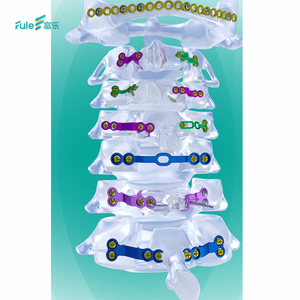
Titanium Spine Surgery Systems Posterior Cervical Laminoplasty Orthopedic Surgery Implant Class III CE Certified
Get Catalog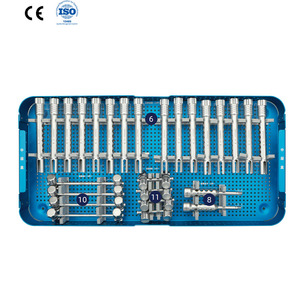
Stainless Steel Manual Posterior Internal Fixation System Pedicle Screw Instrument Set Titanium Lumbar Spine Orthopedic Implant
Get Catalog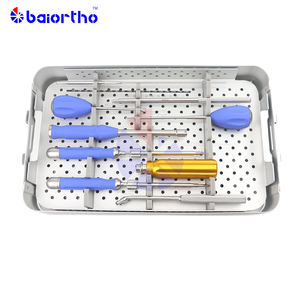
Veterinary Spine Fixation System, Stable Spinal Implant Kit for Small Animal Surgery, Baiortho Medical
Get Catalog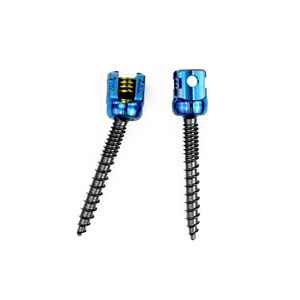
Factory Price Caronia Surgical Spine Fixation System Manual Orthopedic Spinal Implants 5.5/6.0mm Medical Stainless Steel
Get Catalog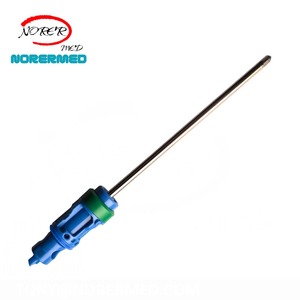
Chinese Manufacturer NORER Custom CNC Machining Arthroscopy Cutter, Arthroscopic Arthroscopy Shaver Blade Minimally Invasive
Get Catalog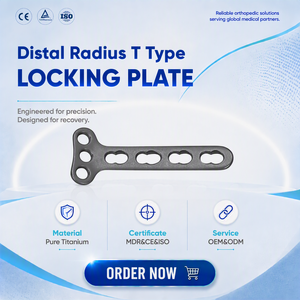
Orthopedic Implant Distal Radius Variable Angle Locking Compression Plate Titanium Bone Fracture Fixation Trauma Surgery
Get Catalog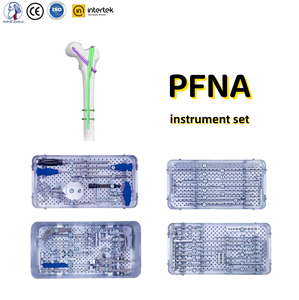
Orthopedic Implant Titanium Intramedullary Nail Surgical Interlocking PFNA Femur Nail Intramedullary Instruments Set
Get Catalog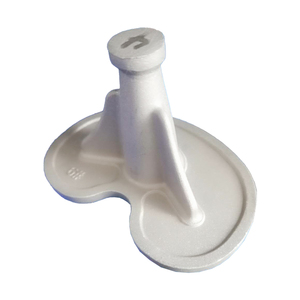
Fast Delivery HKXN Brand Customized Size Orthopedic Implants Knee Hinge Joint CoCrMo Forged Femoral Stem 26-32mm Diameter
Get CatalogExecutive Summary: Engineering Principles in Custom OEM Spine Implant Manufacturing
The global spinal surgery landscape demands an unprecedented synergy between biomechanical performance, biocompatibility, and manufacturing precision. As a premier original equipment manufacturer (OEM) and exporter specializing in spinal fixation systems, our production ecosystem is built upon advanced metallurgy, automated 5-axis CNC machining, and rigorous compliance with global regulatory standards (including US FDA 510(k) benchmarks and EU MDR Regulation 2017/745).
To support global medical device brands and hospital supply networks, our engineering team executes contract manufacturing across all spine segments: Cervical, Thoracolumbar, Deformity Correction, and Minimally Invasive Surgery (MIS). By maintaining complete internal control—from raw titanium billet forging to cleanroom gamma packaging—we mitigate global supply chain volatility while ensuring compliance with ASTM F1472 (Ti-6Al-4V) and ASTM F67 (Unalloyed Titanium) standards.
Enterprise Technical Capabilities & OEM Infrastructure
End-to-End Contract Manufacturing for Global Spinal Device Brands
1. High-Precision Swiss CNC Machining
Utilizing multi-axis Citizen and Tsugami CNC turning-milling centers, we manufacture complex geometries such as polyaxial pedicle screw heads, dual-thread shafts, and low-profile cervical laminoplasty plates. Tolerances are held strictly within ±0.005mm to guarantee flawless instrument intraoperative engagement.
- 5-axis continuous milling for complex curves
- Zero-defect thread burr removal via automated polishing
- Custom micro-drilling for cannulated cement augmentation screws
2. Advanced Metallurgical Surface Treatments
Surface micro-topology directly governs bony ingrowth and biomechanical fatigue resistance. Our in-house chemical processing line provides Type II hard anodizing, color anodizing for size identification, plasma-sprayed titanium coating, and acid-etched surfaces for enhanced bone-implant contact (BIC).
- Biocompatible color coding for intuitive OR workflow
- Enhanced fatigue strength under cyclic loading (ASTM F1717)
- Controlled roughness profiles (Ra 1.5 - 3.2 µm)
3. Cleanroom Assembly & Sterile Packaging
We relieve distributor regulatory and operational burdens by offering complete pre-sterilized implant packaging solutions. Operating under ISO Class 7 cleanrooms, products are sealed in medical-grade Tyvek blisters and validated for Cobalt-60 Gamma Irradiation to achieve a Sterility Assurance Level (SAL) of 10⁻⁶.
- Double-barrier Tyvek® blister packaging
- GS1 DataMatrix UDI barcode printing
- 5-year shelf-life stability test validated
Material Engineering Matrix: Implants & Fixation Systems
Comprehensive Mechanical Specification Breakdown for OEM Sourcing Decisions
| Material Standard | Composition / Alloy Grade | Tensile Strength (MPa) | Primary Spine Applications | Biocompatibility & Standards Compliance |
|---|---|---|---|---|
| ASTM F1472 / ISO 5832-3 | Ti-6Al-4V Wrought Alloy | ≥ 930 MPa | Pedicle Screws, Connectors, Rods (5.5mm/6.0mm) | Excellent fatigue strength; optimal modulus of elasticity to minimize stress shielding. |
| ASTM F67 / ISO 5832-2 | Unalloyed Titanium (Grade 2 / Grade 3) | 400 – 550 MPa | Posterior Cervical Plates, Mesh Cages, Laminoplasty Clips | Superior cold formability and intraoperative contourability for delicate anatomical structures. |
| ASTM F2026 | PEEK (Polyetheretherketone) Optima | ≥ 95 MPa | ACDF Cages, PLIF/TLIF Interbody Fusion Devices | Radiolucent properties for clear postoperative X-ray/CT assessment; modulus matches cortical bone. |
| ASTM F1537 / ISO 5832-12 | Co-Cr-Mo (Cobalt-Chromium-Molybdenum) | ≥ 1050 MPa | Rigid Deformity Rods, Heavy-Duty Pedicle Screw Rod Systems | Maximum stiffness and flexural rigidity for complex scoliosis and kyphosis corrections. |
Future Procurement & Technology Trends in Spine Implants
Key Strategic Vectors Shaping Global B2B Sourcing over the Next Decade
Trend 1: Shift Toward MIS & UBE Specialization
Minimally Invasive Spine Surgery (MISS) and Unilateral Biportal Endoscopy (UBE) are rapidly replacing open procedures globally. Procurement managers must source pedicle screws featuring long-arm extension sleeves, percutaneous rod insertion guides, and ultra-low-profile heads. Manufacturers who offer integrated MIS instrument sets alongside implants are capturing dominant market share.
Trend 2: Additive Manufacturing & Porous Titanium
3D-printed electron beam melting (EBM) and selective laser melting (SLM) implants are transitioning from niche custom devices to mass-produced standard items. Porous titanium implants featuring biomimetic trabecular structures promote direct cellular migration, reducing dependence on autologous bone graft and shortening clinical fusion timelines.
Trend 3: Direct-to-OR Sterile Packaged Sourcing
Hospitals and surgery centers are seeking to eliminate in-house autoclave reprocessing due to rising labor costs and cross-contamination risks. Demand for factory-sterilized, individually boxed implants with UDI-ready tracking labels is growing at an annual rate exceeding 14.5% across Europe and the Americas.
Trend 4: Regulatory Consolidation under EU MDR
The stringent technical documentation, post-market clinical follow-up (PMCF), and bio-safety evaluation under EU MDR have forced tier-two suppliers out of the market. Importers and brand owners now prioritize OEM suppliers with established ISO 13485 full-scope certification and complete STED regulatory technical files.
Frequently Asked Questions (FAQ) for OEM Buyers & Importers
Addressing Technical, Logistical, and Regulatory Aspects of Spinal Implant Supply
What is your standard MOQ for custom OEM spine implant manufacturing?
For custom CNC-machined titanium implants (such as specialized pedicle screws or anterior cervical plates), our standard Minimum Order Quantity (MOQ) typically ranges from 100 to 300 units per specification. For standard production runs with custom laser marking or anodization, lower MOQs can be accommodated during initial clinical trials.
How do you guarantee quality control and fatigue resistance on spinal pedicle screws?
Every batch undergoes strict multi-stage inspection: 100% optical dimension checks on critical threads, surface roughness verification, and mechanical testing adhering to ASTM F1717 (axial compression, torsion, and dynamic fatigue testing to 5 million cycles without failure). Full raw material mill certificates (MTR) accompany every shipment.
Can you provide technical documentation support for national health authority registrations?
Yes. We support global distributors by supplying complete Technical Documentation Files formatted according to STED guidelines. This includes risk analysis (ISO 14971), biocompatibility evaluation reports (ISO 10993 series), sterilization validation, and cleaning/reprocessing instructions for reusable surgical instrument sets.
What options are available for private labeling and sterile vs. non-sterile supply?
We offer turnkey private label capabilities: custom laser etching of your brand logo and part numbers, custom color-anodized matching, design of ergonomic instrument trays, and final packaging in non-sterile bulk packaging or pre-sterilized, double-blister Tyvek packaging (Co-60 Gamma irradiated).
What is the typical lead time from prototype verification to mass production shipment?
CAD drawing evaluations and DFM (Design for Manufacturability) reports are completed within 48 hours. Machined prototypes are delivered within 2 to 3 weeks. Upon prototype sign-off and production batch approval, full mass production lead times generally range between 30 and 45 calendar days.
Do you offer matching surgical instrument sets for your spinal implant systems?
Yes. Every spinal fixation system (pedicle screws, cervical plates, interbody cages) is complemented by dedicated, highly durable surgical instrument sets—including silicone-handled screwdrivers, depth gauges, benders, taps, and rongeurs—engineered to withstand hundreds of hospital sterilization cycles.
Partner with a World-Class Custom Spine Implant Supplier
Whether you require OEM contract manufacturing based on custom engineering CAD drawings, pre-sterilized private label packaging, or distribution-ready spinal fixation systems, our technical director team is ready to assist.
Get Catalog