Featured OEM Spinal & Orthopedic Systems
Explore our ISO 13485 compliant surgical implant and instrumentation capabilities. Every system is manufactured from medical-grade raw materials with complete lot traceability.
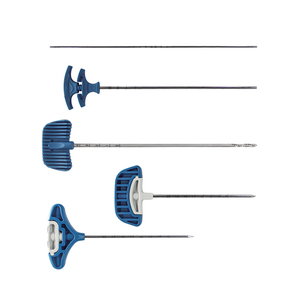
Thoracic & Lumbar Kyphoplasty Kit System Set
Complete minimally invasive vertebroplasty & kyphoplasty tool kit designed for precise vertebral compression fracture restoration.
Get Catalog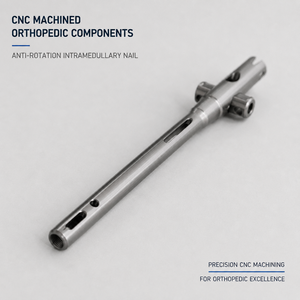
5-Axis CNC Ti-6Al-4V ELI Anti-Rotation Intramedullary Nails
Ultra-precision titanium alloy intramedullary nail systems engineered for stable long bone fracture reduction and multi-planar locking.
Get Catalog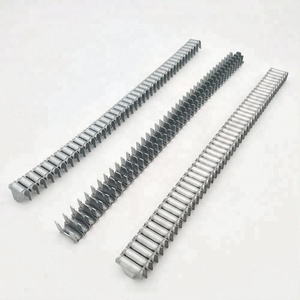
M85 CL-36 Precision Insulated Fasteners & Fixation Clips
Custom engineered stainless steel U-type structural fasteners and specialty clips manufactured to exact industrial and mechanical tolerances.
Get Catalog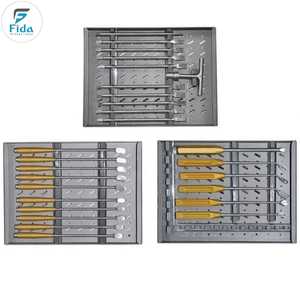
PLIF / TLIF Interbody Fusion Surgery Instrument Set
Reusable medical-grade stainless steel manual surgical instrument tray customized for lumbar interbody fusion and cage insertion workflow.
Get Catalog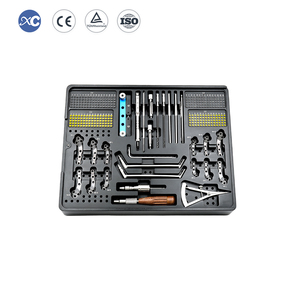
2.7/3.5mm Multi-Axial Locking TPLO Bone Plate Set
Advanced veterinary orthopedic titanium locking compression plate set engineered for precise tibial plateau leveling osteotomy surgery.
Get Catalog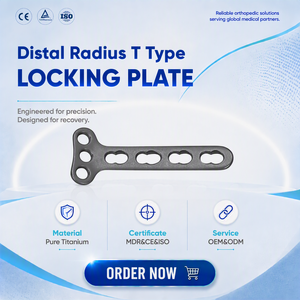
Distal Radius Variable-Angle Locking Plate System
Anatomically pre-contoured pure titanium and Ti-6Al-4V variable-angle compression plates for radius fracture internal fixation.
Get Catalog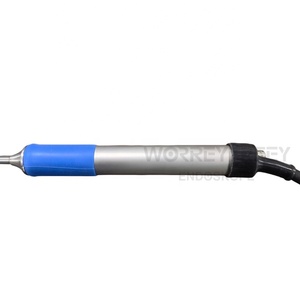
70,000 RPM Surgical Shaver & Power Drill System
High-speed motorized endoscopic power driver system for endoscopic discectomy, transforaminal decompression, and joint debridement.
Get Catalog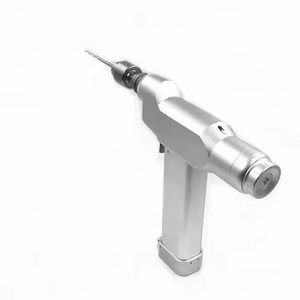
Surgical Cannulated Drill Power Tool System
Ergonomic autoclavable surgical power tool system featuring variable speed control for intramedullary reaming and K-wire placement.
Get CatalogState of the Art Contract Manufacturing for OEM Spinal Implants
The global demand for high-performance spinal fixation devices—including polyaxial pedicle screws, occipitocervical systems, anterior cervical plates, and interbody fusion cages (TLIF, PLIF, ALIF, LLIF)—requires contract manufacturers to deliver absolute dimensional precision, robust biomechanical reliability, and rigorous regulatory compliance. As a specialized custom OEM spinal implants manufacturer and global contract supplier, Orthi Medical Co., Ltd. operates state-of-the-art manufacturing infrastructure dedicated to serving orthopedic brand owners, private label distributors, and medical device innovators worldwide.
Core Quality Commitment: Every spinal implant manufactured in our facilities undergoes 100% optical and coordinate measuring machine (CMM) inspection, fully traceable to raw material heat lots complying with ASTM F136 (Ti-6Al-4V ELI), ASTM F2026 (PEEK OPTIMA), and ASTM F67 (Unalloyed Titanium).
1. Advanced Metallurgy & Biomaterials Selection Matrix
Material integrity is the foundational prerequisite for spinal implant long-term fatigue life and osteointegration. Contract procurement managers must evaluate raw material certifications against strict international standards:
| Material Grade | Standard Specification | Ultimate Tensile Strength (UTS) | Primary Clinical Application |
|---|---|---|---|
| Ti-6Al-4V ELI | ASTM F136 / ISO 5832-3 | ≥ 860 MPa | Pedicle screws, spinal rods, cervical plates, trauma nails |
| Pure Titanium (TA2/TA3) | ASTM F67 / ISO 5832-2 | 400 – 500 MPa | Anatomical locking plates, soft tissue fixation staples |
| PEEK OPTIMA® | ASTM F2026 | 90 – 100 MPa (Flexural) | Interbody fusion cages, zero-profile cervical devices |
| Cobalt-Chromium (CoCrMo) | ASTM F75 / ASTM F1537 | ≥ 930 MPa | High-load deformity spinal rods, joint arthroplasty components |
2. Ultra-Precision 5-Axis CNC Swiss Machining Capabilities
Complex spinal implant geometries—such as dual-lead threads, fenestrated cement-injection pedicle screw shafts, self-tapping flutes, and expandable cage hinges—demand multi-axis machining precision. Our production floor features Citizen and Star 5-axis CNC Swiss-type automatic lathes alongside high-speed DMG MORI machining centers. This enables complete single-setup machining of pedicle screws and complex instrument handles, eliminating cumulative re-clamping errors and guaranteeing concentricity tolerances within ±0.005 mm.
Future Procurement Trends in Global Spinal Device Sourcing
Medical device sourcing directors and OEM brand managers face an evolving regulatory and supply chain landscape. Analyzing global market shifts reveals several critical procurement trends that will define the next decade of OEM supplier selection:
Trend A: Vertical Integration & Turnkey Contract Manufacturing
Leading orthopedic brands are rapidly consolidating vendor lists in favor of turnkey OEM partners capable of managing the entire product lifecycle—from raw material forging and 5-axis machining to color anodizing, laser marking, cleanroom packaging, and gamma sterilization. Partnering with a fully vertically integrated manufacturer reduces supply chain risk, shortens production lead times by up to 40%, and guarantees seamless batch-level quality control.
Trend B: Widespread Adoption of Gamma-Sterilized Single-Use Implant Kits
Hospital operating rooms are increasingly rejecting traditional non-sterile bulk implant trays that require labor-intensive hospital decontamination, washing, and autoclaving prior to surgery. Strategic procurement teams are requesting individual pre-packaged, double-blister sterile implants sterilized via Cobalt-60 gamma irradiation (achieving a Sterility Assurance Level of SAL 10⁻⁶ per ISO 11137). This transition eliminates hospital cross-contamination risks and provides full UDI (Unique Device Identification) barcode scanning compatibility.
Trend C: Harmonized Global Regulatory Technical Dossiers
Navigating regulatory hurdles under the EU Medical Device Regulation (MDR 2017/745) and US FDA 510(k) clearances requires OEM suppliers to provide comprehensive technical dossiers. Modern procurement contracts stipulate that suppliers supply raw material mill test reports (MTRs), biocompatibility testing data (ISO 10993 series), cleaning validation reports, and mechanical fatigue test protocols upfront.
Technological & Material Development Trends in Spinal Fixation
The field of spinal surgery is experiencing rapid technological evolution, driven by the dual goals of accelerating bone fusion rates and facilitating minimally invasive surgical (MIS) access. OEM contract manufacturers must continually update their manufacturing techniques to accommodate these design innovations:
3D Printed Porous Titanium & Additive Manufacturing
Traditional solid PEEK interbody cages are increasingly giving way to 3D printed porous titanium cages produced via Selective Laser Melting (SLM) or Electron Beam Melting (EBM). Featuring biomimetic trabecular structures with controlled 60-70% porosity and pore sizes ranging from 400 to 700 microns, these 3D printed constructs lower the elastic modulus to match human cancellous bone, significantly reducing stress shielding and promoting direct cellular ingrowth throughout the entire cage interior.
Surface Modification & Hydroxyapatite (HA) Coatings
To enhance immediate post-operative stability, modern titanium spinal screws and interbody cages receive advanced surface treatments. Electrochemical Type II anodization increases wear resistance and fatigue limit, while plasma-sprayed Hydroxyapatite (HA) coatings and titanium plasma spray (TPS) provide an osteoconductive interface that accelerates early bone apposition. Vacuum plasma spraying technology ensures high bond strength exceeding 30 MPa, preventing coating delamination under physiological shear stress.
Unilateral Biportal Endoscopy (UBE) Compatibility
As spinal procedures shift toward ultra-minimally invasive techniques like Unilateral Biportal Endoscopy (UBE) and Percutaneous Transforaminal Endoscopic Discectomy (PTED), implant and instrument hardware must adapt. Modern pedicle screw systems feature lower-profile tulip heads, high-pitch dual-thread shafts for fast insertion through narrow working sleeves, and dedicated radiolucent carbon-fiber instrumentation handles.
Biomechanical Validation per ASTM F1717 & ASTM F2077
All OEM spinal hardware designs must undergo rigorous mechanical stress testing before commercial market launch. Pedicle screw construct integrity is evaluated per ASTM F1717 (static compression bending, static torsion, and dynamic fatigue testing up to 5 million cycles), while interbody fusion cages are tested per ASTM F2077 and ASTM F2267 to determine static/dynamic compression shear performance and subsidence risk profile.
Frequently Asked Questions (FAQ) for OEM Spinal Implant Procurement
Sourcing spinal implants requires rigorous technical evaluation. Below are expert answers to the most common questions posed by medical device procurement teams, regulatory directors, and distribution executives:
Why Leading Orthopedic Brands Choose Orthi Medical
Orthi Medical Co., Ltd. stands as a beacon of engineering quality and reliability in the medical device contract manufacturing sector. By maintaining full operational control over raw material procurement, 5-axis precision machining, surface finishing, and quality inspection, we guarantee consistent lot-to-lot excellence that empowers global medical device distributors and hospital networks.
Full Portfolio Synergy
Consolidate your procurement across Trauma, Spine, Sports Medicine, Joint Arthroplasty, UBE Endoscopy, and Interventional Stents with a single trusted manufacturer.
Uncompromised Quality Assurance
Every component undergoes strict CMM dimensional verification, surface roughness testing, micro-hardness validation, and cleanroom particle monitoring.
Surgeon Education & Clinical Support
We support our commercial partners with step-by-step surgical technique guides, workshop materials, cadaver lab support, and ongoing academic event collateral.
Ready to Accelerate Your OEM Spinal Implant Project?
Partner with an ISO 13485 certified manufacturer equipped with 5-axis CNC machining, complete regulatory dossiers, and custom packaging solutions. Contact our engineering procurement team today for technical catalogs and contract manufacturing quotes.
Get Catalog