Precision Engineering for Orthopedic & MIS Surgery
Explore our export-certified portfolio of orthopedic trauma, spinal fixation, and sports medicine instrument technologies manufactured under stringent ISO 13485 guidelines.
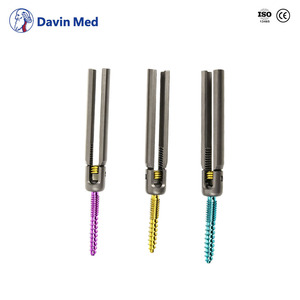
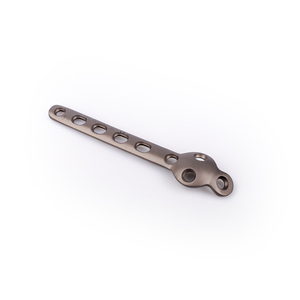
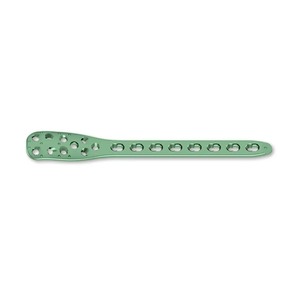
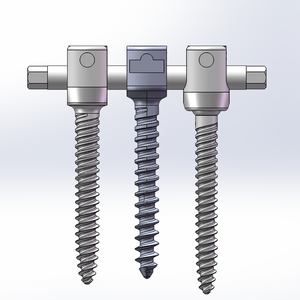
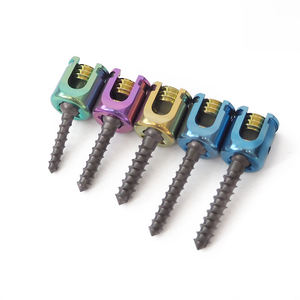
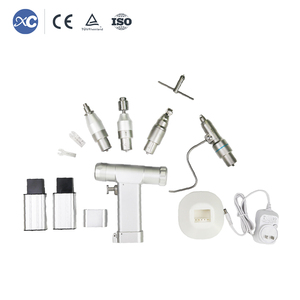
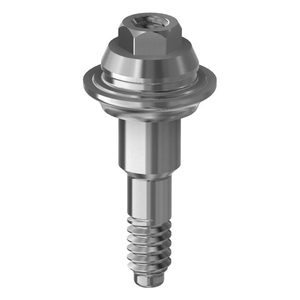
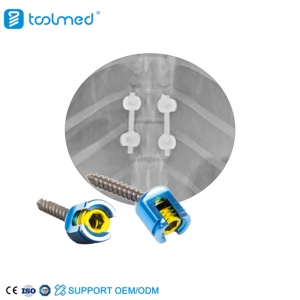
World-Class Contract Manufacturing Infrastructure
Operating state-of-the-art 5-axis CNC machining, ultra-precision grinding, automated surface passivation, and ISO Class 7/8 cleanroom packaging facilities for tier-1 medical brands worldwide.
Advanced Medical Metallurgy
We work exclusively with certified raw materials complying with ASTM F899 (Surgical Stainless Steel), ASTM F67 / F1472 (Pure Titanium & Ti-6Al-4V ELI), and medical-grade PEEK. Full raw material heat traceability certificates (EN 10204 3.1) accompany every production lot.
Custom OEM Tooling & Trays
Complete custom design of surgical instrument trays, silicone insert holders, laser etch branding, color anodizing, and anti-glare micro-bead blasting. We transform customized CAD models into ergonomic, autoclavable instrument sets.
Regulatory Submission Files
Speed up your local market approval. We provide full technical documentation (STED), biocompatibility risk assessments (ISO 10993), wear debris analysis, and cleaning/sterilization validation protocols to support FDA 510(k) and EU MDR (2017/745) filings.
Architecture & Metallurgy of Custom OEM Shoulder Arthroscopy Sets
An in-depth technical analysis for orthopedic procurement officers, OEM product managers, and medical device distributors seeking competitive advantages in minimally invasive shoulder surgery.
1. The Evolution of Shoulder Arthroscopy: Why Instrument Precision Matters
Shoulder arthroscopy has transitioned from diagnostic joint inspection to highly sophisticated reconstructive procedures, including Rotator Cuff Repair, Bankart Lesion Stabilization, SLAP Tear Management, Subacromial Decompression, and Superior Capsular Reconstruction (SCR). Operating within tight joint capsules—often with fluid irrigation under strict pressure control—demands surgical instruments engineered with minimal tactile resistance, exceptional fatigue strength, and absolute mechanical fidelity.
As a specialized OEM factory, our technical team addresses the common pain points encountered by arthroscopic surgeons: instrument tip flexure during suture passage, premature cutting edge degradation on motorized shaver blades, glare reflection under 4K HD endoscopic light sources, and mechanical wear from repeated autoclave cycles.
2. Anatomical Breakdown of a Complete Custom Shoulder Set
A standard high-performance shoulder arthroscopy tray contract-manufactured at our facilities integrates specialized mechanical sub-assemblies:
| Instrument Category | Material Specification | Engineering Functionality & Tolerance | Custom OEM Options |
|---|---|---|---|
| Arthroscopic Punches & Graspers | 17-4PH Stainless / 420J2 Hardened Steel | Low-profile jaws with dual-pivot links; cutting edge sharpness maintained through >500 actuation cycles. | Biter configurations: Straight, Left/Right Curved, 90° Up-Bite; Custom handle loops. |
| Suture Passers & Shuttle Forceps | Nitinol Needle Tips / Ti-6Al-4V Shafts | Flexible Nitinol needle memory alloy allowing smooth penetration through thick tendon tissue without deflection. | Self-capturing suture mechanisms, mono-filament & braided suture compatibility (#2 UHMWPE). |
| Arthroscopy Shaver Blades & Burs | 316L Tube / 440C Precision Rotors | Concentricity within ±0.01mm to eliminate intraoperative vibration at speeds up to 12,000 RPM. | Full-Radius Resector, Aggressive Cutter, Tapered Flute Bur; Single-use sterile or reusable. |
| High-Flow Cannula Systems | Medical Grade PEEK / Anodized Titanium | Flexible silicone flexible valves preventing fluid leakage while permitting smooth passage of curved instruments. | Threaded anti-slip body, translucent portals, clear flow lumens (Ø4.5mm - 8.5mm). |
| Knot Pushers & Suture Cutters | Electropolished 316L Stainless Steel | Smooth chamfered suture runners to prevent fraying during sliding knot execution down to tissue anchors. | Closed-end, open-ended, or locking thumb switches; custom laser depth markings. |
3. Metallurgical & Surface Treatment Standards
To ensure long-term clinical reliability, instruments must resist stress corrosion cracking and pitting induced by saline irrigation fluids ($0.9\%\ \text{NaCl}$). Our manufacturing process utilizes rigorous surface passivation and physical coatings:
- Citric & Nitric Passivation (ASTM A967): Removes free iron particles post-machining, creating a protective chromium oxide surface barrier.
- Physical Vapor Deposition (PVD) Coatings: Titanium Nitride (TiN) or Diamond-Like Carbon (DLC) coatings increase surface hardness up to 2500 HV, significantly reducing friction on cutting edges and preventing intraoperative light reflection.
- Electropolishing: Yields a smooth mirror-finish ($Ra < 0.2\,\mu\text{m}$), removing microscopic burrs where organic debris could accumulate, thus ensuring superior cleanability during reprocessing.
Technological Trends Shaping Shoulder Arthroscopy Manufacturing
Stay ahead of market shifts. How smart engineering, additive manufacturing, and ergonomics are redefining the next generation of sports medicine surgical tools.
1. Transition Toward Modular & Hybrid Disposable Systems
Global healthcare systems are increasingly analyzing cost-per-case vs reprocessing overhead. The market is shifting toward hybrid instrument kits—combining reusable, high-durability main handles with single-use, factory-sharp working tips (shavers, suture needles, and punch tips). Custom OEM factories must offer modular threading platforms that allow seamless interface between reusable handpieces and disposable sterile components.
2. Ergonomic Optimization & Tactile Feedback Tuning
Repetitive strain injuries among orthopedic surgeons have driven demand for lightweight instrument shafts constructed from high-strength Titanium alloys and PEEK composites rather than heavy stainless steel. Modern OEM design focuses on balance points, counter-weighted handles, and ratcheting mechanisms that reduce hand fatigue during lengthy cuff reconstruction procedures while enhancing tactile bio-feedback when penetrating calcified tissue.
3. Integration with All-Inside Anchor Systems
Modern rotator cuff repairs heavily rely on all-inside suture anchors and knotless fixation technology. Instrument sets must now include specialized guide sleeves, drill guides with millimeter-accurate depth stops, and tap shafts engineered to operate seamlessly alongside proprietary anchor designs. Custom OEM factories provide co-development services to match instrument tolerances directly to anchor delivery devices.
4. 4K Ultra-HD Visualization & Anti-Glare Surface Finishes
With the adoption of 4K and 3D arthroscopic camera towers, traditional polished metal instruments create severe light flare and reflection on surgical monitors. Future-ready custom sets utilize non-reflective matte coatings, dark blue/grey bead-blasting, or black oxide layers to preserve optical clarity and reduce eye fatigue for surgical teams.
Future Procurement Trends for Global Medical Buyers
Navigating global supply chain dynamics, regulatory shifts, and cost optimization when selecting a contract manufacturing partner for surgical sets.
Traditional Sourcing Model
HISTORICAL APPROACH
- Multi-vendor fragmented purchasing
- Unstandardized tray configurations
- High risk of component dimensional mismatch
- Separate packaging and sterilization logistics
- Unpredictable batch-to-batch lead times
Integrated OEM Contract Sourcing
MODERN STRATEGIC TREND
- Single-source accountable manufacturing: Implants + Instruments + Trays produced under one roof.
- Turnkey regulatory dossiers (CE MDR, FDA 510k ready).
- Customized branding, laser marking, and color-coded tray layouts.
- Cleanroom assembly & validated sterile barrier packaging.
- Guaranteed batch consistency via 5-axis CNC automation.
Supply Chain Resilience Focus
RISK MITIGATION
- Raw material buffer inventory management
- Dual-sourcing of medical-grade steel & titanium
- Full traceability from ingot to sterile package
- Comprehensive risk management per ISO 14971
- Rapid prototyping to mass production scale-up
From Concept to Certified Sterile Surgical Trays
Our streamlined 4-stage contract manufacturing pipeline ensures rapid product launch while mitigating technical and regulatory risks.
CAD & DFM Review
Design for Manufacturability analysis by senior surgical engineers. Optimization of tolerances, blade geometries, and material choices.
Rapid Prototyping
Precision CNC machining of functional samples within 14-21 days. Mechanical testing, surgeon fit-and-feel evaluations.
Automated Production
5-axis swiss turning and multi-axis milling under automated inspection. Laser marking, passivating, and custom tray assembly.
QC & Sterile Release
100% optical coordinate inspection. Bioburden testing, sterile pouch sealing in Class 7 cleanrooms, and export documentation.
Frequently Asked Questions (FAQ) for OEM Buyers
Comprehensive answers regarding custom manufacturing, compliance, material verification, minimum orders, and private labeling.
What certifications and quality standards do your shoulder arthroscopy instrument sets adhere to?
Our manufacturing facility operates strictly under an ISO 13485:2016 and ISO 9001:2015 certified Quality Management System. Products comply with European CE marking guidelines under EU MDR 2017/745 and applicable US FDA Quality System Regulations (21 CFR Part 820). Raw materials follow international standards such as ASTM F899 for surgical stainless steel, ASTM F67/F1472 for titanium implants, and ISO 10993 for biocompatibility.
Can you manufacture custom arthroscopic instruments based on our proprietary CAD designs or samples?
Yes. As a direct OEM/ODM manufacturer, we specialize in drawing-based contract manufacturing. You can provide 3D CAD files (STEP, IGES, SolidWorks) or physical samples. Our engineering team conducts a thorough Design for Manufacturability (DFM) assessment, verifies tolerances down to ±0.005mm, and produces functional prototypes for mechanical and clinical evaluation prior to mass production.
What options are available for custom branding, color coding, and tray organization?
We offer full private-label customization services, including:
- Precision fiber laser marking for company logos, part numbers, UDI codes, and lot numbers.
- Anodized color coding on titanium handles, cannulas, and instrument shafts for intraoperative identification.
- Custom-molded or CNC-milled aluminum/silicone sterilization trays designed to match your specific procedural workflow.
How do you ensure the longevity and corrosion resistance of re-sterilizable surgical instruments?
All surgical steel instruments undergo a multi-stage chemical passivation process according to ASTM A967 to build a stable protective oxide layer. Furthermore, critical friction components receive Physical Vapor Deposition (PVD) coatings like Titanium Nitride (TiN) or Diamond-Like Carbon (DLC). Instruments undergo rigorous salt-spray testing, boiling water corrosion tests, and multi-cycle autoclave validation (134°C steam sterilization) to guarantee zero rust formation or joint degradation over extended clinical use.
Can instruments be supplied pre-sterilized in final primary packaging?
Yes. We offer turnkey packaging options in ISO Class 7 cleanrooms. Products can be sealed in Tyvek pouches or rigid blister packs and sterilized via Gamma Irradiation (Co-60) or Ethylene Oxide (EO) gas, achieving a Sterility Assurance Level (SAL) of 10-6. Full sterilization validation reports (ISO 11137 / ISO 11135) are provided.
What is your typical Minimum Order Quantity (MOQ) and lead time for OEM orders?
For standard catalog items with custom laser marking, MOQs start as low as 5 to 10 sets. For fully customized OEM instruments requiring dedicated tooling, initial prototype batches can be produced in quantities of 50–100 units. Standard production lead time is typically 30 to 45 days after design sign-off, with rapid prototyping options delivered within 14 to 21 days.
Partner with a Premier OEM Surgical Device Manufacturer
Whether you require custom prototype fabrication, complete shoulder arthroscopy tray engineering, or high-volume contract manufacturing, our expert engineering team delivers uncompromised Swiss-level quality with competitive factory-direct lead times.