OEM Implants & Specialized Surgical Instrument Systems
Engineered to international regulatory specifications with 100% material traceability and certified ISO 13485 manufacturing quality controls.
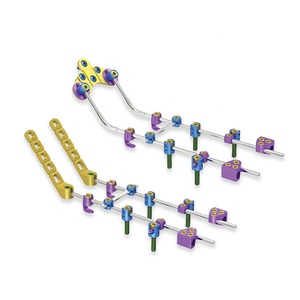
Spinal Implants New Design Posterior Occipital-Cervical-Thoracic System for Spine Surgery Meditech CE ISO
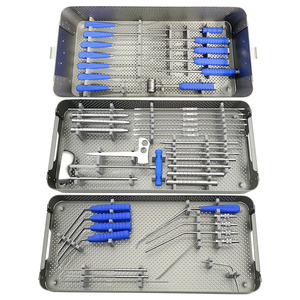
Spinal Surgery Unilateral Biportal Endoscopic Surgery Instruments Set UBE Instrument Set Orthopedic Instrument
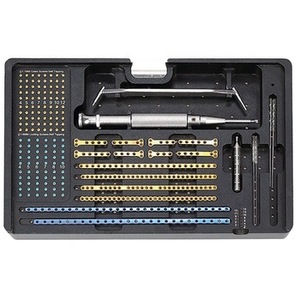
1.6mm Locking Plate Instrument Kit Small Animals Orthopedic Veterinary Surgical Instruments Drill Guide Implants Bone Plate
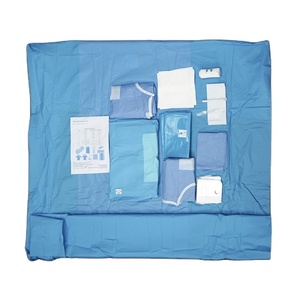
Disposable Orthopedic Sterile Kits/lpacks /Orthopedic Implant Sets/Orthopedic Surgery Packs
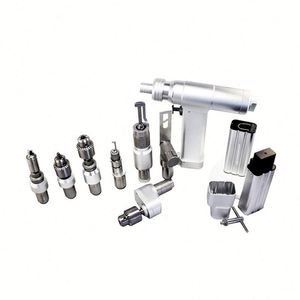
Veterinary Instrument Ortho Drill Medical Equipment Bone Drill Orthopedic Drill for Surgery a Multifunctional Toolkit
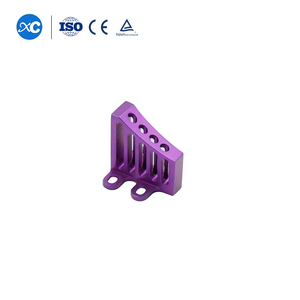
Premium Orthopedic Veterinary Trauma Implant Surgical Instrument - Titanium TTA Implant for Animal Orthopedic Trauma Surgery
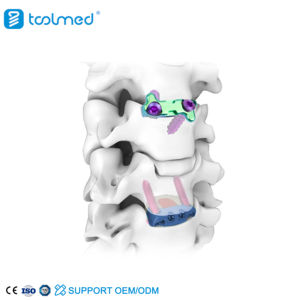
Medical Spine Fixation System Lumbar Cage Peek Cage Double Locking Screw Cervical Cone fusion Cagefor Surgery Spinal Implants
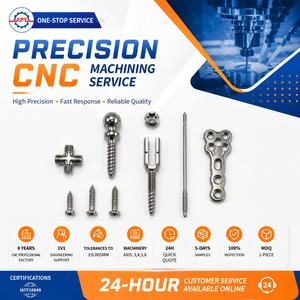
Precision CNC Machined Orthopedic Implants Titanium Bone Screws Spinal Fixation Parts OEM Custom Medical Components Manufacturer
Executive Summary: The Evolution of Quality Management Systems in Custom OEM Orthopedic Manufacturing
The global orthopedic implant sector is experiencing a fundamental paradigm shift driven by stringent regulatory frameworks (such as EU MDR 2017/745 and US FDA Quality System Regulation 21 CFR Part 820), heightened clinical expectations for biomechanical performance, and an urgent demand for supply chain agility. For medical device brand owners, original equipment manufacturers (OEMs), and global exporters, selecting a custom orthopedic implant manufacturing partner requires rigorous evaluation of their Quality Management System (QMS) architecture.
Modern implantable medical devices—ranging from pedicle screw systems and cervical interbody PEEK cages to complex intramedullary tibia nails and specialized veterinary locking plates—demand zero-defect manufacturing protocols. A compliant quality system cannot exist merely as a static paper record; it must function as a dynamic, data-driven framework embedded across raw material procurement, multi-axis subtractive Swiss machining, automated surface modification, ultrasonic passivation, and ISO Class 7 cleanroom packaging.
This whitepaper outlines the critical technical pillars that define a high-capability OEM orthopedic factory. By analyzing raw material metallurgy, precision geometric tolerances, bioburden control, and future supply chain procurement trends, we provide healthcare brand directors and procurement engineers with the benchmark criteria necessary to mitigate clinical risk and accelerate international regulatory clearance.
The 6-Stage Quality Management System (QMS) in OEM Orthopedic Manufacturing
To guarantee long-term in vivo stability, osseointegration, and mechanical endurance, certified orthopedic factories deploy a closed-loop 6-stage quality architecture. Each stage represents a critical control point (CCP) governed by specific international standards.
Stage 1: Raw Material Validation & Metallurgy Traceability
Every titanium bar (ASTM F67 Pure Titanium, ASTM F1472 Ti-6Al-4V ELI) and implant-grade PEEK (ASTM F2026) undergoes incoming optical emission spectrometry (OES) and microstructural grain size verification. Melt certificates and heat numbers are permanently logged into the Device History Record (DHR).
Stage 2: 5-Axis Precision CNC Swiss Turning & Milling
Utilizing high-precision Citizen and Star multi-axis CNC machines, complex screw threads, dual-locking mechanisms, and contoured anatomical plates are turned within micrometer tolerances (±0.005mm). In-line automated Coordinate Measuring Machines (CMM) ensure GD&T compliance.
Stage 3: Chemical Surface Modification & Passivation
Implants undergo automated micro-bead blasting and nitric/citric acid passivation according to ASTM F86 standards. Anodizing systems produce color-coded identification layers (Type II/III) that resist wear while enhancing corrosion resistance and osseointegration potential.
Stage 4: Multi-Stage Ultrasonic Cleaning & ISO Class 7 Packaging
Machined components pass through multi-chamber ultrasonic cleaning lines using pyrogen-free purified water. Primary packaging occurs inside monitored ISO Class 7 cleanrooms, utilizing medical-grade Tyvek blisters sealed with validated thermal temperature controls.
Stage 5: Sterilization Validation (SAL 10⁻⁶ Co-60 Gamma)
Terminal sterilization protocols are validated under ISO 11137 standards. Utilizing Cobalt-60 gamma radiation or Ethylene Oxide (EO), implants achieve a Sterility Assurance Level (SAL) of 10⁻⁶, eliminating in-hospital reprocessing risks for surgical teams.
Stage 6: Biomechanical Testing & Full Regulatory Technical Dossier
Batch samples undergo static axial compression, dynamic fatigue testing (ASTM F1717 for spinal constructs, ASTM F543 for bone screws), and pull-out force analysis. Technical documentation is compiled directly into registration-ready CE/FDA format files.
Future Procurement Trends in Global Orthopedic OEM Manufacturing
As healthcare purchasing organizations shift toward value-based procurement models, global exporters and brand owners must align with OEM suppliers capable of anticipating market shifts. Key technical and strategic trends shaping the next decade include:
1. Convergence of Additive Manufacturing and Precision CNC Subtractive Finishing
The industry is rapidly adopting hybrid manufacturing workflows. Direct Metal Laser Sintering (DMLS) 3D printing enables complex porous titanium structures (trabecular bone mimics) for interbody fusion cages and custom revision joint cups. However, secondary multi-axis CNC milling remains vital to ensure sub-micron thread precision and smooth joint articulation surfaces.
2. Accelerated Transition to Single-Use Factory Sterile Packaged Implant Systems
Traditional non-sterile implants sent in re-usable surgical trays impose significant autoclave reprocessing costs and infection risks on hospitals. OEM factories offering fully validated, gamma-sterilized individual unit packaging (SAL 10⁻⁶) allow distributors to deliver ready-to-use kits directly to operating rooms, reducing cross-contamination risks and streamline inventory tracking.
3. Regulatory Harmonization & Comprehensive Technical Dossier Readiness
With the full implementation of EU MDR and strict global vigilance guidelines, medical device brands can no longer rely on superficial OEM factory setups. Leading exporters now demand complete Design History Files (DHF), biocompatibility data (ISO 10993 series), process validation records (IQ/OQ/PQ), and continuous post-market surveillance (PMS) support from their manufacturing partners.
4. Integration of Minimally Invasive Surgery (MIS) & Endoscopic (UBE) Toolkits
The global demand for spine and joint preservation procedures is driving growth in Unilateral Biportal Endoscopy (UBE) and sports medicine arthroscopy. OEM factories capable of co-developing specialized surgical instruments alongside trauma and spinal implants offer significant competitive advantages to international distributors seeking one-stop solution sourcing.
Technical Benchmark Matrix: Standard Commercial Machining vs. Medical OEM Standards
Understanding the strict boundary between standard precision machine shops and certified medical implant OEM factories is paramount for quality assurance managers.
| Quality Parameter | Standard Commercial Machining | Certified ISO 13485 OEM Implant Factory |
|---|---|---|
| Raw Material Controls | Commercial Grade Titanium / Stainless Steel; basic mill test reports. | Medical-Grade ASTM F67, ASTM F1472 Ti-6Al-4V ELI, PEEK ASTM F2026 with 100% heat lot spectral analysis. |
| Machining Tolerance | ±0.05 mm to ±0.02 mm standard dimensional check. | Sub-micron Swiss CNC turning within ±0.005 mm; 100% optical CMM automated thread inspection. |
| Surface Treatment | Basic industrial anodizing or degreasing without acid residue monitoring. | ASTM F86 medical passivation, controlled Type II/III anodizing, micro-bead blasting, zero chemical residue. |
| Cleanroom Environment | Open shop floor packaging; high risk of particulate contamination. | ISO Class 7 positive-pressure cleanroom; continuous bioburden and particulate monitoring. |
| Sterilization Assurance | Non-sterile supply; relies entirely on end-user autoclave. | Terminal Co-60 Gamma Sterilization achieving SAL 10⁻⁶ validated per ISO 11137. |
| Regulatory Technical File | Minimal production invoice and rudimentary drawing check. | Full DHR, DHF support, IQ/OQ/PQ validation, ISO 10993 biocompatibility & ASTM F1717 fatigue reports. |
Orthi Medical OEM Infrastructure & Technical Capabilities
As a specialized manufacturer and global exporter of orthopedic implants and minimally invasive surgical systems, Orthi Medical Co., Ltd. operates a state-of-the-art production campus designed specifically to satisfy strict global regulatory expectations.
Integrated Production Campus
Equipped with advanced 5-axis Swiss-type lathes, high-speed CNC milling centers, and wire EDM equipment capable of executing intricate implant geometry with high repeatability.
In-House Testing Laboratory
Features state-of-the-art biomechanical testing equipment for axial compression, torsional shear, fatigue testing, surface roughness (Ra) profiling, and coordinate measuring machines (CMM).
Turnkey Regulatory Support
Experienced regulatory affairs teams assist global partners with technical documentation, surgical technique manual creation, clinical evaluation reports (CER), and CE/FDA submission files.
Frequently Asked Questions (FAQ) for OEM Orthopedic Sourcing
Clear, technical answers to essential questions asked by medical device procurement directors, quality engineers, and international distributors.
What quality certifications and material standards govern your OEM orthopedic production lines? +
How does your factory handle custom OEM drawing adjustments, tooling, and rapid prototyping? +
Can orthopedic implants be supplied in terminal sterile packaging ready for clinical distribution? +
What mechanical test reports and Device History Records (DHR) are provided with OEM shipments? +
What product lines can global medical distributors source from Orthi Medical? +
What assistance is provided for international product registration (CE, FDA, NMPA)? +
Partner with a Certified OEM Orthopedic Manufacturing Leader
Accelerate your product launch, reduce clinical compliance risks, and secure high-precision titanium & PEEK implant supplies with our audited ISO 13485 manufacturing ecosystem.