Featured Spine & OEM Implant Solutions
Explore our certified interbody fusion devices, titanium mesh systems, and custom OEM manufacturing series for global orthopedic exporters and medical brands.
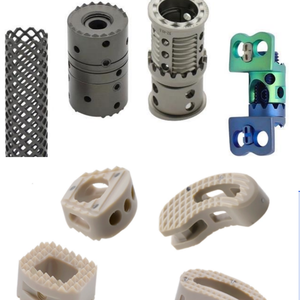
Expandable Titanium Mesh & Interbody PEEK Cage Series
Designed for versatile ALIF, PLIF, TLIF, and OLIF procedures with adjustable height mechanisms and high fatigue strength.
Custom OEM PEEK Interbody Fusion OLIF Cage System
Anatomically contoured radiolucent PEEK implants with tantalum markers for retroperitoneal MIS oblique spine surgery.
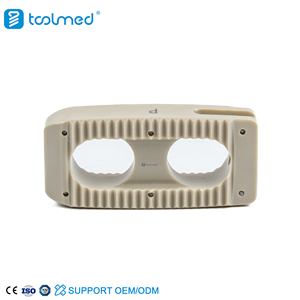
PEEK Oblique Lateral Lumbar Interbody Fusion (OLIF) Cage
Engineered with large graft windows and optimized anti-expulsion teeth to accelerate osseointegration and segmental stability.
3D Printed Porous Titanium OLIF Cage with Anatomical Lordosis
Featuring Trabecular Titanium structure (porosity 60-70%) to mimic cancellous bone modulus and eliminate delamination risk.
Surgical Instrument Set & Modular Trays for OLIF Instrumentation
Complete MIS instrumentation kit including trial cages, trial inserters, nerve retractors, and endplate preparation shavers.
OEM Titanium Alloy Spinal Lumbar Fixation & Cage Assembly
High-tensile Ti-6Al-4V ELI construct compatible with stand-alone or supplemental pedicle screw fixation protocols.
Expandable Lateral & Oblique Lumbar Interbody Fusion Cage
Continuous expansion architecture providing custom height restoration and lordotic angle adjustment intraoperatively.
High-Strength PEEK Cervical & Lumbar Interbody Cage Series
Precision Swiss CNC-machined PEEK OPTIMA implants certified for multi-level degenerative disc treatment.
ISO 13485
MDR & CE Compliant Quality Assurance
< 0.005mm
Ultra-Precision Swiss CNC Machining
SAL 10-6
Co-60 Gamma Sterilization Validation
60+ Countries
Trusted Global OEM Export Network
Biomechanical Superiority & Anatomical Rationale of Custom OLIF Cages
Oblique Lumbar Interbody Fusion (OLIF) has redefined minimally invasive spine surgery (MISS) for anterior and middle column restoration. Operating through the anatomical corridor between the anterior retroperitoneal vessel sheath and the psoas muscle (predominantly targeting the L2–L5 vertebral levels), the OLIF approach bypasses the muscular disruption and neurological trauma associated with posterior approaches such as PLIF or TLIF. For orthopedic OEM brand owners, medical device distributors, and hospital procurement officers, sourcing custom OEM OLIF cages engineered to exact anatomical geometries is essential for achieving superior fusion rates and minimizing postoperative complications.
Clinical Insight for OEM Buyers: The primary biomechanical objective of an OLIF cage is to maximize endplate contact area, restore intervertebral disc height, reconstruct physiological lumbar lordosis ($4^\circ$ to $15^\circ$), and establish robust initial mechanical stability. Custom OEM exporters must adhere to tight manufacturing tolerances to ensure zero micro-motion at the bone-implant interface.
Key Biomechanical Advantages of the OLIF Approach:
- Preservation of Posterior Elements & Psoas Integrity: By approaching the spinal column obliquely anterior to the psoas major, OLIF eliminates posterior spinous process resection, multifidus muscle stripping, and lumbar plexus stretch injuries commonly associated with direct lateral transpsoas (LLIF/XLIF) approaches.
- Expanded Footprint & Subsidence Risk Reduction: OLIF cages span across the dense peripheral apophyseal ring of the vertebral endplates. Because the peripheral ring is significantly stronger than the central cancellous bone, an oversized wide-footprint cage dramatically decreases the risk of postoperative implant subsidence into the vertebral body.
- Indirect Decompression of Neural Elements: Height restoration via large-volume OLIF cages stretches the posterior longitudinal ligament (PLL) and ligamentum flavum, expanding intervertebral foramen volume by up to 35% and spinal canal area without direct neural canal entry.
PEEK-OPTIMA® & Titanium Alloys
Manufactured from implant-grade Invibio PEEK-OPTIMA® (ASTM F2026) or Ti-6Al-4V ELI (ASTM F136/F1472), balancing elasticity modulus with extreme static and dynamic fatigue strength.
Radiopaque Tantalum Markers
Integrated medical-grade Tantalum pins (ASTM F560) positioned at precise anatomical coordinates enable accurate intraoperative visualization under fluoroscopic X-ray and CT imaging.
Anti-Expulsion Serrations
Bi-directional pyramidal or tooth-pattern surface profiles resist graft migration and axial expulsion under flexural, torsional, and shear loading forces within the intervertebral space.
Material Science & Advanced Manufacturing: PEEK vs. 3D-Printed Porous Titanium
As a specialized custom OEM OLIF cage manufacturer and exporter, Orthi Medical provides contract manufacturing in two primary medical-grade materials: Polyetheretherketone (PEEK) and 3D Printed Additive Porous Titanium (Ti-6Al-4V ELI). Understanding the material properties and biomechanical interactions of each material is crucial for regulatory registration and market segmentation.
1. Medical-Grade PEEK (Polyetheretherketone)
PEEK-OPTIMA® remains a golden standard for interbody fusion devices due to its elastic modulus of approximately 3.6 GPa, which closely mirrors human cortical bone (12–18 GPa) compared to solid metals. This elastic compatibility minimizes stress shielding at the adjacent bone interface, reducing endplate osteolysis and promoting load-sharing across autograft or allograft material placed in the hollow graft window. Furthermore, PEEK is radiolucent, allowing spine surgeons to evaluate radiographic fusion progress on X-ray and CT scans without metallic artifact scatter.
2. 3D Printed Porous Titanium (Additive Manufacturing)
Utilizing Electron Beam Melting (EBM) and Selective Laser Melting (SLM) technology, our 3D printed titanium OLIF cages feature an interconnected, engineered porous architecture (pore sizes ranging between 400 $\mu$m and 700 $\mu$m with 60%–70% overall porosity). This structures mimics trabecular cancellous bone, facilitating vascularization, osteoblast migration, and direct bone in-growth (osteointegration) throughout the entire cage body. 3D printed titanium cages eliminate the risk of coating delamination often associated with plasma-sprayed titanium coatings on PEEK.
| Specification Parameter | PEEK OLIF Cage Series | 3D Printed Porous Titanium OLIF | Custom OEM Options Available |
|---|---|---|---|
| Raw Material Standard | ASTM F2026 (Medical Grade PEEK) | ASTM F3001 / ASTM F136 (Ti-6Al-4V ELI) | Carbon Fiber Reinforced PEEK / HA Coated |
| Modulus of Elasticity | 3.6 GPa – 4.0 GPa (Cortical-like) | 1.5 GPa – 3.0 GPa (Trabecular-like) | Custom structural stiffness control |
| Lordotic Angles | 4°, 8°, 12°, 15° Standard Angles | 4°, 8°, 12°, 15° Standard Angles | Custom anatomical lordotic taper ($0^\circ-20^\circ$) |
| Radiopaque Markers | 3–5 Tantalum Pins (ASTM F560) | Inherent radiopaque titanium structure | Custom marker pattern & positioning |
| Cage Width & Length | Width: 18–22mm | Length: 40–60mm | Width: 18–22mm | Length: 40–60mm | Full custom dimensional matrix scaling |
| Fatigue Test Benchmark | > 5,000,000 cycles (ASTM F2077) | > 5,000,000 cycles (ASTM F2077) | Custom static/dynamic shear testing |
| Sterilization Capability | Gamma Irradiation / Autoclave | Co-60 Gamma (SAL 10-6) | Bulk Non-Sterile or Blister Pack Sterile |
Future Sourcing Trends & Procurement Roadmaps for OLIF Devices (2025–2030)
The global spinal interbody fusion market is undergoing rapid evolution driven by minimally invasive surgical advancements, patient-specific implant designs, and stringent regulatory demands. Procurement managers and OEM brand holders must align with contract manufacturers capable of anticipating technological and supply-chain shifts over the next decade.
1. Transition Toward Patient-Specific 3D Printed Implants
Advances in preoperative high-resolution CT modeling and automated CAD translation are driving the demand for custom patient-matched OLIF cages. These custom implants accommodate complex spinal deformities, revision surgeries, or asymmetric endplate erosion. Exporters equipped with validated 3D printing infrastructure can provide rapid turnaround times from DICOM file transmission to final sterile packaged implant.
2. Integrated Zero-Profile Anchoring & Stand-Alone Constructs
Modern OLIF technique trends favor integrated zero-profile locking screw or blade mechanisms built directly into the OLIF cage body. This eliminates the necessity for supplementary anterior plate fixation or posterior pedicle screw constructs in selected single-level degenerative cases, shortening surgical duration and reducing overall instrumentation cost.
3. Bioactive Surface Modifications
While un-modified PEEK remains popular, bioactive surface engineering—such as Hydroxyapatite (HA) plasma spraying, atomic layer deposition of titanium dioxide ($\text{TiO}_2$), or micro-textured surface etching—is increasingly requested by European and North American distributors seeking to accelerate early bone-implant bonding without compromising radiolucency.
4. Consolidated Single-Source OEM Contract Manufacturing
To reduce compliance risk under the EU Medical Device Regulation (MDR 2017/745) and US FDA 21 CFR Part 820 standards, orthopedic brands are reducing vendor counts. Single-source OEM exporters who manage raw material sourcing, 5-axis CNC machining, surface treatment, laser marking, cleanroom washing, sterile packaging, and technical file documentation provide significant total-cost-of-ownership (TCO) advantages.
Why Partner with Orthi Medical for Custom OEM OLIF Exporter Services?
Orthi Medical Co., Ltd. is a recognized ISO 13485 and CE certified medical device manufacturer specializing in spine implants, trauma plates, joint replacement, and sports medicine instruments. Our enterprise capabilities are built upon three core pillars: uncompromising engineering precision, documented quality assurance, and seamless private-label export support.
Full-Spectrum OEM/ODM Customization
We provide complete drawing-based manufacturing services. From initial CAD/CAM modeling to prototype verification, custom lordotic angles, graft window enlargement, and bespoke instrument tray co-development.
Ultra-Precision CNC Machining Fleet
Our production floor operates multi-axis DMG MORI and Citizen Swiss CNC turning-milling centers, achieving consistent manufacturing tolerances within $\pm 0.005$ mm for high-complexity spinal implants.
Cleanroom & Gamma Sterilization
Implants can be cleaned in automated ultrasonic washing lines, assembled inside a Class 100,000 cleanroom, and packaged in double Tyvek blisters ready for Co-60 Gamma Irradiation (SAL 10-6).
Regulatory Registration Dossiers
We support global importers with comprehensive technical files, material safety certificates, mechanical test reports (ASTM F2077, ASTM F2267), and ISO 13485 audit dossiers for rapid local health authority approvals.
Private Label & Laser Branding
In-house high-precision laser marking for custom lot numbers, matrix barcodes, product codes, and customer brand logos, ensuring full batch traceability throughout the supply chain.
Surgeon Training & Academic Support
We provide surgical technique manuals, cadaver workshop support models, and technical sales training materials to assist our global distributors in successfully launching OLIF product lines.
Frequently Asked Questions (FAQ) for OEM OLIF Cage Sourcing
Below are essential technical and operational answers to common inquiries from medical device importers, OEM product managers, and procurement leads.
What mechanical testing standards do your OEM OLIF cages comply with?
Our OLIF cages undergo rigorous mechanical testing in accredited independent laboratories according to international standards: ASTM F2077 (Static and Dynamic Axial Compression, Torsional Fatigue testing up to 5 million cycles without failure) and ASTM F2267 (Standard Test Method for Measuring Load-Induced Subsidence of Interbody Fusion Devices into Simulated Vertebral Bodies). Full mechanical test reports are included in our technical registration documentation.
Can you manufacture custom dimensions and customized lordotic angles for OEM orders?
Yes. As a full-service custom OEM OLIF exporter, we offer complete ODM/OEM customization. We can adjust cage width (e.g., 18mm to 26mm), length (36mm to 60mm), height profiles (8mm to 18mm), lordotic angles ($0^\circ$ to $18^\circ$), and custom tooth patterns according to your specific clinical design requirements and CAD models.
What are the minimum order quantities (MOQ) and production lead times for OEM projects?
For standard catalog OLIF implants under private label, our minimum order quantity typically starts at 50 to 100 units per size specification. For fully custom OEM projects requiring new tooling and CNC programming, prototyping lead times range between 3 and 4 weeks, with mass production delivered within 6 to 8 weeks following sample sign-off and regulatory review.
Are your implants supplied sterile or non-sterile?
We offer both options. Implants can be supplied non-sterile in protective bulk packaging suitable for hospital steam autoclave sterilization, or individually packaged in validated double Tyvek® blister packs sterilized via Cobalt-60 Gamma Irradiation achieving a Sterility Assurance Level (SAL) of 10-6 compliant with ISO 11137 standards.
What quality system certifications and regulatory files do you provide to exporters?
Orthi Medical operates under a certified ISO 13485:2016 and ISO 9001:2015 Quality Management System. We provide complete CE marking technical documentation, material raw certificates (ASTM F2026 for PEEK, ASTM F136/F1472 for Titanium), biocompatibility test reports (ISO 10993 series), and sterilization validation files to assist distributors with regional health authority approvals (such as US FDA 510(k), EU MDR, or local MoH registrations).
Do you manufacture matching surgical instrument sets for the OLIF procedure?
Yes. We manufacture comprehensive matching surgical instrument kits housed in anodized aluminum sterilization boxes. The OLIF instrument set includes retroperitoneal tissue retractors, trial cages, trial inserters, disc space preparation shavers, curettes, bone rasps, and impaction handles engineered from high-durability surgical-grade stainless steel (17-4PH, 420 Stainless Steel).
Partner with a World-Class Custom OEM OLIF Exporter
Expand your spinal product portfolio with high-precision PEEK and 3D Printed Titanium OLIF implants. Request a technical drawing evaluation, customized quotation, or factory audit dossier today.
Get a Quote