OEM Orthopedic & Surgical Instrument Portfolio
Explore our ISO 13485-certified medical device assemblies, specialized surgical instrumentation, and custom OEM manufacturing capabilities engineered for global distributors and device brands.
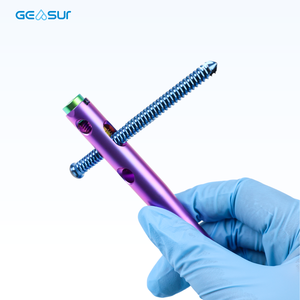
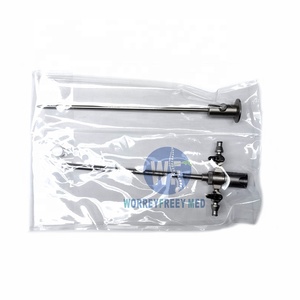
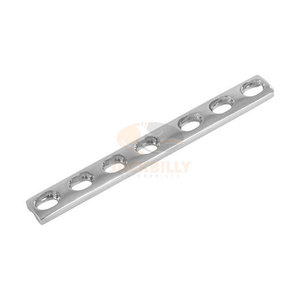
Strategic OEM/ODM Sourcing for Custom Knee Replacement Implants
The global joint reconstruction market is experiencing a profound paradigm shift. Driven by rising life expectancy, increasing sports-related osteoarthritic degradation, and the clinical demand for anatomical precision, procurement directors and medical device OEMs require contract manufacturing partners capable of delivering uncompromised quality, zero-defect machining, and strict regulatory compliance. Contracting custom knee replacement implants—ranging from Total Knee Arthroplasty (TKR/TKA) systems to Unicondylar Knee Arthroplasty (UKA) prosthetics and revision systems—demands a sophisticated understanding of tribology, material science, 5-axis CNC machining capabilities, and sterile packaging validation.
When selecting a contract manufacturing supplier for joint prosthetics, surgical instrumentation, and sports medicine implant systems, medical device brands must navigate stringent international standards including FDA 510(k), EU MDR 2017/745 Class III guidelines, and ISO 13485 quality systems. This whitepaper systematically evaluates the critical engineering parameters, technological evolution, material breakthroughs, and manufacturing workflows essential for evaluating high-precision orthopedic implant suppliers.
Advanced Metallurgy
Utilization of ASTM F136 Ti-6Al-4V ELI, CoCrMo per ISO 5832-4, and Highly Cross-Linked Polyethylene (HXLPE) enriched with Vitamin E to resist oxidation and volumetric wear.
Patient-Specific Implants (PSI)
Seamless conversion of patient 3D CT/MRI DICOM datasets into customized femoral condyle and tibial tray geometries, complemented by 3D-printed surgical cutting guides.
Class III Regulatory Dossiers
Complete Device Master File (DMF) documentation, ISO 13485 audit readiness, Co-60 gamma sterilization validation (SAL 10⁻⁶), and full batch mill test certification.
Prosthetic Anatomy & Metallurgical Selection Criteria
A total knee joint implant comprises four interdependent components: the femoral component, the tibial tray, the bearing insert (tibial liner), and the patellar component. Each element presents unique mechanical, bio-chemical, and tribological requirements.
1. Femoral Component Metallurgy & Surface Finishing
The femoral component replaces the distal end of the femur and articulates continuously against the ultra-high molecular weight polyethylene (UHMWPE) tibial bearing insert. The industry standard material for cemented femoral components is Cast or Wrought Cobalt-Chromium-Molybdenum Alloy (CoCrMo per ISO 5832-4 / ASTM F75), celebrated for its superior hardness, high ultimate tensile strength (> 650 MPa), and resistance to abrasive scoring. For cementless press-fit applications, Titanium Alloy (Ti-6Al-4V ELI per ASTM F136) integrated with Porous Plasma Sprayed Titanium coating or 3D Additive Trabecular Lattice structures facilitates rapid osseointegration.
Surface roughness is paramount: condylar bearing surfaces undergo multi-stage automated grinding and mirror-polishing to achieve an ultra-smooth finish with a Ra value < 0.02 µm. This minimal surface roughness dramatically decreases friction coefficients, minimizing wear debris generation that could trigger aseptic loosening.
2. Tibial Tray Architecture: Cemented vs. Cementless Porous Ingrowth
The tibial tray acts as the structural platform anchored into the proximal tibia. OEM designs must balance rigidity and weight to prevent stress shielding. Titanium alloy (Ti-6Al-4V) remains the primary material due to its modulus of elasticity being closer to human cortical bone compared to CoCrMo.
- Cemented Trays: Feature undersurface dovetail locks, polished stems, and micro-grooves to optimize polymethylmethacrylate (PMMA) bone cement interlock.
- Cementless / Porous Coated Trays: Incorporate Vacuum Plasma Sprayed (VPS) titanium coatings, porous tantalum, or 3D Electron Beam Melting (EBM) biomimetic trabecular structures with 60–70% porosity and 300–500 µm pore sizes to promote direct cancellous bone ingrowth.
3. Tibial Bearings: Highly Cross-Linked Polyethylene (HXLPE) + Vitamin E Stabilization
Historially, conventional Ultra-High Molecular Weight Polyethylene (UHMWPE per ASTM F648) suffered from free-radical oxidation post-gamma sterilization, causing surface delamination, pitting, and osteolytic wear debris. Modern custom OEM manufacturing utilizes Highly Cross-Linked Polyethylene (HXLPE) treated with electron-beam irradiation and blended with α-Tocopherol (Vitamin E) per ASTM F2695.
Vitamin E neutralizes free oxidation radicals without requiring thermal remelting, preserving the mechanical toughness and fatigue resistance of the polymer matrix while achieving a volumetric wear rate reduction of up to 85% in mechanical simulator testing (< 2.0 mm³/million cycles according to ISO 14243 testing protocols).
| Component Name | Primary Material Standard | Surface Treatment / Coating | Machining Tolerance | Primary Clinical Function |
|---|---|---|---|---|
| Femoral Condyle | CoCrMo Alloy (ASTM F75 / ISO 5832-4) or Ti-6Al-4V (ASTM F136) | Mirror Polish (Ra < 0.02 µm) / VPS Titanium Porous Coating | ± 0.005 mm | Provides smooth bicondylar articulation against tibial liner |
| Tibial Tray Baseplate | Ti-6Al-4V ELI (ASTM F136 / ISO 5832-3) | Grit Blasted / 3D Trabecular EBM Porous Lattice | ± 0.010 mm | Distributes load across proximal tibia; anchors into cancellous bone |
| Tibial Bearing Insert | Vitamin E Blended HXLPE (ASTM F2695 / ASTM F648) | Machined Polymeric Articular Geometry | ± 0.012 mm | Low-friction shock absorber; prevents metal-on-metal contact |
| Patellar Button | UHMWPE / HXLPE with Titanium Pegs | Smooth Spherical / Anatomical Contour | ± 0.015 mm | Restores patellofemoral tracking and reduces knee extension strain |
End-to-End Custom OEM Manufacturing Process
From DICOM image processing to final gamma-sterilized packaging, our contract manufacturing facilities maintain strict batch traceability and quality inspection at every phase.
DICOM & 3D CAD Modeling
Processing patient CT/MRI DICOM datasets (1.0 mm slice thickness) into 3D anatomical bone models. CAD engineers generate patient-specific implant contours and custom instrumentation arrays.
FEA & Mechanical Simulation
Performing Finite Element Analysis (FEA) to test stress distribution, von Mises fatigue limits, and contact pressure under ISO 14243 gait cycle loadings before physical prototyping.
5-Axis CNC & Swiss Turning
Machining forged CoCrMo blocks or titanium bars on high-precision 5-axis CNC machining centers (Makino, DMG Mori) under ultra-precise optical encoder feedback (tolerances ±0.005mm).
Polishing, Cleanroom & Gamma Pack
Automated robotic condylar polishing, ultra-clean aqueous degreasing, CMM dimensional inspection, Class 7 (ISO 10,000) primary double-pouch sealing, and Co-60 gamma sterilization (SAL 10⁻⁶).
Future Procurement Trends & Technological Innovations in Joint Replacement
The global joint replacement supply chain is undergoing rapid technological transformation. Hospital procurement committees and medical device brand managers must align with suppliers capable of integrating next-generation manufacturing technologies.
1. Direct Additive Manufacturing (3D Printing) of Trabecular Structures
Traditional manufacturing required applying plasma-sprayed titanium or sintering beads onto solid cast metal bases. The future of OEM knee manufacturing lies in monolithic additive manufacturing utilizing Selective Laser Melting (SLM) or Electron Beam Melting (EBM). By printing the solid tibial substrate and the porous trabecular ingrowth structure as a single continuous piece, factories eliminate the risk of coating delamination while customizing pore morphology to match specific bone densities.
2. Patient-Specific Instrumentation (PSI) & Rapid Prototyping
Surgical efficacy is heavily dependent on alignment accuracy. OEM suppliers are increasingly tasked with manufacturing disposable, patient-specific cutting blocks (PSI). Derived from pre-operative MRI/CT scans, these nylon/PEEK cutting guides allow orthopaedic surgeons to execute precise femoral distal cuts and tibial slope cuts without intramedullary alignment rods, shortening operative times by up to 25% and reducing blood loss.
3. Integration of Smart Sensor Telemetry in Revision Implants
Smart implants represent the frontier of joint arthroplasty. Future custom revision knee systems are embedding sub-miniature micro-electromechanical sensors (MEMS) and passive RFID telemetry directly into the non-bearing zones of tibial trays. These sensors wirelessly transmit post-operative data regarding load distribution, joint balance, temperature (early infection detection), and patient gait kinematics to clinical teams, driving data-driven rehabilitation.
4. Supply Chain Resilience, Decentralized Manufacturing & Regulatory Harmonization
Geopolitical challenges and strict regulatory shifts (such as the transition from EU MDD to MDR 2017/745) have pushed medical device brand owners to seek stable, highly compliant OEM partners. Leading factories now offer comprehensive registration assistance, providing technical documentation, biocompatibility testing (ISO 10993), and mechanical fatigue test reports to streamline global market entry.
Why Partner With Our OEM Contract Manufacturing Facilities?
With state-of-the-art 5-axis CNC machining, rigorous quality management, and complete end-to-end supply chain integration, we empower global medical device brands to deliver superior orthopedic solutions.
ISO 13485 & CE Compliance
Fully certified ISO 13485 and ISO 9001 quality management systems. Our facilities operate strictly under medical device regulatory frameworks to support EU MDR and FDA 510(k) submissions.
Sub-Micron CMM Inspection
100% critical dimension verification using Zeiss Coordinate Measuring Machines (CMM) and 3D optical profilometers ensuring articulate surface tolerances within ±0.005 mm.
Sterile Packaging & Co-60 Gamma
In-house ISO 14644-1 Class 7 cleanrooms providing Tyvek double-pouch thermoforming packaging, verified by Cobalt-60 gamma sterilization delivering a Sterility Assurance Level (SAL) of 10⁻⁶.
Frequently Asked Questions for OEM Implant Sourcing
Addressing the technical, regulatory, operational, and commercial questions asked by medical device procurement officers and brand engineers.
Request OEM/ODM Engineering Specifications & Production Catalog
Partner with an established ISO 13485-certified manufacturer for custom knee prosthetics, surgical instrument sets, and sports medicine devices. Our engineering team responds to RFPs within 24 hours.