Featured Orthopedic Implants & OEM Hardware Solutions
Precision-engineered titanium and stainless steel trauma systems for orthopedic distributors and OEM partners worldwide
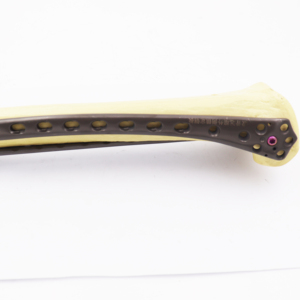
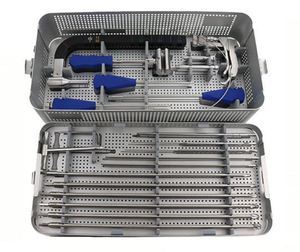
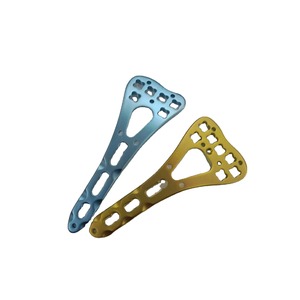
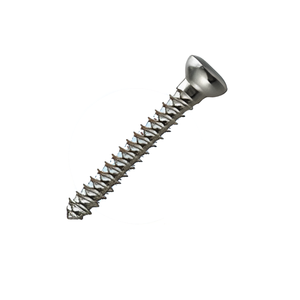
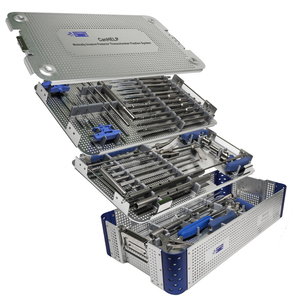
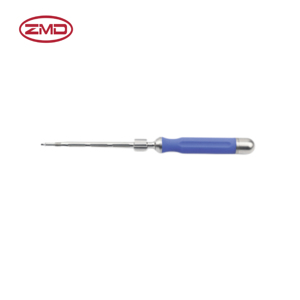
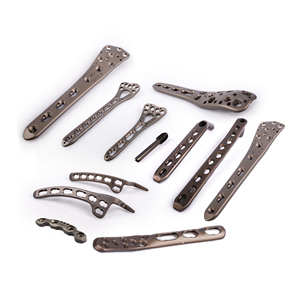
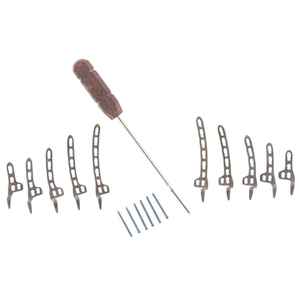
Biomechanical Engineering & Metallurgical Architecture of OEM Interlocking Nails
Intramedullary fixation represents the gold standard for long-bone fracture stabilization, specifically across femoral, tibial, and humeral diaphyseal injuries. A custom OEM interlocking nail system functions as an internal load-sharing beam, positioned along the central neutral axis of the bone. This axial placement significantly minimizes the bending moments experienced under weight-bearing conditions compared to eccentric extra-medullary plating systems.
At Orthi Medical, our contract engineering team focuses on optimizing the structural parameters that dictate axial stiffness, torsional stability, and fatigue life. Using finite element analysis (FEA) and dynamic fatigue testing under ASTM F1264 guidelines, our OEM interlocking nail designs balance rigidity with structural flexibility to promote secondary bone healing through controlled micromotion and micro-callus formation.
Material Metallurgy & Mechanical Specification Standard
Raw materials utilized in custom OEM nail manufacturing undergo rigorous raw-material lot inspection, ultrasonic flaw detection, and chemical composition analysis to guarantee zero material defects prior to precision Swiss machining.
| Material Grade | Standard Ref. | Tensile Strength (MPa) | Yield Strength (MPa) | Modulus of Elasticity | Primary Clinical Application |
|---|---|---|---|---|---|
| Ti-6Al-4V ELI | ASTM F136 / ISO 5832-3 | ≥ 860 MPa | ≥ 795 MPa | 110 GPa | Cannulated Femoral/Tibial Nails, Reconstruction Screws |
| Pure Titanium TA2 / TA3 | ASTM F67 / ISO 5832-2 | 400 – 500 MPa | 275 – 380 MPa | 105 GPa | Sterile Low-Load Bone Plates, Anatomical Washers |
| Stainless Steel 316LVM | ASTM F138 / ISO 5832-1 | ≥ 860 MPa | ≥ 690 MPa | 193 GPa | Hindfoot Fusion Nails, Heavy-Duty Trauma Hardware |
| Cobalt-Chromium (CoCrMo) | ASTM F75 / ISO 5832-4 | ≥ 960 MPa | ≥ 600 MPa | 210 GPa | High-Wear Arthroplasty Stems & Modular Components |
Comprehensive OEM / ODM Custom Manufacturing Architecture
As a specialized OEM intramedullary nail system manufacturer, Orthi Medical transforms technical blueprints into clinical-grade implants. High-precision 5-axis CNC Swiss machining, deep-hole gun drilling, and automated wire EDM allow us to produce complex geometric profiles, including anatomical anterolateral curvature radii, dynamic compression slots, and multi-planar locking holes.
Deep-Hole Gun Drilling
Concentric cannulation up to 480mm length with internal bore diameter precision within ±0.03mm, ensuring smooth guide-wire passage during reamed intramedullary surgical procedures.
Anodization & Color Coding
Type II electrochemical anodization increases surface fatigue resistance and reduces galling. Type III electrolytic color anodizing provides clear intraoperative size identification.
Multi-Planar Targeting Arms
Custom instrument engineering including radiolucent carbon fiber distal aiming guides, quick-coupling drivers, and ergonomic depth gauges for sub-millimeter targeting accuracy.
Multi-Planar Locking & Dynamic Compression Mechanics
Modern trauma surgery demands surgical flexibility. Our OEM interlocking nails feature engineered locking options tailored to distal and proximal metaphyseal fracture geometries:
- Static Locking Mode: Round transverse screw holes prevent axial collapse and rotation in unstable, multi-fragmentary fractures.
- Dynamic Compression Slots: Oblong proximal or distal slots allow axial translation under partial weight-bearing, inducing inter-fragmentary compression and accelerating primary bone healing.
- Helical Blade & Variable-Angle Screws: Engineered for osteoporotic bone, optimizing cut-out resistance in proximal femur and distal tibia fixation.
- End Cap Mechanics: Threaded titanium end caps protect internal driving threads from tissue ingrowth and offer secondary axial compression.
Enterprise Manufacturing Infrastructure & Quality Control Standards
Orthi Medical Co., Ltd. operates under a fully integrated medical device Quality Management System (QMS) compliant with ISO 13485 and ISO 9001. From raw bar stock receiving to cleanroom packaging and final release, every manufacturing stage is governed by strict Standard Operating Procedures (SOPs).
Regulatory & Technical Dossier Support for Global Partners
To assist our international OEM clients and regional distributors in accelerating market authorization, Orthi Medical provides complete technical files structured per the Summary Technical Documentation (STED) format:
• Biocompatibility Validation: Cytotoxicity (ISO 10993-5), Sensitization (ISO 10993-10), and Systemic Toxicity (ISO 10993-11) test reports.
• Mechanical Verification: Four-point bending fatigue strength, static torsion resistance, and screw pull-out force data per ASTM standards.
• Registration Support: CE Mark Technical Files, ISO certificates, material mill test certificates (EN 10204 3.1), and Master Files for FDA 510(k) submissions.
Future Sourcing & Technological Trends in Interlocking Nail Systems (2025–2035)
The global market for orthopedic trauma devices is shifting rapidly driven by demographic aging, minimally invasive surgical protocols, and value-based healthcare models. B2B procurement managers and medical device brands must align their product roadmaps with several key technological vectors:
1. Smart Implants & Telemetric Strain Sensor Integration
The integration of micro-optoelectromechanical or passive RFID strain sensors directly within the cannulated core of intramedullary nails is entering clinical trials. These micro-sensors monitor inter-fragmentary micromotion and internal load shifts in real time, delivering quantitative data on fracture callus consolidation directly to the surgeon's mobile terminal without reliance on repeated X-ray radiation exposure.
2. Patient-Specific Additive Manufacturing & Hybrid 3D Printing
While standard OEM interlocking nails serve the vast majority of acute trauma cases, severe bone loss, revision surgery, and oncological resections require hybrid solutions. Modern OEM suppliers are combining standardized CNC-machined nail bodies with 3D-printed porous titanium (Ti-6Al-4V) meta-physeal sleeves that exhibit trabecular-like porosity (60-70% porosity, 300-500 µm pore size), encouraging rapid osteointegration and structural anchoring.
3. Antimicrobial & Bioactive Surface Coatings
Implant-associated infection (IAI) remains one of the most devastating complications in open trauma fractures. Procurement trends point toward pre-coated implants featuring silver nanoparticle deposition, hydroxyapatite (HA) plasma spraying, or biodegradable gentamicin-eluting polymer matrices that prevent bacterial adhesion (such as Staphylococcus aureus) during the critical 72-hour post-operative window.
4. Consolidated Single-Use Sterile Kit Procurement
Hospitals are increasingly shifting away from bulk non-sterile implant trays requiring costly intra-hospital autoclave reprocessing. Pre-sterilized, single-use procedure kits containing the interlocking nail, matching locking screws, end caps, and disposable guide wires in double-barrier Tyvek blister packs reduce hospital surgical site infection rates while providing 100% inventory traceability.
Frequently Asked Questions: Technical & OEM Procurement Guide
Addressing core mechanical, quality control, and contract manufacturing inquiries from hospital purchasing boards and OEM brand directors.
Partner with a Leading OEM Interlocking Nail Manufacturer
Expand your orthopedic product portfolio with ISO 13485 certified implants, custom titanium machining, and comprehensive regulatory documentation support.
Get Catalog