Featured Orthopedic & Surgical Implant Solutions
Explore our premium ISO 13485 certified orthopedic implants, precision internal drive connection screws, spinal trauma fixation sets, and specialized surgical instrumentation designed for global medical distributors and OEM partners.
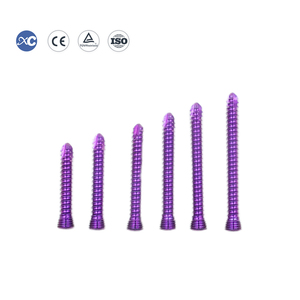
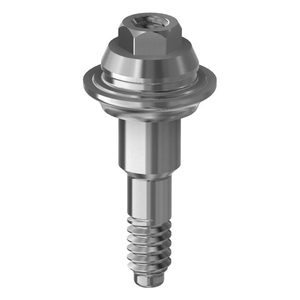
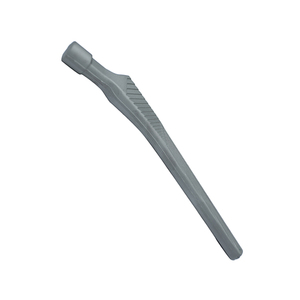
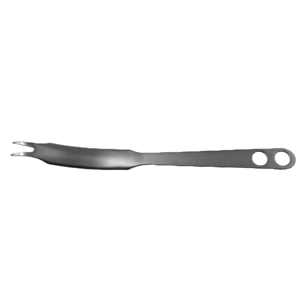
Engineering Fundamentals of Custom Headless Compression Screws
In modern orthopedic trauma and sports medicine surgery, maintaining rigid interfragmentary compression without implant prominence is paramount. The Headless Compression Screw (HCS)—frequently manufactured with dual variable-pitch threads or continuous differential threading—is specifically designed to solve the anatomical challenges posed by intra-articular fractures, scaphoid non-unions, osteochondral fractures, and distal radius reconstructions.
Unlike standard bone screws that rely on a protruding screw head to exert compressive force against the outer cortex, a headless compression screw buries completely below the articular cartilage or periosteal surface. This flush or sub-cartilaginous profile prevents soft-tissue impingement, tendon irritation, and joint stiffness, permitting early post-operative patient mobility and superior long-term clinical outcomes.
Differential Pitch Mechanics
The leading (distal) thread advances faster into the distal fragment than the trailing (proximal) thread advances into the proximal fragment. As the screw is driven, the disparity in lead pitch automatically draws the two bone fragments together, generating high-velocity dynamic axial compression.
Cannulated Core Alignment
Manufactured with ultra-precise concentric cannulation through 5-axis Swiss CNC gun-drilling. The central lumen allows accurate intraoperative placement over a temporary Kirschner wire (K-wire), ensuring minimal tissue trauma during minimally invasive percutaneous procedures.
Star-Drive / Hexalobular Recess
Equipped with precision-machined internal hexalobular drive sockets (Torx-compatible) that maximize torque transmission, eliminate driver cam-out, and prevent driver head stripping even under extreme insertion forces in dense cortical bone.
Micro-Screw Specification & Engineering Dimensions Matrix
As a specialized OEM/ODM medical device contract manufacturer, our factory produces headless compression screws in a wide spectrum of diameters and lengths tailored to specific anatomical fixations:
| Screw Category | Outer Dia. (Distal/Proximal) | Cannulation ID | Length Range | Primary Indications | Raw Material Standard |
|---|---|---|---|---|---|
| Micro Headless Compression Screw | Ø 1.5 mm / Ø 2.0 mm | Ø 0.7 mm (0.028" K-Wire) | 8 mm – 30 mm | Phalangeal, metacarpal & osteochondral fractures | Ti-6Al-4V ELI (ASTM F136 / F1472) |
| Mini Headless Compression Screw | Ø 2.2 mm / Ø 3.0 mm | Ø 0.9 mm (0.035" K-Wire) | 10 mm – 40 mm | Scaphoid, carpal bones, radial head fractures | Ti-6Al-4V ELI / 316LVM (ASTM F138) |
| Standard Headless Screw | Ø 3.5 mm / Ø 4.0 mm | Ø 1.2 mm (0.045" K-Wire) | 14 mm – 60 mm | Distal radius, medial malleolus, osteotomies | Titanium Alloy / Stainless Steel |
| Large Cannulated Headless Screw | Ø 4.5 mm / Ø 7.0 mm | Ø 1.6 mm – Ø 2.2 mm | 20 mm – 110 mm | Tarsal/Metatarsal fusion, calcaneus, subtalar arthrodesis | Medical Grade Titanium (Type II Anodized) |
Our Factory's OEM/ODM Customization Capabilities
Orthi Medical Co., Ltd. operates state-of-the-art CNC machining infrastructure, Class 100,000 cleanrooms, and automated passivating/anodizing lines dedicated to fulfilling contract manufacturing contracts for international orthopedic device brands.
Multi-Axis Swiss CNC Precision
Utilizing 7-axis Citizen and Star Swiss-type automatic lathes, we achieve concentricity tolerances down to ±0.003 mm and surface roughness values of Ra < 0.4 µm. This guarantees flawless thread geometry and smooth K-wire sliding during surgical deployment.
ASTM Compliant Implant Alloys
We work exclusively with certified medical-grade raw materials: Titanium Grade 5 / Ti-6Al-4V ELI (ASTM F136 / ASTM F1472), High-Nitrogen Stainless Steel (ASTM F138 316LVM), and PEEK. Complete material heat-number certificates and chemical composition documentation are provided with every delivery batch.
Type II Anodization & Color Coding
Custom electro-chemical surface passivation and Type II titanium anodization improve fatigue strength and bio-inertness while offering vibrant intraoperative color coding (gold, blue, magenta, green) for fast dimension identification by surgical staff.
End-to-End OEM Contract Manufacturing Workflow
From custom CAD blueprint validation to cleanroom packaging, our disciplined engineering pipeline guarantees predictable delivery cycles and strict regulatory conformity.
Engineering evaluation of thread pitch ratios, drive socket tolerances, and material stress limits.
Precision CNC sample turnarounds within 7-10 days, accompanied by full optical measurement reports.
Multi-spindle Swiss turning with inline laser gauging and continuous thread profile monitoring.
ISO Class 7 cleanroom double-blister packaging, Co-60 gamma sterilization, and CE file assembly.
Future Trends in Headless Compression Screw Technology & Sourcing
As minimally invasive surgical (MIS) techniques advance and ambulatory surgery centers (ASCs) expand globally, the market demand for headless compression screws is undergoing transformative technological shifts. Medical device procurement teams must align with suppliers capable of supporting next-generation implant innovations.
1. Continuous Variable-Pitch Threading Architecture
Traditional dual-threaded screws possess a smooth central shank separating distal and proximal threads. However, next-generation continuous variable-pitch headless screws feature a thread profile whose pitch progressively tightens along the entire length of the screw shaft. This design distributes axial compression forces seamlessly across the fracture line, eliminates stress concentration zones, and provides superior resistance to screw pull-out in osteopenic bone.
2. Smart Sterile Single-Use Kit Systems
Hospital purchasing departments are actively shifting away from bulk non-sterile implant trays requiring expensive and energy-intensive hospital autoclave processing. The future of medical procurement lies in pre-packaged, single-use procedure kits containing a sterile headless compression screw alongside disposable guide wires, countersinks, drills, and driver bits. This model guarantees sterility, reduces operating room turnaround times, and simplifies hospital billing.
3. Porous Additive Surface Treatments & Bio-Absorbable Formulations
Advancements in surface engineering involve applying porous titanium micro-coatings (via chemical etching or selective laser sintering) to the central non-threaded section of the screw, accelerating direct bone osseointegration. Furthermore, contract research into bio-absorbable magnesium alloy matrices is paving the way for headless screws that gradually degrade into natural bone mineral over 18 to 24 months, eliminating the need for hardware removal surgeries.
Frequently Asked Questions (FAQ) for OEM Sourcing Managers
Here are expert answers to the most common engineering, quality, and supply chain queries encountered when procuring custom OEM headless compression screws.
Accelerate Your Orthopedic OEM Supply Chain
Partner with an ISO 13485 certified contract manufacturer capable of turning your engineered concepts into market-ready, sterile-packaged headless compression screws. Send your technical drawings or product specs to our engineering team today.
Contact Us