Featured OEM Surgical Instrumentation & Repair Systems
Explore our precision-engineered surgical devices, medical-grade instrument sets, and OEM cartilage restoration delivery tools developed under strict ISO 13485 & CE regulatory standards.
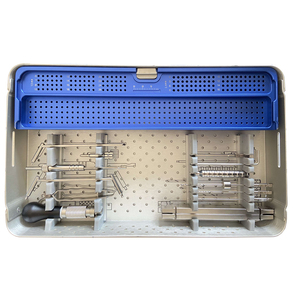
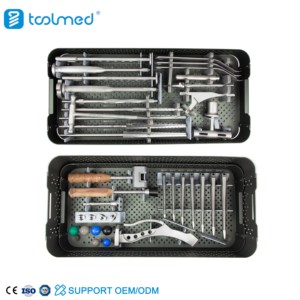
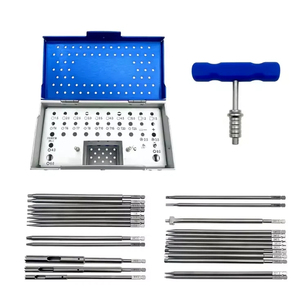
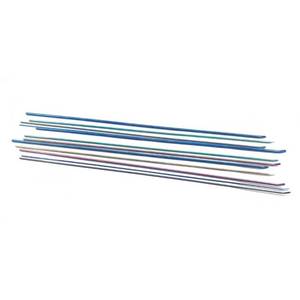
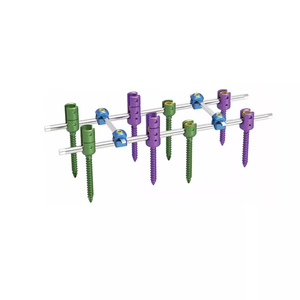
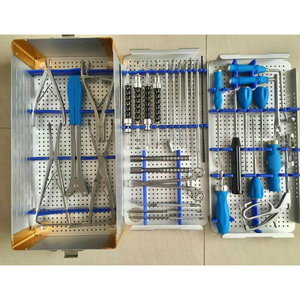
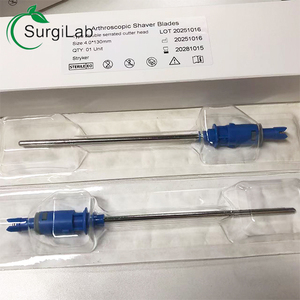
Engineering Excellence in Custom OEM Cartridge Repair Devices
Articular cartilage lesions present a unique bioengineering challenge due to the avascular, a-lymphatic, and non-immunogenic nature of hyaline tissue. When focal osteochondral defects occur—whether from acute traumatic sports injuries, osteochondritis dissecans (OCD), or degenerative joint disease—spontaneous repair yields biologically inferior fibrocartilage rich in Type I collagen rather than true hyaline cartilage (Type II collagen). To bridge this physiological gap, medical device brands and hospital procurement teams require highly specialized, biocompatible, and minimally invasive cartilage delivery devices and scaffold fixation instrumentation.
As a premier custom OEM cartridge repair device manufacturer and exporter, our enterprise integrates advance metallurgic engineering, precision Swiss-lathe micromachining, and bio-absorbable polymer synthesis. We provide full-cycle contract manufacturing services, converting clinical concepts into CE-marked and FDA 510(k)-ready surgical delivery devices, arthroscopic cartilage tamp systems, microfracture awls, and cell-matrix injection cartridges.
Modern arthroscopic cartilage repair has shifted from manual transplantation toward single-stage, cell-free matrix-assisted autologous chondrocyte implantation (MACI) and tissue-engineered scaffolds. A critical vector of surgical efficacy relies on the delivery cartridge dynamics: maintaining cell viability or structural scaffold integrity during high-pressure cannula passage while providing exact depth stop mechanisms (0.5mm to 3.0mm calibrations) to protect healthy surrounding subchondral bone.
OEM Manufacturing & Customization Capabilities
Medical-Grade Biomaterials
We work exclusively with certified implant-grade materials including Titanium Alloy ASTM F136 (Ti-6Al-4V ELI), PEEK OPTIMA, 316LVM Surgical Steel, and bioresorbable polymers (PLGA/PLLA) ensuring superior biostability and minimal inflammatory response.
Swiss 5-Axis Precision Machining
Equipped with state-of-the-art Citizen and Star 5-axis CNC Swiss sliding-head lathes, we achieve ultra-tight tolerances within ±0.005mm for complex cannulated tips, micro-threading, dynamic spring latches, and internal fluid channel geometries.
Ergonomic & Modular Drivers
Custom handle design featuring anodized aluminum alloy or Radel® PPSU overmolding, engineered for autoclavable tactile feedback, quick-connect ratcheting, and intuitive single-handed arthroscopic operation.
Cartridge Repair Device Technical Specifications Matrix
Comprehensive comparative data for orthopedic distributors and OEM procurement officers.
| Device Feature | Standard Specification | Custom OEM Options | Quality Standard |
|---|---|---|---|
| Primary Materials | ASTM F136 Ti6Al4V ELI / PEEK-OPTIMA® | 316LVM / Nitinol / Bio-Resorbable PLGA | ISO 5832-3 / ASTM F2026 |
| Outer Diameter (Cannula Fit) | Ø 3.5mm, Ø 4.5mm, Ø 6.0mm | Custom Ø 2.0mm to 10.0mm micro-cannulas | EN ISO 9626 Compliance |
| Surface Finish & Anodization | Ra < 0.4 µm (Electropolished) | Type II / III Color Anodizing & Laser Etching | ISO 10993 Cytotoxicity Free |
| Sterilization Packaging | Tyvek Blister Double-Pouch (Sterile) | Bulk non-sterile / Customtray delivery | ISO 11607 / Co-60 SAL 10⁻⁶ |
| Depth Control Mechanism | Laser-marked ring stops (0.5mm step) | Positive-lock mechanical micro-threaded stop | 100% Caliper Verified |
Future Procurement Trends in Cartilage Repair Devices
The global articular cartilage repair market is experiencing rapid expansion, driven by an aging active population, expanding sports medicine procedures, and technological breakthroughs in biomaterials. As international medical device importers and distributor networks evaluate their supply chains for 2026 through 2035, several key structural shifts are defining global procurement strategies:
1. Transition to All-in-One Delivery Cartridges
Surgeons are increasingly rejecting multi-step manual scaffold placement in favor of single-use, pre-loaded delivery cartridges. These devices allow simultaneous subchondral micro-drilling, bio-glue application, and matrix insertion through a single standard 4.0mm arthroscopic portal, dramatically cutting operating room time.
2. Demand for Sterile-Packed Single-Use Instrumentation
Hospital infection control protocols and ASC (Ambulatory Surgical Center) financial models are driving adoption of pre-sterilized disposable delivery kits. Eliminating hospital autoclave reprocessing costs minimizes risk of cross-contamination and guarantees pristine instrument sharpness for every chondral procedure.
3. Hybrid Biological Scaffolds & 3D Bio-Printing Integration
The next generation of cartilage repair relies on multiphasic osteochondral constructs that match both subchondral bone rigidity and superficial cartilage viscoelasticity. OEM partners must now deliver custom cartridges capable of extruding sensitive hydrogels, growth-factor impregnated scaffolds, and autologous stem cell matrices without shear-induced cell damage.
Why Partner with Our Manufacturing Facility
Orthi Medical Co., Ltd. operates as a vertically integrated manufacturing complex committed to powering global orthopedic brands. Our operational infrastructure is structured to solve supply chain fragility, ensure strict regulatory compliance, and accelerate product commercialization.
Full Regulatory Support (DHF & STED)
We provide full technical dossier support including Design History Files (DHF), Risk Analysis (ISO 14971), Biocompatibility Reports (ISO 10993), and Validation Testing to facilitate seamless CE MDR and US FDA 510(k) submissions for our OEM client partners.
ISO Class 7 Cleanroom Packaging
In-house controlled cleanroom environments ensure zero particulate contamination during assembly and primary packaging. Automated ultrasonic cleaning and Co-60 gamma irradiation yield validated SAL 10⁻⁶ sterility assurance levels.
End-to-End Private Label Solutions
From high-resolution fiber laser marking of custom batch numbers and logos to custom tray layout, anodized color-coding, and custom box graphics, we turn your product vision into market-ready commercial kits.
Frequently Asked Questions (FAQ) for OEM Buyers
What is the typical lead time for custom OEM cartilage repair device development?
Our standard prototype turnaround time for drawing-based custom cartilage repair devices is 2 to 4 weeks, depending on design complexity. Once engineering samples pass CMM inspection and functional bench testing, full-scale mass production lead times typically range from 30 to 45 days. Rapid prototyping tracks are available for urgent clinical trial timelines.
What biomaterials are available for custom cartilage scaffold delivery tools?
We work with implant-grade Titanium (Ti-6Al-4V ELI per ASTM F136), PEEK OPTIMA®, 316LVM stainless steel, high-density PE, and clear PPSU (Radel®). For bioresorbable components or scaffold matrices, we partner with specialized polymer suppliers to integrate PLGA, PLLA, and collagen-based materials tailored to your specific degradation profile.
Do you provide custom sterile packaging and private label solutions?
Yes. We offer complete private label sterile packaging services. Devices are washed using multi-stage ultrasonic systems, assembled in ISO Class 7 cleanrooms, sealed in medical-grade Tyvek® double pouches, and sterilized via Co-60 gamma radiation. Custom outer cartons, instruction for use (IFU) printing, and UDI compliant barcode labeling are fully supported.
What certifications and quality assurances accompany your exported medical devices?
Our facility operates under audited ISO 13485 and ISO 9001 quality management systems. Applicable products carry CE markings. Every shipment is delivered with comprehensive documentation including Material Mill Test Certificates (MTR), Dimensional Inspection Reports (CMM), Surface Roughness Trace Charts, and Sterilization Validation Certificates.
How do you protect customer Intellectual Property (IP) during custom OEM design?
IP security is foundational to our enterprise. We execute binding Non-Disclosure Agreements (NDAs) prior to receiving engineering CAD files or clinical specifications. All client tooling, CNC programs, and fixture designs are stored on encrypted internal servers with restricted access, ensuring your proprietary innovations remain completely confidential.
What is your Minimum Order Quantity (MOQ) for custom manufactured surgical instruments?
For custom OEM devices requiring custom tooling or specialized CNC setup, our baseline MOQ typically starts at 50 to 100 sets. However, for initial clinical trial runs or market evaluation phases, we offer flexible low-volume pilot production runs. Contact our engineering sales team to discuss your project scale.
Accelerate Your Orthopedic Product Pipeline Today
Partner with a trusted ISO 13485 certified manufacturer for your custom OEM cartilage repair devices, arthroscopic delivery tools, and specialized orthopedic instrument lines. Our engineering team is ready to review your CAD files and technical requirements.