Orthopedic & Surgical Instrument Solutions
Direct OEM manufacturing and scalable procurement for global medical device distributors, hospitals, and surgical brands.
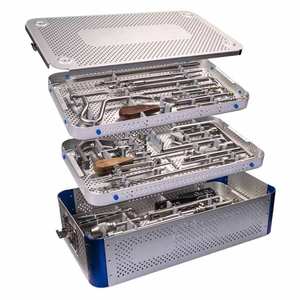
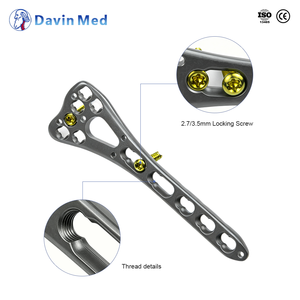
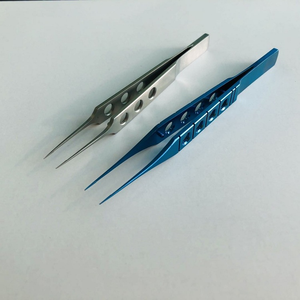
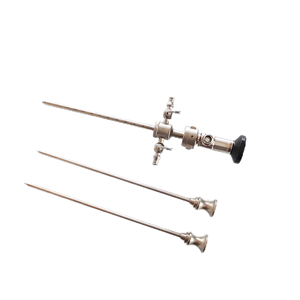
Engineering Excellence in Custom OEM ACL Reconstruction Systems
An authoritative analysis of biomechanical design, material metallurgy, manufacturing tolerances, and regulatory compliance pathways for sports medicine contract manufacturing.
Anterior Cruciate Ligament (ACL) reconstruction represents one of the most critical interventions in modern sports medicine and orthopedic arthroscopy. With dynamic multi-planar loads exerted on the human knee joint during pivot-shift, deceleration, and high-impact rotation, the clinical success of soft tissue graft fixation hinges entirely upon the biomechanical integrity, fatigue resistance, and bio-compatibility of the ACL reconstruction system. As an established medical device manufacturer operating under rigorous ISO 13485 and ISO 9001 frameworks, Orthi Medical delivers OEM/ODM production solutions that seamlessly bridge clinical biomechanics with high-precision contract manufacturing.
Core OEM Engineering Objective
To eliminate graft slippage, optimize graft-to-bone healing kinetics, minimize tunnel widening, and provide surgeons with tactile, reproducible instrument feedback during bone tunnel placement and fixations.
1. Biomechanical Mechanics & System Architecture
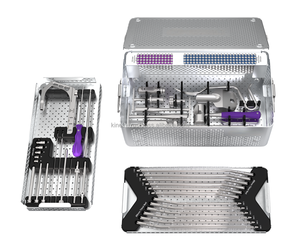
A fully integrated custom OEM ACL reconstruction system consists of both implantable fixation devices and matching specialized arthroscopic instrumentation. Engineering a system requires balancing cortical suspension strength against cancellous interference compression depending on the chosen graft type (e.g., autologous Bone-Patellar Tendon-Bone [BTB], quadrupled Hamstring graft, or synthetic allografts).
A. Cortical Suspension Fixation (Adjustable & Fixed-Loop Buttons)
Femoral fixation has progressively evolved from traditional transfixation cross-pins toward titanium cortical buttons featuring high-strength Ultra-High-Molecular-Weight Polyethylene (UHMWPE) suture loops. Our custom OEM button architectures utilize Titanium Alloy Ti-6Al-4V ELI (ASTM F136), engineered to maximize contact area against the lateral femoral cortex while maintaining an ultra-low profile to avoid soft-tissue irritation.
- Fixed-Loop Systems: Continuous loop construction Eliminates stitch-tying variability, yielding ultimate tensile strength values exceeding 950 N under cyclic stress testing (ASTM F2502).
- Adjustable-Loop Systems: Features self-locking finger-trap friction mechanisms that allow full graft tensioning and retensioning within the femoral tunnel post-tibial fixation without knot slippage.
B. Tibial & Femoral Interference Screws
Interference screws provide direct 360-degree compression of the tendon graft against the reamed tunnel walls. Precision machining of the thread profile is essential: sharp, aggressive distal threads are radiused to prevent soft tissue laceration during insertion, while the pitch is optimized to maximize pull-out strength in cancellous bone densities ranging from 0.15 g/cm³ to 0.45 g/cm³.
Titanium Ti-6Al-4V Screws
Machined from medical-grade ASTM F1472 / F136 titanium bar. Features anodized color-coding, cannulated inner cores for guide wires (Ø1.1mm - Ø1.5mm), and high torsional strength to withstand up to 4.5 Nm of driver torque.
PEEK-OPTIMA® Screws
Non-absorbable polymer implants featuring an elasticity modulus closely matched to cortical bone (~3.5 GPa). Provides radiolucent artifact-free imaging under MRI and CT post-operatively.
Bio-Composite PLLA / β-TCP Screws
Composed of Poly-L-Lactic Acid blended with 30% Beta-Tricalcium Phosphate. Osteoconductive matrices promote gradual bio-absorption and native bone osteointegration over 24 to 36 months.
2. Technical Specifications & Material Metallurgy
Every OEM implant produced at our facility undergoes spectral analysis, raw material mechanical verification, and microscopic surface topology profiling. The table below outlines the material parameters utilized across our ACL reconstruction implant and instrument portfolios:
| Material Variant | Material Standard | Tensile Strength (MPa) | Young's Modulus (GPa) | Primary OEM Application |
|---|---|---|---|---|
| Pure Titanium (TA2 / TA3) | ASTM F67 | ≥ 400 - 500 MPa | 105 GPa | Low-profile washer plates, suture anchors, marking rings |
| Titanium Alloy (Ti-6Al-4V ELI) | ASTM F136 / F1472 | ≥ 930 - 1020 MPa | 110 GPa | Cortical suspension buttons, cannulated interference screws |
| PEEK Polymer | ASTM F2026 | ≥ 95 - 110 MPa | 3.6 GPa | Radiolucent interference screws, joint spacer inserts |
| Bio-composite (PLLA / β-TCP) | ISO 13779 / ASTM F2502 | ≥ 65 - 80 MPa | 5.2 GPa | Bio-absorbable osteoconductive interference screws |
| Stainless Steel (Custom 455 / 316L) | ASTM F138 / ISO 5832-1 | ≥ 1100 MPa | 193 GPa | Reamers, drill guides, cannulated drills, arthroscopic aimers |
3. OEM Precision Manufacturing & Cleanroom Capabilities
Manufacturing implants capable of supporting up to 3 million gait cycles annually requires uncompromising process control. Orthi Medical’s state-of-the-art facility features 5-axis high-speed Swiss CNC turning centers, micro-milling machines, automated EDM wire cutting, and robotic ultrasonic surface cleaning operations.
Process Control & Quality Assurance:
- Micro-Machining Tolerances: Critical inner hex and torx driver recesses on interference screws are held to tolerances within ±0.003 mm to prevent driver strip-out during surgical insertion into dense bone.
- Anodization & Color Coding: Type II anodization provides a hard, wear-resistant oxide layer, while Type III color anodization allows intuitive surgical size matching across screws, drills, and reamers.
- Cleanroom Packaging (ISO Class 7): Implants undergo multi-stage ultrasonic solvent degreasing and automated bioburden washing prior to cleanroom assembly.
- Sterilization Assurance: Co-60 Gamma Radiation sterilization processes are validated per ISO 11137, ensuring a Sterility Assurance Level (SAL) of 10⁻⁶ with 5-year shelf-life package stability.
4. Future Procurement Trends in Sports Medicine & ACL Implants
As healthcare procurement teams, surgical device distributors, and private-label OEMs evaluate supplier contracts, several key trends are reshaping the global market:
Trend A: Shift Toward All-Inside ACL Reconstruction Techniques
Surgeons are rapidly transitioning from traditional full-tunnel transtibial reaming to "All-Inside" socket-creation techniques utilizing retro-reamers. All-inside approaches preserve bone stock, reduce post-operative pain, and require specialized dual-button cortical fixation systems. OEM contracts now prioritize suppliers capable of delivering matching retro-drills, flip-cutter aimers, and dual-suspension implants within a unified procedural tray.
Trend B: Pre-Packaged Sterile Kit Solutions
Hospitals are demanding single-use, pre-sterilized implant and instrument modules. Eliminating hospital autoclaving reduces sterilizer backlog, lowers cross-contamination risks, and streamlines operating room setup times. Orthi Medical leads this trend by supplying fully sterile-packaged ACL kits containing the button, interference screw, passing wires, and disposable drills in a single blister tray.
Trend C: Biocomposite Material Innovation
While metallic implants maintain strong market share in developing regions due to cost-efficiency, mature medical markets are experiencing accelerated growth in bioactive PLLA/β-TCP and PEEK implants. OEM procurement teams require contract manufacturers with specialized molding, micro-machining, and low-temperature handling facilities capable of processing heat-sensitive polymers.
5. Enterprise Advantages: Why Partner with Orthi Medical
With decades of dedicated manufacturing experience in orthopedic trauma, spine, sports medicine, and joint replacement, Orthi Medical Co., Ltd. serves as a trusted full-service OEM/ODM manufacturer for global healthcare leaders.
Turnkey Technical Dossiers
We supply complete CE marking technical files, ISO 13485 test protocols, biocompatibility reports (ISO 10993), and 510(k) device master files to accelerate your local regulatory approvals.
Rapid Prototype & Tooling
Our dedicated R&D engineering shop transitions 2D/3D CAD models into functional stainless steel or titanium prototypes within 14 to 21 business days.
End-to-End Traceability
Every raw material bar lot is linked via laser-engraved UDI (Unique Device Identification) numbers, guaranteeing batch-to-batch consistency from raw forge to sterile blister pack.
Frequently Asked Questions (OEM & Sourcing FAQ)
Comprehensive answers regarding contract manufacturing, regulatory compliance, testing standards, and supply chain logistics.
What custom OEM services do you offer for ACL reconstruction systems?
What materials are certified for your ACL screws and buttons?
Can you manufacture custom arthroscopic instrumentation matching our implant set?
What quality control and mechanical test reports do you provide for regulatory submission?
What is your typical lead time for custom OEM prototyping and batch production?
Partner with a Trusted OEM Orthopedic Manufacturer
Request a custom technical proposal, request implant sample evaluations, or discuss private-label contract manufacturing directly with our engineering team.