Featured Surgical Implants & Instrument Systems
Direct from China's Premier Orthopedic Manufacturing Hubs: High-Precision Trauma, Spine, and Reconstructive Solutions
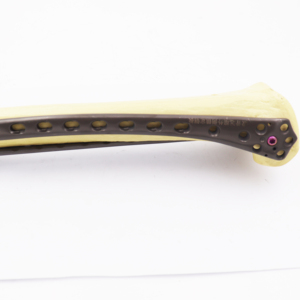
Good Price Titanium Distal Femur Locking Plate Orthopedic Implants CE Certified
Pre-contoured anatomical curvature, multi-planar locking screw options, manufactured from high-strength Ti-6Al-4V ELI alloy.
Get Catalog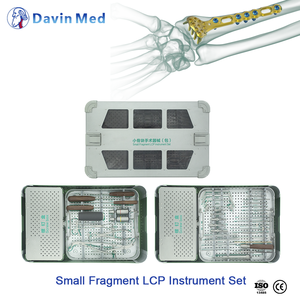
Medical Orthopedic Small Fragment Instrument Set Screw Box Autoclavable Kit
Comprehensive stainless steel instrument set designed for upper limb trauma fracture fixation with anodized color-coded organization.
Get Catalog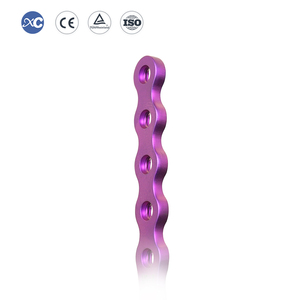
Titanium Veterinary Orthopedic Surgical Implant Plate 4.0mm T Type Locking Plate
High-grade medical titanium T-locking plate engineered for severe fracture stability and small animal reconstructive surgery.
Get Catalog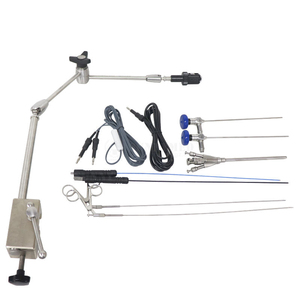
Premium Quality Medical Endoscopic Discectomy System Arm Scope Holder Set
Rigid, micro-adjustable stainless steel mechanical arm scope holder specifically built for minimally invasive discectomy procedures.
Get Catalog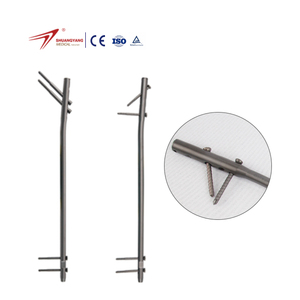
Femoral Reverse Interlocking Intramedullary Nail System for Human Skeleton
Advanced distal and proximal locking mechanism providing optimum torsional and axial stability for complex femoral fractures.
Get Catalog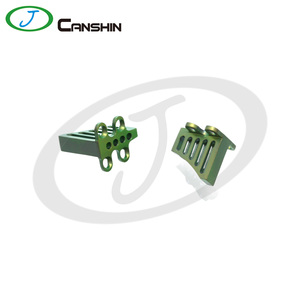
TTA Cage Orthopedic Rapid Titanium Gold Veterinary Implant TPLO System
Porous titanium anatomical structure optimized for rapid osteointegration and cranial cruciate ligament repair.
Get Catalog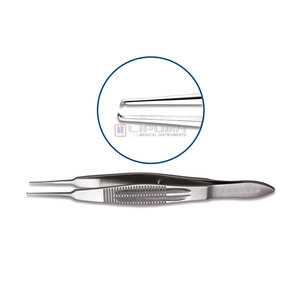
Castroviejo Fixing Forceps 1x1Z Micro Surgical Stainless Steel Tissue Instruments
Ultra-fine 1x1 teeth alignment manufactured from surgical-grade stainless steel for non-traumatic tissue manipulation.
Get Catalog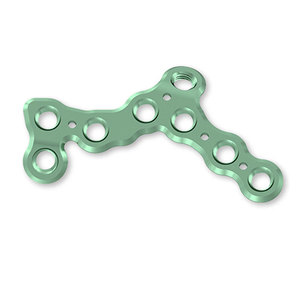
Orthopedic Surgical Trauma Non-Locking Plate Large Fragment Instrument Set
Ergonomic manual stainless steel bone fixation kit for lower limb surgical interventions, featuring fully autoclavable trays.
Get CatalogExecutive Overview: The Evolution of Vertebral Body Replacement (VBR) Manufacturing in China
Vertebral Body Replacement (VBR) devices—commonly referred to as corpectomy cages—represent one of the most mechanically demanding and surgically crucial segments within spine arthrodesis and reconstructive surgery. Indicated for complex anterior spinal column reconstruction following total or partial corpectomy due to spinal tumors, severe burst fractures, localized infections (such as osteomyelitis), or degenerative deformities, VBR implants must provide immediate structural stability, restore physiological lordosis/kyphosis, and facilitate long-term osseointegration.
Over the past decade, China has transformed from a low-cost contract component machining destination into a powerhouse of advanced medical device engineering, state-of-the-art additive manufacturing (3D metal printing), and regulatory-compliant orthopedic export infrastructure. Leading Chinese OEM/ODM factories, such as Orthi Medical, now operate high-precision 5-axis Swiss CNC machining centers, Selective Laser Melting (SLM) additive manufacturing units, and ISO Class 8 cleanrooms dedicated to gamma-sterilized ready-to-operate implants.
Information Gain Insight: The primary biomechanical challenge of vertebral body replacement is mitigating structural subsidence into adjacent vertebral endplates while maintaining dynamic axial fatigue resistance under continuous physiological loading (up to 2.4 kN in the lumbar spine during daily activity).
Biomechanical Load Distribution & Subsidence Mitigation
Subsidence—the involuntary sinks or intrusion of a rigid VBR device into the softer cancellous bone of superior and inferior endplates—remains a major clinical concern. Modern Chinese exporters have revolutionized VBR structural geometry by incorporating:
- Expanded Footprint Endplates: Modular, self-aligning endcaps with articulated ball-and-socket joints ranging from 0° to 15° lordotic angle adjustments to maximize endplate surface contact area.
- Continuous Stepless Mechanical Expansion: Gear-driven, internal thread drive systems that allow surgeons to precisely distraction-expand the height of the cage in situ under fluoroscopic monitoring.
- Trabecular Porous Micro-Architectures: Utilizing Electron Beam Melting (EBM) and Direct Metal Laser Sintering (DMLS) to forge titanium constructs with interconnected porosity (60%–75% pore volume, 300–600 µm pore size) that mimics human trabecular bone structure.
Material Science Innovations: Ti-6Al-4V ELI vs. PEEK vs. 3D Trabecular Titanium
Choosing the appropriate material substrate is a foundational decision for hospital procurement teams and brand owners establishing OEM product lines. Chinese medical device manufacturers offer three primary material platforms for vertebral body replacement systems:
| Material Specification | Elastic Modulus (GPa) | Radiolucency & Imaging | Biomechanical Performance | Primary Clinical Application |
|---|---|---|---|---|
| Ti-6Al-4V ELI (ASTM F136) | 110 GPa | Radiopaque; mild MRI scatter | Ultra-high mechanical fatigue strength; dynamic expansion threading capability. | Heavy load-bearing thoracolumbar expandable corpectomy cages. |
| PEEK-OPTIMA (ASTM F2026) | 3.6 GPa | Radiolucent (requires Tantalum markers) | Modulus close to cortical bone (~18 GPa); eliminates stress shielding risks. | Cervical & thoracic static corpectomy, post-oncology radiotherapy tracking. |
| 3D Porous Titanium (DMLS/SLM) | 1.5 – 5.0 GPa | Controlled radiopacity; reduced density | Bio-mimetic cellular lattice; promotes vascularization and direct bony ingrowth. | Next-generation custom patient-specific & modular expandable VBR cages. |
1. Titanium Alloy (Ti-6Al-4V ELI / Grade 23)
Titanium alloy remains the gold standard for expandable VBR designs due to its exceptional ultimate tensile strength (>860 MPa) and high fatigue limit. The Extra Low Interstitial (ELI) grade ensures minimized impurity levels, maximizing ductility and fracture toughness. Expandable central core shafts and gear teeth are exclusively machined from ASTM F136 titanium to prevent thread stripping under severe distractive torques during spinal alignment restoration.
2. PEEK-OPTIMA (Polyetheretherketone)
PEEK implants offer distinct advantages in oncological spine surgery. Because PEEK is radiolucent, it allows oncologists to clearly assess post-operative tumor recurrence and monitor bony fusion progress via CT and MRI without heavy metal artifacts. Embedded radiopaque tantalum pins (conforming to ASTM F560) provide crucial intraoperative radiographic visualization for exact alignment positioning.
3. 3D Printed Additive Trabecular Structures
By shifting from solid metal bar stock to additive layer manufacturing, Chinese factories can engineer biomimetic porous lattices directly into the VBR's top and bottom footings. This structural innovation drops the effective elastic modulus down to 1.5–3.0 GPa—matching cancellous bone—which fundamentally solves the physical phenomenon of stress shielding (where overly rigid implants shield surrounding bone from physiological stress, leading to bone resorption and loosening).
Future Procurement Trends in Spine Reconstruction (2025–2035)
Strategic Supply Chain Shifts Driving International Purchasing Decisions for Global Medical Distributors
1. Patient-Specific Custom VBRs
The convergence of high-resolution thin-slice CT data and 3D printing software enables Chinese contract manufacturers to deliver custom patient-matched corpectomy cages within 7 to 10 days, matching exact anatomical defect profiles following radical tumor resection.
2. Integrated MIS & Biportal Endoscopy
Next-generation VBR devices are designed with slim insertion profiles for Minimally Invasive Surgery (MIS) and Unilateral Biportal Endoscopy (UBE) approaches. Compact expandable footprints allow insertion through 15mm tube ports before intraoperative expansion.
3. Gamma-Sterilized Single Pack Kits
Global hospitals are shifting away from non-sterile bulk implants that require on-site autoclave processing. Chinese exporters provide pre-packaged, double-blister sterile implants (Co-60 Gamma radiation, SAL 10-6) ready for immediate OR deployment.
4. Co-Development Regulatory Dossiers
Tier-1 Chinese factories supply complete technical documentation—including ISO 10993 biocompatibility testing, ASTM F2077 static/dynamic shear & compression test reports, and CE/FDA 510(k) ready registration dossiers—accelerating localized distributor registration.
5. Full OEM Turnkey Manufacturing
From CAD prototype refining, custom anodization color coding, and ergonomic insertion instrument tray design to laser etching lot numbers and private labeling, Chinese manufacturers offer seamless end-to-end production lines.
6. Modular System Interchangeability
Modern VBR architectures feature standardized core expansion columns compatible with diverse endplate diameters, shapes (round, oval, rectangular), and fixed or variable lordotic angles, reducing overall hospital inventory holding costs.
Manufacturing Infrastructure & Quality Control Standards: Orthi Medical
As a leading Chinese designer, manufacturer, and exporter of medical devices, Orthi Medical Co., Ltd. operates a comprehensive quality management system certified to ISO 13485:2016 and ISO 9001. We specialize in orthopedic trauma plates, pedicle screw spinal systems, sports medicine suture anchors, hip & knee arthroplasty, and vertebral body replacement devices.
Every step of the manufacturing lifecycle is executed within our centralized production facility to guarantee strict lot-to-lot consistency, material origin verification, and dimensional accuracy:
- Raw Material Traceability: Medical-grade raw titanium bars (ASTM F136 Ti-6Al-4V ELI & ASTM F67 pure titanium) and PEEK polymer rods (ASTM F2026) are sourced exclusively from audited certified suppliers accompanied by complete chemical composition and tensile mechanical mill test certificates.
- High-Precision Machining: Machining operations utilize multi-axis CNC Swiss automatic lathes (Citizen/Star) and DMG MORI 5-axis machining centers capable of maintaining micro-tolerances within ±0.005 mm on internal thread channels and expanding gears.
- Surface Engineering & Cleaning: Implants undergo specialized ultrasonic solvent degreasing, passivation (ASTM F86), electro-polishing, and Type II anodization for protective oxide layer enhancement and color coding.
- Class 100,000 Cleanroom Processing: Final washing, primary packaging into dual-layer Tyvek blisters, and heat sealing are performed inside an ISO Class 8 (Class 100,000) cleanroom environment.
- Sterilization Validation: Sterilized products undergo Cobalt-60 gamma-ray irradiation validating a Sterility Assurance Level of SAL 10-6 in accordance with ISO 11137 standards.
Quality Commitment: 100% of critical threads, locking mechanisms, and expansion gears undergo optical coordinate measuring machine (CMM) inspection prior to final release.
Frequently Asked Questions: Sourcing Vertebral Implants from China
In-Depth Technical, Regulatory, and Logistics Guidance for International Procurement Officers
1. What mechanical testing standards must Vertebral Body Replacement (VBR) implants meet for international registration?
For international market entry (including CE marking, FDA 510(k), and local health authority approvals), VBR implants must undergo rigorous mechanical evaluation per standardized ASTM protocols:
- ASTM F2077: Test Methods for Intervertebral Body Fusion Devices. This encompasses static axial compression, dynamic axial compression fatigue (tested up to 5 million cycles without mechanical failure), static torsion, and dynamic torsional fatigue.
- ASTM F2267: Standard Test Method for Measuring Load-Induced Subsidence of an Intervertebral Body Fusion Device Under Static Axial Compression. This determines the implant's resistance to intruding into polyurethan foam block representations of vertebral endplates.
- ASTM F1877: Standard Practice for Characterization of Particles to assess wear debris in moving components of expandable cages.
2. How does an expandable VBR cage compare mechanically to static titanium mesh cages?
Static titanium mesh cages require the surgeon to manually trim the mesh length intraoperatively using wire cutters, which can create sharp burrs, uneven endplate seating, and unpredictable axial loading. In contrast, expandable VBR cages feature internal gear drive threads allowing stepless in situ height adjustment. This allows surgeons to insert the implant at a collapsed low profile, position it precisely, and expand it under direct visualization to restore lost intervertebral disc height and physiological lordosis while achieving optimal endplate compressive fit.
3. What is the typical OEM/ODM turn-key development timeline for private label spinal systems?
Our standardized OEM development lifecycle follows four distinct phases:
- Design & Engineering Review (Days 1–7): Analysis of customer CAD models, material specs, and functional requirements by our senior spine engineering team.
- Prototyping & Bench Testing (Days 8–25): 5-axis CNC machining of working samples followed by dimensional verification reports and preliminary static testing.
- Design Verification & Tooling (Days 26–45): Finalizing custom instrument trays, color-coding anodization, laser marking artwork, and initial production validation.
- Regulatory Dossier & Batch Release (Days 46–60): Compilation of technical files (ISO 13485, biocompatibility, sterilization validation) and commercial shipment delivery.
4. How is quality controlled for 3D-printed trabecular titanium VBR implants?
3D-printed porous titanium implants undergo rigorous quality control protocols. Each build layout includes tensile test coupons and density cubes processed under identical laser sintering parameters. Quality checks include Micro-CT scanning to verify internal pore interconnectivity and volume percentage, elemental analysis to check for interstitial oxygen/nitrogen pickup, and ultrasonic cleaning validation to eliminate any un-sintered residual metal powder particles inside the lattice structure.
5. Can implants be supplied sterile, and what is the shelf-life packaging specification?
Yes. Implants can be supplied non-sterile (for hospital tray sterilization) or pre-sterilized via Cobalt-60 Gamma Irradiation achieving a Sterility Assurance Level (SAL) of 10-6. Sterile implants are double-sealed in rigid PETG blister trays with breathable Tyvek lids (conforming to ISO 11607 packaging standards) housed inside protective outer cardboard boxes. Sterile packaging is validated for a 5-year shelf life under real-time and accelerated aging protocols.
6. What support is provided to international distributors for local health authority product registration?
We provide comprehensive regulatory registration packages to authorized distributors. This documentation includes ISO 13485 certificates, CE certificates of conformity, Device Master Files (DMF), raw material mill certificates, biocompatibility test reports (ISO 10993 series), sterilization validation reports (ISO 11137), ASTM mechanical test data, and detailed multilingual Surgical Technique Guides (STG).
Partner with China's Leading Orthopedic Implant Factory
Elevate your orthopedic product portfolio with ISO 13485 certified trauma, spine, and reconstructive implant systems. Request our full product catalogs, CAD specifications, and factory-direct wholesale pricing today.
Get Catalog