Featured Orthopedic Implants & Trauma Systems
Explore our precision-engineered implant portfolios manufactured under strict ISO 13485 quality protocols, utilizing ASTM F136 Ti-6Al-4V ELI titanium alloy and PEEK polymers.
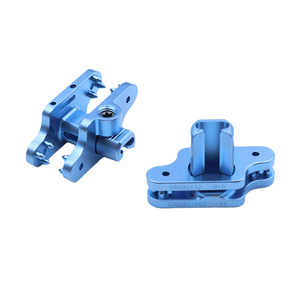
Geasure Orthopedic Implant Titanium Alloy Interspinous Process Fixation Device 8-16mm for Posterior Column Stabilization
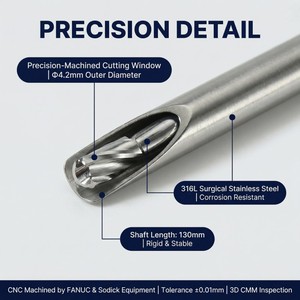
Smith&Nephew Compatible Arthroscopic Shaver Blades and Bur, Disposable Sterile Shaver Blade System
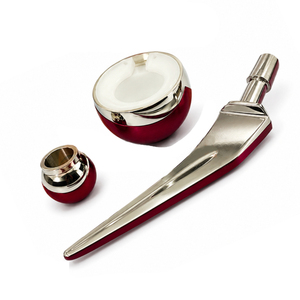
Orthopedic Hip Bipolar Prosthesis Implant for Femoral Neck Fracture Replacement Bipolar Femoral Head Prosthesis
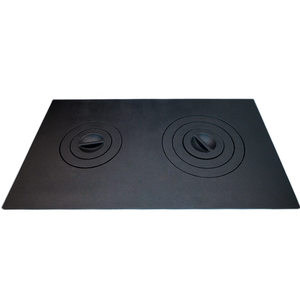
Cast Iron Stove Top Plate with Removable Rings for Wood Stove Oven and BBQ Grill
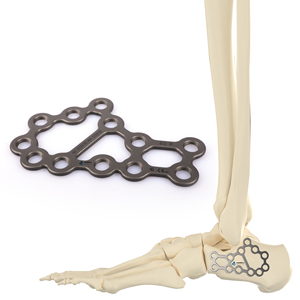
CANWELL Medical Calcaneal Locking Plate Titanium Foot Heel Bone Orthopedic Implants Factory Trauma Fracture Surgery OEM CE ISO
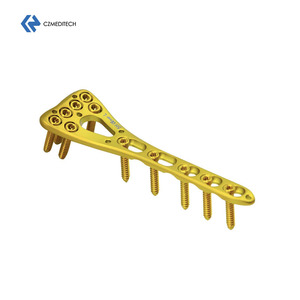
VA Distal Radius Locking Plate Variable Angle System for Fracture Fixation CE Titanium Trauma Implants
Medical Percutaneous Vertebroplasty (PVP) Kit Disposable Bone Cement Injection System for Spinal Compression Fracture
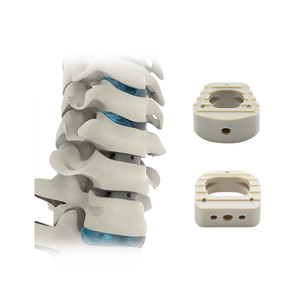
Geasure Medical-Grade PEEK Cervical Interbody Fusion Cage For Spinal Surgery
Proximal Femoral Nailing Systems: Architectural Principles & Biomechanical Engineering
Trochanteric and subtrochanteric fractures represent a major clinical challenge in orthopedic trauma management, particularly within geriatric demographics presenting with compromised bone mineral density (osteoporosis). The evolution of intramedullary fixation—specifically the Proximal Femoral Nail Antirotation (PFNA) system—has fundamentally transformed surgical outcomes by shifting mechanical loads along the anatomical load-bearing axis of the femur.
Unlike extramedullary devices such as the Dynamic Hip Screw (DHS) or construct-dependent locking plates, proximal femoral nails function as load-sharing internal splints. By positioning the nail inside the medullary canal, the moment arm of the hip joint reaction force is significantly reduced compared to side-plate configurations. This reduced lever arm minimizes bending stresses across the implant body, dramatically lowering the incidence of hardware fatigue failure, cut-out, and non-union.
5° Medio-Lateral Angle
Designed to enable anatomical insertion through the tip of the greater trochanter. This optimized lateral bending angle prevents excessive soft-tissue disruption and minimizes the risk of medial femoral cortex perforation during reaming and insertion.
Helical Blade Bone Compaction
The PFNA single helical blade compacts cancellous bone surrounding the blade shaft during insertion rather than removing it. This compacting mechanism maximizes implant-to-bone contact surface, delivering superior rotational stability and cut-out resistance in osteoporotic bone.
Flexible Distal Tip Geometry
Engineered with a bevelled distal tip and optional longitudinal flutes to reduce rigidity mismatches between the metallic titanium alloy nail and native cortical bone, preventing anterior thigh pain and secondary distal femoral fractures.
Metallurgical Foundations: Titanium Alloy (Ti-6Al-4V ELI) vs. Stainless Steel
From a manufacturing perspective, choice of material directly dictates clinical success. As a specialized OEM factory, our proximal femoral nails are produced primarily using ASTM F136 Ti-6Al-4V Extra Low Interstitial (ELI) titanium alloy. Titanium offers a modulus of elasticity (~110 GPa) significantly closer to human cortical bone (~18 GPa) than 316L stainless steel (~200 GPa). This lower elastic modulus reduces stress shielding, promoting secondary bone callus formation according to Wolff's Law.
Additionally, titanium alloy exhibits biocompatibility, corrosion resistance, and imaging artifact reduction under Magnetic Resonance Imaging (MRI) and Computed Tomography (CT), facilitating accurate post-operative clinical evaluation.
PFNA System Technical Dimensional Standards
Comprehensive OEM specification grid for procurement managers and clinical evaluation committees.
| System Parameter | Short Proximal Femoral Nail | Long Proximal Femoral Nail | Helical Blade / Lag Screw |
|---|---|---|---|
| Anatomical Lengths | 170 mm, 200 mm, 240 mm | 300 mm to 440 mm (20 mm increments) | 75 mm to 120 mm (5 mm increments) |
| Proximal Diameter | 16.5 mm / 17.0 mm | 16.5 mm / 17.0 mm | 10.0 mm / 12.0 mm shaft |
| Distal Shaft Diameters | Ø 9 mm, Ø 10 mm, Ø 11 mm, Ø 12 mm | Ø 9 mm, Ø 10 mm, Ø 11 mm, Ø 12 mm | Cannulated core for 3.2 mm guide wire |
| CCD Angle Options | 125°, 130° | 125°, 130° | Integrated anti-rotation locking mechanism |
| Distal Locking Options | Static & Dynamic oblong slot (4.9 mm screws) | Static & Dynamic multi-planar distal locking | End-cap thread locking mechanism |
| Material Compliance | ASTM F136 Ti-6Al-4V ELI / ISO 5832-3 | ASTM F136 Ti-6Al-4V ELI / ISO 5832-3 | Anodized Titanium / Micro-blasted Surface |
| Packaging Standard | Sterile Double-Blister (Co-60 Gamma) / Non-Sterile | Sterile Double-Blister (Co-60 Gamma) / Non-Sterile | Individual Sterile Tyvek Pouch |
Global Procurement Trends in Orthopedic Wholesale Sourcing
The global market for orthopedic trauma devices is experiencing a structural transition driven by healthcare economic pressures, regulatory harmonizations, and supply chain security requirements. Purchasing directors, medical device distributors, and hospital group purchasing organizations (GPOs) must navigate several macro trends when establishing vendor relationships with Chinese manufacturing hubs:
1. Pre-Sterilized Ready-to-Use Packaging
Hospitals worldwide are moving away from bulk non-sterile implant trays requiring autoclave processing. Direct supply of gamma-irradiated sterile implants (SAL 10-6) eliminates hospital reprocessing costs, minimizes contamination risks, and streamline operating room inventory management.
2. Stringent Regulatory Compliance (CE MDR & FDA)
Regulatory frameworks such as the European Union Medical Device Regulation (EU MDR 2017/745) demand full clinical evaluation reports, post-market surveillance data, and total raw material traceability. Sourcing partners must maintain robust technical documentation files and ISO 13485 certification.
3. High Mix, Low Volume OEM Customization
Distributors are increasingly demanding custom laser marking, specific anodization color coding for quick instrument recognition, and tailored tray configurations that fit specific regional surgical preferences without incurring massive minimum order quantities (MOQs).
Future Product Development & Technological Evolution
Where orthopedic trauma fixation is heading over the next decade.
3D Printed Porous Metaphyseal Collars
Integration of Selective Laser Melting (SLM) additive manufacturing to produce trabecular-like porous structures on the proximal portion of the nail, accelerating biological osseointegration and proximal bone stock preservation.
Radiolucent Carbon Fiber Instrumentation
Transition from traditional heavy stainless-steel targeting arms to radiolucent carbon fiber composite drill guides. This allows unobstructed intraoperative fluoroscopic visualization of distal locking holes under C-arm imaging.
Antibacterial Nanostructure Anodization
Surface modifications incorporating silver ion implantation or hydrophobic nanostructures to suppress peri-implant bacterial colonization and biofilm formation, significantly mitigating post-operative infection risks in complex open fractures.
Why Partner with Our Factory in China?
As an established medical device manufacturer specializing in orthopedic implants and surgical instruments, our state-of-the-art facility combines precision machining, rigorous quality control, and scalable production capacity to service worldwide OEM and private-label partners.
- 5-Axis Precision Milling & Swiss Lathes: Equipped with high-precision CNC machinery imported from Japan and Switzerland, ensuring sub-micron dimensional tolerances on complex helical threads and cannulated bores.
- ISO 13485 & CE Quality Systems: Complete quality assurance system overseeing raw material receipt, melt certificate verification, multi-stage in-process inspection, and cleanroom packaging.
- Class 100,000 Cleanroom Processing: ISO Class 8 validated cleanrooms for ultra-clean washing, assembly, primary pouching, and gamma sterilization preparation.
- Complete Biomechanical Testing: In-house testing laboratory compliant with ASTM F1264 and ASTM F384, executing static torsion, axial fatigue, and cut-out resistance testing.
- Turnkey Registration File Support: We supply our wholesale partners with comprehensive technical documentation (STED), surgical technique guides, and material safety data sheets for seamless regional ministry of health registrations.
- Supply Chain Resilience: Direct raw material sourcing contracts with leading titanium producers guarantee stable material pricing and uninterrupted production schedules.
Frequently Asked Questions for B2B Buyers
Key information regarding ordering, customization, regulatory compliance, and quality verification.
1. What raw material standards are utilized for your Proximal Femoral Nails?
2. Do you provide OEM private labeling and custom surgical instrument trays?
3. Are implants provided in sterile condition, and what is the sterility assurance level (SAL)?
4. What is the standard Minimum Order Quantity (MOQ) for wholesale order placement?
5. How do you guarantee anti-cutout performance in the PFNA helical blade?
6. What documentation do you provide to support local medical device registration?
7. What is the typical lead time for factory OEM orders?
8. Are your surgical instrument sets compatible with other global systems?
9. How are quality inspections conducted during manufacturing?
10. Can we request a factory audit or sample evaluation before placing bulk contracts?
Request Wholesale Pricing & OEM Technical Specifications
Partner with China's premier orthopedic implant manufacturer. Contact our engineering and sales consultation team today for factory-direct quotes, technical dossiers, and sample evaluation packages.