Featured Orthopedic Instrument Sets & Medical Devices
Precision-engineered surgical instruments and implant systems manufactured in accordance with strict international biomechanical standards.
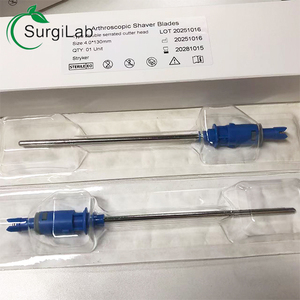
Disposable Arthroscope Shaver Joint Arthroscopic Blades 4.0/3.5/5.0*130mm (Suit Stryker)
Engineered with high-rpm rotational balance and dual-cut serrated teeth. Compatible with Stryker arthroscopy systems for efficient resection in knee and shoulder joints.
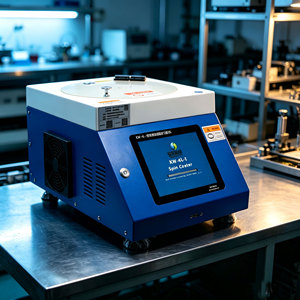
High Precision Spin Coater ±0.1% Speed Stability PTFE Chamber Automatic Dispensing Processor
Laboratory-grade spin coating processor featuring chemical-resistant PTFE chamber and programmable multi-step speed control for medical device surface engineering.
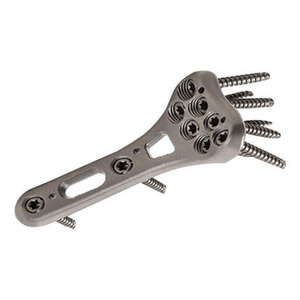
ORTHO ZE Large Fragment Surgical Non-Locking Plate Stainless Steel Bone Fixation Set
Comprehensive manual fixation tray featuring 316L/420 surgical stainless steel plates, bone taps, countersinks, and ergonomic drill guides for long-bone trauma repair.
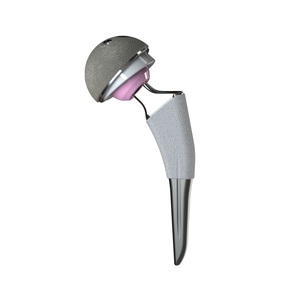
Orthopedic Titanium Hip Joint Prosthesis Total Hip Replacement Veterinary & Human Instrument
Cementless plasma-sprayed titanium femoral stem with HA surface coating, coupled with UHMWPE acetabular liners for optimal biomechanical primary stability.
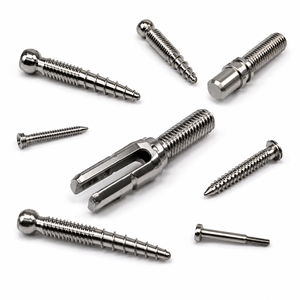
ISO 13485 CNC Machining Precision Medical Stainless Steel & Titanium Bone Screw OEM Parts
5-axis micro-milled cannulated and solid cortical screws manufactured under tight ±0.005mm tolerances, designed for trauma plates and dental abutments.
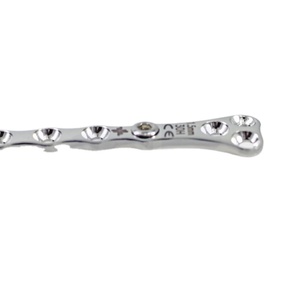
Orthopedic Equipment Veterinary Cuttable Bone Reconstruction Plate Implants Direct Factory
Flexible titanium and stainless steel reconstruction plates engineered for veterinary surgery, featuring contoured cut points for multi-fragmentary fracture fixation.
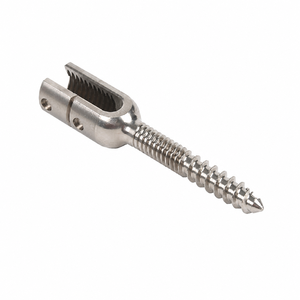
Titanium Pedicle Screw CNC Machining Service Spinal Fixation OEM Precision Hardware
Polyaxial and monoaxial pedicle screws crafted from ASTM F1472 Ti-6Al-4V alloy, featuring dual-lead threads and cannulated shafts for cement augmentation.
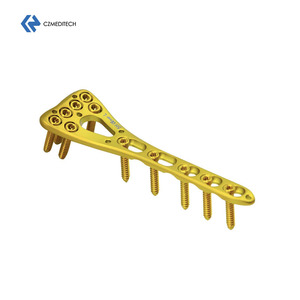
VA Distal Radius Variable Angle Locking Plate System Titanium Trauma Implants
Anatomically pre-contoured distal radius titanium plate offering ±15° variable angle polyaxial locking trajectory for rigid fixation of complex intra-articular fractures.
Enterprise Advantage: China’s Premier Orthopedic Manufacturing Partner
Orthi Medical Co., Ltd. operates a modern ISO 13485-certified manufacturing complex equipped with Swiss 5-axis CNC machining centers, automated passivation systems, and Class 100,000 cleanroom packaging facilities.
Certified Metallurgy & Raw Materials
Full traceability for titanium alloys (ASTM F1472 Ti-6Al-4V, ASTM F67 Grade 2/3 Pure Titanium), PEEK (Invibio Optima), and surgical stainless steels (316L, 420, 630). Mill test certificates accompany every batch.
5-Axis CNC Precision Machining
Utilizing high-speed German and Japanese multi-axis CNC milling centers to maintain tolerances under ±0.005mm for delicate spinal pedicle threads, locking screw holes, and complex arthroscopy instruments.
Sterile Packaging & Gamma Irradiation
State-of-the-art Class 10,000 (ISO 7) and Class 100,000 (ISO 8) cleanrooms equipped for blister sealing and pouch packaging, sterilized by Co-60 gamma radiation reaching a Sterility Assurance Level of SAL 10⁻⁶.
Registration & Dossier Technical Support
Complete technical documentation assistance, including biocompatibility reports (ISO 10993), mechanical fatigue test data (ASTM F543 / F1717), design history files (DHF), and surgical technique guides for local registration.
Surgeon Education & Academic Training
Empowering global hospital teams through hands-on cadaveric workshops, sawbone demonstration kits, step-by-step surgical manuals, and academic conference support tailored for trauma and spine systems.
Consolidated OEM/ODM Sourcing
Single-source supply chain spanning orthopedic trauma, spinal pedicle systems, sports medicine arthroscopy tools, hip/knee joint replacements, interventional stents, and custom sterilizing trays.
Technical Specification Matrix: Medical-Grade Alloys & Polymers
A technical reference guide comparing mechanical attributes, surface treatments, and biostability standards for orthopedic implants and instrument manufacturing.
| Material Classification | Standard Specification | Tensile Strength (MPa) | Yield Strength (MPa) | Passivation / Finishing | Primary Clinical Application |
|---|---|---|---|---|---|
| Ti-6Al-4V ELI (TC4) | ASTM F1472 / ISO 5832-3 | ≥ 930 MPa | ≥ 860 MPa | Color Anodizing / Type II Passivation | Pedicle screws, locking trauma plates, hip stems |
| Pure Titanium Grade 2 / 3 | ASTM F67 / ISO 5832-2 | 400 – 500 MPa | 275 – 380 MPa | Chemical Passivation / HA Coating | Rib reconstruction plates, cranial fixation, mesh |
| Stainless Steel 316L | ASTM F138 / ISO 5832-1 | ≥ 860 MPa | ≥ 690 MPa | Electropolishing (ASTM F1089) | Standard non-locking plates, cannulated screws |
| Martensitic SS 420 / 630 | ASTM F899 | ≥ 1100 MPa | ≥ 1000 MPa | Heat Treated / HRC 45-55 Hardened | Surgical drill bits, taps, osteotomes, bone reamers |
| PEEK Optima Polymer | ASTM F2026 | 95 – 100 MPa | ≥ 90 MPa | Radiopaque Tantalum Marker Insertion | Cervical & lumbar interbody fusion cages, suture anchors |
Future Procurement Trends in Global Orthopedic Markets (2025–2035)
Strategic analysis for B2B healthcare executives, procurement directors, and medical device importers operating under changing regulatory and geopolitical landscapes.
1. Shift Toward Integrated OEM/ODM Ecosystems in China
Historically, global orthopedic brand owners fractured their supply chains across multiple component vendors—sourcing bone screws from one machinist, instrument trays from another, and sterile packaging services from a third-party facility. Over the next decade, international procurement models are rapidly consolidating toward turnkey contract manufacturers based in China.
Advanced Chinese suppliers like Orthi Medical now offer vertical integration: raw material spectral verification, 5-axis Swiss-lathe machining, ultrasonic washlines, continuous automated anodizing, ISO 7 cleanroom pouch sealing, and CE/FDA technical documentation. This single-source paradigm reduces supply chain lead times by 40%, lowers freight overhead, and eliminates multi-vendor quality disputes.
2. Rise of Single-Use Disposable Instrument Sets
While traditional reusable instrument trays require costly hospital central sterile supply department (CSSD) processing, autoclaving, and inspection, the industry is witnessing an accelerated demand for sterile-packaged, single-use surgical instrument kits. Disposable arthroscopy shaver blades, pre-sterilized cannulated drill bits, and single-use intramedullary alignment guides prevent cross-contamination and lower total operating room operational expenses.
Factory-sealed sterile kits with Co-60 gamma irradiation (SAL 10⁻⁶) allow surgical centers to streamline inventory turnarounds, making them the preferred choice for modern Ambulatory Surgical Centers (ASCs) in North America, Europe, and Latin America.
3. Impact of Volume-Based Procurement (VBP) and Margin Optimization
Healthcare systems globally are adopting centralized tender mechanisms and Value-Based Procurement (VBP) policies to curb medical expenditures. As reimbursement rates for elective orthopedic procedures compress, medical device distributors can no longer maintain profitability under inflated Western OEM pricing structures.
Partnering directly with ISO 13485 China exporters enables distributors to secure high-tier titanium implants (ASTM F1472) and premium stainless steel instrument sets at competitive direct-factory price points—preserving robust gross margins without compromising clinical safety or biomechanical performance.
4. Digital Traceability & UDI Regulatory Compliance
Regulatory authorities worldwide, including the US FDA and European Union MDR (Medical Device Regulation), strictly mandate Unique Device Identification (UDI) laser marking on all surgical implants and reusable instruments. Future-ready Chinese suppliers are embedding automated GS1-compliant 2D Matrix laser marking directly onto screws, plates, and driver shafts, ensuring end-to-end traceability from CNC spindle to patient implantation.
Development & Technological Trends in Orthopedic Instrumentation
Exploring modern engineering advancements transforming minimally invasive surgery, joint reconstruction, and patient-specific surgical tools.
Minimally Invasive Surgery (MIS) & UBE Toolsets
Modern spinal and joint procedures are shifting from open surgeries to Unilateral Biportal Endoscopy (UBE) and Percutaneous Transforaminal Endoscopic Discectomy (PTED). Specialized long-reach, micro-articulating rongeurs, RF plasma probes, and low-profile cannula systems enable targeted bone resection through 1cm portals, drastically reducing patient recovery cycles.
Patient-Specific 3D Printed Guides & Implants
Additive manufacturing using Titanium Selective Laser Sintering (SLS) allows the fabrication of custom porous osteoconductive trabecular surfaces. Custom patient-matched surgical cutting jigs for total knee arthroplasty (TKA) and complex pelvic fracture reconstruction ensure sub-millimeter surgical accuracy in the operating theater.
Bio-Active Hydroxyapatite (HA) & PEEK-Optima Material Innovations
Implant surface coatings have advanced from simple titanium sandblasting to plasma-sprayed Hydroxyapatite (HA) layers that stimulate rapid osseointegration. Concurrently, radiolucent PEEK interbody fusion cages integrated with porous titanium endplates combine optimal elastic modulus with radiopaque visualization under C-arm fluoroscopy.
Smart Surgical Instruments & Robotic Interfaces
Navigated surgery and robotic-assisted total joint replacement demand high-precision instrument interfaces with passive optical tracking arrays and torque-limiting quick-connect ratchets. Modern surgical instrument sets are engineered to integrate seamlessly with robotic navigation software and automated arm couplings.
Frequently Asked Questions: B2B Sourcing & OEM Manufacturing
In-depth technical answers to critical questions asked by medical device procurement officers, regulatory managers, and hospital importers.
What quality management certifications and regulatory standards do Orthi Medical products comply with?
Do you offer custom OEM/ODM manufacturing and private-label packaging for medical brand owners?
Can orthopedic implants and surgical instruments be delivered pre-sterilized?
Which product lines can a global distributor consolidate through your factory?
- Trauma Implants & Instruments: Locking plates, cannulated compression screws, intramedullary tibial/femoral nails.
- Spinal Fixation Systems: Thoracolumbar pedicle screws, PEEK cervical/lumbar fusion cages, anterior cervical plates, kyphoplasty kits.
- Sports Medicine: PEEK suture anchors, disposable arthroscopy shaver blades, ACL/PCL drill guides, meniscal repair cannulae.
- Arthroplasty: Cementless hip stems, acetabular cups, total knee replacement components, and matching surgical trays.
- Endoscopy & Interventional: UBE instrument sets, 4K camera systems, transforaminal endoscopes, coronary and ureteral stents.
What is the typical production lead time and Minimum Order Quantity (MOQ) for B2B orders?
How do you support distributors with surgical technical training and market registration?
What quality inspection protocols ensure zero defects on incoming surgical shipments?
How can I request a customized quotation or technical product catalog?
Partner with China’s Leading Orthopedic Manufacturer
Whether you require wholesale distribution of CE-marked implants, specialized custom surgical trays, or complete contract manufacturing services—our engineering team is ready to support your market expansion.
Get a Quote