Featured Medical Implants & High-Precision Solutions
Explore our engineered portfolio of orthopedic devices and precision machining solutions. Each line is manufactured under strict ISO 13485 oversight, utilizing implant-grade titanium alloy, PEEK, and stainless steel with complete material traceability.
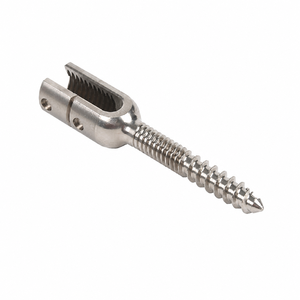
Titanium Pedicle Screw CNC Machining Service Spinal Orthopedic Bone Screw Custom Precision OEM Parts
Inquire Now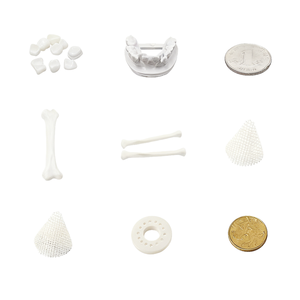
Medical Implant 3D Printing Service Custom Orthopedic Devices Bioprinting Compatibility Precision Craftsmanship
Inquire Now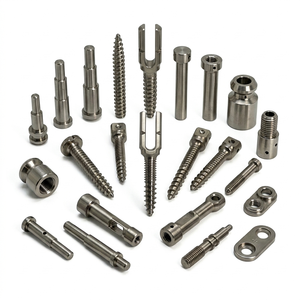
ISO 13485 CNC Medical Machining OEM Spinal Pedicle Screw Orthopedic Bone Screws Plates 5-Axis Precision Implant Parts
Inquire Now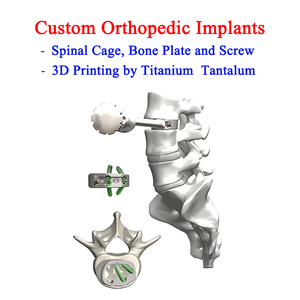
Custom High Precision 3D Printing Service for Medical Grade Orthopedic Implants Spinal Cage Bone Plate Joint Prosthesis Titanium
Inquire Now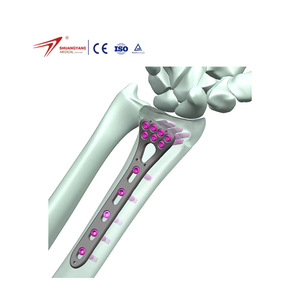
High Quality Orthopedic Implant Trauma Implant Multi-axial Distal Radius Locking Plates and Screws for Orthopedic Surgery
Inquire Now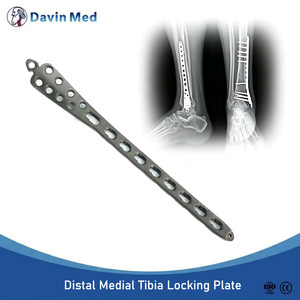
Davin CE ISO Titanium Orthopedic Implants Distal Medial Tibial Locking Plate Screws for System Fracture Fixation Surgical
Inquire Now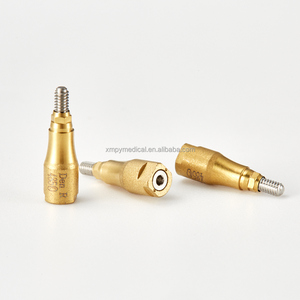
High Accuracy Implant Scan Body for Digital Workflow Compatible with Nobel Implant System Scan Post for Implant Restoration
Inquire Now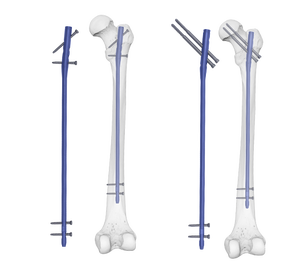
Expert Femoral Intramedullary Nail Orthopedic Implant Femur Fracture Fixation Surgical Medical Device
Inquire NowExecutive Whitepaper: Strategic Sourcing & Regulatory Compliance in Global Orthopedic Manufacturing
In the rapidly evolving global healthcare ecosystem, international medical device distributors, hospital networks, and OEM brand owners face a complex dual challenge: maintaining strict mechanical reliability and biological safety standards while navigating increasingly intricate regulatory clearance processes. Sourcing orthopedic implants from China has transitioned from a pure cost-containment strategy to a high-value technology and regulatory partnership. Leading Chinese manufacturers now integrate state-of-the-art additive manufacturing (3D printing), 5-axis Swiss-type CNC machining, and automated surface treatment with comprehensive international regulatory support frameworks.
This whitepaper provides procurement directors, regulatory affairs officers, and clinical teams with a comprehensive operational framework for evaluating orthopedic implant manufacturing capabilities, raw material selection parameters, quality assurance protocols, and market registration strategies necessary for global distribution success.
Core Enterprise Capabilities: Advanced Manufacturing & Quality Infrastructure
Our manufacturing infrastructure is purpose-built to meet the exacting tolerances required for surgical osteosynthesis and joint reconstruction. Operating within ISO 13485 certified production facilities, our digital manufacturing pipeline seamlessly integrates high-speed subtractive CNC machining with advanced additive metal printing technology.
5-Axis Swiss CNC Machining
Equipped with ultra-precision Citizen and DMG MORI multi-axis CNC Swiss-type lathes, achieving sub-micron dimensional tolerances (±0.005mm) on complex pedicle screw threads, locking plate countersinks, and cannulated drill geometry.
Additive 3D Titanium Printing
Direct Metal Laser Sintering (DMLS) utilizing Ti-6Al-4V ELI titanium alloy powder. Producing biomimetic porous trabecular structures with controlled pore interconnectivity (60-80% porosity) to optimize bone ingrowth in interbody fusion cages.
ISO Class 7 Cleanroom Packaging
Environmentally controlled ISO Class 7 primary assembly and blister packaging suites. Automated filling and sealing systems ensuring low initial bioburden prior to Co-60 gamma irradiation sterilization (SAL 10⁻⁶).
Turnkey Global Regulatory Registration Support Framework
Navigating national health authority approvals—such as US FDA 510(k), European Union CE MDR, National Medical Products Administration (NMPA), Brazil ANVISA, and Saudi FDA—presents the single largest barrier to global market penetration for orthopedic distributors. Our specialized regulatory affairs division provides turnkey registration technical dossiers structured under the Summary Technical Documentation (STED) format.
Biocompatibility Testing (ISO 10993)
Complete GLP-accredited laboratory test packages covering Cytotoxicity (ISO 10993-5), Sensitization & Irritation (ISO 10993-10), Systemic Toxicity (ISO 10993-11), and Material Characterization (ISO 10993-18).
Mechanical & Fatigue Validation
Empirical fatigue data generated per standard protocols: ASTM F1717 for spinal implant constructs, ASTM F382 for metallic bone plates, and ASTM F543 for medical bone screws, proving long-term dynamic loading resistance.
Risk Management & CER
ISO 14971 compliant risk management files including dFMEA/pFMEA analysis, alongside Clinical Evaluation Reports (CER) compliant with MEDDEV 2.7/1 Rev 4 and MDR requirements for equivalence demonstration.
Precision Material Science & Quality Control Matrix
Material purity directly determines in-vivo performance, fatigue limit, and biocompatibility. We strictly source raw materials from certified global suppliers with chemical composition and mechanical properties verified via third-party spectrographic analysis.
| Implant Material Grade | Governing Standard | Tensile Strength (MPa) | Primary Surgical Application | Key Advantage |
|---|---|---|---|---|
| Ti-6Al-4V ELI (Grade 23) | ASTM F136 / ISO 5832-3 | ≥ 860 MPa | Spinal Screws, Trauma Plates, Nails | Superior fatigue resistance, low elastic modulus |
| Unalloyed Pure Titanium (TA2/TA3) | ASTM F67 / ISO 5832-2 | 400 - 550 MPa | Cranio-Maxillofacial, Rib Plates | High ductility for anatomical intraoperative contouring |
| PEEK-OPTIMA (Radiolucent) | ASTM F2026 | 90 - 100 MPa | Cervical & Lumbar Interbody Cages | Modulus matching bone, artifact-free CT/MRI imaging |
| Ultra-High Molecular Weight PE | ASTM F648 / ISO 5834-2 | ≥ 40 MPa | Joint Inserts & Suture Anchor Tapes | Exceptional wear resistance & low friction coefficient |
Market Analysis: Future Sourcing & Manufacturing Trends (2025–2030)
The global orthopedic implant market is undergoing structural shifts driven by clinical demand for minimally invasive surgery (MIS), digital preoperative planning, and customized implants. Key procurement trends shaping supplier selection over the next decade include:
1. Transition to Patient-Specific Implants (PSI) & Digital Workflow: Standard mass-produced sizes are increasingly supplemented by custom 3D printed implants derived from patient CT/MRI scan data. Manufacturers offering end-to-end digital integration—from DICOM file conversion to custom titanium sintering and matching scan bodies—will dominate high-margin surgical market segments.
2. Bioactive & Antibacterial Surface Functionalization: Coating technologies are advancing beyond static hydroxyapatite (HA) plasma spraying. Emerging surface modifications such as Micro-Arc Oxidation (MAO) incorporating silver/copper ions or nanostructured titanium oxides provide active antimicrobial defense against surgical site infections while accelerating osseointegration.
3. Pre-Sterilized Ready-to-Use Single Packs: Hospitals are aggressively shifting away from non-sterile implant trays requiring costly, labor-intensive in-house autoclave reprocessing. Supply chains are migrating toward gamma-sterilized, single-use packaged plates, screws, and intramedullary nails backed by SAL 10⁻⁶ validation and 5-year packaging shelf-life studies.
4. Mandated Unique Device Identification (UDI) Traceability: Global regulatory frameworks demand direct part marking (DPM) utilizing high-resolution laser annealing for GS1-compliant DataMatrix barcodes, ensuring complete track-and-trace security from raw ingot batch to individual patient implantation.
Technical & Regulatory Procurement FAQ
Critical insights for regulatory directors, procurement executives, and medical device distributors evaluating OEM/ODM manufacturing partnerships in China.
Q How does your registration support team assist local MOH/FDA approvals in target export countries?
We provide fully compiled technical registration dossiers in STED format, including raw material mill certificates, ISO 10993 biocompatibility testing reports, ASTM mechanical fatigue validation data, process sterilization validation, risk analysis (ISO 14971), and Letter of Authorization (LOA). Our regulatory team directly coordinates with your local regulatory affairs specialists to address health authority deficiency letters quickly.
Q What quality management certifications do your manufacturing facilities maintain?
Our facilities maintain full accreditation under ISO 13485:2016 (Medical Devices Quality Management Systems) and ISO 9001. Product lines carry European CE certificates issued by accredited Notified Bodies, and our production cleanrooms comply with ISO 14644 Class 7 environmental specifications.
Q Can you execute custom OEM/ODM implant production from proprietary CAD drawings?
Yes. Our engineering team conducts full Design for Manufacturing (DFM) reviews on client STEP/IGES CAD files. We manufacture custom prototypes, fabricate tailored surgical instrument trays, apply customized laser markings, execute color-anodization color coding, and perform pre-production mechanical testing prior to mass production.
Q What mechanical dynamic fatigue testing is performed on trauma locking plates and spinal screws?
All implant designs undergo rigorous mechanical validation. Spinal systems undergo multi-axis static torsion and dynamic fatigue testing per ASTM F1717 (reaching 5 million cycles without failure). Trauma locking plates undergo 4-point bending fatigue tests per ASTM F382, while bone screws undergo axial pull-out, insertion torque, and drive torque evaluation per ASTM F543.
Q What is the Sterility Assurance Level (SAL) and shelf-life for pre-sterilized implants?
Our sterile-packaged implants are processed using Cobalt-60 Gamma Irradiation to achieve a validated Sterility Assurance Level (SAL) of 10⁻⁶ in accordance with ISO 11137 standards. Packaged in medical-grade Tyvek double-blister packs, accelerated and real-time aging studies validate a sterile shelf-life of 5 years.
Q How do you guarantee material traceability and prevent cross-contamination?
Every production lot is linked to a unique heat code master file traceable directly to the original raw titanium bar or PEEK resin lot mill certificate. Manufacturing strictly isolates implant processing from industrial grade materials, utilizing dedicated synthetic cutting fluids verified for biocompatibility and bioburden control.
Q What are the standard Minimum Order Quantities (MOQs) and production lead times for wholesale export orders?
Standard catalog items maintain flexible MOQs to support distributor inventory setups. Custom OEM/ODM runs typically carry an MOQ of 50–100 pieces per specification depending on geometry. Standard production lead time is 30 to 45 days, with expedited prototyping available in 14 days.
Partnering with China's Premier Orthopedic OEM/ODM Exporter
Establishing a resilient, high-quality medical device supply chain requires an experienced partner capable of bridging technical precision with global regulatory compliance. As a dedicated wholesale manufacturer, we provide the manufacturing capacity, engineering expertise, and registration dossier support needed to expand your brand's market share in hospital operating theaters globally.
Accelerate Your Orthopedic Device Market Entry
Contact our technical engineering and regulatory support specialists today to request technical catalogs, sample evaluation packages, or custom OEM manufacturing quotes.
Inquire Now