Featured Orthopedic Non-Locking Plates & Surgical Instrument Sets
Explore our CE & ISO 13485 certified trauma fixation implants and precision-crafted manual surgical instrument trays engineered for lower limb, upper limb, and veterinary anatomical stabilization.

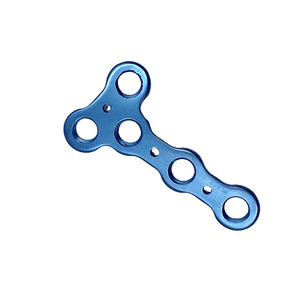
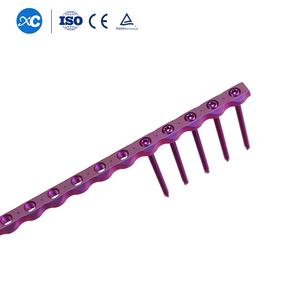
Biomechanics, Metallurgy & Sourcing Framework for Non-Locking Bone Plates
An in-depth analysis for medical device procurement officers, hospital supply directors, and orthopedic distributors evaluating Chinese manufacturing ecosystems.
In modern trauma orthopedic surgery, the non-locking bone plate remains a cornerstone implant for fracture reduction, diaphyseal alignment, and anatomical stabilization. Unlike locked plating constructs that create a rigid fixed-angle mechanical assembly, traditional non-locking bone plates rely on friction generated between the underside of the metallic plate and the periosteal cortical surface. This frictional stability is induced by tightening bicortical or monocortical standard bone screws into the underlying bone bed. Understanding the exact biomechanical indications, metallurgical integrity, and production tolerances of non-locking systems is essential for hospital supply chain managers seeking high-reliability products from premier China wholesale non-locking bone plate manufacturers and factories.
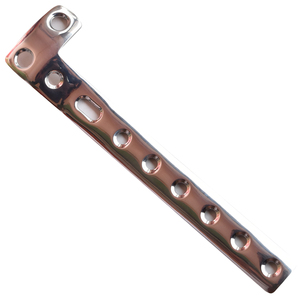
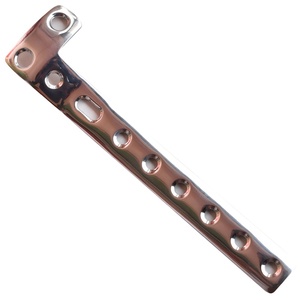
Over the last three decades, Chinese medical device OEMs have evolved from basic contract machine shops into sophisticated technology hubs equipped with multi-axis Swiss CNC turning centers, cleanroom packaging facilities, and rigorous automated inspection systems. As global healthcare systems face escalating budgetary pressures alongside demands for uncompromising patient outcomes, direct factory sourcing of non-locking plates (such as Dynamic Compression Plates - DCP, Limited Contact Dynamic Compression Plates - LC-DCP, and specialized tubular plates) provides orthopedic distributors with an optimized balance of cost efficiency, structural reliability, and regulatory compliance.
Dynamic Compression Mechanics
The spherical gliding principle embedded in standard non-locking DCP hole geometries enables axial compression across fracture lines. As the spherical head of a standard cortex screw travels down the sloped ramp of the plate hole, it exerts horizontal thrust, drawing the bone fragments together into rigid contact to promote primary direct bone healing without visible callus formation.
Periosteal Blood Supply Preservation
Modern non-locking designs feature Limited Contact (LC-DCP) undercut undersurfaces. By reducing the contact footprint between the metallic plate and cortical bone by up to 50%, periosteal microvascular perfusion is preserved beneath the implant, reducing cortical necrosis risk and accelerating bone revascularization.
Metallurgical Integrity & Fatigue Life
Non-locking plates are manufactured from cold-worked implant-grade 316LVM Surgical Stainless Steel (ASTM F138) or High-Strength Titanium Alloy (Ti-6Al-4V ELI, ASTM F136). Cold-working enhances ultimate tensile strength (>860 MPa for SS, >930 MPa for Ti), preventing structural bending failure under physiological cyclically applied loads.
Non-Locking Bone Plates vs. Locking Compression Plates (LCP)
A comparative technical matrix detailing biomechanical principles, clinical indications, material stresses, and manufacturing cost structures.
| Evaluation Parameter | Non-Locking Bone Plates (DCP / LC-DCP) | Locking Compression Plates (LCP) |
|---|---|---|
| Fixation Mechanism | Friction between plate underside and periosteal bone surface. | Threaded mechanical lock between screw head and plate hole. |
| Bone Quality Requirement | Requires adequate cortical bone stock to achieve screw torque purchase. | Ideal for osteoporotic bone, metaphyseal fractures, and multi-fragmentary trauma. |
| Bone Healing Pathway | Primary direct bone healing (rigid absolute stability with axial compression). | Secondary healing via callus formation (flexible relative stability). |
| Contouring Accuracy | Must be precisely contoured to bone anatomy to prevent malalignment. | Anatomical pre-contouring preferred, exact cortical contact not required. |
| Manufacturing Complexity | Precision CNC slot milling, smooth countersink radii, electropolished surface. | Complex 5-axis threaded hole tapping, conical thread matching, higher tool wear. |
| Wholesale Unit Cost Index | Highly cost-effective (30% to 50% lower unit procurement cost). | Higher unit cost due to multi-lead threaded geometries and locking screws. |
Strict Compliance with ASTM & ISO Biomaterial Standards
The long-term bio-compatibility and mechanical stability of orthopedic trauma implants depend fundamentally on raw material purity and heat treatment consistency. China wholesale non-locking bone plate manufacturers utilize certified bar stock and sheet metal subjected to Vacuum Arc Remelting (VAR) processes to eliminate non-metallic inclusions.
316LVM Stainless Steel (ASTM F138 / ISO 5832-1)
- Low Carbon Content (≤ 0.030%): Prevents intergranular carbide precipitation during heat treatment, eliminating intergranular corrosion risks.
- Nickel-Chromium-Molybdenum Balance: Delivers superior resistance to pitting corrosion in physiological saline environments.
- Passivated Oxide Film: Passivated via nitric or citric acid baths to form a durable passive chromium oxide surface layer ($Cr_2O_3$).
Titanium Grade 5 ELI (ASTM F136 / ISO 5832-3)
- Extra Low Interstitial (ELI): Reduced oxygen and iron content increases fracture toughness and fatigue crack resistance.
- Modulus Matching (~110 GPa): Elastic modulus closer to human cortical bone (~18 GPa) compared to stainless steel (~200 GPa), mitigating stress shielding.
- Type II Anodization: Surface anodization treatment improves micro-hardness and reduces fretting wear debris generation.
Why Partner with China Wholesale Non-Locking Bone Plate Factories?
From advanced CNC machining suites to international regulatory dossier support, discover how leading Chinese factories streamline medical device supply chains.
Precision Machining & Micro-Deburring
Utilizing 5-axis DMG MORI CNC milling machines and Citizen Swiss turning lathes, factories achieve geometric dimensional tolerances within ±0.01 mm. Automated electrochemical deburring eliminates micro-burrs along plate countersinks and edges, preventing localized stress concentrations and tissue irritation.
100% Optical CMM Inspection
Every production batch undergoes non-contact Coordinate Measuring Machine (CMM) dimensional verification, surface roughness testing (Ra < 0.4 µm), and 3D laser profiling. Mechanical testing per ASTM F382 (four-point bending stiffness and fatigue resistance) ensures lot-to-lot structural reliability.
ISO Class 7 Cleanroom & Gamma Packaging
Implants are washed in multi-stage ultrasonic deionized water systems before final primary packaging inside ISO Class 7 cleanrooms. Implants can be delivered pre-sterilized via Cobalt-60 Gamma Irradiation (SAL 10⁻⁶) in double-peel Tyvek pouches, ready for immediate operating room use.
Global Sourcing Dynamics & Technological Outlook (2025–2035)
How evolving healthcare economics, hybrid trauma fixation techniques, and OEM private-label partnerships are shaping the non-locking bone plate landscape.
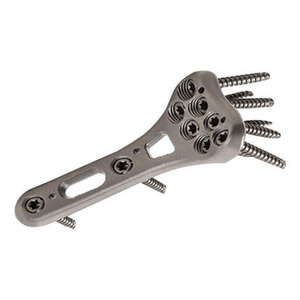
As regional healthcare authorities prioritize hospital expenditure containment without compromising patient care quality, the global market demand for standard non-locking bone plates continues to exhibit steady growth alongside locking systems. Rather than replacing non-locking implants entirely, modern trauma surgeons increasingly employ hybrid fixation constructs—combining non-locking lag screws through plate dynamic compression holes to achieve anatomical interfragmentary compression, complemented by peripheral locking screws for angular stability.
Furthermore, several macro procurement trends are dictating global supply strategies:
1. Standardized Trauma Tray Consolidation
Distributors are streamlining inventory by sourcing modular non-locking large fragment (4.5mm/6.5mm) and small fragment (3.5mm/2.7mm) system kits. Unified manual instrument sets reduce hospital tray sterilization overhead and simplify surgical technician training.
2. OEM Private Labeling Expansion
Leading Western and emerging market medical brands are transitioning internal production lines to trusted Chinese contract manufacturers. Custom laser marking (laser UDI barcode etching), specialized color anodization, and branded aluminum graphic trays enable rapid brand expansion.
3. Turnkey Regulatory File Support
China wholesale manufacturers now provide comprehensive regulatory dossiers, including ISO 13485 audit reports, CE marking certification, raw material mill certificates, biocompatibility test data (ISO 10993), and surgical technique manuals to accelerate local registration.
Frequently Asked Questions (FAQ)
Detailed technical and commercial answers addressing common inquiries from hospital procurement executives and OEM medical device buyers.
Dynamic Compression Plates (DCP) feature sloped oval screw holes that enable directional compression as standard cortical screws are tightened. Limited Contact Dynamic Compression Plates (LC-DCP) refine this mechanism by incorporating symmetric dynamic compression slots (allowing bi-directional compression from either side of the hole) and longitudinal undercut relief grooves on the plate underside. The undercut design reduces contact area with periosteal bone tissue by up to 50%, mitigating microvascular compression and minimizing cortical bone porosis under the implant.
Tier-1 Chinese orthopedic device manufacturers source raw bar stock and metal sheets exclusively from certified suppliers conforming to international specifications, specifically ASTM F138 / ISO 5832-1 for 316LVM Stainless Steel and ASTM F136 / ASTM F67 for Implant Titanium. Every raw material heat lot is accompanied by a material test report (MTR) detailing chemical composition (spectrophotometry), tensile strength, yield strength, elongation, and grain size analysis. Factories perform third-party destructive verification testing prior to CNC machining.
Yes. Full OEM/ODM services are available, including custom plate profiling based on CAD/CAM drawings, specialized screw hole spacing, surface anodization in distinct color codes (e.g., gold, blue, green), laser etching of custom brand logos, lot numbers, UDI matrix barcodes, and bespoke sterilizable anodized aluminum instrument trays.
Implants can be supplied in non-sterile bulk packaging (protected in individual anti-static medical-grade bags for hospital autoclave reprocessing) or in pre-sterilized formats. Pre-sterilized packages utilize double Tyvek peelable pouches sterilized via Cobalt-60 Gamma Irradiation achieving a Sterility Assurance Level (SAL) of 10⁻⁶. Gamma sterilized packaging maintains a validated shelf-life of 5 years.
Large fragment systems (typically using 4.5mm cortex screws and 6.5mm cancellous screws) require matching drill bits (Ø3.2mm), threaded drill guides, countersinks, taps, depth gauges, hex screwdrivers, and plate bending irons. Small fragment systems (using 3.5mm cortex screws) utilize Ø2.5mm drill bits, corresponding neutral/compression drill guides, and hand taps. Factories supply complete manual instrument sets housed in custom autoclavable sterilization trays.
To assist global distributors with national regulatory submissions (such as FDA, CE, ANVISA, or COFEPRIS), manufacturers provide complete Technical Files (STED format). This documentation includes ISO 13485 certificates, ISO 9001 certificates, CE Certificates of Conformity, ASTM F382 fatigue bending test reports, ISO 10993 biocompatibility evaluation studies, sterilization validation reports, and step-by-step surgical technique guides.
Accelerate Your Orthopedic OEM Supply Chain
Partner directly with an ISO 13485 certified China wholesale non-locking bone plate manufacturer. Access precision Swiss CNC engineering, competitive factory-direct pricing, and complete turnkey regulatory support.