1. Strategic Overview of NMPA Registered Orthopedic Implant Manufacturing in China
The global market for orthopedic implants, surgical instrumentation, and bio-absorbable medical devices is undergoing a structural transition. Sourcing managers, hospital procurement consortiums, and medical device distributors increasingly look to China for high-precision, regulatory-compliant manufacturing partnerships. At the forefront of this shift is the rigorous regulatory baseline mandated by China's National Medical Products Administration (NMPA)—formerly known as CFDA. An NMPA Class III registration represents one of the most comprehensive regulatory benchmarks globally, matching or exceeding international standards such as US FDA 510(k) clearances and European CE MDR (Regulation EU 2017/745).
As a verified China wholesale NMPA registered orthopedic implants manufacturer and exporter, our organization operates at the intersection of metallurgical science, advanced 5-axis CNC machining, bio-engineering, and global quality compliance. Obtaining Class III NMPA registration requires extensive clinical data trials, biocompatibility testing under ISO 10993 parameters, rigorous biomechanical fatigue evaluation (per ASTM F1717, ASTM F543, and ISO 14801), and a fully validated ISO Class 7/8 cleanroom production ecosystem. This regulatory depth provides international healthcare buyers with absolute assurance regarding raw material purity, structural load resistance, and clinical reliability.
Information Gain Insight for Buyers: NMPA Class III compliance demands full batch-level raw material traceability from raw titanium ingot to final Gamma-irradiated packaging. Sourcing directly from an NMPA registered factory eliminates regulatory compliance risks during national medical device imports while reducing Total Cost of Ownership (TCO) by up to 35-45% compared to European or North American OEMs.
By integrating complete in-house production lines—spanning raw material forging, Swiss 5-axis micro-milling, surface anodization, Co-60 Gamma sterilization, and specialized packaging—our facility empowers international medical brands with rapid OEM/ODM prototyping, regulatory dossier assistance (STED formats), and dependable supply chain resilience.
2. Metallurgical Engineering, Biomaterial Science, and Advanced CNC Precision Machining
Orthopedic implant longevity inside the human body depends directly on material selection, mechanical fatigue thresholds, and surface bio-integration characteristics. Our manufacturing infrastructure employs medical-grade biomaterials adhering to strict ASTM and ISO standard specifications:
Titanium Alloy (Ti-6Al-4V ELI)
Compliant with ASTM F136 / ISO 5832-3. High yield strength (≥860 MPa), superior fatigue limit, low modulus of elasticity (110 GPa) matching cortical bone to prevent stress shielding in spinal pedicle screws and intramedullary nails.
PEEK Polymer (PEEK-OPTIMA)
Radiolucent medical-grade Polyetheretherketone per ASTM F2026. Ideal for cervical interbody fusion devices and lumbar cages. Allows post-operative radiographical assessment of bone fusion without metallic artifacts.
Pure Titanium (Grade 2 / Grade 3)
Certified to ASTM F67. Excellent ductility and maximum corrosion resistance. Used extensively in customizable pelvic reconstruction plates, rib locking plates, and reconstructive trauma mesh.
Our state-of-the-art production facilities utilize multi-axis Swiss CNC turning centers (DMG MORI, Citizen) and high-speed milling hubs capable of maintaining machining tolerances within ±0.005 mm. Surface functionalization technologies include Type II Electrochemical Anodization for color-coded surgical sizing, Micro-Arc Oxidation (MAO) for enhanced bone cell adhesion, and Hydroxyapatite (HA) plasma spraying for total joint prostheses press-fit stability.
| Implant Material Type | Standard Specification | Tensile Strength (MPa) | Elongation (%) | Primary Clinical Indication |
|---|---|---|---|---|
| Ti-6Al-4V ELI (Grade 23) | ASTM F136 / ISO 5832-3 | ≥ 860 MPa | ≥ 10% | Spinal Pedicle Screws, Tibia Nails, Hip Stems |
| Unalloyed Pure Titanium (TA2/TA3) | ASTM F67 / ISO 5832-2 | 450 - 550 MPa | ≥ 18% | Pelvic Reconstruction Plates, Rib Compression Plates |
| PEEK Polymer (LT1 Grade) | ASTM F2026 | 90 - 120 MPa | ≥ 5% | Interbody Fusion Cages (ALIF/PLIF/TLIF/Cervical) |
| Cobalt-Chromium Alloy (CoCrMo) | ASTM F75 / ISO 5832-4 | ≥ 900 MPa | ≥ 9% | Bipolar Hip Femoral Heads, Knee Articular Surfaces |
| Ultra-High-Molecular-Weight Polyethylene | ASTM F648 / ISO 5834-2 | ≥ 40 MPa | ≥ 300% | Acetabular Liners, Meniscal Insert Bearings |
3. Product Portfolio Deep Dive & Biomechanical Performance
As a verified China orthopedic implants exporter, our product lines are structured into four core specialized surgical divisions, engineered for optimal anatomical fit, easy instrument engagement, and minimal intraoperative surgical time:
A. Trauma Fixation Systems & Intramedullary Nails
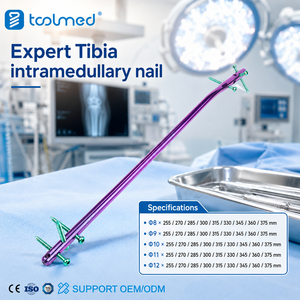
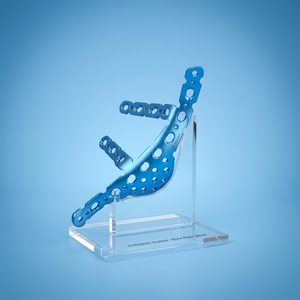
Our trauma portfolio includes expert tibial intramedullary nails, proximal femoral nails (PFNA), and anatomical locking compression plates (LCP). Featuring multi-planar locking screw configurations proximal and distal, our intramedullary systems permit controlled dynamization while maintaining rotational stability across complex comminuted diaphyseal fractures. Anatomically pre-contoured pelvic and rib locking plates eliminate manual intraoperative bending, preserving structural material integrity and preventing micro-fracture propagation.
B. Spinal Fixation & Interbody Fusion Technologies
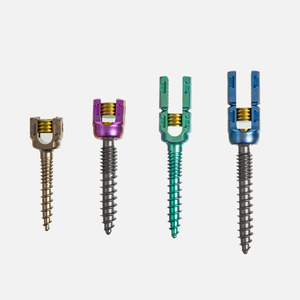
The spinal pedicle screw fixation system incorporates a dual-core, friction-fit polyaxial head design allowing 52 degrees of angulation, accommodating difficult posterior thoracolumbar anatomical contours. Fenestrated cannulated pedicle screws permit cement augmentation (PMMA) in osteoporotic bone. Coupled with zero-profile PEEK cervical fusion devices featuring integrated locking tabs, our spine systems ensure immediate post-operative bio-mechanical stability and high bone graft fusion rates.
C. Joint Arthroplasty (Hip & Knee Prostheses)
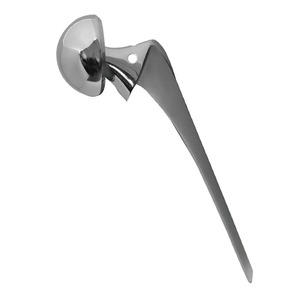
Our bipolar hip joint prosthesis systems utilize high-precision polished CoCrMo femoral heads matched with cross-linked UHMWPE inserts to achieve ultra-low friction wear rates (<5 mg/million cycles). Designed for rapid hemiarthroplasty and total hip arthroplasty (THA), the press-fit cementless femoral stems feature a 3D porous titanium coated proximal zone for secondary osseointegration.
D. Sports Medicine & Arthroscopy Instruments
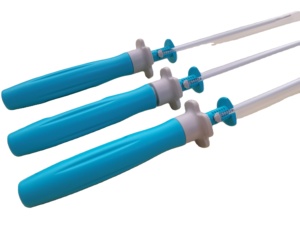
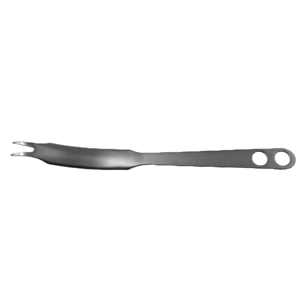
Specialized sports medicine devices, including meniscal repair hook devices, PEEK suture anchors, and high-frequency arthroscopy shaver blades, offer orthopedic surgeons tactile feedback and precise tissue manipulation during minimally invasive joint reconstruction. Precision tissue forceps engineered from surgical-grade 316L stainless steel provide reliable gripping force without inducing tissue necrosis.
4. Future Sourcing Trends & Industry Procurement Outlook (2025–2030)
The orthopedic purchasing landscape is shifting rapidly. Global hospital networks, B2B importers, and brand distributors must adapt to four pivotal macro trends shaping orthopedic supply chain logistics over the next decade:
1. Shift to Single-Pack Sterile Delivery
Transitioning from non-sterile bulk implants to individual Co-60 Gamma irradiated sterile packaging (SAL 10⁻⁶). This eliminates hospital reprocessing costs, minimizes SSI (surgical site infection) risks, and guarantees 100% device traceability.
2. Value-Based Global Procurement
Healthcare systems worldwide are replacing overly expensive tier-1 Western brands with NMPA-certified Chinese OEMs. Importers gain identical metallurgical purity and functional performance at significantly lower price points.
3. UBE & MIS Integration
Unilateral Biportal Endoscopy (UBE) and Minimally Invasive Surgery (MIS) techniques are expanding. Manufacturers capable of supplying custom endoscopic instruments alongside specialized implants will capture market share.
5. Enterprise Strengths, OEM/ODM Solutions & Quality Infrastructure
Partnering with our factory gives international distributors a complete, end-to-end medical manufacturing platform. Our operational capabilities include:
- ISO 13485:2016 Certified Facilities: Full compliance across design, CNC machining, cleanroom washing, surface treating, and sterile barrier packaging.
- In-House Metrological Testing Lab: Equipped with Coordinate Measuring Machines (CMM), optical profile projectors, surface roughness testers, and biomechanical fatigue test rigs per ASTM standards.
- Custom OEM/ODM Engineering: Complete contract manufacturing from 2D/3D CAD drawings to physical prototypes, laser marking, anodized color customization, and custom instrument tray layout.
- Regulatory Technical Documentation: We provide comprehensive technical dossiers, CE MDR technical files, biocompatibility reports, and NMPA registration certificates to simplify local regulatory filings in your target country.