Precision Orthopedic Implants & Surgical Systems
Explore our top-tier CE and ISO 13485 compliant trauma plates, spinal connectors, and specialized instrument kits designed for superior clinical outcomes.
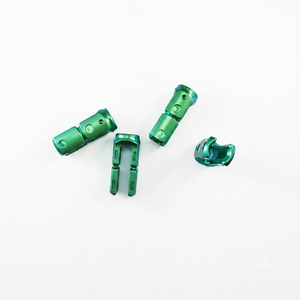
Custom Anodized Green Titanium Spinal Rod Connector U-Type Hook Open Sleeve Component Orthopedic Spinal Implants Fixation System
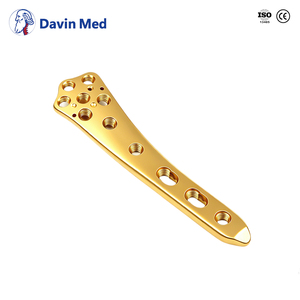
Davin Med Distal Humerus Lateral Locking Plate Titanium Orthopedic Bone Plate Trauma Implant CE ISO13485 OEM ODM Manufacturer
High Precision Spin Coater ±0.1% Speed Stability PTFE Chamber Automatic Glue Dispensing Lab Spin Processor for Microelectronics
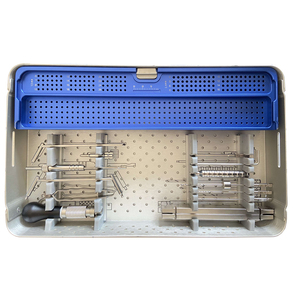
Surgical Small Animal Veterinary ALP S 2.4mm Locking Plate Kit System
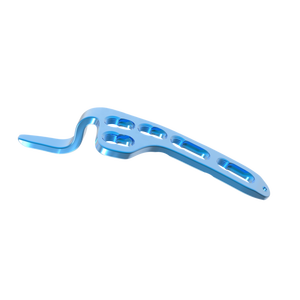
Hot Sell Clavicular Hook Locking Plate Titanium Orthopedic Bone Implants Interventional Materials Factory Direct
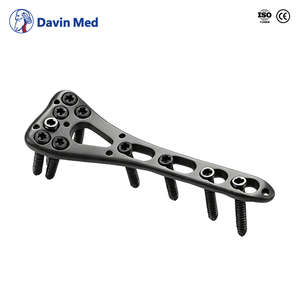
High Quality Orthopedic Trauma Implant Titanium Distal Radius Variable Angle Locking Plate for Wrist Joints Fracture CE ISO
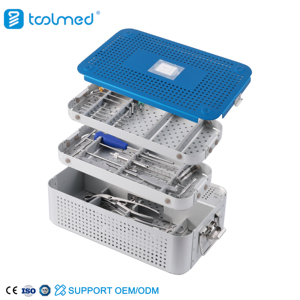
Orthopedic Instrument Orthopedic Surgical Instruments Set Small Fragment/Upper Limbs Instrument Set For Trauma Surgery
Professional 15000Rpm Electric Nail Manicure Pedicure Drill Machine Nail Salon Sets
Biomechanical Innovations in Modern Locking Compression Plate (LCP) Systems
In modern orthopedic trauma surgery, the evolution from conventional compression plating to Locking Compression Plate (LCP) Systems represents a paradigm shift in biological osteosynthesis. Conventional bone plates rely strictly on friction between the plate underside and the cortical bone face, generated by screw tightening force. This mechanism frequently compromises periosteal blood supply, increasing the incidence of delayed union, non-union, and segmental bone necrosis. Conversely, China wholesale locking plate systems manufactured by tier-1 factories utilize fixed-angle constructs where the screw head threads directly into the plate hole, creating a rigid single-unit frame.
By establishing a fixed-angle interface, locking screw technology transfers mechanical loads across the fracture gap through internal fixation rigidity rather than frictional periosteal compression. This preserve-the-periosteum approach accelerates callus formation, preserves microvascular perfusion, and provides superior pullout strength—especially in osteoporotic bone, comminuted intra-articular fractures, and metaphyseal revision procedures.
Core Metallurgical Standards: Ti-6Al-4V ELI vs. Pure Titanium
Leading China locking plate manufacturers mandate strict compliance with international medical-grade material standards to guarantee biomechanical fatigue resistance and biocompatibility:
- Titanium Alloy (Ti-6Al-4V / TC4 - ASTM F1472 / ISO 5832-3): Engineered for high-load application zones such as the distal femur, proximal tibia, and humeral shaft. Possesses an ultimate tensile strength exceeding 930 MPa and an elastic modulus closer to human cortical bone (approx. 110 GPa) compared to stainless steel (210 GPa), significantly mitigating stress shielding.
- Commercial Pure Titanium (TA2/TA3 - ASTM F67 / ISO 5832-2): Preferred for low-profile anatomical plates including distal radius, clavicle hook, and small fragment hand/foot systems. Offers excellent cold-form ductility for intraoperative contouring alongside high fatigue life (tensile strength ≥ 400 to 500 MPa).
| Implant Material Grade | Standard Compliance | Tensile Strength (MPa) | Yield Strength (MPa) | Primary Clinical Indication |
|---|---|---|---|---|
| Ti-6Al-4V ELI (TC4) | ASTM F1472 / ISO 5832-3 | ≥ 930 | ≥ 860 | Weight-bearing long bone locking plates (Femur, Tibia, Humerus) |
| Pure Titanium (TA3) | ASTM F67 Grade 4 | ≥ 500 | ≥ 380 | Periarticular plates, Clavicle, Distal Radius, Small Fragment |
| Pure Titanium (TA2) | ASTM F67 Grade 2 | ≥ 400 | ≥ 275 | Maxillofacial plates, Low-profile Rib & Cranial Fixation |
| PEEK Polymer | ASTM F2026 | 90 - 120 | N/A | Spinal Interbody Cages, Radiolucent Suture Anchors |
Variable Angle (Polyaxial) Locking Mechanisms vs. Monoaxial Fixed Angle
Next-generation distal radius and periarticular locking plates manufactured in China integrate Variable Angle (VA) Locking Technology. While traditional monoaxial locking systems lock screws at a fixed trajectory (typically 90° relative to the plate plane), Polyaxial VA systems feature reinforced conical thread geometry within the plate hole. This allows surgeons to trajectory-steer locking screws within a ±15° cone of variability. This capability is paramount in intra-articular fracture reconstruction, enabling surgeons to target specific fracture fragments, avoid existing joint prostheses or hardware, and maximize bone stock engagement without forfeiting fixed-angle mechanical stability.
Architectural Advantages of China Wholesale Locking Systems
Our state-of-the-art facilities leverage 5-axis CNC machining, high-precision surface anodization, and automated dimensional verification to produce world-class trauma hardware.
Dynamic Combi-Hole System
Combines a standard dynamic compression unit (DCU) hole with a threaded locking hole in a single slot. Provides ultimate surgical versatility: dynamic axial compression, mono/polyaxial locking, or hybrid fixation within one unified plate construct.
Anatomical Pre-Contouring
Precision-engineered utilizing extensive 3D CT skeletal databases. Plates conform accurately to complex anatomical landmarks (distal humerus lateral column, clavicle S-shape, distal radius volar surface), drastically reducing intraoperative bending time and residual internal stress.
Type II Electrolytic Anodization
Proprietary surface modification creates a dense, non-cytotoxic titanium oxide ceramic surface layer. Enhances fretting fatigue resistance, eliminates cold welding (galling) between screw head and plate threads, and offers color-coded identification.
Future Procurement Trends for Wholesale Orthopedic Implants
As global healthcare systems shift toward value-based procurement models, medical device distributors and hospital purchasing groups face mounting pressure to optimize supply chain cost structures without compromising patient safety or surgical efficacy. Sourcing high-quality locking plate systems directly from certified Chinese original equipment manufacturers (OEMs) has transitioned from a cost-reduction tactic to a core strategic imperative.
1. Transition to Gamma-Sterilized Single-Unit Packaging (SAL 10⁻⁶)
Historically, orthopedic trauma hardware was shipped non-sterile in bulk containers, placing the operational burden of cleaning, sorting, and steam autoclave sterilization on hospital central sterile services departments (CSSD). Contemporary procurement trends heavily favor pre-packaged, single-use, sterile-ready locking plates and cannulated screws.
Top China factories now operate cleanrooms compliant with ISO 14644-1 Class 7 standards, utilizing Cobalt-60 (Co-60) gamma ray irradiation to achieve a Sterility Assurance Level (SAL) of 10⁻⁶. This eliminates hospital reprocessing expenses, prevents cross-contamination risk, and guarantees 100% lot-by-lot biological indicator verification upon arrival.
2. OEM/ODM Contract Manufacturing & Private Labeling Integration
Leading medical brand owners increasingly partner with Chinese manufacturers for drawing-based custom machining and full contract manufacturing. Capabilities include:
- Laser Marking & Traceability: High-definition UDI (Unique Device Identification) laser etching compliant with US FDA and EU MDR requirements.
- Custom Instrument Trays: Ergonomic, autoclavable PPSU and aluminum alloy instrument cases custom-designed for streamlined Operating Room (OR) workflows.
- Regulatory Dossier Support: Provision of comprehensive Technical Files, STED documentation, biocompatibility testing (ISO 10993), and mechanical bench testing reports (ASTM F382 / ASTM F543) for rapid local registration.
3. Additive Manufacturing & 3D Porous Structure Hybrid Plates
The convergence of traditional CNC machining and Electron Beam Melting (EBM) 3D printing is shaping the next decade of trauma implants. Emerging locking plate designs incorporate trabecular biomimetic porous metal surface patches directly at the plate-to-bone contact interface, promoting osteo-integration while retaining structural rigidity in critical diaphyseal fracture applications.
Why Partner with Our China Manufacturing Facility?
We deliver uncompromised quality, regulatory compliance, and scalable OEM manufacturing solutions tailored for global distributors.
Rigorous Quality Assurance
Operating strictly under ISO 13485 and ISO 9001 certified quality management systems. Every batch of raw titanium bar stock undergoes spectrum analysis, micro-hardness testing, and grain size verification prior to CNC machining.
Advanced Swiss CNC Machining
Utilizing high-precision multi-axis Citizen and Star CNC sliding-head lathes, alongside DMG MORI 5-axis machining centers, keeping manufacturing tolerances within ultra-tight ±0.005 mm thresholds.
End-to-End Surgical Training
Supporting our global distributor network with comprehensive surgical technique guides, CAD video animation models, sawbones workshop kits, and technical sales training modules.
Sourcing Locking Plate Systems: B2B Procurement Guide
Clear, expert answers to key regulatory, manufacturing, and supply chain questions for healthcare purchasing officers.
What regulatory certifications do your wholesale locking plate systems carry?
Our complete orthopedic product line is manufactured under strict ISO 13485 (Medical Devices Quality Management System) and ISO 9001 quality frameworks. Applicable implant families hold full CE marking under EU Medical Device Regulation guidelines. Raw materials strictly adhere to ASTM F1472 (Ti-6Al-4V) and ASTM F67 (Pure Titanium TA2/TA3) standard specifications, accompanied by complete mill test reports (MTR) for total traceability.
Can you manufacture custom locking plates based on proprietary engineering drawings (OEM/ODM)?
Yes. We specialize in contract OEM/ODM manufacturing for medical device brand owners. Our technical engineering team evaluates STEP/IGES CAD drawings, conducts DFM (Design for Manufacturability) assessments, executes precision CNC prototype machining, and assists with mechanical fatigue bench testing (ASTM F382). Custom laser engraving, anodized color coding, and bespoke sterile packaging solutions are available.
Are your locking plates and screws shipped sterile or non-sterile?
We supply products in both configurations depending on distributor requirements. Non-sterile plates are packaged in protective medical-grade anti-static polybags suitable for tray assembly. Sterile-packaged implants are processed inside ISO Class 7 cleanrooms, sealed within double peelable blister trays with Tyvek lids, and exposed to Cobalt-60 gamma ray sterilization guaranteeing a SAL 10⁻⁶ rating with a validated 5-year shelf life.
How do your locking screw threads prevent cold welding (galling) with the plate?
To eliminate galling—a common issue where titanium screw threads bind permanently to titanium plates—our implants undergo specialized Type II Anodization. Hard anodization increases surface micro-hardness, reduces the coefficient of friction during screw insertion, and prevents thread cold-welding while maintaining stable fixed-angle locking torque specs.
What is the Minimum Order Quantity (MOQ) and lead time for bulk wholesale orders?
For standard catalog inventory (Small Fragment sets, Large Fragment LCPs, Distal Radius plates), our baseline MOQ starts at 10 units per SKU with dispatch within 14–21 business days. Custom OEM/ODM manufacturing runs typically require 100–500 units depending on geometry complexity, with complete tooling setup and sample delivery in 30–45 days.
Partner with China's Premier Orthopedic Implant Factory
Request a comprehensive product catalog, detailed CAD technical specifications, or a competitive OEM wholesale quotation within 24 hours.