Featured Orthopedic Implants & Surgical Systems
Explore our certified product portfolio manufactured in accordance with strict international quality standards. Each system features complete lot traceability, biocompatible material verification, and optional sterile packaging.
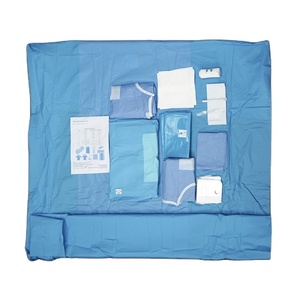
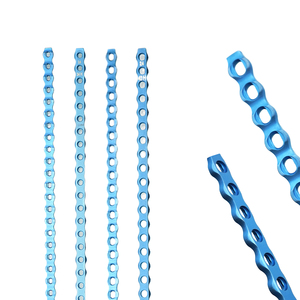
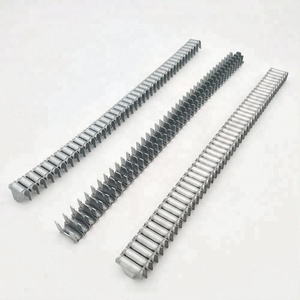
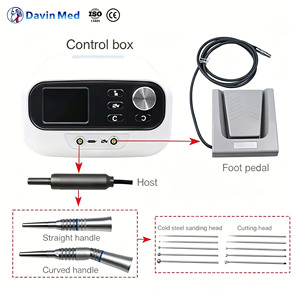
Executive Overview: China Orthopedic Manufacturing Landscape
The global market for orthopedic implants and surgical instruments is undergoing a structural transformation. Hospital procurement committees, regional distributors, and OEM medical brand owners are increasingly seeking ISO 13485 certified manufacturing partners capable of balancing stringent regulatory compliance with cost efficiency and scalable production capabilities. As an established China wholesale ISO 13485 certified orthopedic manufacturer and exporter, Orthi Medical Co., Ltd. operates at the intersection of precision engineering, advanced metallurgy, and strict medical device quality systems.
From trauma internal fixation systems (locking plates, cannulated compression screws, intramedullary nails) to thoracolumbar spinal hardware, sports medicine anchors, total hip and knee joint replacement devices, and minimally invasive endoscopy instrumentation, modern manufacturing requires zero-defect tolerance. Operating advanced 5-axis DMG MORI CNC milling machines, high-precision Swiss-type turning lathes, and automated anodization lines within Class 100,000 cleanrooms, verified Chinese exporters provide global buyers with registration-ready orthopedic devices that fulfill European CE MDR and US FDA 510(k) structural guidelines.
Institutional Advantages & Manufacturing Rigor
1. Certified ISO 13485 & CE Quality Assurance
Our manufacturing infrastructure operates under ISO 13485:2016 and ISO 9001 quality management systems. Every manufacturing batch undergoes 100% optical comparator inspection, CMM 3D coordinate verification, and biomechanical dynamic testing to guarantee consistent dimensional tolerances across all implant series.
2. Medical-Grade Metallurgical Traceability
All implants are fabricated exclusively from certified implantable-grade raw materials: Pure Titanium TA2/TA3 (ASTM F67), Ti-6Al-4V TC4 / ELI (ASTM F1472 / ASTM F136), radiolucent PEEK-OPTIMA, Cobalt-Chromium-Molybdenum (CoCrMo per ASTM F75), and UHMWPE (ASTM F648), complete with raw material mill test certificates.
3. Turnkey OEM / ODM & Private Labeling
We provide end-to-end contract manufacturing for global medical brands. From custom CAD drawing machining and prototype sample verification to laser etching, color anodizing, custom sterilizable tray layout design, and private-label blister packaging.


Implant Material Performance & Engineering Standards
To assist biomedical engineers and procurement specialists, the table below outlines the material standards, yield strengths, and clinical indications for our primary product lines:
| Material Type | International Standard | Tensile Strength (MPa) | Yield Strength (MPa) | Primary Surgical Application |
|---|---|---|---|---|
| Pure Titanium Grade 2 (TA2) | ASTM F67 / ISO 5832-2 | ≥ 345 MPa | ≥ 275 MPa | Low-load craniomaxillofacial & rib fracture plates |
| Pure Titanium Grade 3 (TA3) | ASTM F67 / ISO 5832-2 | ≥ 450 MPa | ≥ 380 MPa | Standard trauma bone screws & reconstructive pins |
| Ti-6Al-4V Alloy (TC4 / Grade 5) | ASTM F1472 / ISO 5832-3 | ≥ 930 MPa | ≥ 860 MPa | Pedicle screws, trauma locking plates, intramedullary nails |
| Ti-6Al-4V ELI (Extra Low Interstitial) | ASTM F136 / ISO 5832-11 | ≥ 860 MPa | ≥ 790 MPa | High-fatigue orthopedic implants & joint components |
| PEEK-OPTIMA (Polyetheretherketone) | ASTM F2026 | ≥ 95 MPa | ≥ 90 MPa | Interbody fusion cages, radiolucent suture anchors |
| Cobalt-Chromium Alloy (CoCrMo) | ASTM F75 / ISO 5832-4 | ≥ 660 MPa | ≥ 450 MPa | Total hip femoral heads & total knee femoral components |
Future Procurement Trends in Global Orthopedic Sourcing
As global healthcare expenditures grow and hospital systems demand improved operational throughput, orthopedic procurement strategies are evolving rapidly. Distributors and institutional buyers must align with manufacturers that actively invest in advanced production paradigms. Key trends shaping the next decade of orthopedic B2B purchasing include:
1. Transition to Gamma-Sterilized Single-Pack Implants
Traditional non-sterile bulk implants require costly autoclave processing, tray washing, and inventory tracking at hospitals. Modern procurement favors Co-60 gamma-irradiated implants (Sterility Assurance Level SAL 10⁻⁶) sealed in double sterile blister packaging. Pre-sterilized implants eliminate hospital reprocessing expenses, eliminate cross-contamination risks, and ensure immediate surgical readiness.
2. Rise of Radiolucent PEEK & Porous 3D Titanium Cages
In spinal and arthroplasty interventions, traditional solid metal implants are increasingly replaced by materials with an elastic modulus closer to human cortical bone (18 GPa). PEEK interbody fusion cages provide artifact-free postoperative CT and MRI imaging, while 3D-printed porous titanium implants feature interconnected trabecular structures that promote accelerated osseointegration and bone ingrowth.
3. Minimally Invasive Surgery (MIS) & UBE Expansion
Surgical preferences have shifted decisively toward minimally invasive techniques such as Unilateral Biportal Endoscopy (UBE), Percutaneous Transforaminal Endoscopic Discectomy (PTED), and minimally invasive plate osteosynthesis (MIPO). Procurement managers must source specialized low-profile instruments, cannulated pedicle screws, and high-definition 4K endoscopic systems that support these procedures.
4. EU MDR (2017/745) Regulatory Harmonization
Strict enforcement of the European Union Medical Device Regulation (EU MDR) has created supply shortages for non-compliant brands. International buyers are prioritizing China manufacturers that maintain comprehensive Technical Documentation (TD), clinical evaluation reports (CER), and post-market surveillance (PMS) infrastructure to maintain uninterrupted market authorization.
Technological Advancements in Implant Manufacturing
To maintain competitive positioning, China's leading orthopedic exporters are moving beyond basic machining into advanced surface engineering and biomechanical modeling. Innovation focuses on three critical technology domains:

Biomechanical Simulation & Precision Surface Treatment
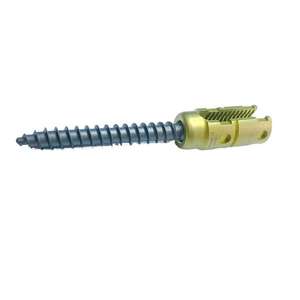
Modern orthopedic implant development utilizes Finite Element Analysis (FEA) to simulate complex biomechanical stress distribution under physiological dynamic loads. For example, in polyaxial pedicle screw systems and locking bone plates, FEA optimization minimizes stress shielding while preventing fatigue failure at thread transitions.
Furthermore, surface treatment technology has advanced from standard mechanical polishing to Type II Anodization, Micro-Arc Oxidation (MAO), and Vacuum Plasma Sprayed (VPS) Hydroxyapatite (HA) coatings. These chemical and physical surface modifications enhance micro-roughness, promote osteoblast attachment, and reduce friction coefficients on articulating joint surfaces.
Frequently Asked Questions (FAQ) for B2B Buyers
Direct answers to key technical, quality control, and commercial questions asked by hospital procurement managers and medical device distributors: