Wholesale Interbody Fusion Cage Systems & Instruments
Explore our ISO 13485 certified product range featuring medical-grade PEEK (ASTM F2026) and Ti-6Al-4V ELI titanium (ASTM F136 / ASTM F3001) implants for cervical and lumbar spinal fusion surgeries.
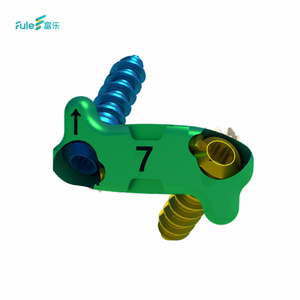
Competitive Price CE/ISO13485/ISO9001 Certified Full Titanium/PEEK Anterior Interbody Fusion Cage Class III Spinal Fixation 5+
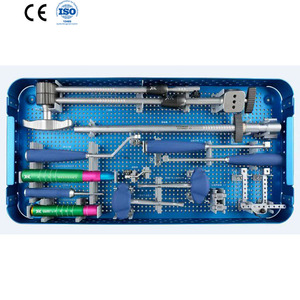
Minimally Invasive Lumbar Channel Instrument Set Anterior Cervical Intervertebral Fusion Cage System Medical for Bone Surgery
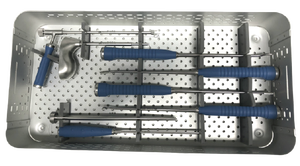
CE Posterior Orthopedic Lumbar Interbody Fusion Cage Instruments Tlif Instruments
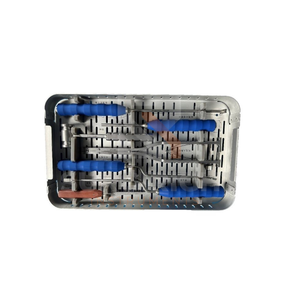
Titanium Cervical Spine Implants Cervical Interbody Fusion Cage Mesh Instrument Set Manual Power Source CE Certified ISO13485
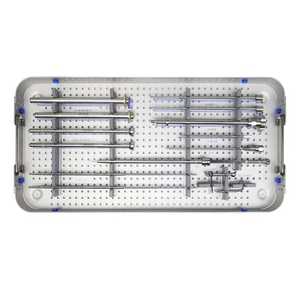
Medical Surgical Orthopedic Zero Profile Interbody Fusion Cage Stainless Steel Manual Instrument Medicab CE Certified Class I
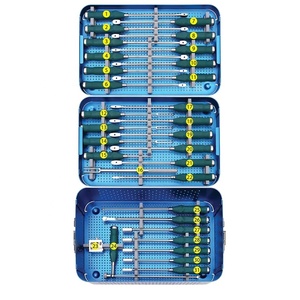
High Quality German Stainless Steel Manual Reusable Posterior Lumbar Interbody Fusion Cage Orthopedic Surgical Instruments CE
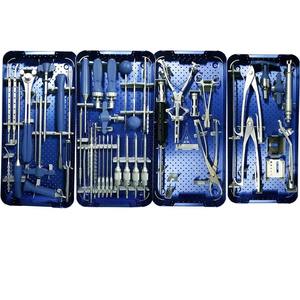
Cervical Intervertebral Fusion Cage System Stainless Steel Orthopedic Instruments Spine Surgery Manual MOL CE Certified AS-4994
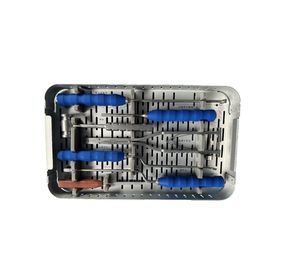
Stainless Steel Cervical Spine Implants Cervical Interbody Fusion Cage Mesh Cage Instrument Set Manual Power Source Surgiright
Biomechanical Engineering of Interbody Fusion Cages: Material Science & Clinical Efficacy
Interbody fusion cages serve as critical load-bearing structural spacers inserted into the intervertebral disc space following anterior, posterior, or lateral discectomy. The primary engineering goals of interbody devices are threefold: 1) Immediate restoration of intervertebral disc height and sagittal alignment, 2) Mechanical decompression of spinal neural foramina, and 3) Provision of a bio-stable environment that facilitates bony bridge fusion between upper and lower endplates.
PEEK (Polyetheretherketone) Polymer Matrix
Medical-grade PEEK (ASTM F2026) has long served as the gold-standard polymer for spinal interbody spacers. Its primary elastic modulus (~3.6 GPa) closely matches human cortical bone (12–18 GPa) and cancellous bone (1–4 GPa), significantly mitigating stress shielding and reducing postoperative endplate subsidence compared to solid dense metals.
- Radiolucency: Clear radiographic visualization of bone graft maturation on X-ray and CT without metallic artifacts.
- Tantalum Markers: Embedded ASTM F560 radiopaque tantalum pins enable precise intraoperative placement verification.
- Biocompatibility: Chemically inert, non-resorbable polymer with high resistance to thermal and chemical degradation.
3D-Printed Porous Trabecular Titanium
Utilizing Selective Laser Melting (SLM) additive manufacturing, 3D porous Ti-6Al-4V ELI (ASTM F3001) implants simulate the bio-mimetic architecture of human cancellous bone. Featuring interconnected pore sizes ranging between 450 μm and 700 μm with 60–75% porosity, these devices facilitate direct osteoblast attachment, proliferation, and vascularization throughout the implant interior.
- Direct Osteointegration: Rough surface topography promotes cell signaling and alkaline phosphatase (ALP) expression.
- Engineered Stiffness: Porous structure lowers bulk elastic modulus to 2–5 GPa, balancing strength with bone-like compliance.
- High Friction Coefficient: Micro-textured surfaces increase initial mechanical grip against endplates to prevent cage migration.
Surgical Approach Comparison: ALIF, PLIF, TLIF, DLIF/LLIF, and ACDF Zero-Profile
| Surgical Technique | Anatomical Access | Primary Indication | Footprint & Graft Volume | Subsidence Risk Profile | Key Advantage |
|---|---|---|---|---|---|
| ACDF Zero-Profile | Anterior Cervical | Cervical radiculopathy & myelopathy | Compact, anatomic cervical fit | Low (with integrated screws) | Prevents dysphagia, no anterior plate prominence |
| ALIF | Anterior Lumbar | L5-S1 spondylolisthesis & DDD | Maximum footprint & graft capacity | Very Low (spans apophyseal ring) | Restores lordosis, avoids canal scarring |
| PLIF | Posterior Lumbar | Bilateral canal stenosis & instablity | Dual bilateral narrow cages | Moderate (requires careful reaming) | Direct 360° posterior canal decompression |
| TLIF | Transforaminal Lumbar | Unilateral disc herniation & degenerative scoliosis | Single curved kidney-shaped cage | Low to Moderate | Preserves contralateral lamina and ligamentum flavum |
| DLIF / LLIF / OLIF | Lateral / Oblique Lumbar | Multi-level lumbar revision & deformity | Wide lateral spanning footprint | Extremely Low (anchored on cortical rim) | Minimally invasive, preserves anterior/posterior ligaments |
Future Procurement & Technological Trends in Interbody Fusion
As global healthcare systems demand higher clinical efficacy alongside cost containment, medical device purchasing directors and OEM partners must adapt to these six macro procurement trends.
1. Dominance of Additive Manufactured Trabecular Titanium
Procurement volumes are rapidly shifting from smooth PEEK implants toward 3D-printed porous titanium cages. 3D printing enables lattice structures that combine osteoinductive pore geometry with reduced mechanical stiffness, driving superior early fusion rates.
2. Rise of Expandable Interbody Fusion Cages
Minimally invasive surgery (MIS) demands smaller insertion footprints. Expandable cages enter the disc space collapsed to minimize neural retraction, then expand in-situ to restore customized lordosis and height while optimizing endplate contact.
3. Pre-Sterilized Single-Use Implant Packaging
Hospitals are increasingly mandating factory-sealed, gamma-sterilized (SAL 10⁻⁶) individual implant blister packaging. This eliminates hospital autoclave logistics, guarantees sterility, prevents scratch damage, and enhances traceability via UDI barcoding.
4. Regulatory Harmonization (EU MDR & US FDA 510k)
Regulatory requirements under European MDR (2017/745) and FDA 510(k) necessitate rigorous clinical evaluations, post-market surveillance (PMS), and comprehensive technical documentation (STED). Tier-1 manufacturers with complete file readiness win global distribution contracts.
5. Integrated Zero-Profile & Stand-Alone Constructs
Stand-alone cervical and lumbar fusion cages with pre-drilled integrated bone screw channels bypass the need for supplemental anterior plates or posterior pedicle screw fixation in single-level procedures, drastically reducing OR procedure times.
6. Resilient Direct-from-Factory Supply Chains
Global orthopedic brand owners are bypassing multi-tiered brokers to partner directly with accredited Chinese OEM hubs. Direct factory manufacturing secures competitive landed costs, custom tray design, and private-label branding capabilities.
Technological Evolution: From Cortical Allografts to Bioactive Surface Coatings
Spinal interbody fusion technology has undergone four distinct generational shifts over the past four decades. Understanding this evolutionary trajectory allows distributors and procurement teams to align their product portfolios with modern surgical demands.
Gen 1 & Gen 2: Allografts to Solid PEEK Cages
First-generation structural cortical bone autografts suffered from unpredictable resorption rates and donor site morbidity. Second-generation solid smooth PEEK cages solved biocompatibility and mechanical radiolucency, yet frequently developed a fibrous non-fusion capsule due to hydrophobic surface characteristics.
Gen 3 & Gen 4: 3D Titanium & Bioactive Surfaces
Third-generation implants integrated plasma-sprayed titanium coatings onto PEEK to promote cellular adhesion. Fourth-generation biomimetic additive 3D titanium and Hydroxyapatite (HA) / Nanotopography modifications deliver true biological osteointegration, driving faster bone fusion without fibrous tissue interposition.
Enterprise Capabilities & OEM Manufacturing Strengths
Our state-of-the-art medical device facility combines advanced German 5-axis CNC machining, automated cleanroom packaging, and ISO 13485 certified quality management systems.
5-Axis CNC Precision
Equipped with high-precision DMG MORI 5-axis CNC machining centers and Citizen Swiss lathe units capable of ±0.005mm tolerances for intricate interbody tooth profiles and instrument catches.
Class 100,000 Cleanroom
Implant cleaning, assembly, primary blister sealing, and secondary box packing take place within an ISO Class 7 (Class 100,000) controlled cleanroom environment adhering to ISO 14644.
ASTM F2077 / F2267 Testing
In-house mechanical testing lab performs rigorous static/dynamic axial compression, static/dynamic shear, dynamic torsion (ASTM F2077), and endplate subsidence evaluation (ASTM F2267).
Turnkey Regulatory Support
Full technical dossier support (STED format) including raw material mill test reports, biocompatibility (ISO 10993), packaging validation (ISO 11607), and CE/FDA registration filing files.
Frequently Asked Questions for Wholesale Procurement
Answers to common inquiries from medical device distributors, OEM partners, and hospital procurement managers.