Featured Orthopedic Implants & Surgical Systems
Executive Summary: The Evolving Landscape of Intramedullary Humeral Nailing
Humeral shaft and proximal humerus fractures account for approximately 5% to 8% of all adult trauma presentations globally. The anatomical complexity of the upper extremity—characterized by proximity to the radial nerve, delicate rotator cuff insertion points, and complex torsional forces during arm rotation—demands orthopedic trauma implants engineered with uncompromising biomechanical integrity. Over the past two decades, China has emerged as a premier global manufacturing cluster for medical device buyers seeking wholesale humeral intramedullary nails, locking plates, and custom OEM/ODM surgical instrumentation sets.
Modern surgical intent has progressively shifted from open reduction and internal fixation (ORIF) using extramedullary plates toward minimally invasive intramedullary nailing (IMN). Intramedullary fixation provides superior biomechanical advantages: it acts as a load-sharing internal splint, preserves the periosteal blood supply, minimizes soft-tissue disruption, and allows early functional rehabilitation. As hospitals and medical device distributors re-evaluate supply chain resilience, partnering with verified **China wholesale humeral nail manufacturers and suppliers** offers a compelling combination of clinical precision, ISO 13485 regulatory compliance, material traceability, and cost efficiency.
Clinical Insight: Closed intramedullary nailing of humeral fractures achieves primary axial stability while reducing overall operative time and surgical site infection (SSI) rates by over 40% compared to traditional open plating techniques, provided multi-planar proximal locking is maintained.
Anatomical Curvature Design
Optimized 5° to 6° proximal bend reduces rotator cuff disruption during anterograde insertion, preventing subacromial impingement.
Multi-Planar 3D Locking
Proximal multi-angle screw options provide rigid fragment fixation in osteoporotic bone, preventing secondary varus collapse.
Medical Grade Metallurgy
Manufactured exclusively from certified Ti-6Al-4V ELI (ASTM F136 / ISO 5832-3) titanium alloy with superior fatigue endurance.
Biomechanical Engineering of Modern Humeral Nailing Systems
1. Anterograde vs. Retrograde Insertion Mechanics
A critical consideration for orthopedic surgeons and procurement committees is selecting between anterograde and retrograde humeral nailing modalities. Leading Chinese manufacturers engineer universal or dedicated nail geometries to accommodate both surgical approaches seamlessly:
- Anterograde Nailing: Indicated for proximal two-thirds humeral shaft fractures. The entry portal is positioned at the apex of the humeral head, medial to the greater tuberosity. Advanced straight nail profiles with a proximal bend move the entry point laterally, preserving the avascular zone of the supraspinatus tendon.
- Retrograde Nailing: Preferable for distal shaft fractures or when shoulder joint stiffness must be avoided. The entry portal is situated 1.5 cm to 2.0 cm proximal to the olecranon fossa. Retrograde nails incorporate a flattened distal trajectory to minimize triceps tendon friction and supracondylar fracture risks.
2. Multi-Planar Locking Geometry & Dynamic Compression
Rotational instability remains the primary cause of nonunion in humeral fractures. To combat complex shear forces, modern titanium humeral nails feature a refined matrix of proximal and distal locking options:
| Parameter | Anterograde Humeral Nail | Retrograde Humeral Nail | Proximal Humeral Locking Nail |
|---|---|---|---|
| Diameter Range | Ø 7.0 mm – 10.0 mm (1 mm increments) | Ø 7.0 mm – 9.0 mm | Ø 8.0 mm – 11.0 mm |
| Length Range | 200 mm – 320 mm (20 mm increments) | 180 mm – 280 mm | 150 mm – 240 mm |
| Material Standard | Ti-6Al-4V ELI (ASTM F136) | Ti-6Al-4V ELI (ASTM F136) | Titanium Alloy / Pure Titanium |
| Proximal Locking Screws | 3 to 4 Multi-Planar Options (Ø 4.0 mm) | 2 Transverse Screws | 4-5 Divergent/Convergent Locking Screws |
| Distal Locking Modes | Static & Dynamic Oblong Slots | Static & Threaded Locking | Static Dual-Plane Locking |
| Indications | Middle 1/3 Shaft Fractures, Nonunions | Distal 1/3 Shaft Fractures | 2-Part & 3-Part Proximal Fractures |
The inclusion of an elongated oblong slot at the distal end allows for controlled dynamic axial compression under physiological loading. Alternatively, static locking mode neutralizes both torsional and axial forces, ideal for highly comminuted pathological fractures.
Metallurgical Quality Assurance & Swiss CNC Precision
In medical implant manufacturing, material purity directly dictates fatigue life and biocompatibility. Premium Chinese orthopedic device manufacturers utilize raw titanium billets fully compliant with ASTM F136 (Ti-6Al-4V ELI) and ASTM F67 (Unalloyed Titanium) standards. Extra Low Interstitial (ELI) titanium offers superior fracture toughness compared to standard Grade 5 titanium, making it essential for thin-walled cannulated implants subjected to cyclical bending moments.
Precision Manufacturing Pipeline at Orthi Medical
The fabrication of high-tier intramedullary humeral nails involves rigorous multi-axis machining and automated surface treatment processes:
5-Axis Swiss CNC Turning
Sub-micron tolerance machining ensures absolute concentricity of cannulated lumens and smooth thread-to-nail interface geometry.
Type II Anodization
Electrochemical anodization enhances surface hardness, reduces fretting corrosion, and provides color-coded identification for varying nail diameters.
Mechanical Fatigue Testing
Implants undergo rigorous dynamic four-point bending and torsional fatigue stress testing according to ISO 14801 and ASTM F1264 protocols.
Global Sourcing Trends & Procurement Strategy (2026–2032)
The global orthopedic trauma device market is undergoing structural shifts driven by cost-containment mandates in public healthcare systems, the rise of Ambulatory Surgery Centers (ASCs), and stringent regulatory frameworks such as the EU MDR (Regulation 2017/745) and US FDA 510(k) clearances. Overseas distributors and hospital purchasing networks are adopting new strategic procurement models when working with Chinese wholesale manufacturers:
1. Transition to Sterile-Packaged Single-Use Implant Kits
Traditional non-sterile bulk shipments require extensive hospital autoclave reprocessing, increasing operating room setup costs and human error risk. Leading Chinese suppliers now provide Co-60 Gamma Sterilized pouches achieving a Sterility Assurance Level (SAL) of 10⁻⁶. Sterile packaging simplifies supply chain logistics, eliminates hospital reprocessing overhead, and offers 5-year shelf-life stability.
2. OEM/ODM Private Labeling & Custom Instrumentation Trays
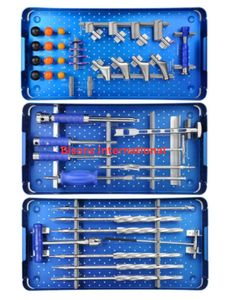
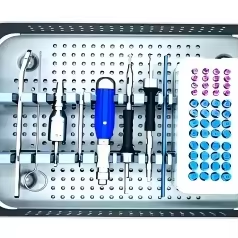
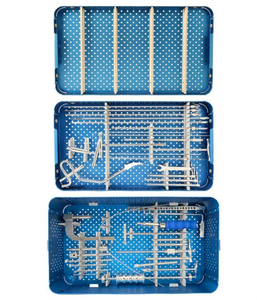
Global brand owners increasingly leverage OEM/ODM partnerships with certified Chinese factories to rapidly expand their product catalogs. Turnkey services include custom laser etching of part numbers and lot codes, custom-colored anodization, and ergonomic carbon-fiber or stainless-steel surgical instrument trays designed for seamless carbon-neutral shipping.
3. Comprehensive Regulatory Documentation Support
Securing market access in South America, Southeast Asia, the Middle East, and Eastern Europe requires robust technical dossiers. Reputable suppliers furnish distributors with complete STED (Summary Technical Documentation), ISO 13485 certificates, biocompatibility test reports (ISO 10993 series), and clinical evaluation reports (CER).
Why Partner with Orthi Medical Co., Ltd.
Orthi Medical Co., Ltd. stands at the forefront of China's medical device manufacturing sector, specializing in trauma plates, intramedullary nails, spinal fixation systems, sports medicine anchors, and joint replacement solutions. Our integrated manufacturing infrastructure eliminates supply chain friction for international buyers.
Turnkey OEM / ODM Solutions
From initial CAD drawing review and rapid prototype machining to mass production and private label packaging, our engineering team delivers tailored solutions within tight timelines.
Class 100,000 Cleanroom Facility
All cleaning, assembly, primary packaging, and gamma sterilization prep take place inside audited ISO Class 7/8 controlled cleanroom environments.
Academic & Surgeon Training Support
We empower global distributors with detailed surgical technique manuals, step-by-step video guides, sawbones demonstration models, and cadaver workshop support.
Frequently Asked Questions (FAQ) for Global Buyers
Accelerate Your Orthopedic Supply Chain with Orthi Medical
Connect with our senior technical sales team to request factory direct pricing, detailed product catalogs, material test reports, or custom OEM contract manufacturing terms.
Get a Quote