Featured Veterinary Orthopedic Implants & Surgical Instrument Sets
Engineered for small animal trauma, canine TPLO/TTA procedures, and specialized veterinary orthopedic reconstruction. Manufactured under ISO 13485 standards using medical-grade ASTM F136 Titanium and biocompatible alloys.
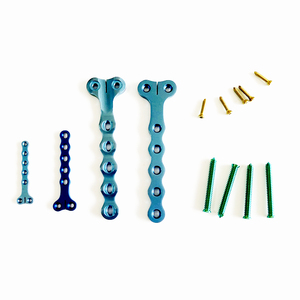
T Shape 1.6 / 2.0 / 2.4 mm Veterinary Orthopedic Locking Bone Plate
Ultra-low profile micro-locking plate system engineered for distal radius, ulna, and articular fracture osteosynthesis in feline and small-breed canine patients.
Send an Inquiry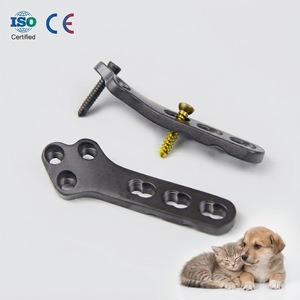
Veterinary Titanium TPLO Bone Locking Plate for Canine Osteotomy
Anatomically contoured Tibial Plateau Leveling Osteotomy plate featuring polyaxial locking mechanics to deliver maximum biomechanical stability under cranial cruciate ligament rupture (CCLR) repair.
Send an Inquiry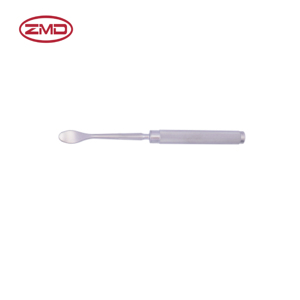
Veterinary Pubic Bone Separator for Specialized Orthopedic Surgeries
Precision soft-tissue & bone retraction instrument designed to safely separate animal pelvic structures during complex pelvic osteotomies and trauma repair procedures.
Send an Inquiry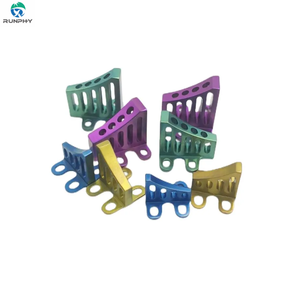
RUNPHY Titanium Gold TPLO / TTA Rapid Small Animal System
Gold anodic-oxidized titanium implants designed for Tibial Tuberosity Advancement (TTA) and TPLO. Reduced tissue friction, high wear resistance, and rapid bone integration.
Send an Inquiry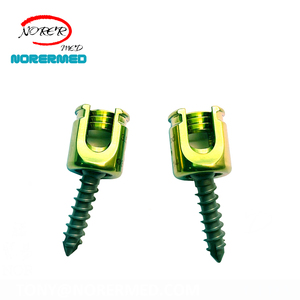
Titanium Posterior Cervical Mass Screw System for Veterinary Spine
High-precision 5-axis CNC machined titanium pedicle & cervical screws built for canine Wobbler syndrome correction, cervical vertebral instability, and trauma reconstruction.
Send an Inquiry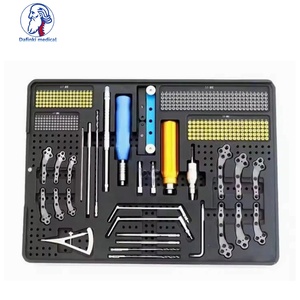
Dafinki 2.0 / 2.4 / 2.7 / 3.5 mm Titanium TPLO AO Multiaxial Implant Set
Complete surgical system incorporating multiaxial locking plates, cortical/locking screws, color-coded drill bits, and ergonomic instrumentation in an autoclave tray.
Send an Inquiry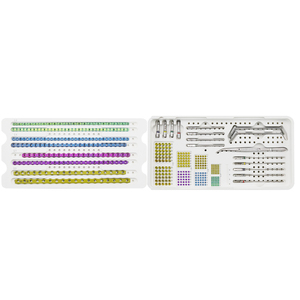
ALPS (Advanced Locking Plate System) Small Animal Orthopedic Plates
Biological osteosynthesis design featuring point-contact underside geometry. Minimizes periosteal blood supply disruption and accelerates bone healing in dogs and cats.
Send an Inquiry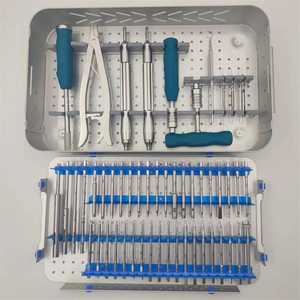
Internal Fixation Extractor Set & Broken Screw Removal System
Universal surgical extraction kit equipped with left-hand reverse drill bits, conical extractors, and trephines for removing damaged, stripped, or broken orthopedic hardware.
Send an InquiryGlobal Landscape: China as the Hub for Veterinary Orthopedic Device Exports
Over the past decade, the global companion animal healthcare market has experienced a structural evolution. Driven by increasing pet humanization, specialized veterinary orthopedic clinics, and higher surgical intervention rates for canine cranial cruciate ligament ruptures (CCLR) and complex appendicular fractures, the demand for precision orthopedic implants has surged worldwide.
China has established itself as the primary international manufacturing and export powerhouse for veterinary orthopedic solutions. Leading medical manufacturing clusters in Zhejiang and Jiangsu leverage advanced 5-axis CNC machining centers, automated electrochemical surface finishing lines, and certified Class 10,000 cleanrooms to produce implant systems that match or exceed Western performance benchmarks at highly optimized capital expenditures.
For international medical device distributors, veterinary hospital chains, and private-label brands, navigating the vendor landscape in China requires evaluating specific technical capability metrics: metallurgical certification (ASTM F136 / ASTM F67), fatigue testing data (ASTM F382), mechanical pullout torque compliance (ASTM F543), and export documentation readiness.
Metallurgical Engineering & Biomechanical Performance Standards
Veterinary orthopedic implants undergo immense cyclic loading during patient recovery. Small animals, particularly active canine breeds following TPLO or trauma surgery, exert significant dynamic stress across bone-plate interfaces. Premium suppliers utilize raw materials compliant with international surgical standards to guarantee fracture stability and eliminate fatigue failure risks.
| Implant Material | Standard Specification | Tensile Strength (MPa) | Yield Strength (MPa) | Elastic Modulus (GPa) | Primary Surgical Application |
|---|---|---|---|---|---|
| Ti-6Al-4V ELI (Grade 5) | ASTM F136 / ISO 5832-3 | ≥ 860 | ≥ 795 | 110 - 114 | TPLO plates, TTA Rapid cages, Spinal Screws, Heavy Trauma LCP |
| Commercially Pure Titanium (CP3/CP4) | ASTM F67 / ISO 5832-2 | 550 - 700 | 480 - 520 | 100 - 105 | Micro trauma plates (1.5/2.0mm), feline pelvic plates, contourable mesh |
| PEEK (Polyetheretherketone) | ASTM F2026 | 90 - 100 | 110 - 130 | 3.5 - 4.1 | Interbody fusion cages, suture anchors, radiolucent spinal spacers |
| 316L Stainless Steel | ASTM F138 / ISO 5832-1 | ≥ 860 | ≥ 690 | 190 - 200 | Cost-effective trauma pins, external fixators, wire instrumentation |
Surface Coating & Anodization Innovations: Leading Chinese manufacturers employ Electrochemical Anodization (Type II per AMS 2488) and Micro-Arc Oxidation (MAO). Anodizing increases surface hardness, eliminates micro-burrs left after high-speed CNC milling, and creates a controlled titanium oxide ($TiO_2$) passivated layer that significantly accelerates osteoblast adhesion and reduces ion release into surrounding animal tissues.
Deep Dive: Core Veterinary Orthopedic Implant Technologies
Understanding the subtle design differences between various implant systems is vital for procurement teams aiming to fulfill veterinary surgeon specifications across trauma, joint, and spinal procedures.
TPLO & TTA Rapid Systems
Canine Tibial Plateau Leveling Osteotomy (TPLO) remains the gold standard treatment for cranial cruciate ligament tears. Chinese suppliers produce anatomical pre-contoured left/right TPLO plates with polyaxial locking holes. The RUNPHY Titanium Gold series utilizes targeted surface treatments for superior wear resistance in heavy working dogs (e.g., German Shepherds, Labradors).
ALPS Biological Osteosynthesis
The Advanced Locking Plate System (ALPS) minimizes implant-to-bone contact area through a scalloped, point-contact undersurface design. Unlike conventional LCP plates that compress the periosteum, ALPS preserves local cortical blood supply, drastically reducing the risk of delayed union or osteomyelitis in compromised patients.
Pedicle Screws & Spine Implants
Veterinary spinal reconstruction requires extreme micro-machining precision. Posterior cervical mass screw sets and thoracolumbar pedicle systems feature cannulated design options, dual-lead thread geometries for rapid insertion into pedicles, and variable-angle polyaxial heads to simplify rod coupling during spinal decompression.
Revision & Extraction Sets
Hardware failure or infected non-union revision requires reliable removal instrumentation. Internal fixation extractor sets incorporate specialized left-hand conical extractors, damaged screw drivers, and bone trephines to safely back out stripped screws (1.5mm to 3.5mm) without compromising surrounding cortical bone.
Future Sourcing & Tech Trends in Veterinary Orthopedics (2025–2030)
As veterinary surgery advances toward human-grade precision, procurement managers must anticipate technology shifts to avoid stock obsolescence and maintain market competitiveness. Leading Chinese exporters are actively driving several technological innovations:
2. Additive Manufacturing (3D-Printed Titanium): For complex oncological resections, severe pelvic deformities, or custom joint replacements in large dogs, electron beam melting (EBM) and selective laser melting (SLM) 3D printing technologies allow the creation of porous trabecular titanium implants. These patient-specific implants match exact animal CT scan data and promote intra-porous bone ingrowth.
3. Pre-Sterilized Single-Use Implant Packaging: Moving away from bulk unsterilized shipments that require hospital-side autoclave preparation, leading exporters now supply individual gamma-irradiated sterile blister packs ($SAL\ 10^{-6}$). These sterile packs feature UDI (Unique Device Identification) barcodes to streamline clinic inventory tracking and guarantee surgical sterility compliance.
4. Bioabsorbable & Bioactive Coatings: Research into bioactive hydroxyapatite (HA) coatings and biodegradable magnesium alloy pins is expanding in small-animal sports medicine, offering temporary fracture support while eliminating the need for secondary implant removal procedures.
Enterprise Strengths: OEM/ODM Manufacturing & Quality Control
Partnering with an established Chinese manufacturer provides international distributors with end-to-end support, from initial CAD modeling to global export approval. Key enterprise capabilities include:
5-Axis CNC Precision Milling
Utilizing high-end Swiss and German multi-axis CNC machines, component dimensions are held to tight tolerances within ±0.005 mm, ensuring perfect screw-to-plate thread engagement.
Class 10,000 Cleanroom Packaging
Controlled environment washing, ultrasonic passivation, and Co-60 gamma sterilization packaging preserve implant cleanliness and satisfy stringent international import controls.
Turn-Key Private Labeling
Full OEM/ODM customization services: custom laser logo marking, anodized color-coding by screw diameter (e.g., 2.0mm blue, 2.4mm green, 2.7mm yellow), and bespoke surgical instrument tray layout design.
Every batch of raw titanium bar stock undergoes spectrum chemical analysis and mechanical tensile testing before entering production. Complete Device History Records (DHR) and Certificate of Analysis (CoA) documentation accompany all export shipments.
Frequently Asked Questions by International Buyers
Direct technical answers to common questions raised by medical device importers, distributors, and veterinary hospital purchasing officers.
What quality management certifications are essential when importing veterinary implants from China?
What is the mechanical difference between ASTM F136 Ti-6Al-4V ELI and ASTM F67 Titanium?
Can your facility support OEM private labeling and custom surgical kit configuration?
How are small animal locking plates (1.5mm / 2.0mm / 2.4mm) engineered to prevent screw back-out?
What sterility assurance levels (SAL) are provided for pre-sterilized implant packages?
What biomechanical test data is provided with major product lines like TPLO and LCP plates?
What are the standard production lead times and minimum order quantities (MOQ) for B2B export orders?
How does the ALPS point-contact design improve periosteal blood supply during bone healing?
Partner with China's Premier Veterinary Orthopedic Implant Manufacturer
Expand your product catalog with high-precision titanium locking plates, TPLO/TTA systems, and custom OEM surgical sets. Request our full technical catalog, sample packs, or direct factory pricing today.