Featured Products & Orthopedic Implant Systems
Precision-machined trauma implants, surgical instruments, and interventional devices manufactured under strict ISO 13485 and CE compliance standards.
1. Executive Overview: Sourcing Unilateral External Fixators from China
In modern orthopedic trauma management and limb reconstruction, unilateral external fixator systems represent a cornerstone technology for fracture stabilization, limb lengthening, deformity correction, and soft tissue preservation. As global healthcare procurement teams, medical device distributors, and hospital purchasing departments seek reliable OEM/ODM partners, China has established itself as the world’s leading hub for medical-grade precision manufacturing.
Sourcing from top Chinese unilateral external fixator factories provides medical distributors with a strategic balance of advanced metallurgical engineering, rigorous quality assurance under ISO 13485, dynamic production scaling, and competitive cost structures. This comprehensive whitepaper evaluates the structural engineering, biomechanical behavior, material compliance, and future procurement paradigms for unilateral external fixators produced by leading Chinese exporters.
2. Structural Anatomy & Technical Architecture
Unilateral external fixators differ fundamentally from circular (Ilizarov) frames and hybrid configurations by anchoring to the bone on a single spatial plane. This design drastically reduces surgical application time, minimizes patient discomfort, and facilitates soft-tissue reconstruction during open fractures (Gustilo Grade II, III-A, III-B).
Integrated precision-threaded compression-distraction rods allowing sub-millimeter axial adjustments (0.5mm to 1.0mm per turn) for controlled osteogenesis during limb lengthening.
Polyaxial articulation pin clamps offering up to 360° rotational freedom and ±30° angulation, enabling rapid fracture reduction without secondary osteotomy adjustment.
Self-tapping and self-drilling bone screws fabricated from Ti-6Al-4V ELI coated with Hydroxyapatite (30-50 µm thickness) to prevent pin-tract infections and pin loosening.
3. Comparative Matrix: Unilateral vs. Circular vs. Hybrid Fixator Systems
For orthopedic buyers evaluating portfolio expansion, understanding the comparative clinical utility and procurement metrics of fixator categories is crucial for driving information gain and market selection.
| Fixator System Type | Primary Clinical Indication | Surgical Setup Time | Patient Mobility Index | Manufacturing Precision |
|---|---|---|---|---|
| Unilateral Fixator System | Long bone fractures (Femur, Tibia, Humerus), acute trauma, dynamic distraction | 20 – 35 minutes (Fast) | High (Lightweight, single-plane) | Micron-level CNC machining & ball-joint tolerance |
| Circular Fixator (Ilizarov) | Complex multi-planar bone deformities, severe shortening, non-union | 60 – 120 minutes (Complex) | Moderate (Bulky ring structure) | Wire tensioners, threaded rod assembly |
| Hybrid External Fixator | Peri-articular fractures (Proximal Tibia, Distal Femur), intra-articular trauma | 40 – 60 minutes (Moderate) | Moderate-High | Ring-to-rod clamp articulation interface |
4. Material Science & Biomechanical Engineering Standards
Top-tier Chinese factories utilize medical-grade raw materials certified according to international standard specifications. The mechanical performance of a unilateral fixator depends heavily on the modulus of elasticity, yield strength, and radiolucency of its constituent components:
- Titanium Alloy (Ti-6Al-4V ELI / ASTM F136): Offers superior biocompatibility, low elastic modulus (110 GPa) closer to cortical bone, high fatigue strength (>860 MPa), and minimal MRI artifact interference.
- Carbon Fiber Reinforced Polymers (CFRP): Used for connecting rods to provide 100% radiolucency during intraoperative fluoroscopy, allowing surgeons unobstructed intraoperative visualization of the fracture callus.
- Aircraft-Grade Anodized Aluminum (Al7075-T6): Employed in external clamp bodies to minimize device weight while maintaining extreme structural rigidity.

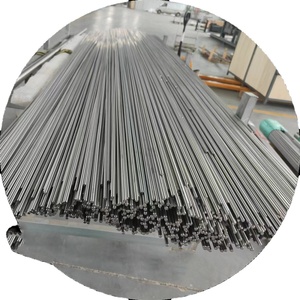
Figure 1: Advanced 5-Axis CNC Precision Machining & QA Facility at Orthi Medical Factory
5. Quality Assurance, ISO Compliance & CE MDR Pathways
Under Google's E-E-A-T guidelines (Experience, Expertise, Authoritativeness, Trustworthiness), medical device procurement requires absolute transparent proof of quality management. Leading Chinese exporters maintain robust quality systems including:
Comprehensive Quality Management Systems (QMS) covering raw material micro-inspection, ultrasonic cleaning, passivation, and batch trace records retained for 10+ years.
Complete Technical Documentation (STED dossiers), Clinical Evaluation Reports (CER), bio-burden testing, and pyrogen-free validation protocols.

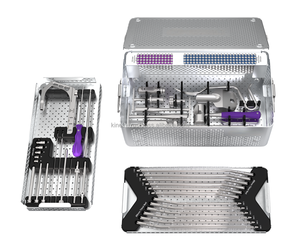
Figure 2: Quality Assurance & ISO 13485 Certification Compliance Documentation
6. Future Sourcing & Technical Development Trends (2025–2035)
The global external fixation ecosystem is undergoing rapid technological evolution. B2B buyers must align with factories actively investing in next-generation R&D trends:
Integration of wireless strain gauge micro-sensors into the fixator body to measure real-time biomechanical load transfer across the fracture site, optimizing axialization timings.
Development of Silver/Zinc nanoparticle (AgNP) and Hydroxyapatite dual-layer coatings on Schanz pins to practically eliminate pin-tract osteomyelitis.
Additive manufacturing (SLM/EBM titanium printing) allowing custom pin clamp alignment geometry based on preoperative CT 3D reconstruction data.
7. Enterprise Manufacturing Capabilities & OEM/ODM Advantage
At Orthi Medical Co., Ltd., we operate as a premier Chinese manufacturer specialized in trauma fixation systems, spinal implants, joint replacement, and custom orthopedic instrumentation. Our factory integrates state-of-the-art manufacturing technologies to support international medical device distributors.

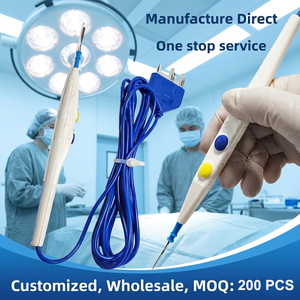
Figure 3: Clinical Application & Dynamic Stabilization in Long-Bone Trauma Surgery
Our OEM/ODM capabilities encompass full turnkey engineering support:
- Custom Drawing CAD/CAM Engineering: Rapid prototyping from 2D/3D models within 5 business days.
- Surface Treatment Expertise: Type II anodization, laser engraving, electro-polishing, and color coding.
- Sterile Packaging Services: Cleanroom packaging (ISO Class 7) with Co-60 gamma sterilization (SAL 10-6).
- Regulatory Support: Provision of free-sale certificates, raw material certificates, and technical master files.

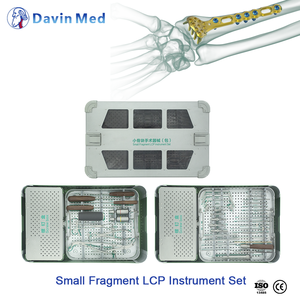
Figure 4: Global Surgical Education, Cadaveric Training Workshops & Academic Conferences
8. Frequently Asked Questions (FAQ) for Global Buyers
What raw material standards are used for your unilateral fixators?
Do you offer OEM private label branding and custom surgical instrument trays?
Can the external fixator implants be supplied in sterile blister packaging?
What certifications and technical documentation do you provide for regulatory registration?
What is the standard lead time for OEM custom orders?
Partner with China's Leading Orthopedic Fixator Manufacturer
Request technical specifications, CAD drawings, factory audits, or competitive B2B volume quotations. Our engineering team responds within 24 business hours.