Premier Orthopedic & Surgical Implant Portfolio
Direct manufacturer supply of ISO 13485 & CE-certified intramedullary fixation nails, spinal pedicle screws, arthroscopy tools, and trauma plate systems.
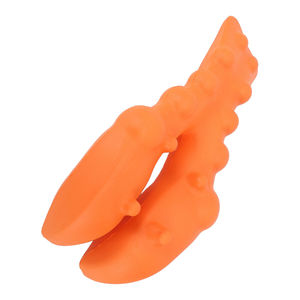
Cervical Traction Trapezius Trigger Point Massager Occipital Release Tool
Ergonomic EVA cervical traction release device designed for occipital neuralgic relief, tension headache decompression, and clinical physical therapy applications.
Inquire Now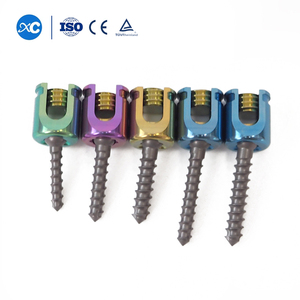
Distributor Price Columna Vertebral Spine Implants Polyaxial Pedicle Screws
High-precision titanium alloy (Ti-6Al-4V) polyaxial pedicle screws offering 40° angular motion for multi-segment posterior spinal stabilization.
Inquire Now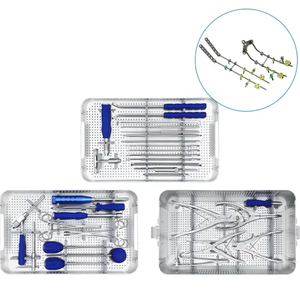
Spine Fixation Posterior Cervical Thoracic System Instrument Set
Comprehensive posterior occipito-cervico-thoracic fixation system including occipital plates, cross-connectors, and modular surgical instruments.
Inquire Now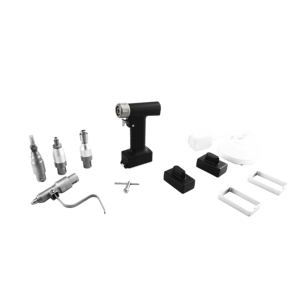
Veterinary Reusable Dog Orthopedic Surgical Drill Saw System
Autoclavable cannulated surgical drill machine and oscillating saw set optimized for small animal and veterinary canine osteotomy surgeries.
Inquire Now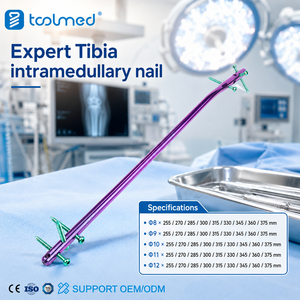
China Manufacturer Expert Tibia Intramedullary Nail Locking System
Advanced anatomical tibial locking nail featuring multi-planar proximal and distal locking options for metaphyseal and diaphyseal fracture management.
Inquire Now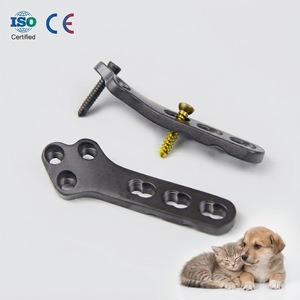
Veterinary TPLO Titanium Bone Locking Plate for Canine Osteotomy
CE-marked anatomical tibial plateau leveling osteotomy (TPLO) locking plate constructed from biocompatible Grade 5 titanium for veterinary cruciate repair.
Inquire Now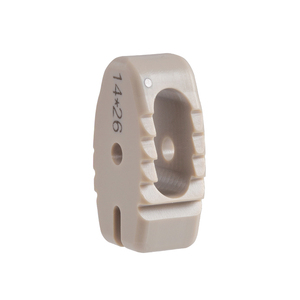
Spinal Implants PLIF PEEK Cage Cervical Interbody Fusion Device
Radiolucent PEEK lumbar and cervical interbody cages equipped with Tantalum markers for precise intraoperative imaging and optimal bone fusion.
Inquire Now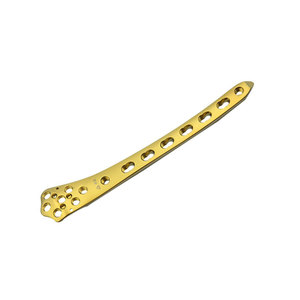
Minimally Invasive Femoral Proximal & Distal Lateral Locking Plate
Low-profile anatomically contoured femoral locking compression plate system engineered for minimally invasive percuntaneous osteosynthesis (MIPO).
Inquire NowWhitepaper: Biomechanical Engineering & Clinical Evolution of Tibial Intramedullary Nailing
Intramedullary nailing (IMN) remains the gold standard for the internal fixation of diaphyseal tibial fractures. As the longest load-bearing long bone with minimal soft-tissue coverage anteromedially, the tibia presents complex biomechanical and vascular management challenges during osteosynthesis. Modern orthopedic trauma engineering focuses on optimizing torsional rigidity, dynamic micromotion, fatigue strength, and minimally invasive surgical entry approaches.
1. Metallurgical Excellence & Material Biocompatibility
The performance of an intramedullary tibial nail depends fundamentally on its metallurgical foundation. Modern OEM/ODM manufacturers utilize medical-grade Ti-6Al-4V ELI (ASTM F1472) titanium alloy and commercially pure titanium (ASTM F67 Grade 2/3). Titanium alloys exhibit a modulus of elasticity (~110 GPa) significantly closer to human cortical bone (~18 GPa) than traditional 316L stainless steel (~200 GPa). This substantial reduction in stiffness minimizes "stress shielding"—a physiological phenomenon where overly rigid implants absorb bone strain, leading to localized peri-implant osteopenia and delayed fracture union.
2. Biomechanical Comparison: Suprapatellar vs. Infrapatellar Surgical Approach
The entry port dictates intraoperative alignment precision and patellofemoral cartilage preservation. Traditional infrapatellar entry requiring hyperflexion of the knee often introduces anterior apex malalignment (procurevatum deformation) in proximal third tibial fractures due to the pull of the quadriceps mechanism. The semi-extended suprapatellar insertion approach utilizes specialized cannula sleeves passed retro-patellar through the quadriceps tendon, ensuring straight-line axial alignment without hyperflexion stress.
| Parameters | Suprapatellar Entry Approach | Infrapatellar Entry Approach |
|---|---|---|
| Knee Position During Insertion | Semi-extended (15°–20° flexion) | Hyperflexed (>90° flexion) |
| Proximal Fragment Alignment | Superior control; eliminates procurevatum deformities | High risk of anterior/valgus displacement |
| Fluoroscopy Visualization | Unobstructed AP & Lateral imaging setup | Frequent C-arm repositioning required |
| Patellofemoral Soft Tissue Protection | Protected via dedicated rubber sleeve cannula | Direct patellar tendon incision & potential fat pad irritation |
3. Multi-Planar Advanced Locking Configurations
Early-generation intramedullary nails were limited to transverse bi-cortical locking screws, leading to rotational instability in short proximal or distal segment fractures. Expert Tibia Intramedullary Nail systems incorporate multi-planar distal and proximal locking matrix options:
- Proximal Multi-Angle Screws: Dual oblique, horizontal, and anteroposterior (AP) locking options permit rigid stabilization of high proximal segmental fractures.
- Distal Tri-Planar Locking: Extremely distal screws positioned within 5 mm of the subchondral bone surface allow secure fixation of pilon juxta-articular extensions.
- Dynamic Compression Slots: An elongated longitudinal slot enables 5–7 mm controlled postoperative axial micromotion, encouraging secondary callus formation under early weight-bearing protocols.
Expert Tibial Intramedullary Systems: Product Matrix
Engineered for procedural adaptability across complex open, closed, segmental, and non-union tibial fractures.
Expert Anatomical Tibia Nail
Features a 4.5° Herzog proximal bend matching the natural sagittal curvature of the tibial bow. Available in cannulated configuration for reamed and unreamed insertion techniques over guide wires.
- Diameters: Ø 8.0mm to 11.5mm (0.5mm increments)
- Lengths: 255mm to 390mm
- Material: Anodized Ti-6Al-4V ELI
Suprapatellar Instrumentation Kit
Precision-engineered surgical instrument tray including radiolucent carbon fiber aiming arms, protective trochlear sleeves, trocar assemblies, and sharp reamers.
- Autoclavable PPSU high-temp trays
- Quick-coupling drill bits & screwdrivers
- 100% CAD/CAM stainless steel hardness
Sterile-Packed Locking Fasteners
Self-tapping, fully threaded Ø 4.0mm and Ø 4.5mm locking bolts equipped with T25 StarDrive recesses to prevent hex-stripping during high-torque insertion.
- Lengths: 20mm to 90mm
- Sterilization: Gamma Co-60 (SAL 10-6)
- Traceability: Dual barcode tracking stickers
Future Technological Trends in Orthopedic Intramedullary Systems
The global orthopedic trauma device market is undergoing rapid evolution driven by minimally invasive surgical preferences, digital surgery integration, and advanced surface functionalization. Medical procurement leaders must anticipate these transformative technical trajectories when selecting long-term manufacturing partners in China:
Bioactive & Antibacterial Surface Coatings
Infection remains one of the most devastating complications in open tibial fractures (implant-associated osteomyelitis). Next-generation intramedullary nails feature chemical surface functionalization, such as silver nanoparticle ion-implantation, hydroxyapatite (HA) plasma spraying, and biodegradable antibiotic-eluting polymer coatings (PECA/PLGA). These coatings provide localized antimicrobial prophylaxis without systemic toxicity while promoting osteoblast cell adhesion.
Carbon-PEEK Composite Materials
Carbon-Fiber-Reinforced Polyetheretherketone (CF-PEEK) represents a major shift in load-bearing implants. Offering complete radiolucency, CF-PEEK intramedullary nails eliminate metallic artifacts on CT and MRI imaging, allowing precise postoperative fracture assessment. Furthermore, CF-PEEK delivers superior fatigue endurance under repetitive cyclic stress while perfectly mimicking the longitudinal modulus of elasticity of cortical bone.
Electromagnetic & Optical Navigation Targeting
Freehand distal locking screw placement using traditional "radiation-heavy" fluoroscopic aiming techniques exposes surgical staff to cumulative X-ray radiation. Modern systems incorporate embedded electromagnetic sensor channels or optical drill guidance modules. This enables radiation-free, real-time 3D visualization of distal locking holes, achieving 99% first-pass screw targeting accuracy and cutting intraoperative fluoroscopy time by over 70%.
3D Printing & Custom Patient-Specific Implants
Additive manufacturing (Selective Laser Melting - SLM) allows China's leading factories to manufacture patient-specific intramedullary implants for severe malunions, post-traumatic deformities, or oncological segmental resections. Porous titanium structures printed directly into specific nail segments encourage accelerated osseointegration at critical bone-implant interface boundaries.
Global Procurement & Sourcing Strategy Trends for Medical Distributors
Hospital networks, healthcare purchasing organizations (GPOs), and international medical device distributors are modernizing their supply chain strategies. When evaluating Chinese tibial nail manufacturers, procurement directors prioritize structural risk mitigation, regulatory dossier robustness, and total cost of ownership (TCO):
1. The Shift to Ready-to-Use Single-Use Sterile Packaging
Historically, hospitals acquired non-sterile implants in bulk trays, requiring labor-intensive hospital central sterile supply department (CSSD) processing, washing, and autoclaving prior to surgery. Modern clinical risk management favors factory-sealed, single-use Cobalt-60 Gamma Sterilized Packaging (SAL 10-6). Pre-sterilized implants eliminate hospital contamination risks, simplify surgical inventory auditing, reduce perioperative prep time, and provide complete lot-to-patient traceability via embedded GS1 DataMatrix barcodes.
2. Vendor Consolidation Across Multi-Specialty Orthopedic Portfolios
Procuring trauma implants, spinal pedicle systems, sports medicine anchors, and surgical power tools from disparate suppliers increases administrative overhead and quality management risk. Global buyers are consolidating orders with comprehensive Chinese manufacturers who maintain multi-line capabilities under unified ISO 13485 quality oversight. Sourcing trauma plates, intramedullary nails, spinal cages, and instruments from a single factory yields major economies of scale, streamlined container shipping, and simplified international customs processing.
3. Strict Compliance with Evolving Global Regulations (EU MDR & US FDA)
With the transition from the European Medical Devices Directive (MDD) to the stringent Medical Device Regulation (EU MDR 2017/745), regulatory compliance has become the single biggest barrier to market entry. Leading Chinese factories invest heavily in long-term clinical evaluation reports (CER), comprehensive biomechanical fatigue testing (ASTM F1264), biocompatibility testing (ISO 10993), and robust post-market surveillance (PMS) systems to guarantee seamless distributor registration worldwide.
Why Partner with Orthi Medical Co., Ltd.?
State-of-the-art medical manufacturing infrastructure engineered to support global OEM/ODM private-label brands and clinical distributors.
ISO 13485 Quality Assurance
Operating rigorous ISO 13485 and ISO 9001 certified quality management systems. Every raw titanium bar undergoes spectral material verification and ultrasonic flaw detection before CNC precision machining.
5-Axis Swiss CNC Precision
Equipped with high-precision 5-axis Swiss Citizen CNC lathes, wire-EDM, and automated anodizing lines capable of achieving micron-level tolerances across complex cannulated geometries.
Turnkey OEM/ODM Private Label
Complete custom product development support: from CAD drawing engineering, rapid prototype machining, and laser branding to customized surgical tray layout and sterile blister packaging.
Frequently Asked Questions (FAQ)
Expert guidance for medical procurement officers, hospital buyers, and orthopedic device importers.
What specific titanium material grades are used in your tibial intramedullary nails?
Do your Expert Tibial Nail systems support suprapatellar surgical approaches?
Can implants be delivered in factory-pre-sterilized packages?
What mechanical and biomechanical testing validates your tibial nail designs?
What regulatory documentation support do you offer for overseas market registration?
What is your standard production lead time for OEM/ODM private label orders?
How do dynamic compression slots in your tibial nails assist clinical healing?
Partner with China's Premier Tibial Nail Manufacturer
Contact our medical device engineering team today to request product catalogs, mechanical test reports, or custom OEM manufacturing quotations.
Inquire Now