Featured Medical Implants & Surgical Systems
Explore our certified orthopedic solutions, engineered with high-precision CNC machining and rigorous metallurgical controls.
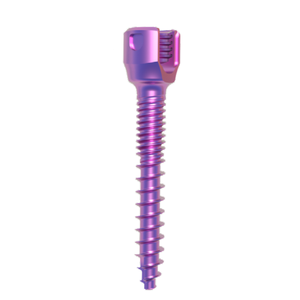
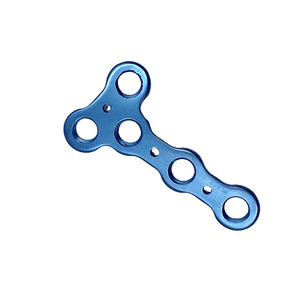
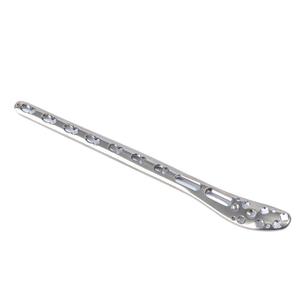
1. Steinmann Pin Engineering & Metallurgical Foundations in Modern Trauma Care
In orthopedic trauma and skeletal traction therapy, the Steinmann Pin serves as an irreplaceable primary stabilization device. Larger in diameter than standard Kirschner wires (K-wires)—typically ranging from 3.2 mm to 5.0 mm—Steinmann pins provide the torsional rigidity and flexural modulus required to withstand high traction forces across major long-bone fractures, including femoral shaft disruptions, distal tibia fractures, and complex pelvic injuries.
As leading medical device manufacturers in China, our facilities engineer Steinmann pins using high-purity medical-grade alloys: 316LVM Surgical Stainless Steel (ASTM F138 / ISO 5832-1) and Ti-6Al-4V ELI Titanium Alloy (ASTM F136 / ISO 5832-3). The structural integrity of a traction pin depends on cold-working manufacturing processes that elevate tensile strength beyond 930 MPa, preventing elastic deformation or micro-fracture during prolonged traction cycles under patient weight burdens.
Clinical Insight (E-E-A-T Principle): Pin-tract infection and mechanical loosening remain the primary complications associated with skeletal traction. Our factory utilizes proprietary centerless precision grinding and electropolishing techniques to achieve a surface roughness ($R_a$) of less than 0.2 µm. This ultra-smooth finish minimizes bacterial adhesion while preserving the sharp cutting geometry of Trocar and Diamond tips for minimal bone necrosis during insertion.
Technical Matrix: Steinmann Pin Specifications & Mechanical Properties
The selection of the appropriate pin tip and thread configuration depends directly on the anatomical site and clinical duration (temporary skeletal traction vs. definitive external fixation).
| Parameter / Specification | 316LVM Stainless Steel Pins | Ti-6Al-4V ELI Titanium Pins | Clinical Applications |
|---|---|---|---|
| Standard Diameters (mm) | 2.0, 2.5, 3.2, 4.0, 4.5, 5.0 | 3.2, 4.0, 4.5, 5.0 | Supracondylar Femur, Proximal Tibia, Calcaneus |
| Standard Lengths (mm) | 150 mm – 300 mm | 150 mm – 300 mm | Adult & Pediatric Traction Systems |
| Tensile Strength ($\sigma_b$) | ≥ 860 MPa | ≥ 930 MPa | High flexural stability under axial loading |
| Tip Geometry Options | Trocar Point / Diamond Point | Trocar Point / Self-Drilling Threaded | Fast cortical penetration with minimal thermal friction |
| Shank Configuration | Smooth Shank / Center-Threaded | Center-Threaded / End-Threaded | Prevents lateral pin migration in cancellous bone |
| Biocompatibility Standard | ISO 10993 Certified | ASTM F136 / ISO 5832-3 | Long-term tissue compatibility & MRI compliance |
2. Core Enterprise Advantages & Manufacturing Rigor
Sourcing medical implants globally demands absolute confidence in quality control, regulatory compliance, and batch-to-batch consistency. Operating as a premier orthopedic device supplier in China, Orthi Medical Co., Ltd. combines vertical integration with world-class quality systems.
ISO 13485 & CE Compliance
Our quality management system is fully certified under ISO 13485 and ISO 9001. All implant production lines follow strict GMP protocols, ensuring complete documentation support for international regulatory registrations.
Swiss 5-Axis CNC Precision
Utilizing high-precision Citizen CNC Swiss lathe machinery, our Steinmann pins, cannulated screws, and spinal pedicle systems achieve micro-inch dimensional tolerances (+/- 0.005 mm) for perfect instrument fitment.
Gamma-Sterilized Packaging
Implants can be delivered pre-sterilized using Cobalt-60 (Co-60) Gamma Irradiation, achieving a Sterility Assurance Level (SAL) of $10^{-6}$ inside class 100,000 cleanroom thermoformed blister packaging.
Turnkey OEM / ODM Solutions
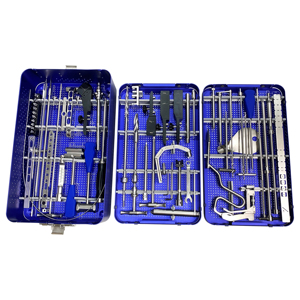
From customized thread pitch engineering and laser etching of lot codes to complete custom surgical tray configuration, we partner with overseas orthopedic brands to launch proprietary device lines.
3. Future Sourcing & Procurement Trends in Orthopedic Hardware
The global procurement landscape for orthopedic trauma hardware is undergoing a structural shift. Procurement officers, hospital network buyers, and medical distributors are moving away from fragmented sourcing models to consolidated, high-assurance OEM partnerships in Asia. Key trends defining the 2025–2030 procurement cycle include:
A. Shift Toward Pre-Sterilized Single-Use Trauma Kits
Traditional non-sterile hospital handling requires labor-intensive autoclaving, tray wrapping, and sterilization verification—adding operational costs and increasing the risk of nosocomial infections. Modern health systems prioritize single-use, gamma-sterilized Steinmann pins, Kirschner wires, and locking plates supplied in double-peelable pouch configurations ready for direct Operating Room (OR) insertion.
B. Antibacterial & Bio-Active Surface Modifications
Research into pin-tract complication reduction has accelerated the adoption of silver-ion (Ag+) nanocoatings and Hydroxyapatite (HA) surface treatments on skeletal pins. These advanced surface modifications suppress bacterial biofilm formation while promoting osteointegration at the cortical bone interface when pins are used in external fixation frames.
C. Rigorous Raw Material Traceability & Supply Chain Resilience
Under tightening global regulatory frameworks (such as the EU MDR 2017/745 and US FDA 21 CFR Part 820), medical distributors demand absolute raw material origin verification. Premium Chinese manufacturers now issue full metallurgical heat-lot certificates (Chemical Composition & Mechanical Test Reports) according to ASTM standards alongside every shipment lot.
4. Industry Development Trends: Steinmann Pins vs. Advanced Fixation Technologies
While minimal-invasive surgical (MIS) techniques continue to evolve, the fundamental physics of skeletal traction remain crucial in emergency trauma stabilization. The evolutionary trajectory of Steinmann pin design reflects broader developments across orthopedic surgery:
Biomechanical Evolution: Center-threaded Steinmann pins have largely superseded smooth pins in high-load femoral traction procedures. The centrally located thread section anchors securely within the cancellous bone structure of the femoral condyles, preventing side-to-side pin slippage and significantly reducing soft tissue irritation.
Furthermore, hybrid fixation techniques now combine Steinmann pins with carbon-fiber external fixation rings for complex periarticular fracture bridging. The high radiolucency of carbon fiber, combined with high-tensile titanium pins, allows surgeons to obtain crystal-clear intraoperative fluoroscopic imaging (C-arm guidance) without metal artifacts obscuring fracture reduction views.
Frequently Asked Questions (Procurement & Technical)
Essential guidance for orthopedic distributors, hospital buyers, and OEM procurement managers.
Partner with China's Premier Orthopedic Implant Manufacturer
Request technical datasheets, material certificates, OEM factory audit reports, or competitive bulk pricing for your regional market.
Get a Quote