Clinical & Biomechanical Whitepaper
State of the Art in Spinous Process Fixation & Interspinous Distraction Systems
In the rapidly evolving landscape of spinal surgery, Spinous Process Fixation Systems (SPFS) and Interspinous Process Devices (IPDs) have established a pivotal role as less invasive, biomechanically sound alternatives or adjuncts to traditional pedicle screw instrumentation. Lumbar spinal stenosis (LSS), degenerative disc disease (DDD), and low-grade degenerative spondylolisthesis represent primary clinical indications where neurogenic claudication severely impairs patient mobility. Traditional posterior decompression accompanied by pedicle screw fusion often entails extensive soft-tissue dissection, high intraoperative blood loss, prolonged recovery cycles, and heightened risk of adjacent segment degeneration (ASD).
As a leading China manufacturer of spinal implants and surgical instrumentation, Orthi Medical has spearheaded advancements in spinous process fixation architecture. Modern spinous process fixation systems leverage the anatomical rigidity of the posterior column to achieve stable interspinous distraction, indirectly enlarging the lumbar neural foraminal height and spinal canal area. By restricting problematic hyperextension while retaining flexional stability, these implants effectively relieve compressive load on spinal nerve roots without over-constraining the segmental motion envelope.
100%
ASTM F1472 Titanium & PEEK Material Traceability
SAL 10-6
Gamma Sterilization Assurance Level for Packaged Implants
>5 Million
Fatigue Testing Cycles per ASTM F2530 Standards
60+
Global Markets Served with ISO 13485 Compliance
The anatomical rationale for interspinous process fixation relies upon the mechanical stiffness of the spinous process and cortical bone interface. Premium titanium alloy plates (Ti-6Al-4V ELI) and radio-translucent PEEK polymer constructs provide robust fixation by clamping securely across adjacent spinous processes. When combined with interbody fusion cages (such as PLIF or TLIF spacers), spinous process fixation devices serve as a structural posterior column tension band, resisting extension and lateral bending moments while promoting solid arthrodesis.
Featured Implant & Manufacturing Systems
Featured Products & Specialized Manufacturing Machinery
Explore our range of orthopedic spinal implants, minimally invasive fixation devices, and high-precision processing machinery engineered for global healthcare suppliers and contract manufacturing partners.
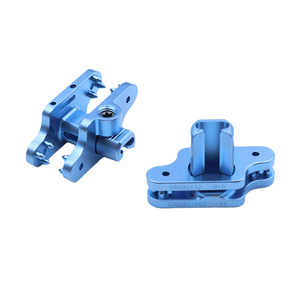
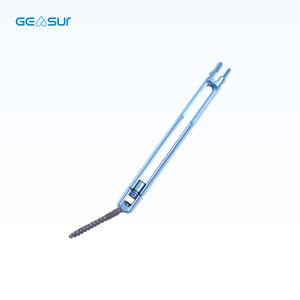
Geasure Orthopedic Implant Titanium Alloy Interspinous Process Fixation Device 8-16mm for Posterior Column Stabilization
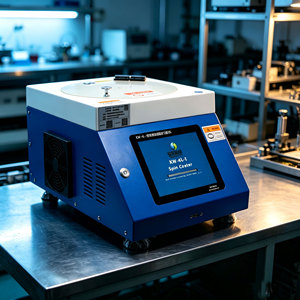
High Precision Spin Coater ±0.1% Speed Stability PTFE Chamber Automatic Glue Dispensing Lab Spin Processor for Microelectronics
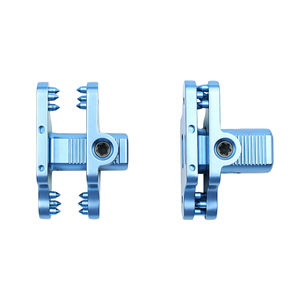
Premium Titanium Spinous Process Fusion Plate Orthopedic Implant for Interspinous Spinal Fixation
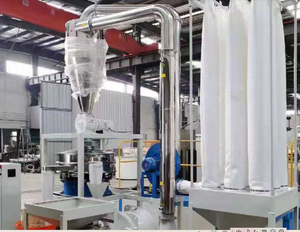
Crystal Double-screw 380V High Productivity Machine for Tile Compact Spinning System
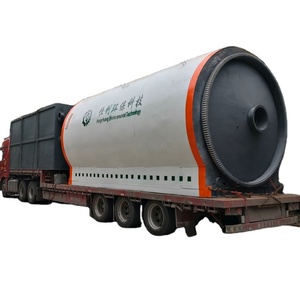
Rotating Reactor Other Rubber Processing Machinery
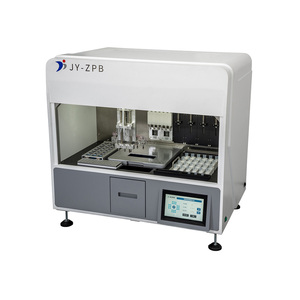
Centrifugation Spin Cell Processing Consumable Items Auto-dyeing Cell Thin-layer Preparation Machine
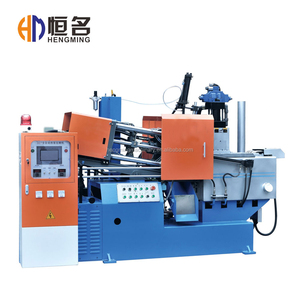
Metal Spin Casting Process Machine for Sale
Information Gain & Technical Benchmarking
Biomechanical Comparison: Spinous Process Fixation vs. Pedicle Screw & Standalone Cages
To assist clinical evaluators and hospital procurement teams in evaluating fixation modalities, the following technical comparison details structural stiffness, surgical disruption, operative risk profile, and arthrodesis success rates across posterior stabilization procedures.
| Performance Criterion | Spinous Process Fixation (SPFS) | Pedicle Screw System (5.5/6.0mm) | Standalone Interbody Cage (TLIF/PLIF) |
|---|---|---|---|
| Primary Surgical Objective | Posterior tension band, interspinous distraction, indirect decompression | 3D multi-planar rigid stabilization & segment immobilization | Disc height restoration & anterior column load bearing |
| Surgical Approach & Tissue Trauma | Minimally Invasive (MIS) mid-line or tubular access; low muscle detachment | Extensive lateral dissection or complex multi-portal percutaneous steps | Transforaminal or posterior canal exposure with nerve root retraction |
| Operative Time & Blood Loss | 30–50 minutes per level; minimal intraoperative hemorrhage (<50 mL) | 90–180 minutes per level; moderate to high blood loss | 60–120 minutes per level; moderate blood loss |
| Pedicle / Neural Risk | Zero risk of pedicle wall breach or direct nerve root impingement | 1% to 5% risk of pedicle cortex perforation requiring fluoroscopic monitoring | Risk of epidural fibrosis, dura tear, or root irritation during insertion |
| Flexion / Extension Stiffness | High resistance in extension (>80% reduction); moderate in flexion | Maximum rigidity across flexion, extension, bending, and torsion | High axial load resistance; limited rotational stability without posterior fixation |
| Material Specifications | Ti-6Al-4V ELI (ASTM F1472) / PEEK Polymer (ASTM F2026) | Ti-6Al-4V (ASTM F1472) / CoCrMo (ASTM F1537) | PEEK (ASTM F2026) / 3D Porous Titanium / Hydroxyapatite |
Mechanical testing per ASTM F2530 (Standard Test Method for Interspinous Process Fixation Devices) demonstrates that dual-plate spinous process clamps withstand severe cyclic loading under extension without inducing spinous process fracture, provided proper bone mineral density screening is observed. The integration of lateral spike arrays penetrates the cortical shell of the spinous process, creating a rigid mechanical interlock that resists implant migration under physiological shear forces.
Technology & Market Intelligence
Technological Trends Reshaping Spinous Process Fixation Systems
1. Material Innovation: PEEK vs. Porous Titanium
While medical-grade Titanium Alloy (Ti-6Al-4V ELI) remains the gold standard for load-bearing plates, radiolucent PEEK (Polyetheretherketone) implants with integrated titanium endplates are gaining market share. PEEK’s elastic modulus (3.6 GPa) closely matches cortical bone, diminishing stress-shielding effects while permitting artifact-free postoperative MRI and CT artifact evaluation.
2. Minimally Invasive (MIS) & Percutaneous Guidance
Next-generation spinous process devices incorporate low-profile tubular delivery tools compatible with O-arm and 3D fluoroscopic navigation. Percutaneous insertion techniques preserve the supraspinous ligament complex and multifidus musculature, accelerating postoperative rehabilitation and reducing opioid reliance.
3. Hybrid Fusion & Motion Preservation Concepts
Surgeons increasingly utilize spinous process plates as supplemental fixation alongside interbody cages (TLIF/OLIF). Fusion-capable spinous process devices featuring central hollow cavities allow autologous bone graft or demineralized bone matrix (DBM) packing, securing high fusion rates comparable to pedicle screws in single-level procedures.
B2B Sourcing Strategy
Global Procurement & Supply Chain Trends for Medical Implants
As healthcare systems worldwide adapt to Value-Based Healthcare (VBHC) frameworks, hospital purchasing groups, tender authorities, and OEM brand owners are restructuring their supply chain strategies. Key purchasing trends for spinous process fixation systems over the 2026–2030 decade include:
Gamma-Sterilized Packaged Implants
Global buyers are shifting away from non-sterile bulk implants toward individually pouch-sealed, Co-60 gamma-irradiated implants (SAL 10-6 per ISO 11137). Pre-sterilized packages eliminate hospital autoclave processing costs, ensure traceability via standard GS1 barcodes, and reduce surgical site infection risks.
Supply Chain Consolidation
Distributors are prioritizing integrated China manufacturers capable of supplying full-spectrum orthopedic solutions—combining spinal pedicle screws, spinous process fixation, trauma locking plates, intramedullary nails, and sports medicine anchors under unified ISO 13485 quality agreements.
Turnkey Regulatory Dossiers
Speed to market hinges on complete regulatory support. Leading Chinese OEM partners provide comprehensive Technical Files compliant with EU MDR (2017/745), US FDA 510(k) predicate equivalence, biomechanical test dossiers, and biocompatibility studies per ISO 10993.
Orthi Medical OEM / ODM Capabilities
Why Partner with Orthi Medical Co., Ltd.
Orthi Medical Co., Ltd. is a premiere Chinese manufacturer of orthopedic implants and surgical instruments. Our state-of-the-art production facility operates under rigorous international quality standards, offering full custom OEM/ODM contract manufacturing, custom instrument tray development, and sterile packaging services to global distributors and medical device brands.
5-Axis CNC Precision Machining
Equipped with imported DMG MORI 5-axis CNC machining centers and Citizen automatic Swiss lathes, we guarantee dimensional tolerances down to ±0.005 mm for complex implant geometries, cannulated screws, and locking plates.
Certified Quality Architecture
Our Quality Management System complies fully with ISO 13485 and ISO 9001 certifications. Every production batch is accompanied by raw material mill certificates, CMM dimensional inspection sheets, and mechanical batch test reports.
Class 10,000 Cleanroom Packaging
Terminal washing and primary pouch packaging take place within ISO Class 7 (Class 10,000) cleanrooms. Gamma irradiation (Co-60) ensures a certified Sterility Assurance Level (SAL) of 10-6 with a 5-year validated shelf life.
Purchasing & Engineering Guide
Frequently Asked Questions (FAQ) for Global Buyers
What international raw material standards govern your spinous process fixation systems?
All Orthi Medical implantable products utilize certified medical-grade raw materials strictly meeting ASTM and ISO specifications. Titanium implants are fabricated from extra-low interstitial Ti-6Al-4V ELI alloy conforming to ASTM F1472 / ASTM F136 or commercially pure titanium matching ASTM F67 (TA2/TA3). For radiolucent polymer implants, we utilize implant-grade PEEK complying with ASTM F2026. Every material lot is batch-traced back to the original steel mill melt certificate with chemical composition and tensile strength analysis (≥930 MPa for TC4 titanium).
How does an interspinous fixation system compare in biomechanical stability to pedicle screw fixation?
Spinous process fixation systems provide strong biomechanical resistance against extension forces (>80% restriction) and moderate restriction in lateral bending and flexion. While pedicle screw constructs offer rigid 360-degree multi-planar immobilisation, spinous process fixation serves as an excellent posterior column tension band with significantly reduced operative morbidity, making it ideal for single- or dual-level lumbar stenosis, low-grade spondylolisthesis, or as an adjunct to interbody fusion (PLIF/TLIF).
What mechanical static and dynamic test reports are available for OEM spinous process devices?
Our engineering team conducts rigorous static compression-shear, static extension, and dynamic fatigue testing in accordance with ASTM F2530 (Standard Test Method for Interspinous Process Fixation Devices) and ASTM F1717 (Spinal Implant Constructs). Testing reports demonstrate structural fatigue endurance exceeding 5,000,000 cycles under simulated physiological peak loads without implant fracture, loosening, or significant wear debris generation.
Can Orthi Medical supply custom private-label branding and matching surgical instrument trays?
Yes. We provide complete turnkey OEM/ODM services. This includes high-precision laser marking for distributor logos and lot numbers, custom anodized color-coding (gold, blue, green, magenta) for fast intraoperative implant sizing, custom silicone-grommeted aluminum instrument trays, and customized surgical technique manuals tailored for your market.
What is the sterility assurance level (SAL) and shelf-life of pre-packaged sterile implants?
Our pre-packaged sterile implants undergo Co-60 gamma irradiation to achieve a certified Sterility Assurance Level (SAL) of 10-6. Primary packaging consists of double Tyvek blister pouches sealed inside an ISO Class 7 cleanroom environment. Accelerated and real-time aging studies per ISO 11607-1/2 validate a 5-year sterile shelf life under standard storage conditions.
What are the typical lead times for custom OEM prototype development and mass production orders?
For custom drawing-based OEM projects, prototype fabrication typically requires 2 to 4 weeks depending on component complexity. Following engineering sample approval and mechanical verification, full-scale mass production lead time is generally 30 to 45 business days. Stock catalog products can be dispatched significantly faster.
How does Orthi Medical assist international distributors with regulatory registration files?
We maintain dedicated regulatory affairs teams to support global registration. We supply complete technical dossiers including ISO 13485 certificates, CE certificates, Certificate of Free Sale (CFS), raw material compliance declarations, biocompatibility test data (ISO 10993), sterilization validation reports, and step-by-step surgical technique guides required by health authorities across Europe, Latin America, Southeast Asia, and the Middle East.
How does your production process prevent fretting corrosion and wear debris in titanium clamping mechanisms?
Fretting corrosion is mitigated through precise tolerance controls, micro-finish surface polishing, and specialized hard-anodization surface treatments (Micro-Arc Oxidation / MAO). Critical clamp contact surfaces and locking screws are stress-relieved and passivated per ASTM F86 standards to eliminate microscopic surface flaws, ensuring optimal fretting resistance throughout long-term implant insertion.
Partner with China’s Premier Orthopedic OEM Manufacturer
Whether you are expanding your spinal product catalog, seeking high-precision OEM contract manufacturing, or upgrading your hospital tender supply chain, Orthi Medical delivers world-class titanium & PEEK spinous process fixation systems tailored to your technical requirements.
Get Catalog