Featured Small Fragment Implants & Precision Orthopedic Systems
Explore our precision-machined orthopedic fixation implants and surgical equipment. Engineered under strict ISO 13485 quality standard guidelines, each system guarantees anatomical conformity, high fatigue resistance, and sterile packaging integrity for global B2B procurement.
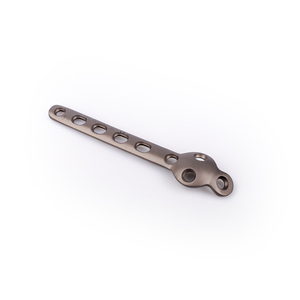
B2B Sourcing Guide: Small Fragment Locking Compression Plate (LCP) Systems
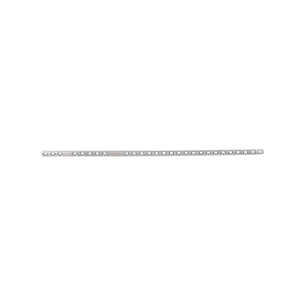
In modern orthopedic traumatology, Small Fragment Locking Compression Plates (2.7mm / 3.5mm LCP systems) represent the primary internal fixation gold standard for periarticular and diaphyseal fractures of the distal radius, fibula, clavicle, olecranon, and humerus. For medical device distributors, OEM brand owners, and hospital procurement committees, sourcing small fragment locking implants from leading Chinese manufacturing hubs requires an in-depth understanding of metallurgical compliance, biomechanical rigid-fixation principles, dynamic compression combi-hole technology, and manufacturing precision tolerances.
Combines friction coupling dynamic compression with fixed-angle stability. The threaded screw head locks directly into the plate combi-hole, transforming the implant construct into a single rigid unit to prevent secondary screw toggle and loss of reduction.
Utilizes High-Grade Titanium Alloy (Ti-6Al-4V ELI per ASTM F136 / ISO 5832-3) and pure titanium (ASTM F67), providing superior fatigue life, biocompatibility, minimal MRI artifact distortion, and optimized elastic modulus to diminish stress shielding.
Pre-contoured profiles matched to human bone anatomy drastically reduce intraoperative bending requirements, shorten operating room (OR) times, and mitigate soft-tissue irritation along slender distal bone segments.
Technical Specification Comparison: Small Fragment Locking Systems
Evaluating China’s leading orthopedic factories requires granular verification of mechanical parameters, surface finishes, and hole geometric configurations. The table below outlines technical benchmarks for 2.7mm and 3.5mm small fragment locking systems standard across elite export manufacturers.
| Implant Parameter | 3.5mm Small Fragment LCP | 2.7mm Mini/Small Fragment LCP | Polyaxial Small Fragment System |
|---|---|---|---|
| Core Application | Fibula, Radius, Ulna, Clavicle, Ankle | Distal Radius, Metacarpals, Ulna Styloid | Complex Periarticular Fractures / Osteoporotic Bone |
| Material Grade Options | Ti-6Al-4V ELI (ASTM F136) / 316LVM (ASTM F138) | Pure Titanium (ASTM F67) / Ti-6Al-4V ELI | Ti-6Al-4V ELI with Type II Anodization |
| Plate Profile Thickness | 2.8 mm – 3.5 mm low profile design | 1.5 mm – 2.2 mm ultra-low profile | 2.5 mm – 3.2 mm anatomical fit |
| Screw Interface Types | 3.5mm Locking Screws & 3.5mm Cortical Screws | 2.7mm Locking Screws & 2.7mm Cortical Screws | 2.7mm / 3.5mm Polyaxial Locking Screws (±15° trajectory) |
| Combi-Hole Mechanism | Dynamic Compression Unit (DCU) + Threaded Hole | Threaded Locking Hole + Compression Slot | StarLock / Multi-directional Threaded Ring |
| Yield & Tensile Strength | Yield ≥ 860 MPa; Tensile ≥ 930 MPa | Yield ≥ 860 MPa; Tensile ≥ 930 MPa | Yield ≥ 900 MPa; Fatigue Limit Tested (1x10⁶ cycles) |
Enterprise Manufacturing Strength: Why Sourcing from China's Top Exporters Delivers Competitive Edge
China's orthopedic manufacturing sector has evolved from basic OEM machining into automated, high-precision biomedical engineering hubs. Premier manufacturers like Orthi Medical Co., Ltd. integrate vertical supply-chain capabilities—spanning high-speed 5-axis CNC micro-milling, automated color anodizing, cleanroom barrier packaging, and international regulatory support—ensuring global medical distributors secure maximum supply reliability and expanded margin performance.
Equipped with DMG MORI and Citizen Swiss-type 5-axis CNC lathes, establishing strict manufacturing tolerances within ±0.005mm. Thread profiles of locking head screws are precision-machined to prevent cold-welding or galling inside plate locking holes.
Full compliance with global medical Quality Management Systems (QMS). In-house ISO Class 7 (100,000 level) cleanrooms ensure bioburden control during final ultrasonic washing, assembly, and double-blister Tyvek package seal procedures.
Offers pre-sterilized, ready-to-use individual implant packaging processed via Co-60 gamma radiation. Eliminates hospital sterilization bottleneck costs, lowers surgical infection risks, and simplifies inventory lot tracing for global importers.
Future Procurement Trends: 2025–2030 Orthopedic Implant Market Dynamics
As healthcare systems worldwide shift toward value-based purchasing, orthopedic procurement teams face mounting pressure to balance cost control with uncompromised surgical safety. Key macro trends shaping small fragment locking plate sourcing over the coming decade include:
1. Transition to Ready-to-Use Sterile Implants: Non-sterile implants requiring hospital washing and autoclave sterilization are rapidly being phased out. Direct-to-OR sterile packaged small fragment plates reduce hospital operational overhead by up to 28% and provide 100% sterile assurance (SAL 10⁻⁶).
2. Rise of Polyaxial / Variable-Angle Locking Technologies: Monoaxial locking plates, while effective, limit screw trajectory flexibility in complex intra-articular comminuted fractures. Polyaxial small fragment plates allowing a 30-degree cone of variable angular trajectory are becoming the baseline specification in European and North American tender requirements.
3. Integrated OEM/ODM Full-System Sourcing: Global distributors are consolidating vendors to reduce supply chain audit complexity. Modern Chinese factories provide complete turnkey solutions—matching small fragment titanium plates with color-coded 2.7mm/3.5mm cortical and locking screws, drill bits, depth gauges, and customized graphic sterilization trays under single-source private labeling.
4. Material Advancements in Surface Modification: Type II Electrochemical Titanium Anodization is becoming standard. This micro-surface hardens the titanium oxide layer, reducing friction during screw engagement, preventing galling, increasing fatigue strength by 15-20%, and enabling distinct color coding (e.g., Gold 2.7mm, Blue 3.5mm, Green 4.0mm) for swift surgical identification.
Industry Technological & Product Development Trends
Innovation in small fragment plating systems centers around minimizing soft tissue disruption while maximizing biomechanical stability. Research and development teams in China's top medical device centers are focusing on three primary innovation fronts:
Modern small fragment locking plates feature tapered plate ends and smoothed rounded contours. This low-profile geometry allows minimally invasive percutaneous plate osteosynthesis (MIPPO), reducing periosteal stripping and preserving blood supply to promote rapid bone healing.
Emerging biomaterials combine radiolucent PEEK polymers with titanium locking inserts. Carbon-PEEK small fragment plates offer an elastic modulus closely mimicking native human cortical bone (18 GPa vs 110 GPa for Titanium), drastically reducing stress shielding and allowing artifacts-free post-operative CT/MRI image evaluation.
Integration of surgical planning software and 3D digital templating allows orthopedic surgeons to match pre-bent anatomical small fragment locking plates with patient-specific anatomy prior to entering the OR, substantially boosting surgical precision in complex trauma cases.
Frequently Asked Questions (FAQ) for Global Buyers & Procurement Managers
Partner with China’s Leading Orthopedic Implant Factory
Looking for certified Small Fragment Locking Compression Plates, custom OEM instrument sets, or sterile package solutions? Request a detailed product catalog, metallurgical test report, or instant B2B quotation from our engineering team today.
Get a Quote