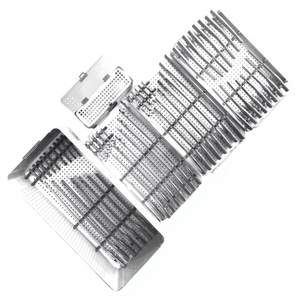
Featured Surgical Implants & Instrument Systems
Explore our high-precision orthopedic solutions designed for trauma, spine, joint reconstruction, and sports medicine.
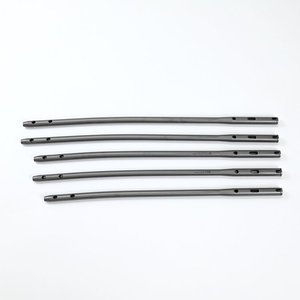
Factory Price PFNA Bone Surgical Instruments Orthopedic Implants Femoral Nail Titanium Locking Intramedullary Nails
Send an Inquiry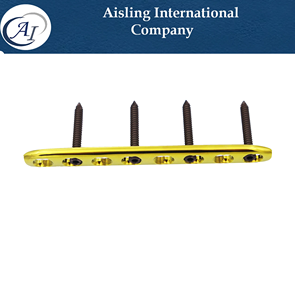
AISLING INTERNATIONAL Orthopedic Locking Plates for Olecranon Hook Reconstruction with Pure Titanium CE Certified
Send an Inquiry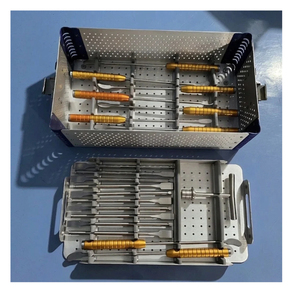
Stainless Steel PLIF TLIF Cage Surgical Instrument Set Manual Orthopedic Spine Surgery Tools for Hospital Use
Send an Inquiry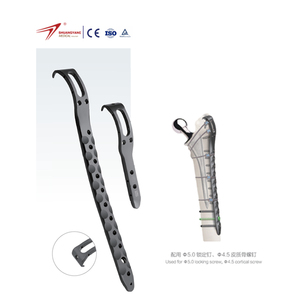
Titanium Cable Plate Artificial Hip Joint Prosthesis And Revision Femur Locking Plate Implant Surgery Renovation Implant
Send an Inquiry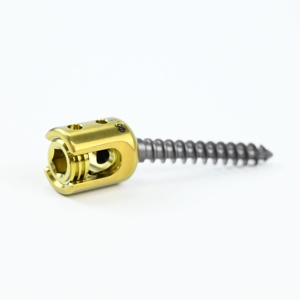
Factory Wholesale Orthopedic Surgical Neurosurgery Implants Spine Titanium Polyaxial Reduction Spine Screw
Send an Inquiry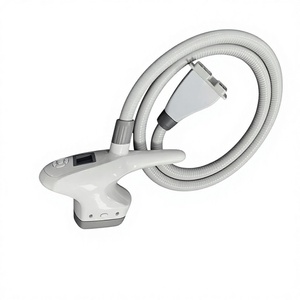
Vacuum Bipolar RF Head Replacement for Cavitation Machine Handle Body Slimming Machine Handpieces Replacement
Send an Inquiry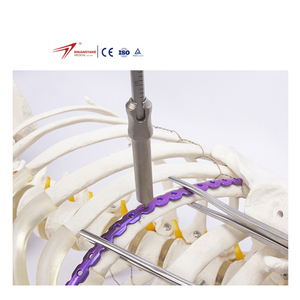
Shuangyang Medical Custom Orthopedic Titanium Rib Bone Plate Implants for Orthopedic Surgery Rib Locking Plate
Send an Inquiry25+
Years Manufacturing Mastery
ISO 13485
Certified Quality System
80+
Global Export Markets
100,000
Cleanroom Class (ISO 8)
Biomechanical Superiority of Proximal Tibia Locking Plate Systems
Proximal tibial fractures, particularly complex articular intra-fractures classified under AO/OTA 41-C and Schatzker Types IV, V, and VI, present formidable challenges in trauma orthopedics. Managing bicondylar plateau disruptions requires an implant system capable of counteracting high axial loads, varus/valgus bending moments, and rotational shear stresses without compromising soft-tissue viability around the proximal metaphyseal-diaphyseal junction.
As a leading China proximal tibia locking plate manufacturer and direct factory, our engineering design principles center on creating rigid fixations that preserve fragment vascularity through limited-contact undersurfaces while maximizing mechanical stability across multi-planar construct geometries.
Anterolateral & Medial Contour Fit
Pre-contoured anatomical geometry precisely matches the lateral and medial proximal tibial flares. This eliminates the need for intraoperative plate bending, preserving fatigue strength and drastically reducing operative time.
Subchondral Raft Screw Alignment
Multiple divergent subchondral locking screws create a rigid "raft" foundation beneath the articular surface, preventing secondary collapse of joint fragments and providing superior purchase in osteoporotic bone.
Fixed-Angle Locking Stability
Threaded locking screw-to-plate interface acts as a single-bar construct, converting destructive shear forces into beneficial compressive forces across the fracture line, preventing screw pullout or toggle.
Modern surgical techniques favor Minimally Invasive Percutaneous Plate Osteosynthesis (MIPPO). Our anatomical lateral proximal tibia locking plates feature tapered plate ends and rounded smooth profiles that facilitate effortless submuscular insertion, minimizing periosteal stripping and protecting the anterior tibial artery branch network.
Metallurgical Integrity & Technical Specifications
Raw material purity dictates the long-term clinical safety of orthopedic implants. Our manufacturing facilities utilize exclusively implant-grade medical alloys sourced from certified global melt houses, meeting strict international standards such as ASTM F136 (Ti-6Al-4V ELI), ASTM F67 (Unalloyed Titanium), and ASTM F138 (316L Stainless Steel).
Material Comparison Matrix for Proximal Tibia Fixation
| Mechanical / Material Parameter | Titanium Alloy (Ti-6Al-4V ELI) | Pure Titanium (TA2 / TA3) | Stainless Steel (316L) |
|---|---|---|---|
| Ultimate Tensile Strength (MPa) | ≥ 860 MPa (High structural load support) | 450 – 550 MPa | ≥ 690 MPa |
| Yield Strength 0.2% (MPa) | ≥ 795 MPa | 380 – 480 MPa | ≥ 460 MPa |
| Modulus of Elasticity (GPa) | 110 GPa (Close to cortical bone ~18 GPa) | 105 GPa | 200 GPa (Higher stress shielding risk) |
| Biocompatibility & MRI Safety | Superior (Non-magnetic, zero artifact interference) | Excellent | Good (Potential artifact under strong MRI) |
| Fatigue Resistance (ASTM F382) | > 1,000,000 cycles at 75% yield load | > 800,000 cycles | > 900,000 cycles |
Dimensional Specifications: Proximal Tibia Locking Plate System
| System Component | Proximal Head Screws | Diaphyseal Shaft Screws | Plate Hole Configurations | Plate Length Range |
|---|---|---|---|---|
| Lateral Proximal Tibia Plate | Ø 3.5mm / 4.0mm Locking Screws | Ø 4.5mm Locking / Cortex Screws | 3, 5, 7, 9, 11, 13, 15 Combi-Holes | 82mm – 260mm (Left/Right specific) |
| Medial Proximal Tibia Plate | Ø 3.5mm Locking Screws | Ø 3.5mm / 4.0mm Cortical Screws | 4, 6, 8, 10, 12 Holes | 75mm – 210mm (Universal contour) |
| Posterolateral Tibial Plate | Ø 2.7mm / 3.5mm Low Profile Screws | Ø 3.5mm Cortex Screws | 3, 4, 5, 6, 8 Holes | 55mm – 140mm Anatomical curve |
Global Sourcing & Procurement Trends in Orthopedic Trauma (2025–2030)
The global market for trauma fixation implants is undergoing a structural transformation driven by value-based healthcare, tightening regulatory compliance (such as EU MDR 2017/745), and the demand for supply chain agility. Procurement leaders from hospital groups, medical device distributors, and OEM brand owners are re-evaluating their sourcing strategies to align with these emerging realities:
1. Shift Towards Pre-Sterilized Ready-to-Use Kits
Hospitals are actively phasing out unsterile bulk implants requiring costly, energy-intensive autoclave cycles prior to surgery. Single-use, gamma-sterilized (Co-60, SAL 10-6) individual blister packages eliminate cross-contamination risks and streamline OR turnover speed.
2. Direct Factory Partnership & OEM Consolidation
Tier-1 distributors are bypassing middle traders to establish direct contract manufacturing agreements with audited Chinese factories capable of delivering private-label implants, laser-etched UDI barcodes, and registration-ready technical dossiers.
3. Total Cost of Ownership (TCO) Optimization
With reimbursement caps pressing margins globally, purchasing managers focus on total system cost—evaluating raw material quality, shelf life, zero-defect delivery rates, and matching surgical instrument set longevity alongside base plate unit pricing.
Technological Innovations & Future Product Developments
To maintain a competitive edge in semantic search authority and technological leadership, our research & development team is driving several key innovations in proximal tibia fracture stabilization:
- Polyaxial (Variable Angle) Locking Technology: Transitioning from monoaxial fixed-angle threads to polyaxial locking mechanisms. This allows surgeons to direct screws within a ±15° cone of trajectory, facilitating targeted screw placement around complex intra-articular fractures and existing prostheses.
- Surface Engineering & Type II Anodization: Utilizing micro-arc oxidation and Type II electrochemical anodization to create thick, wear-resistant titanium oxide surfaces. This diminishes cold-welding risks between locking screws and plate threads during hardware removal.
- 3D Printed Additive Manufacturing (Trabecular Structure): Integrating 3D-printed porous titanium structural pads into specialized metaphyseal plates. These emulate natural trabecular bone porosity (60-80% void volume), accelerating osseointegration in bone-loss trauma scenarios.
- Radiolucent Carbon-PEEK Hybrid Composites: Developing radiolucent matrix locking plates that provide artifact-free postoperative X-ray and CT imaging, enabling precise assessment of bone union progress.
Why Partner with Our China Factory? Enterprise Expertise & Quality Infrastructure
With decades of dedicated focus on orthopedic trauma manufacturing, our facility stands as a premier hub for high-volume contract manufacturing, OEM production, and custom implant development.
State-of-the-Art Machining
Equipped with 5-axis DMG MORI CNC milling machines, Citizen Swiss-type lathe centers, and automated wire EDM systems ensuring micron-level tolerance accuracy.
ISO 13485 & CE Compliance
Fully compliant with international quality management standards. Full material batch traceability from raw titanium bar stock to finished sterile unit packaging.
Comprehensive Testing Lab
In-house mechanical testing laboratory conducting dynamic fatigue bending, torsion, screw pull-out force, and metallurgical grain structure analysis per ASTM F382 & ISO standards.
End-to-End OEM/ODM Support
Complete customization services including CAD drawing design, rapid prototyping, customized surgical instrument tray layout, laser marking, and regulatory file creation (STED format).
Frequently Asked Questions (FAQ) for Global Buyers & Procurement Managers
Q1: What certifications and quality standards do your proximal tibia locking plates comply with?
Our orthopedic trauma implant manufacturing facility operates strictly under ISO 13485 and ISO 9001 certified quality management systems. Our proximal tibia locking plates hold CE certification and comply with international material specifications including ASTM F136 (Ti-6Al-4V ELI titanium alloy), ASTM F67 (pure titanium), and ASTM F138 (316L stainless steel). Raw material mill certificates are provided for every batch.
Q2: Can bone plates and locking screws be supplied pre-sterilized?
Yes. We offer both non-sterile bulk packaging and pre-sterilized individual blister packaging. Our sterile implants undergo Co-60 gamma irradiation sterilization, achieving a Sterility Assurance Level (SAL) of 10-6 in compliance with ISO 11137 standards, complete with a 5-year shelf-life validation.
Q3: Do you support custom OEM/ODM manufacturing based on our brand's drawings?
Absolutely. As a top China direct factory, we specialize in OEM/ODM collaboration. We can manufacture implants based on your 2D/3D CAD drawings or physical samples. Services include custom anatomical contour modification, private-label laser etching, custom anodized color coding, and bespoke surgical instrument kit development.
Q4: What is the minimum order quantity (MOQ) and standard lead time for wholesale orders?
For standard stock products, our MOQ is flexible (starting from 5–10 sets per specification). For custom OEM orders, MOQs typically range from 50 to 100 units per plate size depending on complexity. Standard production lead times are 20–35 calendar days after sample/drawing approval.
Q5: How do you prevent thread cold-welding between titanium locking screws and locking plates?
We apply proprietary Type II anodization surface treatments to our titanium plate systems. This process significantly hardens the surface oxide layer, reduces coefficient friction during screw insertion, and effectively eliminates intraoperative or post-healing cold-welding when screws are removed.
Q6: Do you supply matching surgical instrument sets for proximal tibia plate implantation?
Yes, we manufacture complete ergonomic surgical instrument kits tailored specifically for proximal tibia fixation. Kits include torque-limiting screwdrivers, threaded drill sleeves, depth gauges, sharp drill bits, bending irons, and custom sterilizable aluminum tray boxes.