Precision Orthopedic Implants Catalog
Explore certified medical-grade implants engineered for trauma, spinal, maxillofacial, and veterinary reconstruction.
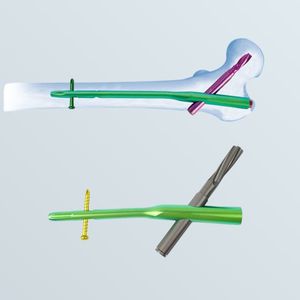
1. Executive Market Overview: The Strategic Evolution of Chinese Orthopedic Manufacturing
The global orthopedic devices market is undergoing a structural realignment. Healthcare systems worldwide—confronted with aging populations, rising trauma incidences, and stringent healthcare cost-containment mandates—are reassessing their medical device supply chains. Historically dominated by Western conglomerates, the sourcing ecosystem for orthopedic implants has transitioned toward high-precision Chinese manufacturing clusters located in Zhejiang (Jinhua, Hangzhou), Jiangsu (Changzhou, Suzhou), and Guangdong (Shenzhen).
China’s premier orthopedic implant factories have transformed from low-cost contract machinists into sophisticated ODM (Original Design Manufacturing) powerhouses. Capitalizing on automated 5-axis DMG MORI CNC milling complexes, Swiss-type longitudinal lathes (Citizen/Tsugami), and Class 100,000 cleanrooms, Tier-1 Chinese manufacturers now deliver implant systems that meet or exceed ISO 13485, ASTM F136, ASTM F67, and European CE MDR (EU 2017/745) requirements.
Key Insight for Procurement Directors: Modern procurement strategy relies on evaluating Total Cost of Ownership (TCO). Partnering directly with audited Chinese factories yields a 35% to 55% reduction in unit land costs while preserving metallurgic integrity, fatigue performance, and biocompatibility standards required by Tier-1 surgical centers.
This comprehensive whitepaper serves as a technical benchmarking guide for medical device distributors, hospital procurement boards, and OEM partners seeking to navigate the Chinese supply landscape, audit vendor capabilities, and establish sustainable OEM/ODM partnerships.
2. Technical Benchmarking: Chinese Tier-1 OEM vs. Global Brands
Evaluating vendor capability requires objective comparison across metallurgy, machining tolerance, surface treatment, quality verification, and cost structure:
| Evaluation Parameter | Tier-1 Chinese Manufacturers (e.g., Orthi Medical) | Multinational OEM Tier-1 Competitors |
|---|---|---|
| Raw Material Origin | ASTM F136 Ti-6Al-4V ELI / Invibio® PEEK / Carpenter Titanium | ASTM F136 Ti-6Al-4V ELI / Invibio® PEEK |
| Machining Precision | Sub-micron (±0.003 mm) via 5-Axis Swiss Lathes & Wire EDM | Sub-micron (±0.002 mm) via multi-axis CNC |
| Surface Modification | Type II Anodization, HA Plasma Spraying, SLA Sandblasting | Proprietary Porous Coatings, Type II Anodization |
| Sterilization Assurance | Co-60 Gamma Irradiation (SAL 10⁻⁶), ISO 11137 Validated | Ethylene Oxide (EtO) or Gamma Irradiation (SAL 10⁻⁶) |
| Regulatory Compliance | ISO 13485:2016, CE MDR, US FDA 510(k) cleared lines | US FDA 510(k), CE MDR, PMDA, NMPA |
| Procurement Lead Time | 4–6 Weeks (Standard Implants) / 8 Weeks (Custom OEM) | 12–20 Weeks (Global Distributor Channels) |
| Cost Advantage (TCO) | Baseline (35% - 55% Cost Reduction) | Premium Pricing (High Overheads & Royalty Markup) |
3. Advanced Metallurgy & Bio-Material Innovations
Implants operate under severe physiological stress, cyclical axial load, and aggressive biological environments. Understanding material selection is fundamental to reducing fatigue failure, fretting corrosion, and stress shielding.
A. Medical-Grade Titanium Alloys (ASTM F136 vs. ASTM F67)
Titanium remains the gold standard for trauma internal fixation and spinal hardware. Chinese factories utilize two main variants:
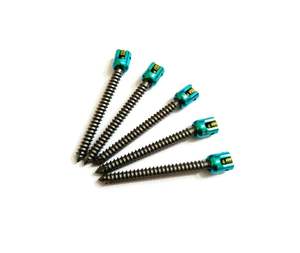
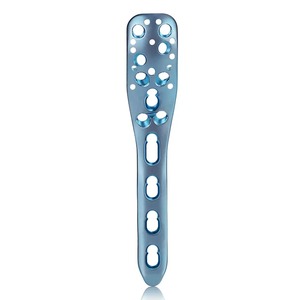
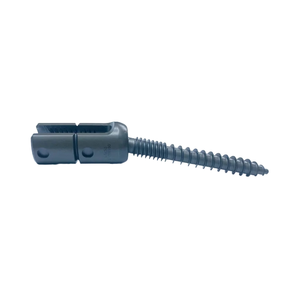
- Ti-6Al-4V ELI (Grade 23 / ASTM F136): Extra Low Interstitial variant providing exceptional yield strength (≥860 MPa) and fracture toughness. Essential for pedicle screws, intramedullary nails, and high-load locking plates.
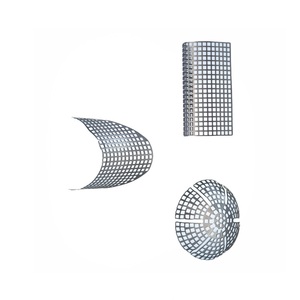
- Commercially Pure Titanium (CP Grade 2 to 4 / ASTM F67): Higher ductility and superior corrosion resistance. Preferred for maxillofacial micro-plates, rib fixation systems, and expandable mesh cages where intraoperative contouring is necessary.
B. Polyetheretherketone (PEEK-OPTIMA®) in Spinal & Arthroscopy Applications
For interbody spinal fusion (cervical and lumbar cages) and sports medicine anchors, PEEK offers a modulus of elasticity (3.6 GPa) closely matching human cortical bone (18 GPa). This mitigates stress shielding and graft subsidence while offering radiolucency for post-operative imaging via X-Ray and MRI.
C. Surface Engineering & Osseointegration Enhancement
Top-tier factories integrate advanced surface modification technologies:
- Type II Anodization (Gray Anodization): Reduces friction coefficients, increases surface fatigue life, and eliminates galling on screw threads and locking mechanisms.
- Hydroxyapatite (HA) Plasma Spraying: Creates a bioactive coating on cementless hip stems and acetabular cups, accelerating osteoblast attachment and early biological fixation.
- 3D Printed Trabecular Porous Structures: Electron Beam Melting (EBM) and Direct Metal Laser Sintering (DMLS) create interconnected pore sizes (300–500 µm) mimicking native cancellous bone architecture.
4. Key Industry & Procurement Trends Shaping 2025–2030
Navigating the next decade of medical device procurement requires aligning with technological and regulatory shifts:
Transition from non-sterile bulk shipments to single-use, gamma-sterilized (Co-60) blister packs (SAL 10⁻⁶) eliminating hospital sterilization overhead.
Bundling implants with specialized instruments for Unilateral Biportal Endoscopy (UBE) and Minimally Invasive Surgery (MIS) to shorten learning curves.
Integration of CT-scan DICOM data into CAD/CAM pipelines for custom oncology and severe maxillofacial/pelvic reconstruction implants within 10 days.
Consolidation of Chinese suppliers toward full EU MDR compliance, providing robust clinical data packages for international distributors.
5. Factory Audit & Supplier Evaluation Blueprint
When selecting a wholesale orthopedic supplier in China, procurement teams must conduct rigorous technical audits across four core parameters:
1. Quality Management System (QMS) & Certification Compliance
Ensure the manufacturer maintains an independently audited ISO 13485:2016 quality management system. Review their Device Master File (DMF), Technical Files under CE MDR, and ensure raw materials carry full Mill Test Certificates (MTC) proving heat-lot chemical and mechanical compliance.
2. Precision Machining Infrastructure
Inquire about machine park specifications. High-precision orthopedic manufacture requires multi-axis CNC machines from DMG MORI, Star, Citizen, or Haas. Subcontracted thermal processing, passivations, and cleaning processes must be validated according to ISO 14971 risk management guidelines.
3. In-House Mechanical & Fatigue Testing Laboratory
Verify that the factory performs routine static, dynamic, and fatigue testing in accordance with ISO 7206 (Hip prostheses), ASTM F1717 (Spinal construct assemblies), and ASTM F382 (Metallic bone plates). Internal CMM (Coordinate Measuring Machine) inspection rooms must maintain strict environmental temperature control.
4. Packaging & Cleanroom Validation
Sterile-packaged products must be processed within a certified Class 100,000 (ISO Class 8) or Class 10,000 (ISO Class 7) cleanroom. Tyvek® blister pouch sealing must comply with ISO 11607 accelerated aging and package integrity testing protocols.
6. Frequently Asked Questions (Procurement & Technical FAQs)
Partner with Orthi Medical: Your Trusted Orthopedic OEM/ODM Partner
Orthi Medical Co., Ltd. is a premier ISO 13485-certified manufacturer specializing in trauma, spine, sports medicine, joint replacement, and custom surgical instruments. Operating state-of-the-art 5-axis CNC production complexes and Class 100,000 cleanrooms, we deliver registration-ready medical devices to distributors and healthcare systems across 60+ countries.
Full-Portfolio OEM Manufacturing
From drawing-based machining to anodization color-coding, laser marking, and custom tray design.
Rigorous Quality Assurance
100% critical dimension inspection, lot traceability, CMM verification, and ISO 11137 gamma sterilization.
Global Regulatory Support
Complete Technical Dossiers, ISO 10993 testing, and CER reports to streamline your local registration.
Ready to optimize your orthopedic implant supply chain?