Navigating Low-MOQ Sourcing & Engineering Excellence in China
The international market for surgical hardware demands absolute geometric accuracy, biocompatible material purity, and compliance with rigorous global regulations. Modern hospitals and regional medical distributors are increasingly seeking flexible low Minimum Order Quantity (MOQ) manufacturing partnerships to optimize inventory velocity without sacrificing product safety or clinical efficacy. China's leading orthopedic factories have evolved to meet this need by implementing Swiss-type multi-axis CNC machining centers, automated optical inspection systems, and ISO 13485 cleanroom infrastructure.
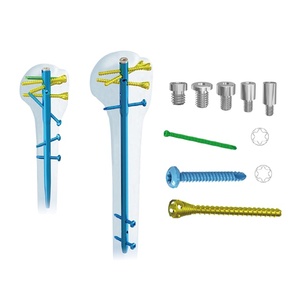
Titanium Alloy Femoral Interlocking Nail System
Engineered from Ti-6Al-4V ELI (ASTM F1472) for long bone fracture repair. Features anatomical curvature with multi-planar locking screw configurations.
Get Catalog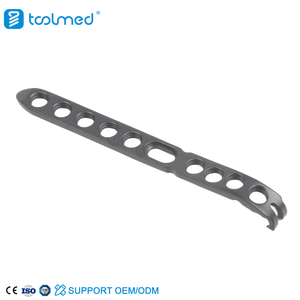
Olecranon Titanium TA3 Locking Plate II (3-8 Holes)
Low-profile anatomical titanium plate constructed for 3.5mm locking cortical screws. Pre-contoured design minimizes soft tissue impingement.
Get Catalog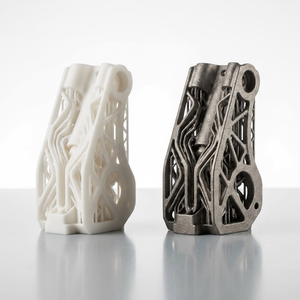
SLM 3D Printed Biocompatible Titanium Implants
Selective Laser Melting (SLM) porous titanium implants engineered with biomimetic trabecular structures to optimize rapid osseointegration.
Get Catalog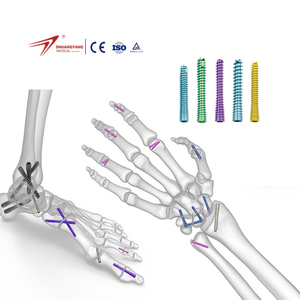
Herbert Cannulated Titanium Compression Screws
Variable-pitch headless screws designed for scaphoid fractures and intra-articular osteotomies. Delivers uniform interfragmentary compression.
Get Catalog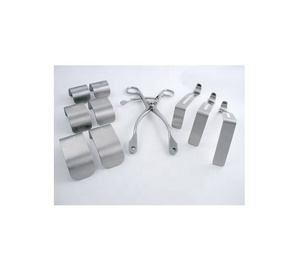
Manual Shoulder Arthroplasty Instrument Set
Precision surgical steel set including Kolbel soft tissue retractors and glenoid exposure systems, built for repeated steam autoclaving.
Get Catalog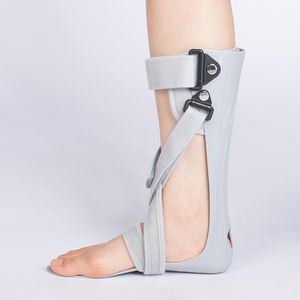
Medical Foot Support Drop Splint Traction AFO Device
Ankle-foot orthosis (AFO) shell crafted from high-density thermoplastic polymers for post-traumatic immobilization and gait correction.
Get Catalog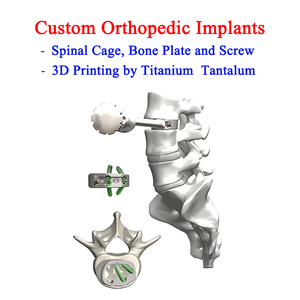
Custom Precision 3D Printed Spinal Cages & Joint Prostheses
Patient-specific implant manufacturing utilizing DICOM CT reconstruction data and clinical 3D titanium printing for complex reconstructive surgery.
Get Catalog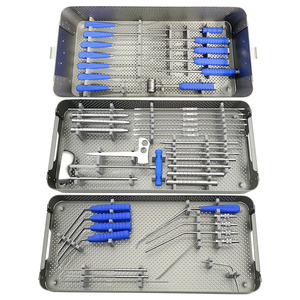
Spinal Surgery UBE Endoscopic Instrument Set
Comprehensive Unilateral Biportal Endoscopy (UBE) instrument suite for lumbar decompression, featuring micro-rongeurs, nerve retractors, and fluid channels.
Get CatalogDeconstructing the Low-MOQ Model in Chinese Medical Manufacturing
Historically, tier-one medical device factories enforced high Minimum Order Quantities (MOQs) ranging from 500 to 2,000 units per item stock-keeping unit (SKU). This created capital bottlenecks for specialized distributors, niche surgical suppliers, and hospitals in emerging markets. Modern production paradigm shifts in top-tier Chinese manufacturing centers—such as those operating in Zhejiang and Jiangsu—have revolutionized this economic model through modular Swiss lathe tooling setups and flexible manufacturing cells (FMCs).
CapEx Optimization
Low-MOQ tiers (starting from 10 to 50 pieces per SKU) allow distributors to evaluate regional surgical adoption without tying up working capital in static safety stock.
Rapid Tooling Re-configuration
High-precision 5-axis DMG MORI CNC systems utilize standardized fixture plates, enabling rapid product switching with near-zero setup scrap rates.
Full Material Traceability
Every low-MOQ trial batch receives identical quality control scrutiny, including spectral raw material analysis, batch heat treatment certificates, and optical CMM reports.
Technical Information Gain: Procurement Total Cost of Ownership (TCO) Matrix
When procuring orthopedic devices, initial unit price accounts for only 40% of lifetime costs. Quality failures, regulatory non-compliance, and delayed sterile deliveries drive up total cost of ownership. Partnering with a verified ISO 13485 supplier offering flexible MOQs balances capital efficiency with absolute clinical safety.
Material Specifications & Quality Control Systems
Orthopedic implants operate in harsh bio-chemical environments under cyclic mechanical loading. The choice of raw alloy directly determines fatigue limit, corrosion resistance, and bio-integration success. Leading Chinese factories adhere strictly to international ASTM and ISO raw material standards.
| Material Designation | International Standard | Tensile Strength (MPa) | Primary Clinical Application |
|---|---|---|---|
| Pure Titanium (TA2 / Grade 2) | ASTM F67 / ISO 5832-2 | ≥ 400 MPa | Low-load craniomaxillofacial trauma plates, soft tissue anchors |
| Pure Titanium (TA3 / Grade 4) | ASTM F67 / ISO 5832-2 | ≥ 550 MPa | Small bone fragment locking plates, olecranon & distal radius plates |
| Ti-6Al-4V ELI (TC4 / Grade 5) | ASTM F1472 / ASTM F136 | ≥ 930 MPa | Femoral interlocking nails, spinal pedicle screws, load-bearing implants |
| PEEK (Polyetheretherketone) | ASTM F2026 | ≥ 95 MPa | Interbody spinal fusion cages, radiolucent suture anchors |
| 316L Stainless Steel | ASTM F138 / ISO 5832-1 | ≥ 860 MPa | Temporary trauma plates, K-wires, robust surgical instrumentation |
Future Procurement Trends in Global Orthopedics
The global orthopedic device market is transitioning from standardized mass-market hardware toward personalized, minimally invasive solutions. Suppliers operating in China are investing heavily in digital integration, automated quality verification, and direct-to-OR sterile packaging systems.
- 3D Printed Porous Trabecular Structures: Replacing conventional Plasma Spray coatings with integrated SLM additive lattice structures for superior bone ingrowth.
- Ready-to-Use Gamma Sterilized Blister Packs: Eliminating hospital autoclave bottlenecks through Co-60 gamma sterilization (SAL 10⁻⁶) in Class 100,000 cleanroom environments.
- Unilateral Biportal Endoscopy (UBE) Expansion: Rapid adoption of endoscopic spinal decompression tools reducing patient recovery timelines and incision trauma.

Why Partner With OEM/ODM Manufacturing Leaders
Bringing an orthopedic implant or surgical system to market requires total control over precision machining, surface anodization, cleaning, and technical registration documentation.
Regulatory File Support
We supply comprehensive technical files (STED), biocompatibility reports (ISO 10993), and mechanical testing documentation to streamline CE MDR and regional FDA registration.
Automated CMM Quality Checks
Utilizing ZEISS optical Coordinate Measuring Machines (CMM) ensuring dimensional tolerances within ±0.005mm for complex thread profiles and locking interfaces.
Agile Supply Chain Lead Times
Integrated raw titanium forging, Swiss machining, color anodizing, and laser marking under one roof cuts standard prototype lead times to under 15 working days.
Frequently Asked Questions by Global Buyers
Essential insights regarding Minimum Order Quantities, quality certifications, OEM customization processes, and sterile packaging options.
What is the minimum order quantity (MOQ) for custom OEM orthopedic implants?
What quality management certifications and material standards do your factories hold?
Can implants and surgical instruments be supplied pre-sterilized?
What is the typical engineering workflow for drawing-based OEM/ODM projects?
How do you protect customer intellectual property (IP) and custom design rights?
Accelerate Your Orthopedic Supply Chain Today
Contact our medical device engineering team to request full product catalogs, discuss low-MOQ trial orders, or obtain instantaneous factory quotes for custom OEM/ODM manufacturing.