Featured Orthopedic Implant & Surgical Instrument Samples
Evaluate our certified ISO 13485 Class III orthopedic implants and surgical instruments. Request rapid sample validation for clinical trial analysis, regulatory dossier filing, or direct distributor partnership.
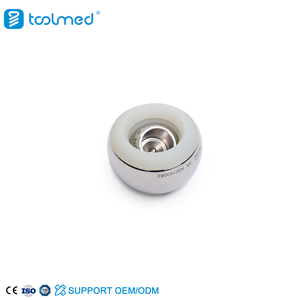
Bipolar Femoral Head for Hip Arthroplasty (CE & ISO Certified)
High-precision mirror-polished CoCrMo / Ti-6Al-4V alloy head for hemiarthroplasty. Low friction, optimized wear rate, compatible with standard stems.
Inquire Now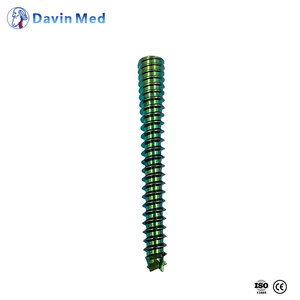
Headless Cannulated Compression Screw System for Hand & Ankle
Differential thread pitch design enabling self-compressing osteosynthesis in scaphoid, intra-articular, and small-bone fractures. Titanium TC4.
Inquire Now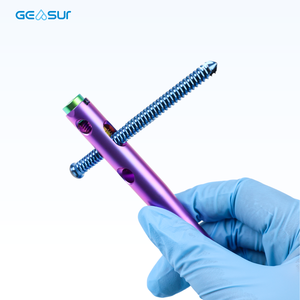
Class III Titanium Alloy Hindfoot Fusion & Ankle Intramedullary Nail
Multi-planar distal and proximal locking configurations engineered for stable tibiotalocalcaneal (TTC) arthrodesis. High fatigue resistance.
Inquire Now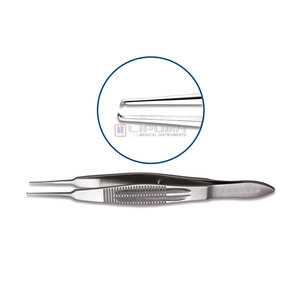
Castroviejo Micro Fixation Forceps 1x1Z Stainless Steel
German-grade surgical stainless steel micro-forceps for soft tissue manipulation, ophthalmic, and peripheral nerve repair procedures.
Inquire Now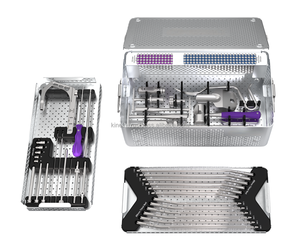
Aluminum Interlocking Tibia & Femur Intramedullary Nail Instrument Set
Ergonomic carbon/aluminum distal targeting jig arm and reaming guides for ultra-precise intramedullary nailing procedures.
Inquire Now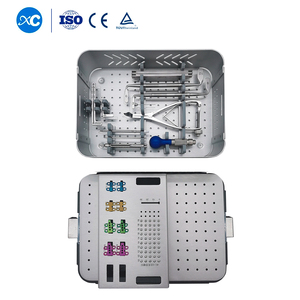
Veterinary Tibial Tuberosity Advancement (TTA) Instrument Set
Complete orthopedic surgical set including specialized TTA plates, cage spreaders, reamers, and drill guides for canine CCL reconstruction.
Inquire Now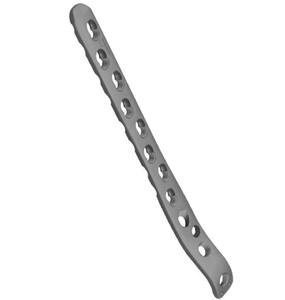
Titanium Limited Compression Locking Plate (LC-DCP System)
Low-profile anatomical profile reducing periosteal contact while providing rigid stability for diaphyseal and metaphyseal fractures.
Inquire Now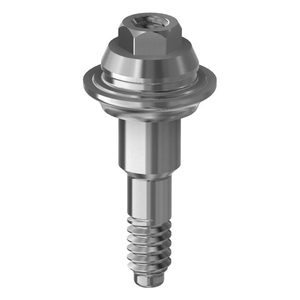
Universal Titanium Pedicle Screw Spine Internal Fixation System
Dual-thread polyaxial and monoaxial pedicle screws with internal drive design and bone-cement fenestration options for osteoporotic spine.
Inquire NowNavigating China's Top Orthopedic Implant Manufacturing Landscape
An authoritative whitepaper breakdown for OEM buyers, hospital procurement committees, and medical device distributors seeking verified sample protocols and production scale.
Material Metallurgy & Compliance
Global medical standards mandate absolute traceability. Leading Chinese orthopedic manufacturers utilize medical-grade Ti-6Al-4V ELI (ASTM F136 / ASTM F1472), pure titanium (ASTM F67 Grade 2/3), PEEK Optima, and implant-grade CoCrMo alloys.
- 100% Raw material batch heat-code certification
- Tensile strength validation (≥ 930 MPa for TC4)
- Biocompatibility testing per ISO 10993 standards
5-Axis CNC Precision Machining
Complex anatomical geometries, such as cannulated compression screws, interbody fusion cages, and variable-angle pedicle screws, demand sub-micron tolerances achieved via Swiss Citizen multi-axis CNC turning and 5-axis DMG MORI machining centers.
- Sub-micron machining precision down to ±0.005mm
- Micro-arc oxidation & Type II anodized color coding
- Automated optical CMM 100% critical dimension check
Global Regulatory Dossiers
Evaluating sample quality is only the first step. Top manufacturers support OEM clients with full regulatory technical documentation (STED format), enabling seamless submission for CE MDR (EU 2017/745), US FDA 510(k), and ANVISA approvals.
- ISO 13485:2016 audited Quality Management System
- Full Design History File (DHF) & DMR availability
- Co-60 Gamma Sterilization validation (ISO 11137)
Technical Biomaterial Benchmarks & Manufacturing Integrity
Orthopedic implants demand unmatched fatigue resistance, osseointegration capabilities, and stress-shielding reduction. Review the material specification breakdown enforced across our production lines.
High-Gain Information: Evaluating Implant Integrity Beyond Sample Visuals
When procuring samples for trauma locking plates, pedicle screw systems, or total hip arthroplasty components, visual inspection is insufficient. Leading hospital buyers and OEM brand owners must analyze chemical composition, micro-structural grain size per ASTM standards, static/dynamic axial fatigue limits, and surface roughness (Ra < 0.2 μm for joint contact zones). Below is the raw technical material baseline maintained by premier Chinese manufacturers.
| Biomaterial Designation | Standard Specification | Tensile Strength (σb) | Yield Strength (σ0.2) | Primary Clinical Application |
|---|---|---|---|---|
| Ti-6Al-4V (TC4) Titanium Alloy | ASTM F1472 / ISO 5832-3 | ≥ 930 MPa | ≥ 860 MPa | Pedicle Screws, Trauma Plates, Cannulated Screws, Intramedullary Nails |
| Ti-6Al-4V ELI (Extra Low Interstitial) | ASTM F136 / ISO 5832-11 | ≥ 860 MPa | ≥ 795 MPa | Joint Arthroplasty Stems, High-fatigue Spinal Cages, Maxillofacial Implants |
| Unalloyed Pure Titanium (TA2 / TA3) | ASTM F67 / ISO 5832-2 | ≥ 400 - 500 MPa | ≥ 275 - 380 MPa | Low-load Cranial & Rib Fixation Plates, Soft-tissue Mesh Backings |
| PEEK Optima (Polyetheretherketone) | ASTM F2026 | ≥ 95 - 110 MPa | ≥ 90 MPa | Interbody Fusion Cages (PLIF/TLIF/ACDF), Suture Anchors |
| CoCrMo Alloy (Cobalt-Chromium) | ASTM F75 / ISO 5832-4 | ≥ 665 MPa | ≥ 450 MPa | Femoral Heads, Knee Articular Bearings, High-wear Arthroplasty Components |
Future Procurement Trends in Orthopedic Implant Manufacturing (2025–2030)
Understanding shifts in global medical device supply chains, regulatory friction, and technological advances allows procurement teams to secure competitive advantage.
1. Shift to Gamma-Sterilized Single-Use Implant Kits
Hospitals globally are moving away from non-sterile bulk delivery requiring local autoclave reprocessing. Procurement protocols increasingly prioritize pre-packaged, individually sterile-sealed implants (SAL 10-6). This eliminates hospital sterilization costs, reduces surgical site infection (SSI) liability, and provides full UDI (Unique Device Identification) scanning compliance.
2. Additive Manufacturing & porous Titanium Integration
Traditional machined solid implants are rapidly giving ground to 3D-printed porous titanium (EBM/SLM technology). By matching the elastic modulus of human trabecular bone (reducing stress shielding), porous structures promote rapid bone in-growth. Manufacturers with hybrid CNC-and-3D-printing facilities represent the premier tier of future contract manufacturing partners.
3. Regulatory Co-Development & OEM Registration Support
With tighter MDR enforcement, distributors can no longer rely on standalone suppliers. Procurement preference is shifting toward contract manufacturers capable of providing turn-key Technical Documentation dossiers (STED), bio-compatibility validation, dynamic fatigue test reports, and direct factory audit access for regulatory notified bodies.
Product Development & Technological Advancement Trends
From minimally invasive surgical instruments to smart bio-compatible materials, explore how orthopedic engineering is evolving to improve surgical efficiency.
Minimally Invasive Surgery (MIS) & UBE Instrumentation
Unilateral Biportal Endoscopy (UBE) and percutaneous spine fixation are replacing open procedures. Product lines are adopting low-profile long-arm pedicle screws, flexible radiolucent carbon-fiber drill guides, and micro-endoscopic shaver blades to accommodate smaller incisions and quicker patient recovery.
Radiolucent PEEK & Bioabsorbable Polymers
In sports medicine anchors and interbody fusion, radio-opacity can obscure post-operative artifact-free MRI/CT imaging. Modern implants incorporate radiolucent PEEK with embedded tantalum markers or bioabsorbable PLLA-HA materials that gradually transfer stress back to healing bone tissue.
Robot-Assisted Surgical Compatibility
As robotic orthopedic surgery expands globally, implant hardware and instrument trays must feature high-precision registration points and optical tracking markers. Modern manufacturers ensure all surgical jigs match navigation system tolerances flawlessly.
Why Partner with China's Premier Orthopedic Contract Manufacturers
Integrating end-to-end design, precision machining, cleanroom packaging, and regulatory support into a cohesive global supply chain.
End-to-End Vertical Integration
From raw titanium bar stock inspection to final gamma sterilization in ISO Class 7 cleanrooms, every stage of production operates under a centralized ISO 13485 QMS framework. This guarantees complete batch-to-batch consistency and total lead time control.
Custom OEM/ODM Engineering & Prototyping
Transforming complex surgeon concepts or specialized CAD drawings into functional clinical prototypes within 7 to 14 days. Capabilities include laser marking, color anodizing, custom CNC foam tray design, and private label packaging.
Global Distribution & Registration Support
Exporting to over 60 countries across Europe, the Americas, Asia-Pacific, and the Middle East. Providing comprehensive registration dossiers, academic surgeon training materials, and step-by-step surgical technique guides for international market authorization.
Orthopedic Implant Sourcing FAQ for International Buyers
Answers to common technical, quality control, and regulatory questions encountered when evaluating sample orders and establishing contract manufacturing partnerships in China.
1. What specific quality certifications and material reports accompany implant sample orders?
2. What is the typical lead time for custom OEM orthopedic implant sample prototyping?
3. How do Chinese orthopedic manufacturers ensure dynamic fatigue resistance for Class III spinal and trauma implants?
4. Can implants be supplied pre-sterilized with custom private-label packaging?
5. What regulatory technical documentation (STED format) is provided for local market registration?
6. What minimum order quantities (MOQ) apply for sample validation versus production orders?
Accelerate Your Orthopedic Supply Chain Today
Request certified product samples, submit custom OEM/ODM engineering drawings, or consult with our regulatory team for rapid market clearance support.