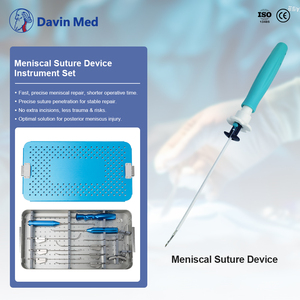
Sports Medicine
Precision-machined implant solutions engineered under strict ISO 13485 standards. Select any system below to initiate direct factory inquiries and custom OEM requests.
An authoritative technical analysis for global medical device procurement directors, orthopedic product managers, and regional hospital networks.
The global orthopedic reconstructive and trauma device market is undergoing a seismic structural transition. Healthcare payers, regional distributors, and hospital procurement boards face growing demands for bio-harmonious materials, stringent regulatory compliance, and cost-effective supply chain resilience. As China solidifies its position as a global manufacturing powerhouse for Class II and Class III medical devices, evaluating top-tier China orthopedic implant manufacturers requires a meticulous assessment of raw material integrity, machining precision, surface modification capabilities, and clinical documentation support.
Orthi Medical Co., Ltd. stands at the forefront of this industrial evolution. Operating under globally recognized quality standards, including ISO 13485:2016 and ISO 9001 with CE compliance, Orthi Medical delivers end-to-end orthopedic solutions ranging from trauma compression plates and spinal pedicle screw constructs to arthroscopic sports medicine anchors, total joint arthroplasty, and minimally invasive endoscopic imaging systems.
Consolidate your procurement architecture under one qualified manufacturer. We produce complete clinical lines across trauma, spine, sports medicine, hip & knee joint replacement, UBE endoscopy, and interventional stents—eliminating vendor fragmentation.
Every bone screw, plate, and spinal rod is fabricated from certified medical-grade raw materials, including ASTM F136 / ASTM F1472 Ti-6Al-4V ELI titanium alloys, ASTM F67 pure titanium (TA2/TA3), and implantable PEEK per ASTM F2026, complete with heat-lot chemical certificates.
Eliminate hospital reprocessing overheads with factory-direct sterile packaging. Implants are packaged in ISO Class 7 cleanrooms using medical-grade Tyvek blisters and sterilized via Cobalt-60 gamma radiation to achieve a validated Sterility Assurance Level (SAL) of 10⁻⁶.
To ensure structural stability and long-term biological safety under biomechanical cyclic loading, our manufacturing lines conform strictly to international metallurgical standards:
| Material Designation | Standard Specification | Tensile Strength (MPa) | Yield Strength (MPa) | Primary Clinical Applications |
|---|---|---|---|---|
| Ti-6Al-4V ELI (TC4) | ASTM F136 / ASTM F1472 | ≥ 930 MPa | ≥ 860 MPa | Pedicle screws, intramedullary nails, locking compression plates, hip stems |
| Commercially Pure Titanium (TA2/TA3) | ASTM F67 | ≥ 400 - 500 MPa | ≥ 275 - 380 MPa | Reconstruction plates, cranial mesh, soft tissue anchor sleeves |
| Implant-Grade PEEK | ASTM F2026 | ≥ 95 - 110 MPa | ≥ 90 MPa | Interbody fusion cages, suture anchors, radiolucent spinal implants |
| Ultra-High Molecular Weight PE (UHMWPE) | ASTM F648 | ≥ 40 MPa | ≥ 20 MPa | Acetabular cup liners, total knee tibial inserts, high-strength sutures |
Analyzing key clinical innovations, material advancements, and surgical technique shifts shaping the next decade of orthopedic implant manufacturing.
Traditional dense titanium implants rely on macro-textured surface roughening or plasma-sprayed Hydroxyapatite (HA) coatings to encourage osseointegration. However, modern orthopedic manufacturing is rapidly adopting Electron Beam Melting (EBM) and Direct Metal Laser Sintering (DMLS) to construct stochastic porous titanium structures.
These 3D-printed biomimetic structures feature interconnecting pore sizes ranging from 300 to 600 microns, closely matching the elastic modulus of human trabecular bone (~1.5 to 3 GPa). This drastically reduces stress shielding, promotes rapid osteoblast migration, and enhances long-term biological secondary fixation in joint arthroplasty and interbody spinal fusion.
Surgeon preferences are shifting decisively from open invasive reconstructions toward minimally invasive techniques. In spine care, Unilateral Biportal Endoscopy (UBE) and Percutaneous Transforaminal Endoscopic Discectomy (PTED) are replacing traditional open laminectomies. Consequently, implant manufacturers must adapt:
In sports medicine, open soft-tissue reattachment has given way to all-arthroscopic rotator cuff and ligament reconstruction. Modern suture anchors utilize carbon-reinforced or unreinforced PEEK polymer per ASTM F2026, offering radiolucency to enable artifact-free postoperative MRI imaging.
Furthermore, suture materials have evolved from simple braided polyester to Ultra-High Molecular Weight Polyethylene (UHMWPE) co-braids. These sutures deliver ultra-high tensile strength, exceptional knot security, and minimal tissue reaction, setting a new benchmark for bankart, slap, and ACL/PCL joint reconstruction.
Historically, orthopedic distributors imported non-sterile implants in bulk, placing the burden of tray assembly, cleaning, and autoclaving on hospital Central Sterile Services Departments (CSSD). Global healthcare providers are now demanding Sterile-Packed Implants directly from the manufacturer.
Factory-sealed gamma-sterilized packaging guarantees zero cross-contamination risks, simplifies inventory control with pre-printed linear and 2D DataMatrix barcodes, reduces hospital operating room setup times, and lowers overall healthcare delivery costs.
How international procurement executives are restructuring their supply chains to combat margin pressure, regulatory scrutiny, and lead-time volatility.
Global distributors are bypassing traditional multi-tiered export trading companies. Direct engagement with certified Chinese original equipment manufacturers (OEMs) yields 30% to 50% unit cost reductions, direct engineering communication, and transparent audit access to CNC machining floor operations.
Product price alone is no longer the sole purchasing driver. Distributors require manufacturers that supply robust technical documentation, including finite element analysis (FEA), mechanical fatigue test reports per ASTM F1717 / ASTM F543, bio-compatibility testing per ISO 10993, and clinical evaluation reports (CER) to streamline domestic regulatory registrations.
To win competitive hospital tenders, regional brand owners require private-label laser marking, custom color-anodized titanium coding (e.g., color-coded drill bit sizes and implant diameters), and ergonomically organized stainless steel/aluminum surgical trays customized for local surgical preferences.
Designed to international performance criteria, our orthopedic implant lines deliver mechanical reliability and surgical adaptability.
Trauma implants demand versatile anatomical contouring, minimal soft-tissue friction, and reliable mechanical stability across variable bone densities:
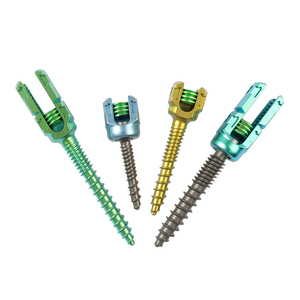
Our spinal implants address degenerative disc disease, spondylolisthesis, spinal stenosis, and complex deformity correction:
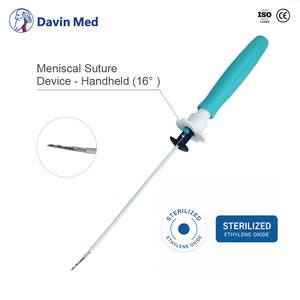
Modern sports medicine procedures require seamless coordination between implant materials and surgical instrumentation:
Reconstructive joint systems and minimally invasive imaging represent the pinnacle of surgical innovation:
Key answers regarding quality compliance, technical specifications, OEM service workflows, and international shipping logistics.
Orthi Medical operates a total quality management system strictly certified under ISO 13485:2016 and ISO 9001. Applicable product lines carry the CE Mark. Raw materials are sourced exclusively from certified mills complying with ASTM standards: ASTM F136 / ASTM F1472 for Ti-6Al-4V titanium alloy, ASTM F67 for commercially pure titanium (TA2/TA3), and ASTM F2026 for implantable PEEK. Material test certificates (MTC) detailing chemical composition and mechanical tensile properties accompany every production batch.
Yes. Our core competence includes comprehensive OEM/ODM contract manufacturing for global medical device brands. We accept 2D/3D CAD files (STEP, IGES, DWG) and perform complete Manufacturing Feasibility Reviews, Finite Element Analysis (FEA), precision 5-axis CNC Swiss lathe turning, surface treatment, laser etching, private-label branding, and custom surgical instrument tray design.
We offer both non-sterile bulk packaging and validated sterile packaging. Sterile products are double-sealed in medical-grade Tyvek blister packs within an ISO Class 7 cleanroom and undergo Cobalt-60 gamma radiation sterilization in full compliance with ISO 11137, guaranteeing a validated Sterility Assurance Level (SAL) of 10⁻⁶ and a 5-year shelf life.
For standard catalog items maintained in inventory (such as common trauma plates, cannulated screws, and pedicle screws), shipment dispatches within 7 to 15 business days. Custom OEM projects generally follow a structured timeline: prototype machining takes 3 to 4 weeks; mechanical verification and fatigue testing take 2 to 3 weeks; and full mass production requires 45 to 60 days depending on surface anodizing and sterilization batch schedules.
We provide comprehensive registration dossiers to assist our distribution partners in obtaining local Ministry of Health (MOH) approvals. Documentation packages include ISO 13485 certificates, CE certificates of conformity, Free Sale Certificates (FSC), raw material chemical/mechanical reports, bio-compatibility test summary reports (ISO 10993), sterilization validation data, and step-by-step Surgical Technique Guides.
Our quality control laboratories perform rigorous mechanical stress and fatigue testing in accordance with international standards. Bone screws undergo axial pull-out strength, insertion torque, and torsional yield testing per ASTM F543. Spinal pedicle screw constructs undergo dynamic multi-axial fatigue testing per ASTM F1717, and interbody fusion cages undergo static and dynamic compression-shear testing per ASTM F2077.
Yes. We actively collaborate with global distributors to facilitate clinical education. We provide high-definition surgical technique manuals, synthetic bone (Sawbones) demonstration models, step-by-step surgical video tutorials, and technical support for distributor-sponsored academic cadaveric workshops and regional spine/trauma symposia.
From initial concept and CAD modeling to mass production and sterile packaging, our structured workflow guarantees precision at every stage.
Our biomedical engineering team evaluates customer drawings, performing Design for Manufacturability (DFM) and tolerance stack-up analysis within 48 hours.
Prototypes are machined on high-precision DMG MORI and Swiss-type Citizen CNC longitudinal turning centers to achieve tolerances within ±0.005mm.
Sample batches undergo static pull-out, torsional torque, and dynamic fatigue testing per ASTM standards to ensure biomechanical durability.
Implants undergo controlled Type II / Type III color anodization, micro-arc oxidation, sandblasting, or plasma Hydroxyapatite (HA) spraying.
Implants are double-pouched in ISO Class 7 cleanrooms, labeled with UDI barcodes, and sterilized via Co-60 gamma irradiation to SAL 10⁻⁶.
Final release includes full lot traceability records, Certificate of Analysis (CoA), material mill certificates, and custom customs documentation.
Request catalog pricing, sample evaluation packs, or custom OEM technical reviews. Connect with our senior engineering team today.