Featured Orthopedic Systems & Precision Surgical Components
Explore our flagship ISO 13485 certified implant systems and surgical instruments manufactured for global distribution.
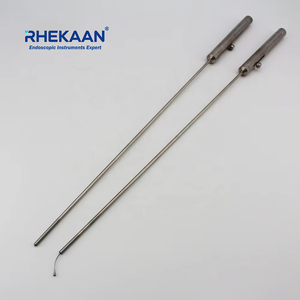
Premium Transforaminal Endoscopic Surgical System Construction Discectomy Endoscopy Extension Type Nerve Probe
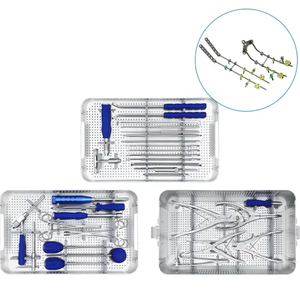
Spine Fixation Stabilization Spinal Surgical Posterior Cervical Thoracic System Instrument Set
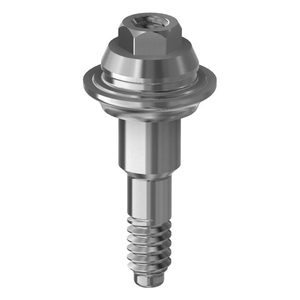
Orthopedic Pedicle Screw Titanium Internal Drive Connection Compatible Universal Spinal Fixation System Precision

Manicure Machine Nail Polish Machine Customize Plastic Aluminium Frame Nail Drill 115B Tips Three Pin For Up200 machine
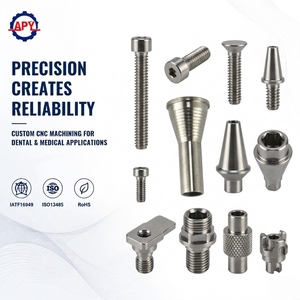
ISO13485 Certified Precision Custom CNC Machining Dental Abutment Implant Screw Titanium Medical Component
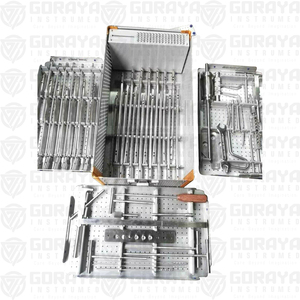
HOT SALE GORAYA GERMAN ORTHOPAEDIC MANUAL INTERLOCKING TIBIA and FEMORAL NAIL 40 UNITS SET STAINLESS STEEL CE ISO APPROVED
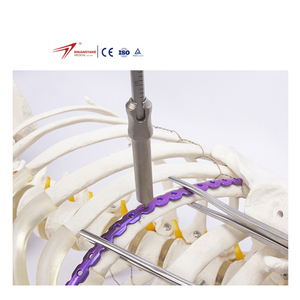
Shuangyang Medical Custom Orthopedic Titanium Rib Bone Plate Implants for Orthopedic Surgery Rib Locking Plate and Screw
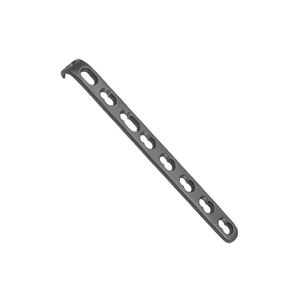
Orthopedic Implant Medial Ulna Olecranon Locking Plate Class III Surgical Intervention Hengchee/OEM/ODM Model 1227
Evaluating China's Orthopedic Implant Factory Ecosystem: Quality, Compliance & OEM Scalability
Global healthcare buyers, orthopedic distributors, and hospital procurement groups increasingly look toward China's advanced medical device manufacturing hubs for high-precision Class III trauma plates, spinal pedicle screws, arthroscopy instruments, and joint replacement implants. Understanding factory qualifications, metallurgical traceability, and regulatory compliance is vital to building a sustainable supply chain.
The Paradigm Shift in Global Medical Device Manufacturing
The global demand for high-performance orthopedic implants has transitioned from legacy Western procurement models toward direct OEM/ODM factory partnerships in established industrial clusters across China (such as Zhejiang and Jiangsu provinces). Modern Chinese orthopedic factories operate high-precision 5-axis Swiss CNC machining centers, automated anodizing systems, and ISO Class 7 cleanrooms designed for sterile blister packaging.
For international distributors, sourcing directly from audited China orthopedic implant factories eliminates intermediary markups while maintaining full adherence to international metallurgical standards including ASTM F67 (Unalloyed Titanium TA2/TA3) and ASTM F1472 (Ti-6Al-4V TC4 Alloy).
By establishing rigorous vendor evaluation criteria—focusing on raw material heat-lot traceability, fatigue test reports under ASTM F1717 / ASTM F382 standards, and CE/ISO 13485 quality systems—distributors can secure consistent product margins and reliable clinical outcomes.

Metallurgical Integrity
Implant-grade materials tested for tensile strength (≥930 MPa for TC4), biocompatibility, microstructural grain homogeneity, and fatigue resistance according to global orthopedic specifications.
ISO 13485 Quality Audit
Comprehensive Quality Management System (QMS) ensuring design controls, cleanroom bioburden management, automated dimensional inspection, and complete lot history record (DHR) tracking.
Turnkey OEM & Registration
Full support for OEM private-label branding, customized surgical instrument tray design, drawing-based micro-machining, and complete technical dossiers for local regulatory registration.
Complete Orthopedic Portfolio: From Trauma to Minimally Invasive Endoscopy
Our manufacturing infrastructure spans eight distinct product divisions, supplying global healthcare distributors with specialized implants, matched surgical instruments, and gamma-sterilized single-use options.

Trauma & Fracture Fixation
Anatomically pre-contoured locking plates, cannulated screws (Ø2.5mm to Ø6.5mm), proximal femoral nails (PFN), and interlocking tibia/femur nails crafted for high mechanical stability during fracture healing.

Spinal Fixation & Fusion
Comprehensive thoracolumbar pedicle screw systems, PEEK interbody fusion cages (TLIF/PLIF/Cervical), low-profile anterior cervical plates, and minimally invasive balloon kyphoplasty kits.

Sports Medicine & Arthroscopy
High-strength PEEK suture anchors, ultra-high-molecular-weight polyethylene (UHMWPE) suture tapes, ACL/PCL reconstruction drill guides, meniscal repair cannulas, and serrated shaver blades.

Minimally Invasive Systems & Stents
Unilateral Biportal Endoscopy (UBE) instrument sets, transforaminal endoscopes, 4K camera visualization systems, coronary bare-metal stents, and Double-J ureteral drainage catheters.
Medical-Grade Metallurgical & Polymer Material Specifications
Every raw material batch undergoes chemical spectrum testing, tensile strength verification, and microstructural analysis prior to precision machining.
| Material Classification | International Standard | Tensile Strength (σb) | Yield Strength (σ0.2) | Primary Clinical Applications |
|---|---|---|---|---|
| Pure Titanium (TA2 / TA3) | ASTM F67 / ISO 5832-2 | ≥ 400 - 500 MPa | ≥ 275 - 380 MPa | Cervical plates, rib locking plates, low-load bone screws |
| Ti-6Al-4V ELI (TC4) | ASTM F1472 / ISO 5832-3 | ≥ 930 MPa | ≥ 860 MPa | Pedicle screws, intramedullary nails, trauma locking plates |
| PEEK-OPTIMA Natural | ASTM F2026 | ≥ 95 MPa | ≥ 90 MPa | Interbody fusion cages, sports medicine suture anchors |
| Cobalt-Chromium-Molybdenum | ASTM F75 / ISO 5832-4 | ≥ 665 MPa | ≥ 450 MPa | Total knee femoral components, hip joint modular heads |
Product Development & Future Engineering Trends (2026–2030)
As clinical demands shift toward faster osseointegration, artifact-free post-operative imaging, and ultra-minimally invasive interventions, leading Chinese factories are driving technological innovations across implant design and material science.
3D Printed Trabecular Titanium
Transitioning from traditional surface coatings to additive-manufactured 3D porous titanium structures. Featuring interconnected pore sizes of 600–800 μm that mimic natural cancellous bone topography, facilitating rapid cellular ingrowth and long-term biological fixation without adhesive delamination risks.
PEEK Carbon-Reinforced Composites
Developing radiolucent PEEK composites reinforced with continuous carbon fibers for spinal and trauma fixation. These materials provide a elastic modulus matching natural cortical bone (15–20 GPa), drastically reducing stress shielding while allowing radiologist artifact-free CT and MRI follow-ups.
Antibacterial & Bio-active Surfaces
Integrating silver nanoparticles (Ag-ion) and nano-hydroxyapatite (n-HA) plasma electrochemical oxidation (PEO) surface treatments. These active surface layers demonstrate superior clinical resistance against biofilm formation (e.g., S. aureus) while encouraging osteoblast differentiation.

Key Procurement Trends Reshaping Global Distributor Sourcing
The global medical device market is undergoing rapid structural changes driven by regulatory tightening (such as EU MDR 2017/745), hospital sterilization costs, and inventory optimization demands. Forward-thinking distributors must realign their factory sourcing strategy accordingly:
- Pre-Sterilized Single-Unit Blister Packaging: Transitioning away from non-sterile bulk shipments toward Co-60 gamma-irradiated single-unit packaging (SAL 10-6). This reduces hospital autoclave turnover time and eliminates reprocessing contamination risks.
- Consolidated Multi-Category Purchasing: Global buyers are consolidating vendors—sourcing trauma, spine, sports medicine, and endoscopic visualization from a single ISO 13485 certified manufacturer to streamline factory audits and customs clearance.
- Turnkey Registration Dossier Support: Factories offering ready-to-submit technical files (including STED documentation, biocompatibility test reports, and clinical evaluation reports) enable distributors to secure local health authority approvals 40% faster.
Why Direct-Factory Collaboration Delivers Unmatched Competitive Advantage
Partnering directly with established China orthopedic implant manufacturing facilities offers strategic benefits across quality control, custom OEM engineering, regulatory speed, and supply security.
5-Axis CNC Precision Lathes
Utilizing high-precision Citizen and Star Swiss-type automatic CNC lathes capable of achieving tolerances within ±0.005 mm for complex thread profiles, variable pitch pedicle screws, and locking plate holes.
ISO Class 7 Cleanroom
Controlled cleanroom environments certified for bioburden testing, ultrasonic washing, secondary pouch sealing, and gamma irradiation processing with a guaranteed Sterility Assurance Level (SAL) of 10-6.
In-House Mechanical Testing
Full testing lab equipped with static and dynamic axial fatigue test rigs, axial pull-out force testers, and torsion measurement machines operating under ASTM F1717, F382, and F543 guidelines.
Strict Adherence to International Regulatory Frameworks
Navigating international medical regulations demands absolute quality compliance. Every product batch shipped from our manufacturing lines comes backed by comprehensive quality documentation:
- ISO 13485:2016 Medical Devices Quality Management System Certification.
- ISO 9001 Quality Management System Certification.
- CE Compliance Markings for European market accessibility.
- 100% Optical Coordinate Measuring Machine (CMM) dimensional verification records.

Frequently Asked Questions (FAQ) for Orthopedic Distributors
Critical answers regarding material certifications, OEM customization, minimum order quantities (MOQ), sterilization standards, and technical registration dossiers.
What raw material certifications and quality standards do your orthopedic implants meet?
Do you provide OEM, ODM, and private labeling services for distributors?
Are your implants available in sterile pre-packaged options?
Which specialty product categories can a distributor consolidate through your factory?
What technical documentation is provided to support product registration in our country?
What is the standard lead time for OEM production and bulk orders?
Partner with a Leading China Orthopedic Implant Manufacturer
Streamline your medical device supply chain today. Connect directly with our engineering and export team to request product catalogs, sample evaluation sets, or factory OEM price quotes.