Featured Locking Plate Instrument Sets & Specialty Systems
Engineered to ISO 13485 and ASTM F1472 standards for maximum biomechanical stability, seamless intraoperative handling, and rigorous surgical versatility.
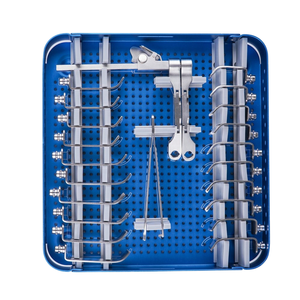
Stainless Steel Manual Spinal Distractor Instrument Set
CE Certified Class I medical spine retractor & distraction toolkit crafted from premium German stainless steel for precise vertebral decompression.
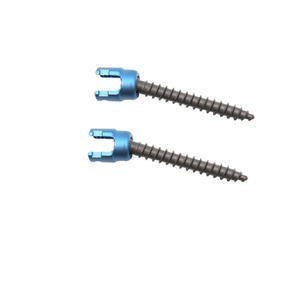
Geasure 6.0mm System Polyaxial Spinal Pedicle Screw
High-strength titanium alloy (TC4 / ASTM F1472) dual-thread pedicle screw system ensuring optimum cortical grip and multi-angle spinal rod engagement.
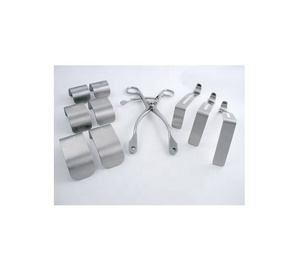
Manual Reusable Shoulder Arthroplasty Instrument Set
Comprehensive shoulder joint reconstruction kit featuring Kolbel soft tissue retractors and specialized glenoid exposure tools.
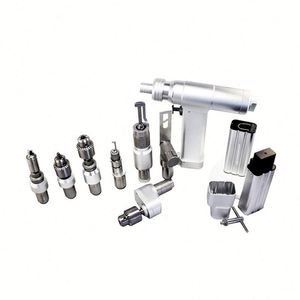
Multifunctional Veterinary & Human Orthopedic Bone Drill
High-torque, cannulated surgical power tool system with ergonomic balance for precise bone drilling and pin driving performance.
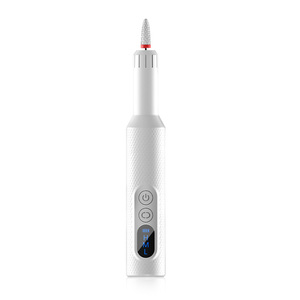
Portable Professional Micro-Shaping Surgical Machine Kit
High-precision rotational polishing and bone finishing unit engineered for delicate orthopedic and podiatric surgical adjustments.
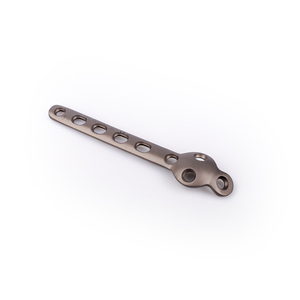
CANWELL Proximal Ulna Olecranon Multi-Axial Locking Plate
Anatomic titanium alloy trauma fixation implant providing variable-angle locking capabilities for intra-articular elbow fracture fixation.
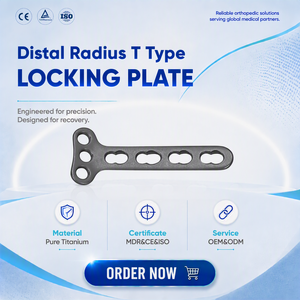
Distal Radius Variable Angle Locking Compression Plate
Ultra-low profile anatomical titanium compression plate designed to minimize soft-tissue irritation during distal radius fracture reduction.
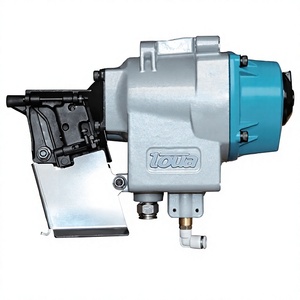
Toua Premium Heavy-Duty Pneumatic Nailing Head Unit
Industrial-grade lightweight aluminum body execution designed for rapid structural fastening and specialized mechanical applications.
Executive Summary: The Strategic Value of Sourcing Locking Plate Instrument Sets from China
In modern orthopedic trauma surgery, the evolution from conventional compression plating to locked internal fixation represents one of the most substantial paradigms shifts in clinical biomechanics. Locking compression plate (LCP) systems function as internal fixators, creating a rigid angular-stable construct that does not rely on friction between the plate and bone to maintain mechanical reduction. Consequently, preserving periosteal vascularity while achieving optimal strain distribution across fracture gaps requires unmatched precision—not only in the titanium implants themselves, but critically within the locking plate instrument set utilized by the surgical team.
China has rapidly established itself as the world’s foremost manufacturing hub for ISO 13485-certified orthopedic devices and surgical instrumentation. Leading Chinese original equipment manufacturers (OEMs) and suppliers combine advanced metallurgy, 5-axis Swiss CNC precision machining, automated micro-passivation, and cleanroom packaging to deliver world-class surgical instrument sets at highly competitive total costs of ownership. For global medical device distributors, tender contractors, and hospital procurement groups, partnering with a premier Chinese supplier provides a resilient supply chain backed by rigorous regulatory technical documentation (STED), ISO compliance, and CE conformity.
Key Insight for B2B Procurement Officers: A premium locking plate instrument set is not merely an assembly of steel tools; it is an integrated mechanical system designed to preserve torque limits, guarantee thread alignment between locking screws and plate bushings, and minimize surgeon fatigue during complex multi-fragment reduction.
Biomechanical Anatomy of a Modern Locking Plate Instrument Set
A comprehensive orthopedic trauma instrument kit must endure hundreds of autoclave sterilization cycles while maintaining sub-millimeter dimensional tolerances. When evaluating a China top locking plate instrument set supplier, engineering teams must inspect the specific mechanical components that constitute the complete surgical tray:
Torque-Limiting Screwdrivers
Engineered with calibrated internal spring-clutch mechanisms (ranging from 0.8 Nm to 4.0 Nm depending on screw diameter), these drivers prevent overtightening, thread stripping, and cold welding between the titanium screw head and the plate’s threaded bushing.
Threaded & Cone Drill Guides
Threaded drill sleeves lock directly into the plate's combination holes, enforcing coaxial alignment for the drill bit. For variable-angle (VA) plates, polyaxial cone guides permit pre-drilling within a precise 30° trajectory cone while preserving thread geometry.
Anatomic Plate Benders & Irons
Dual-ended contouring pliers and bending rods allow three-dimensional shaping of periarticular locking plates to fit patient-specific bone anatomy without introducing micro-fractures or stress concentration points along the plate body.
Direct-Read Depth Gauges
Constructed from anti-glare, passivated surgical stainless steel with laser-etched millimeter graduations, ensuring exact bicortical screw length selection to prevent soft-tissue impaction or tendon irritation.
Material Science Standards: Titanium Alloys vs. German Stainless Steel
Quality assurance in orthopedic manufacturing begins with raw material selection. Leading Chinese suppliers adhere strictly to international ASTM and ISO standards for implants and surgical instruments. Implants integrated within locking plate systems utilize medical-grade pure titanium or titanium alloys, whereas surgical instruments demand high-hardness martensitic and precipitation-hardening stainless steels.
| Application Category | Material Specification | International Standard | Mechanical Properties & Benefits |
|---|---|---|---|
| Locking Bone Plates | Pure Titanium (TA2 / TA3) | ASTM F67 / ISO 5832-2 | Tensile Strength ≥ 500 MPa; Excellent biocompatibility, lower elastic modulus matching natural bone. |
| Locking Screws | Ti-6Al-4V Alloy (TC4) | ASTM F1472 / ISO 5832-3 | High Tensile Strength ≥ 930 MPa; Superior fatigue endurance and yield strength under dynamic shear loads. |
| Cutting & Drilling Tools | Martensitic Stainless Steel (1.4125 / 440C) | ASTM F899 | HRC 54–58 rockwell hardness; Maintains razor-sharp cutting edges through repeated drill usage. |
| Handles, Trays & Forceps | Austenitic Stainless Steel (316L / 17-4PH) | ISO 7153-1 / ASTM A564 | Exceptional resistance to pitting corrosion, steam autoclaving, and repeated chemical disinfection. |
Future Procurement Trends in Global Orthopedic Fixation Systems (2025–2030)
As global healthcare systems shift toward value-based care, hospital procurement departments and orthopedic distributors are altering their sourcing strategies. Key trends shaping the future of locking plate instrument set procurement include:
1. Transition from Fixed-Angle to Variable-Angle (Multi-Axial) Plating
While early monoaxial locking systems constrained screw insertion to a single trajectory perpendicular to the plate, modern trauma centers demand variable-angle (VA) locking technology. VA instruments allow surgeons to angle locking screws up to 15° in any direction around the central axis (30° total cone). This capability is crucial for placing screws around articular surfaces or securing osteoporotic bone fragments. Top Chinese manufacturers have developed proprietary multi-axial locking mechanisms that maintain thread engagement security without increasing profile height.
2. Rapid Adoption of Pre-Sterile Single-Use Kits
In ambulatory surgery centers (ASCs) across North America and Europe, the financial burden of managing re-sterilization loops, tray reprocessing, and washer-disinfector maintenance has driven rapid demand for sterile-packaged implants and single-use instrument kits. Leading Chinese suppliers provide turnkey solutions featuring individual implants in double-blister Tyvek packaging sterilized via Co-60 gamma radiation (Sterility Assurance Level SAL 10⁻⁶), eliminating hospital processing costs and minimizing cross-contamination risks.
3. Integration of Patient-Specific Instrumentation (PSI) and 3D Contouring
Pre-contoured anatomical plates are increasingly tailored using CT-driven 3D anatomical models. Sourcing partners in China are expanding OEM services to include rapid prototyping of custom bending templates, patient-specific surgical guides, and customized tray ergonomics optimized for specialized MIS (Minimally Invasive Surgery) percutaneous plate insertion techniques.
Enterprise Strengths: Why Partner with Orthi Medical Co., Ltd.
Orthi Medical Co., Ltd. stands at the forefront of China's medical device manufacturing sector, operating a complete vertically integrated ecosystem for orthopedic implants and surgical instrument sets. Our operational infrastructure is built upon decades of manufacturing expertise, continuous R&D investment, and an uncompromising dedication to patient safety.
Full Quality Certification
Our state-of-the-art facilities operate under ISO 13485:2016 and ISO 9001 quality management systems. All product lines carry CE certification, backed by complete technical documentation files ready for international market registrations.
End-to-End OEM & Private Labeling
From customer drawing analysis to custom tray layout, laser etching, color anodization, and branded packaging, our engineering team offers comprehensive ODM/OEM capabilities tailored to your market specifications.
Class 100,000 Cleanroom Facilities
Our sterile implants and single-use tools are processed in controlled Class 100,000 cleanrooms and subjected to validated Co-60 gamma irradiation, ensuring absolute sterility (SAL 10⁻⁶) for hospital delivery.
Frequently Asked Questions: Sourcing & Manufacturing
Technical answers to critical questions faced by orthopedic distributors, procurement officers, and OEM buyers when selecting a supplier in China.
Why is calibrated torque control essential in a locking plate instrument set?
Torque control prevents cold welding (galling) between titanium screws and locking plate threads. If a locking screw is over-torqued into a plate hole, the friction can fuse the metal interface, making screw removal during revision surgery extraordinarily difficult. Calibrated torque-limiting screwdrivers disengage automatically when the target torque (e.g., 1.5 Nm for small fragment, 4.0 Nm for large fragment) is achieved, securing mechanical stability while protecting thread integrity.
What is the difference between Monoaxial and Polyaxial (Variable-Angle) locking plate sets?
Monoaxial (fixed-angle) systems constrain screws to enter the plate at a predetermined 90° angle, requiring precise pre-drilling through threaded drill sleeves. Polyaxial (variable-angle) systems utilize specialized thread patterns and material hardness differentials, allowing the surgeon to angle the screw up to 15° off-axis in any direction. This allows target fixation of complex intra-articular fractures around prosthesis stems or key bone fragments.
What certifications and material testing reports are supplied with each export batch?
Orthi Medical provides complete batch traceability documentation with every shipment. This includes raw material mill certificate reports verifying compliance with ASTM F1472 (Ti-6Al-4V) or ASTM F67 (Pure Titanium), ISO 13485 QMS batch release certificates, sterilization validation reports (for gamma-irradiated packs), micro-hardness test results, and dimensional inspection sheets generated by coordinate measuring machines (CMM).
Can Orthi Medical produce custom OEM surgical instrument trays under private label?
Yes. We offer complete turn-key OEM/ODM services. Our engineering team converts your 2D/3D CAD designs into functional prototypes. We handle customized graphic aluminum anodization, custom silicone bracket layout inside sterilizing containers, laser logo marking, multi-language instruction manual preparation, and technical documentation file support for regulatory submissions (FDA 510k, CE MDR, or local MOH registrations).
What is the typical shelf life and sterility assurance for pre-sterilized locking plate products?
Our sterile-packaged titanium implants and disposable instrumentation carry a validated 5-year shelf life. Packaged in double Tyvek blister pouches inside cleanroom environments, they undergo validated cobalt-60 gamma sterilization to guarantee a Sterility Assurance Level (SAL) of 10⁻⁶ in compliance with ISO 11137 standards.
What are the typical lead times and Minimum Order Quantities (MOQ) for custom instrument sets?
For standard catalog instrument sets and implants, lead times range from 2 to 4 weeks. For custom OEM branding and specialized instrument modification, prototyping requires approximately 3 to 4 weeks, with mass production delivered in 6 to 8 weeks. We accommodate flexible MOQs tailored to the distributor's market size and tender requirements.