Featured Orthopedic Fixation & Surgical Implant Systems
Direct-from-factory orthopedic trauma, spinal, and joint replacement implants engineered to stringent ISO 13485 and CE quality standards.
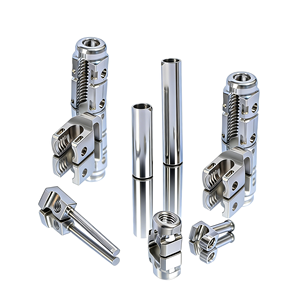
Titanium Spinal Pedicle Screw Rod System Orthopedic Spine Fixation Implant
Inquire Now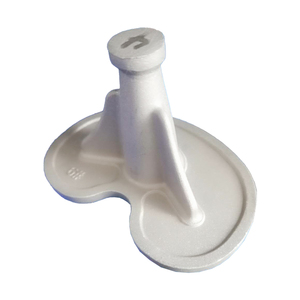
Fast Delivery HKXN Brand Customized Size Orthopedic Implants Knee Hinge Joint CoCrMo Forged Femoral Stem 26-32mm Diameter
Inquire Now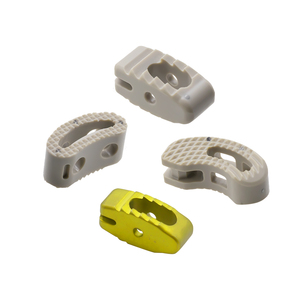
New Design Orthopedic Spinal Titanium Lumbar Cervical fusion Cage Implant System
Inquire Now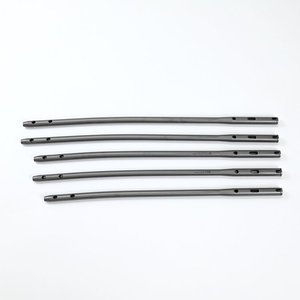
Factory Price PFNA Bone Surgical Instruments Orthopedic Implants Femoral Nail Titanium Locking Intramedullary Nails
Inquire Now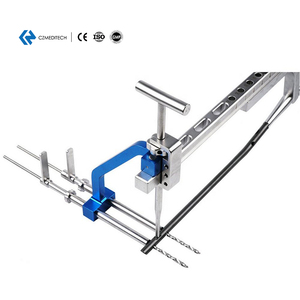
Tibial Intramedullary Nail Titanium Stainless Steel Orthopedic Trauma Implant for Tibia Fracture Fixation Custom Laser Mark
Inquire Now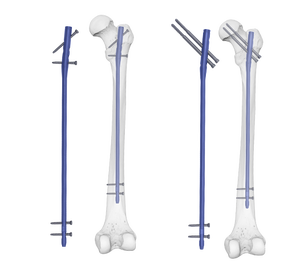
Expert Femoral Intramedullary Nail Orthopedic Implant Femur Fracture Fixation Surgical Medical Device
Inquire Now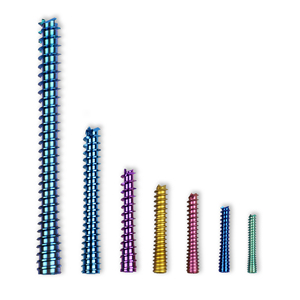
CANWELL Titanium Headless Cannulated Compression Screws Orthopedic Trauma Implant System CE Certified
Inquire Now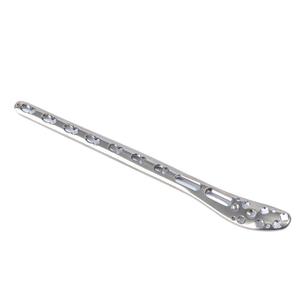
Cnc Custom Medical Titanium Implants Veterinary Orthopedic Hip Implant Cnc Services
Inquire NowTechnical Whitepaper: Evolution of Intramedullary Femoral Nailing Systems
Intramedullary nailing has long served as the gold standard for stabilizing diaphyseal, subtrochanteric, and intertrochanteric femoral fractures. As surgical techniques progress toward minimally invasive orthopedic trauma procedures (MIS), the biomechanical requirements placed upon intramedullary implants have increased exponentially. Contemporary femoral nails must achieve an intricate equilibrium: providing robust torsional and flexural rigidity to resist physiological loading forces while maintaining dynamic elasticity to support micro-motion essential for secondary secondary bone healing through callus formation.
Leading manufacturers in China have spearheaded significant metallurgical and structural advancements in Proximal Femoral Nail Antirotation (PFNA) and Expert Femoral Intramedullary Nail designs. By adopting medical-grade Titanium Alloy (Ti-6Al-4V ELI / TC4, conforming to ASTM F136 / ISO 5832-3), contemporary nails deliver superior biocompatibility, enhanced cyclic fatigue strength, and minimized MRI artifact distortion compared to traditional 316LVM stainless steel counterparts.
Key Biomechanical Insight: The integration of helical blade technology in PFNA systems increases compaction of cancellous bone within the femoral head. This compacting action significantly raises rotational stability and reduces cut-out risks in osteoporotic bone fractures compared to conventional lag screw configurations.
Mechanical Property Comparison: Titanium Alloy vs. Stainless Steel Implants
| Parameter / Material Standard | Ti-6Al-4V ELI (ASTM F136) | Stainless Steel 316LVM (ASTM F138) | Clinical Benefit |
|---|---|---|---|
| Yield Strength (MPa) | ≥ 795 MPa | ≥ 690 MPa | Prevents permanent deformation under high patient weight loads |
| Ultimate Tensile Strength (MPa) | ≥ 860 MPa | ≥ 930 MPa | High load capacity during early post-op ambulation |
| Elastic Modulus (GPa) | 110 GPa | 200 GPa | Closer match to human cortical bone (15-30 GPa), reducing stress shielding |
| Fatigue Limit (107 cycles) | ~510 MPa | ~380 MPa | Extremely low rate of implant breakage prior to non-union healing |
| Imaging Compatibility | Low MRI / CT Artifacts | High Imaging Distortion | Allows precise post-operative radiological assessment |
Anatomical Contour & Multi-Planar Locking Mechanisms
Modern Chinese intramedullary femoral nails feature an anatomical 5-degree mediolateral (M-L) angle, simplifying insertion via the tip of the greater trochanter or trochanteric fossa without compromising the gluteus medius tendon. Furthermore, distal multi-planar locking options (static, dynamic, and slotted locking modes) provide orthopedic surgeons with dynamic axial compression flexibility. This accommodates varying fracture lines—from simple transverse diaphysis ruptures to complex comminuted subtrochanteric fractures.
Global Sourcing Trends: Future of Orthopedic Femoral Nail Manufacturing
As global healthcare systems focus on cost-containment without compromising patient safety, international orthopedic procurement teams are shifting toward specialized Chinese OEM/ODM contract manufacturers. The landscape of medical device procurement is governed by key technological and regulatory developments:
1. Radiolucent Carbon Fiber Instrumentation
Surgeons demand radiolucent carbon fiber distal targeting frames. These lightweight drill guides ensure clear intraoperative C-arm visualization, significantly reducing radiation exposure for surgical staff while shortening operative time.
2. Gamma-Sterilized Pre-Packaged Kits
Hospital procurement is moving rapidly toward individual sterile-packaged implants. Pre-sterilized (Co-60 Gamma radiation, SAL 10-6) femoral nails eliminate hospital reprocessing costs, streamline OR logistics, and eradicate cross-contamination hazards.
3. High-Precision Swiss 5-Axis Machining
Adopting Citizen and Star 5-axis CNC Swiss lathes enables micro-machining tolerances within ±0.005mm. Seamless cannulated gun-drilling ensures consistent wall thickness across nails exceeding 400mm in length.
Furthermore, compliance with global regulatory frameworks—such as European Union CE MDR (EU 2017/745), US FDA 510(k), and ISO 13485 QMS—has become a non-negotiable benchmark. Leading Chinese orthopedic manufacturers provide comprehensive Technical Files (STED), biocompatibility test reports (ISO 10993 series), and mechanical testing validation (ASTM F1264 for intramedullary fixation devices) to streamline regional product registration for international distributors.
Why Partner With Us: Manufacturing Excellence & OEM Expertise
As a premier China orthopedic implant manufacturer, our integrated industrial infrastructure covers the entire lifecycle of trauma, spine, joint, and sports medicine implant production—from raw material forging to finished cleanroom packaging.
Traceable Raw Materials
100% certified titanium bars and CoCrMo forgings sourced directly from audited aerospace-grade material suppliers. Ultrasonic flaw detection and spectrographic material analysis certificates are archived for every production lot.
Cleanroom Packaging & Surface Anodization
Operating ISO Class 7 cleanrooms equipped with automated ultrasonic cleaning systems, Type II anodization for color-coded size identification, and custom laser etching for UDI (Unique Device Identification) compliance.
Turnkey OEM / ODM Solutions
Customized modification of nail lengths, canal diameters, locking screw pitches, and specialized surgical instrument trays engineered according to distributor specifications and regional clinical preferences.
Intramedullary Femoral Nail Procurement FAQ
Addressing critical technical, regulatory, and commercial inquiries for medical device procurement managers and hospital buyers.
Request Technical Specifications & OEM Wholesale Quotation
Connect directly with our senior orthopedic engineering team. Receive detailed product catalogs, CE/ISO documentation, and competitive factory-direct pricing for your market.
Inquire Now