Featured Cervical Interbody Fusion Cage Systems
Precision-engineered spinal implants manufactured under ISO 13485 quality management systems for global orthopedic distributors and hospital networks.
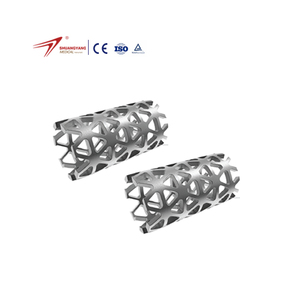
Shuangyang Manufacturer Customized High Quality Spinal Titanium Mesh Cage for Spine Surgery Titanium Mesh Cage Cervical Spine
Send an Inquiry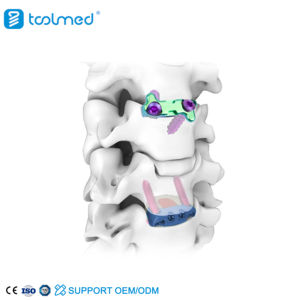
Medical Spine Fixation System Lumbar Cage Peek Cage Double Locking Screw Cervical Cone fusion Cagefor Surgery Spinal Implants
Send an Inquiry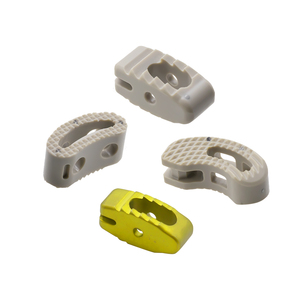
New Design Orthopedic Spinal Titanium Lumbar Cervical fusion Cage Implant System
Send an Inquiry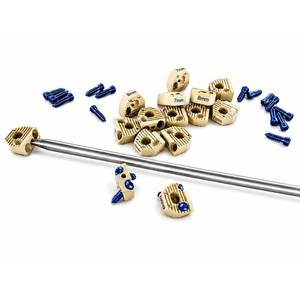
Locking 5mm Cervical Fusion Spine Cage Stainless Steel Material Set 17-Piece Surgical Training Orthopedic Instruments Veterinary
Send an Inquiry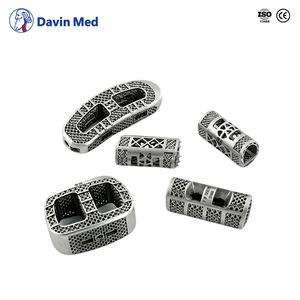
Titanium 3D Printed Spinal Fusion Cage PLIF TLIF ALIF Cervical Lumbar Interbody Fusion Porous Spine Orthopedic Implant
Send an Inquiry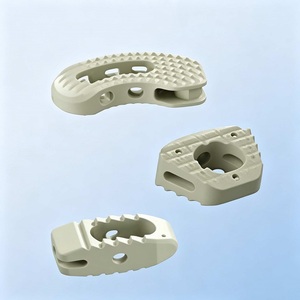
High Biocompatible PEEK Cervical Cage With Screw Anterior Cervical Fusion Cage Spinal Implant
Send an Inquiry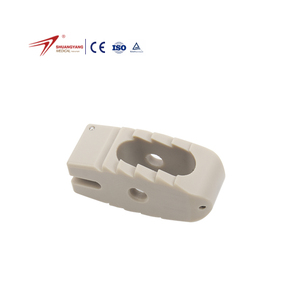
Shuangyang Orthopaedic Surgery Implants Corpectomy Cervical Interbody Fusion Cage Spine Cervical Cage Made of Peek
Send an Inquiry
E-IMAGE APM-06 Survey Top Plate for Camera Tripod Mounting Adapter with 5/8 Stud
Send an Inquiry1. Executive Overview: The Landscape of Cervical Fusion Cage Manufacturing in China
Anterior Cervical Discectomy and Fusion (ACDF) remains the gold-standard surgical intervention for symptomatic cervical radiculopathy, cervical spondylotic myelopathy, and degenerative disc disease (DDD). As surgical techniques transition toward minimally invasive surgery (MIS) and stand-alone zero-profile stabilization, the global demand for high-precision interbody fusion devices has accelerated exponentially. Global healthcare networks, OEM brands, and medical device distributors increasingly look to premier Chinese manufacturing hubs to secure advanced, cost-effective, and fully certified spinal implant solutions.
China's orthopedic manufacturing ecosystem—concentrated in advanced medical technology clusters such as Jiangsu, Zhejiang (Jinhua), and Shanghai—has evolved beyond standard OEM machining into a world-class hub for bio-engineering innovation. Leading Chinese factories combine multi-axis DMG MORI and Citizen 5-axis CNC Swiss machining centers with Electron Beam Melting (EBM) and Direct Metal Laser Sintering (DMLS) 3D printing technologies. This infrastructure enables the production of complex cervical cages featuring anatomical endplate contouring, bone-matching elasticity, and highly porous trabecular surfaces that foster accelerated osteointegration.
Strategic Procurement Insight: Modern Chinese cervical cage factories offer complete vertical integration—from raw material verification (ASTM F136 Ti-6Al-4V ELI & ASTM F2026 PEEK) to dynamic mechanical testing (ASTM F2077/F2267) and cleanroom sterile packaging (SAL 10⁻⁶).
2. OEM Enterprise Strengths & Quality Management Infrastructure
When selecting a manufacturing partner for cervical interbody fusion cages, regulatory compliance, structural reliability, and precise manufacturing tolerances are non-negotiable. Leading manufacturers like Orthi Medical Co., Ltd. and Shuangyang Medical operate comprehensive quality control systems verified under ISO 13485 and ISO 9001 certifications, aligned with European CE marking protocols and US FDA 510(k) technical standards.
Certified Bio-Materials
Strict utilization of medical-grade PEEK (Invibio PEEK-OPTIMA / Solvay Zeniva) conforming to ASTM F2026 and Titanium Alloy (Ti-6Al-4V ELI) conforming to ASTM F136 / ASTM F1472, accompanied by complete mill test reports (MTR) for total lot traceability.
Rigorous Biomechanical Testing
In-house and third-party laboratory verification subjecting cervical cages to static axial compression, dynamic shear fatigue testing up to 5,000,000 cycles per ASTM F2077, and subsidence evaluation in polyurethane foam per ASTM F2267 standards.
End-to-End OEM/ODM Customization
Full engineering capability providing custom anatomical profile modeling, laser-etched UDI marking, specialized surface anodization color-coding, custom surgical instrument kit design, and validation of sterile blister packaging.
3. Technical Deep-Dive: Biomaterial Innovations & Design Architecture
Cervical interbody implants must fulfill demanding mechanical and biological requirements: providing immediate post-operative structural stability, maintaining cervical lordosis, resisting device subsidence into vertebral endplates, and promoting rapid arthrodesis. Chinese manufacturers produce two primary material classifications that dominate clinical practice globally: Polyetheretherketone (PEEK) and 3D Printed Porous Titanium.
| Parameter / Feature | PEEK Cervical Cages (ASTM F2026) | 3D Printed Porous Titanium (ASTM F136) | Zero-Profile Stand-Alone Cages |
|---|---|---|---|
| Elastic Modulus (GPa) | 3.6 – 4.0 GPa (Matches trabecular bone closely) | 1.5 – 3.0 GPa (Engineered pore lattice structure) | 3.6 GPa (PEEK Body) / 110 GPa (Ti Screws) |
| Radiographic Imageability | Radiolucent; requires Tantalum markers for X-ray alignment | Radiopaque; slight artifact on CT/MRI, clear host interface | Radiolucent cage body with visible radiopaque fixation screws |
| Osteointegration Mechanism | Fibrous tissue encapsulation unless plasma-coated with HA | Direct bone ingrowth via interconnecting porous channels | Combines graft window fusion with rigid primary screw fixation |
| Primary Fixation Method | Pyramidal teeth ridges + supplemental anterior plate | High-friction rough surface micro-texture + anterior plate | Integrated self-locking multi-planar bone screws |
| Subsidence Resistance | High due to modulus matching, broad footprint needed | Superior load distribution via macro-porous face contact | Maximum stability; eliminates anterior plate profile |
| Primary Clinical Indication | Standard multi-level ACDF with plate fixation | High-risk non-union patients, revision ACDF surgery | Single and multi-level ACDF to minimize post-op dysphagia |
3D Printed Porous Titanium Architecture
Additive manufacturing using Selective Laser Melting (SLM) or Electron Beam Melting (EBM) has revolutionized cervical cage engineering. By algorithmically controlling pore geometry (pore size ranging between 500–800 μm and overall porosity between 65% to 75%), Chinese factories manufacture titanium cages with a modulus of elasticity that mirrors human cancellous bone. This open cell structure facilitates capillary action, cell migration, and early vascularized bone formation directly throughout the implant core, significantly diminishing the incidence of non-union (pseudarthrosis).
Zero-Profile Integrated Stabilization Systems
Traditional ACDF requires an interbody cage coupled with an anterior cervical plate (ACP) secured via bone screws. While effective, anterior plates increase soft-tissue retraction, leading to post-operative dysphagia (difficulty swallowing) and potential adjacent segment degeneration (ASD). Zero-profile cervical fusion cages manufactured by top Chinese factories incorporate an integrated locking screw mechanism directly within the PEEK or titanium cage body. By remaining flush within the intervertebral disc space, zero-profile devices eliminate hardware contact with the esophagus and surrounding anterior anatomical structures while delivering equivalent torsional and flexural rigidity.
4. Future Procurement Trends in Cervical Fusion Cage Manufacturing
As healthcare systems prioritize patient outcomes, operative efficiency, and cost containment, global procurement executives must anticipate upcoming technological shifts. Over the next five years, sourcing strategies for cervical spinal implants will be shaped by four key vectors:
1. Bioactive Surface Functionalization
Moving beyond bio-inert materials, future PEEK cages are increasingly modified with Hydroxyapatite (HA) coating, titanium plasma spray (TPS), or nanostructured surface etching. These bioactive coatings create osteoconductive interfaces that trigger direct cellular attachment without sacrificing PEEK's radiolucent advantages.
2. Patient-Specific Custom Cages
Leveraging high-resolution preoperative CT datasets, Chinese factories are expanding OEM production of patient-specific 3D printed cervical cages. Tailored precisely to complex anatomical deformities, severe bone loss, or revision corpectomy reconstructions, custom cages ensure optimized endplate contact and restored sagittal alignment.
3. Expansion of Single-Use Sterile Packaging
Hospitals are rapidly transitioning from hospital-sterilized bulk implant trays to single-pack gamma-irradiated implants (SAL 10⁻⁶). Individually packaged sterile cervical cages eliminate hospital reprocessing costs, prevent cross-contamination risks, and streamline inventory control via standardized Unique Device Identification (UDI) barcoding.
5. Frequently Asked Questions (FAQ) for Cervical Cage Procurement
Essential technical and regulatory guidance for medical device procurement managers, OEM brand owners, and surgical supply distributors.
- ASTM F2077: Static and dynamic axial compression, static and dynamic shear testing to evaluate mechanical fatigue endurance up to 5 million cycles.
- ASTM F2267: Static axial compression subsidence testing to measure device penetration resistance into simulated polyurethane bone endplates.
- Expulsion Testing: Measuring the shear force required to dislodge the cage from intervertebral spaces under pre-load conditions.
Partner with China's Leading Orthopedic Implant Factory
Whether you require standard PEEK/Titanium cervical cages, advanced 3D printed porous implants, zero-profile fixation systems, or complete OEM private label manufacturing, our engineering team is ready to support your market growth.
Send an Inquiry