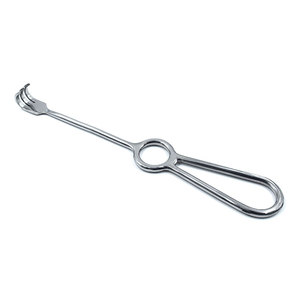
Product Portfolio & Surgical Solutions
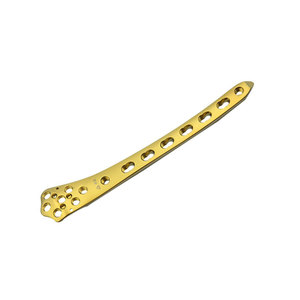
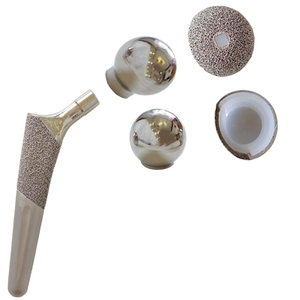
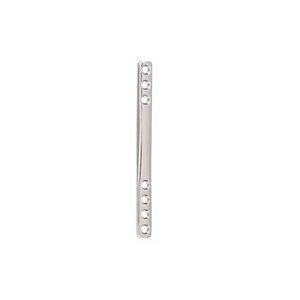
Featured Orthopedic Implants & Fixation Systems
Engineered to international biocompatibility standards. ISO 13485 certified manufacturing with complete lot-batch traceability and gamma sterilization support.
Minimally Invasive Femoral Proximal Locking Plate Distal Femur Lateral Distal Femoral Outer Side Orthopedic Locking Plates
Get Catalog
Hip Replacement Instruments Veterinary Orthopedic Hip Implant
Get Catalog
Competitive Price MEDICA Brand Orthopedic Implants Stainless Steel 2.0 Straight Hole Plate Type 4 Model AF00920 for Veterinary
Get Catalog
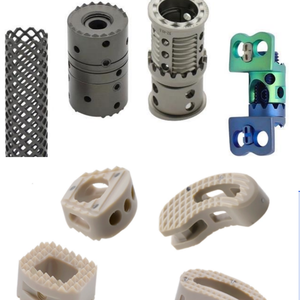
Spine Expandable Titanium Mesh Cage Alif TPAL PLIF OLIF TLIF Peek Cage
Get Catalog
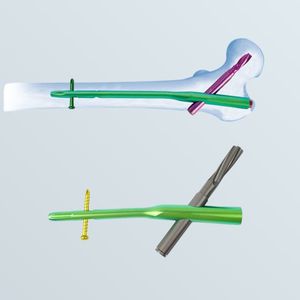
Premium Pfna Intramedullary Nail Wholesale Orthopedic Implant for Femur Intertrochanteric Bone Fracture
Get Catalog
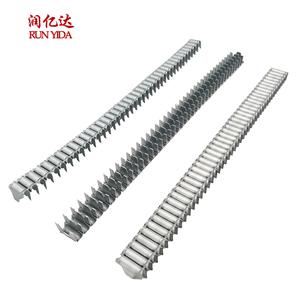
M85 CL-36 U-Type Iron Staples Insulated Staple Fastener Mattress Clip Bonell Nail for Fencing Smooth Shank Carton Packed
Get Catalog
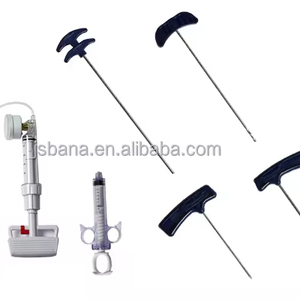
BANA Brand Orthopedic Spine Orthopedic Surgery Pkp Pvp Kyphoplasty Vertebroplasty Kit Is in Stock at the Warehouse
Get CatalogComprehensive Analysis: Acrylic Bone Cement Systems & Surgical Procurement Landscape
In modern clinical orthopedics, surgical bone cement—predominantly synthesized from Polymethyl Methacrylate (PMMA)—serves as a structural biomaterial of vital importance. It acts as an immediate self-curing grout that transfers mechanical loads uniformly between prosthetic implants and living host bone tissue. Whether utilized in total joint arthroplasty (TJA), percutaneous vertebroplasty (PVP), balloon kyphoplasty (PKP), or complex trauma osteosynthesis, bone cement remains the mechanical anchor for surgical success.
As global healthcare procurement demands shift toward higher clinical efficiency, enhanced infection prevention, and cost-effective medical supply chains, China has emerged as a premier hub for state-of-the-art bone cement R&D and precision contract manufacturing. Partnering with a premier China Bone Cement Factory and OEM Supplier provides international medical brands, healthcare institutions, and surgical device distributors with direct access to advanced biomaterial engineering, stringent ISO 13485 quality control, and streamlined regulatory approval files.
Key Information Gain Summary: What Procurement Officers Must Evaluate
Evaluating bone cement suppliers requires assessing three core parameters: viscosity kinetic profiles (low, medium, high), radiopacifier homogeneity (Barium Sulfate $\text{BaSO}_4$ vs Zirconium Dioxide $\text{ZrO}_2$), and antibiotic eluting dynamics for prophylactic or therapeutic infection control. OEM suppliers operating under ISO 13485 must provide certified batch chemical purity, low monomer residue level, and verifiable mechanical strength exceeding ISO 5833 specifications.
1. Polymerization Chemistry & Material Science Breakdown
Surgical acrylic bone cement is packaged as a two-phase system consisting of a liquid monomer component and a powder polymer component. The precise stoichiometry and chemical composition dictate its polymerization reaction, exothermic peak temperature, working time, and ultimate biomechanical fatigue resistance.
1.1 Liquid & Powder Component Composition
The chemical architecture of premium surgical-grade bone cement is rigorously formulated to deliver consistent tactile behavior during preparation:
- Powder Polymer Phase: Composed of spherical PMMA prepolymer beads or methyl methacrylate-styrene copolymers. It contains Benzoyl Peroxide (BPO) as the polymerization initiator and a radiopacifying agent (typically 10% to 45% by weight) such as Barium Sulfate ($\text{BaSO}_4$) or Zirconium Dioxide ($\text{ZrO}_2$) for intraoperative fluoroscopic visualization.
- Liquid Monomer Phase: Contains unpolymerized Methyl Methacrylate (MMA) liquid monomer, an accelerator such as N,N-dimethyl-p-toluidine (DMPT) to trigger cold-curing at ambient room temperature, and trace amounts of Hydroquinone (stabilizer) to prevent premature self-polymerization during storage.
1.2 The Curing Phases & Thermal Kinetics
Upon mixing the liquid and powder under vacuum conditions, the bone cement transitions through four distinct clinical handling phases:
- Mixing Phase: Initial homogenization of liquid monomer wetting the polymer beads (0 to 1.5 minutes).
- Waiting / Dough Phase: Monomer partially dissolves polymer beads, producing a non-tacky dough ready for manual handling or syringe loading (1.5 to 4 minutes).
- Working Phase: Viscosity remains stable, permitting precise delivery into the vertebral body or medullary canal (4 to 8 minutes).
- Setting Phase: Rapid exothermic polymerization occurs, accompanied by volumetric shrinkage (1% to 7%) and peak thermal release (often reaching $60^\circ\text{C}$ to $85^\circ\text{C}$ depending on mass volume).
1.3 Technical Comparison Matrix: Bone Cement Formulations per Clinical Application
| Property / Parameter | Vertebroplasty / Kyphoplasty (PVP/PKP) | Joint Arthroplasty (Hip & Knee) | Antibiotic-Loaded (ALBC) Formulations |
|---|---|---|---|
| Viscosity Profile | Low to Medium (Ultra-long working window) | High or Medium (Tack-free, rapid doughing) | Medium to High (Controlled delivery) |
| Radiopacifier Content | High (30% - 45% $\text{ZrO}_2$ / $\text{BaSO}_4$) | Standard (10% - 15% $\text{BaSO}_4$) | Standard to High (15% - 20% $\text{ZrO}_2$) |
| Compressive Strength | ≥ 70 MPa (ISO 5833 standard) | ≥ 85 MPa (High mechanical load) | ≥ 75 MPa (Sustained structural load) |
| Active Elution Agent | N/A (Pure PMMA + Radiopacifier) | N/A (Structural anchoring) | Gentamicin, Tobramycin, Vancomycin |
| Delivery Method | High-pressure hydraulic syringe / cannula | Vacuum mixing gun / manual finger packing | Vacuum cartridge delivery / spacer molding |
| Primary Clinical Goal | Vertebral height recovery & stabilization | Immediate prosthetic stem fixation | Revision surgery & infection prevention (PJI) |
2. Global Bone Cement Procurement Trends & Supply Chain Evolution
The global orthopedic market is undergoing rapid evolution driven by aging demographics, increasing total joint replacement procedures, and rising adoption of minimally invasive spine surgeries (MISS). Procurement officers and global medical device OEM brands are reshaping their procurement strategies based on three key macro trends:
1. Antibiotic-Loaded Cement (ALBC) Dominance
Prophylactic integration of broad-spectrum antibiotics (such as Gentamicin Sulfate) directly into pre-mixed PMMA formulations has become the standard of care. ALBC significantly lowers the incidence of Periprosthetic Joint Infection (PJI), protecting surgical outcomes and reducing revision surgical expenditures.
2. Closed-System Vacuum Mixing Kits
Traditional open-bowl hand mixing introduces air micro-bubbles, creating mechanical stress risers that degrade long-term fatigue strength by up to 30%. Modern procurement favors single-use, closed-system vacuum mixing delivery kits that eliminate monomer vapor exposure in the Operating Room while yielding pore-free homogeneous cement.
3. OEM Contract Manufacturing Realignment
Leading international orthopedic brands are increasingly outsourcing bone cement synthesis to audited Chinese manufacturing specialists. China offers automated liquid-powder dosing, high-volume manufacturing elasticity, and complete regulatory technical files, drastically optimizing cost-to-performance ratios for distributors.
3. Technological Innovations & Next-Gen Biomaterial Roadmaps
Research and development in bone cement chemistry is aggressively tackling historical clinical challenges, specifically exothermic tissue necrosis, monomer toxicity, lack of biological osteointegration, and radiopacifier settling.
3.1 Bioactive & Osteoconductive Additives
Standard PMMA cement is biologically inert, acting as a mechanical grout rather than an osteoinductive matrix. Advanced R&D facilities in China are incorporating bioactive inorganic materials—such as Hydroxyapatite (HA), Beta-Tricalcium Phosphate ($\beta$-TCP), and Bioglass (45S5)—into the powder phase. These composite cements release calcium ions over time, creating a porous micro-surface that promotes direct bone apposition without sacrificing structural stability.
3.2 Low-Exothermic Viscosity Innovations
Peak polymerization temperatures exceeding $70^\circ\text{C}$ risk thermal coagulation necrosis of adjacent cancellous bone and neural tissues during spinal vertebroplasty. Next-generation PMMA formulations incorporate heat-absorbing organic compounds, optimized monomer-to-polymer ratios, and modified polymer bead diameter distributions. This limits peak polymerization heat to under $55^\circ\text{C}$, safely below the critical threshold for thermal bone damage.
3.3 Nanotechnology & Alternative Radiopacifiers
Micro-sized Barium Sulfate particles can sometimes act as third-body wear debris if cement micro-particles escape into joint cavities, accelerating polyethylene liner wear. Modern formulations employ nano-structured Zirconium Dioxide ($\text{ZrO}_2$) or surface-modified radiopacifying nanoparticles. This ensures optimal radiopacity during X-ray/C-arm fluoroscopic guidance while maintaining smooth mechanical surface finishes and preventing agglomeration.
4. Enterprise Manufacturing Excellence & Technical Quality Assurance
As a senior orthopedic solution enterprise (represented by Orthi Medical Co., Ltd. and top-tier manufacturing infrastructure), our manufacturing ecosystem enforces an uncompromising quality management strategy. Every batch of surgical biomaterials and matching titanium/stainless steel surgical tools undergoes multi-tier physical, chemical, and biological verification.
ISO 13485 & CE Compliance
Our complete manufacturing plant operates under validated ISO 13485 and ISO 9001 quality management systems. Product documentation includes comprehensive technical files, CE compliance dossiers, and toxicological biocompatibility evaluation reports (ISO 10993 compliant).
Medical-Grade Raw Materials
From pure titanium (ASTM F67 TA2/TA3) and high-strength Ti-6Al-4V alloy (ASTM F1472 TC4) for trauma and spinal implants to medical-grade pure methyl methacrylate monomers, all raw inputs come with certified mill test reports and batch-level spectrographic verification.
Co-60 Gamma Sterilization (SAL 10⁻⁶)
Bone cement powder packs, bone screws, plates, and intramedullary nails are sealed within medical-grade double-peel Tyvek packaging. Pre-packaged items undergo Cobalt-60 ($\text{Co}^{60}$) gamma-ray irradiation, guaranteeing a Sterility Assurance Level (SAL) of $10^{-6}$.
Complete Full-Portfolio Sourcing
Consolidate your orthopedic procurement. In addition to bone cement and vertebroplasty/kyphoplasty kits (PVP/PKP), we supply total joint arthroplasty sets, spinal fixation cages, intramedullary nails, sports medicine suture anchors, and UBE endoscopic instruments under one unified quality system.
Procurement & Technical FAQ
Frequently Asked Questions for Medical Buyers
Essential technical, regulatory, and supply-chain answers for orthopedic product managers, hospital procurement officers, and medical device distributors.
Q:
What international quality certifications do your bone cement and orthopedic products carry?
Our manufacturing operations strictly adhere to ISO 13485 and ISO 9001 certified quality management systems. Applicable implant product lines carry CE marking. Raw materials comply with rigorous international standards, including ASTM F67 (pure titanium TA2/TA3), ASTM F1472 (Ti-6Al-4V TC4), and ISO 5833 for acrylic resin bone cements.
Q:
Can bone cement formulations be customized under OEM or private label contracts?
Yes. We provide complete OEM/ODM contract manufacturing services. This includes custom viscosity tuning (low, medium, or high viscosity), specialized radiopacifier ratios ($\text{BaSO}_4$ vs $\text{ZrO}_2$), antibiotic additions (Gentamicin/Tobramycin), custom blister tray design, private label branding, and full technical documentation for local registration.
Q:
Are implants and delivery systems supplied in sterile packaged formats?
Yes. Bone cement components, bone screws, trauma locking plates, cannulated screws, and intramedullary nails can be delivered in sterile-ready, gamma-irradiated (Co-60) packaging with a Sterility Assurance Level (SAL) of 10⁻⁶, eliminating hospital reprocessing costs and minimizing infection risks.
Q:
How are hazardous liquid monomer (MMA) transport regulations handled during international shipping?
Methyl Methacrylate (MMA) liquid monomer is classified under UN 1247 (Class 3 Flammable Liquid). We utilize certified IATA/IMDG compliant dangerous goods packaging (DG-certified glass ampoules and aluminum canisters) along with full Safety Data Sheets (SDS) and export documentation to ensure seamless air and sea freight delivery worldwide.
Q:
What mechanical properties are guaranteed for your PMMA acrylic cement?
Our bone cements meet or exceed ISO 5833 requirements: compressive strength consistently measures ≥ 70 MPa (typically reaching 85-95 MPa), flexural modulus measures ≥ 1800 MPa, and monomer residue levels remain under 1.5% post-curing, ensuring superior long-term biomechanical stability and minimal tissue reactivity.
Q:
What clinical education and technical support are provided to global distributors?
We support our regional partners with step-by-step surgical technique guides, intraoperative mixing video tutorials, sawbone laboratory demonstration kits, cadaver workshop support, and detailed clinical whitepapers to facilitate surgeon training and product launches.
Partner with China's Premier Bone Cement & Orthopedic Supplier
Streamline your medical device supply chain. Request technical datasheets, regulatory registration dossiers, product catalogs, or OEM quotation details from our engineering team.
Get Catalog